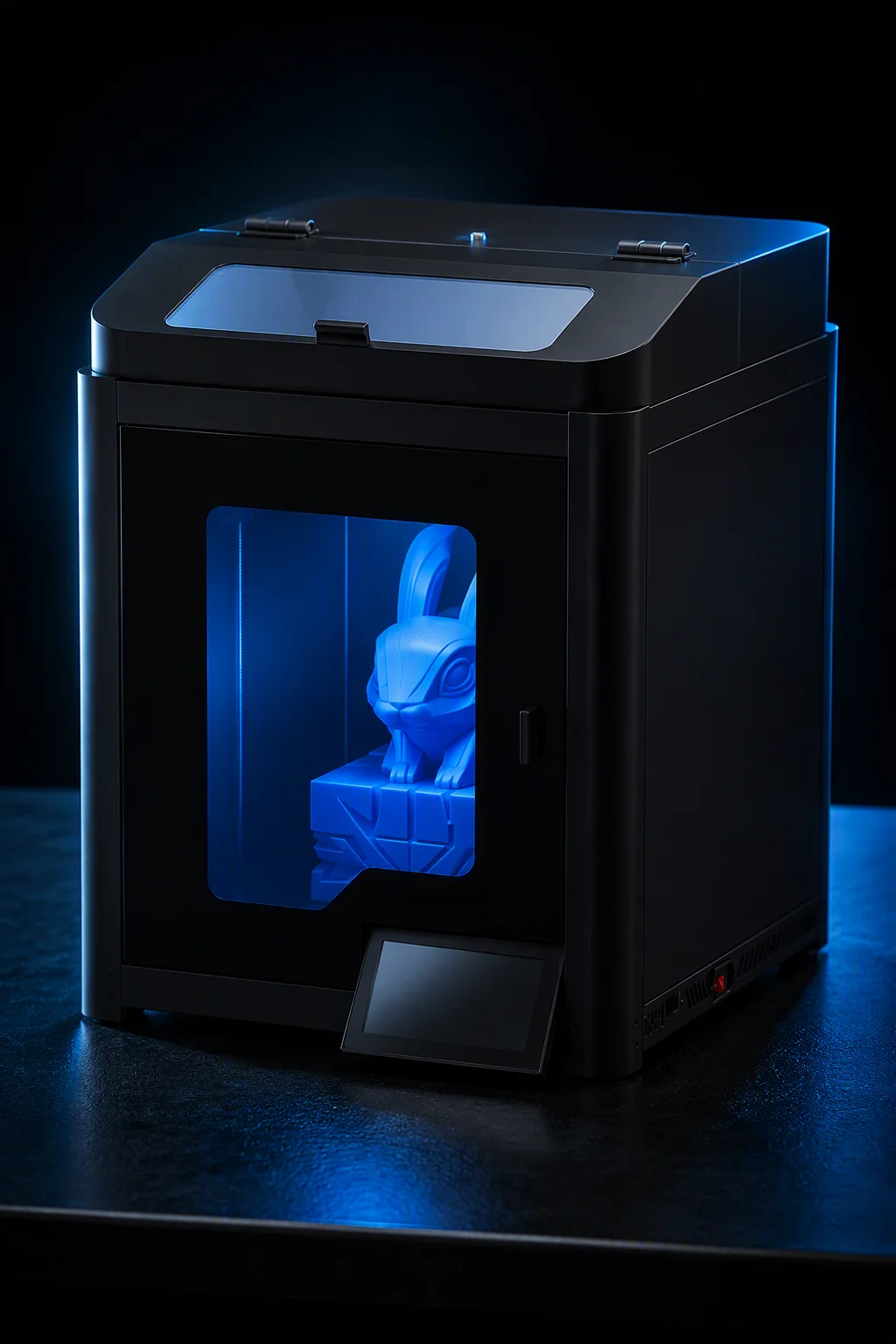
The consumer 3D printing market has matured. As an international distributor or reseller entering 2026, you are no longer asking "should I carry 3D printers?" . You are asking "what is the optimal technology mix for my portfolio?" The divergence between FDM and Resin has deepened, driven by distinct user demands, material innovations, and application verticals. Carrying the wrong balance of inventory means missed revenue or, worse, dead stock.
At Precise3D, based in Shenzhen's manufacturing hub, we develop both high-speed FDM and high-resolution Resin platforms. This gives us a unique vantage point on where the market is heading. This post breaks down the hard data on speed, resolution, total cost of ownership, and market demand to help you build a distribution strategy for 2026.
The State of the Market in 2026: Demand Divergence
The market is no longer uniform. The consumer and desktop resin segment is projected to grow at a compound annual growth rate (CAGR) of 18% through 2028, driven by tabletop gaming, jewelry casting, and rapid dental prototyping. Meanwhile, FDM continues to expand at a steady 12% CAGR, fueled by large-format functional prototyping, STEM education, and print farm automation.
In Q1 2026, demand for desktop resin printers in the North American hobbyist channel increased 22% year-over-year, while FDM saw a 15% increase in units shipped, resin is catching up in volume, but FDM still dominates total installed base by a factor of 2:1.
For distributors, this bifurcation means that targeting specific verticals with tailored solutions is more critical than ever. A generalist approach to inventory will leave you competing on price alone.
Speed and Throughput: The Production Calculus
Speed is the most misunderstood metric in 3D printing. Raw print speed is meaningless without factoring in batch size, volume utilization, and post-processing.
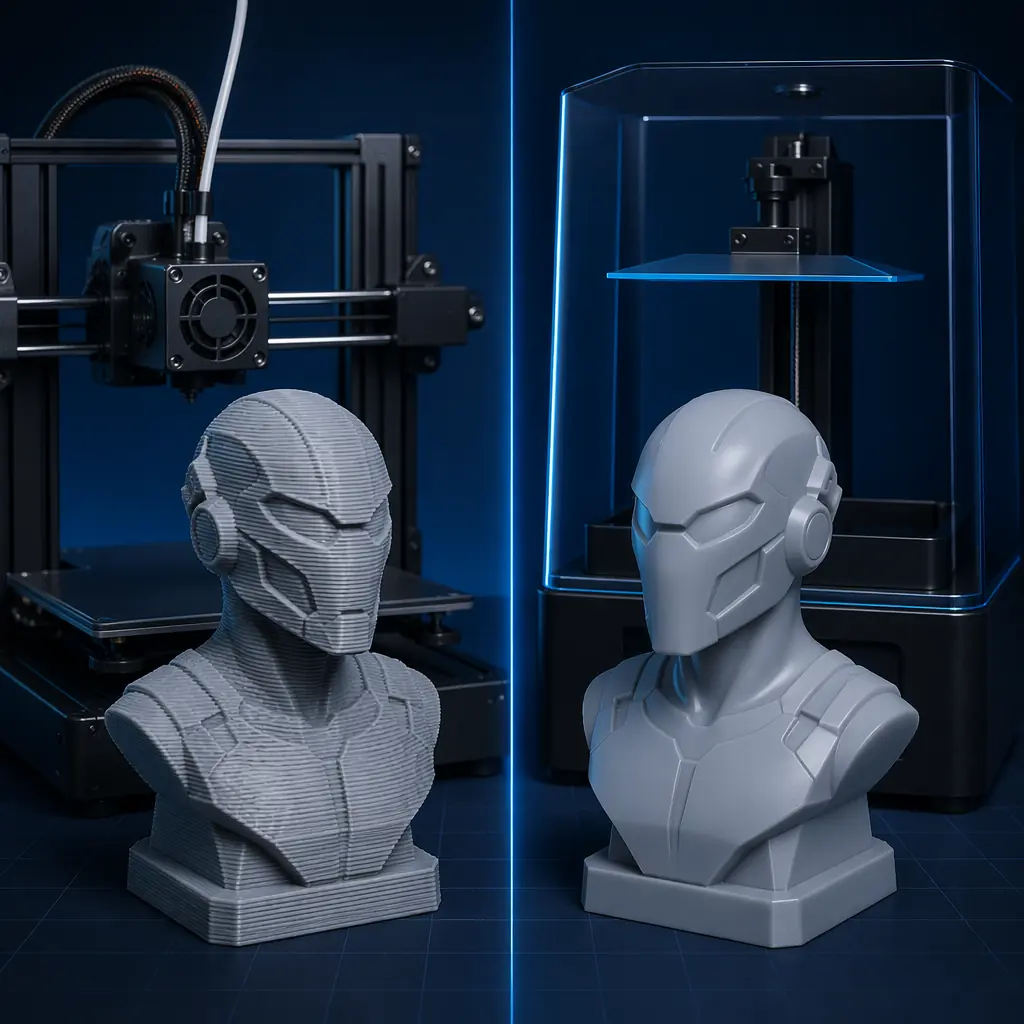
Modern high-flow FDM printers, like the Precise3D F-Series, achieve volumetric flow rates up to 32 mm³/s. This translates to a 150mm-tall vase printing in under 1.5 hours. However, resin printers have revolutionized throughput with MSLA technology, a single layer cures in 2 seconds regardless of part complexity, meaning a build plate full of 20 miniatures prints in roughly the same time as 1 miniature.
For a print farm operator, the calculus is simple: FDM wins for large, functional single parts; Resin wins for high-detail, high-volume batch production. A distributor carrying both technologies captures both workflows.
Resolution, Accuracy, and Post-Processing
Applications are defined by surface finish and dimensional accuracy. In 2026, the gap is narrower but still distinct.
High-end consumer FDM consistently achieves 0.05mm layer heights with precision alloy hot ends and linear rails. Resin printers, however, routinely hit 0.025mm layers For distributors evaluating this area, our resin troubleshooting guide covers it in depth. with invisible layer lines. The real difference is post-processing workflow:
This behavioral difference is critical when positioning products: FDM solves utility; resin solves aesthetics. Stock inventory and train your sales team accordingly.
Total Cost of Ownership: Material and Operations
Distributors must understand their customers' cost per finished part to justify repeat sales. The material economics are shifting in 2026:
The margin opportunity for distributors is significantly higher on premium resins and engineering filaments compared to standard PLA. And because resin customers consume more consumables per successful part, gloves, wash stations, FEP films, their customer lifetime value is higher For distributors evaluating this area, our water-washable resin guide covers it in depth..
FDM maximizes volume turnover; resin maximizes margin per transaction.
A balanced portfolio captures both revenue streams.
2026 Specifications Comparison
Building a Balanced Distribution Portfolio for 2026
The data is clear: the market is demanding both technologies. Specializing in only FDM limits you to the prototyping and education budget. Specializing in only resin limits you to the hobbyist and jewelry vertical. Holding inventory across both requires a reliable OEM partner that can deliver consistent quality at scale.
This is where Precise3D's OEM program delivers. By sourcing both FDM and resin platforms from a single manufacturer, you streamline your logistics, consolidate your spare parts inventory, and negotiate better bulk pricing. Our 2026 product lineup For distributors evaluating this area, our engineering filaments guide covers it in depth. includes the F-Series (high-speed FDM) and the R-Series (high-fidelity resin), designed to share common electronic architectures and user interfaces, reducing your technical training overhead.
Distribution strategy recommendations by market focus:
- Broad retail: Stock 60% FDM / 40% Resin. Serve volume market while capturing the growing enthusiast base
- Value-add distribution: Stock 40% FDM / 60% Resin. Focus on high-margin consumables and premium materials
- Vertical specialist: Let your market decide. Dental channel = 90% Resin. Education = 90% FDM
Conclusion: Partnering for Profitability
The "FDM vs. Resin" debate is a false choice in 2026. The winning distributors offer a spectrum of solutions For distributors evaluating this area, our SLA vs DLP vs MSLA guide covers it in depth.. Customers no longer want a single tool, they want a workflow that matches their specific application. Carrying both FDM and resin printers, along with the consumables that drive repeat revenue, positions your business for both volume growth and margin expansion.
Precise3D is uniquely positioned to support you. With Shenzhen-based manufacturing, a mature R&D pipeline of 200+ engineers, and global logistics reaching 50+ countries For distributors evaluating this area, our resin printer distribution guide covers it in depth., we offer the OEM flexibility to tailor your product lineup for local market demands without overcomplicating your supply chain.
Ready to build your optimized 2026 portfolio? Contact our B2B sales team to discuss OEM partnerships, bulk pricing, and exclusive distributor territories.
Reviewed by the Precise3D engineering & OEM team. Compliance files that accompany the catalog are auditable at the certification register.
Start Your Partnership
Ready to Bring fdm resin to Your Market?
Distributors selling fdm resin build margins with OEM & white-label hardware - request the program sheet and volume pricing.