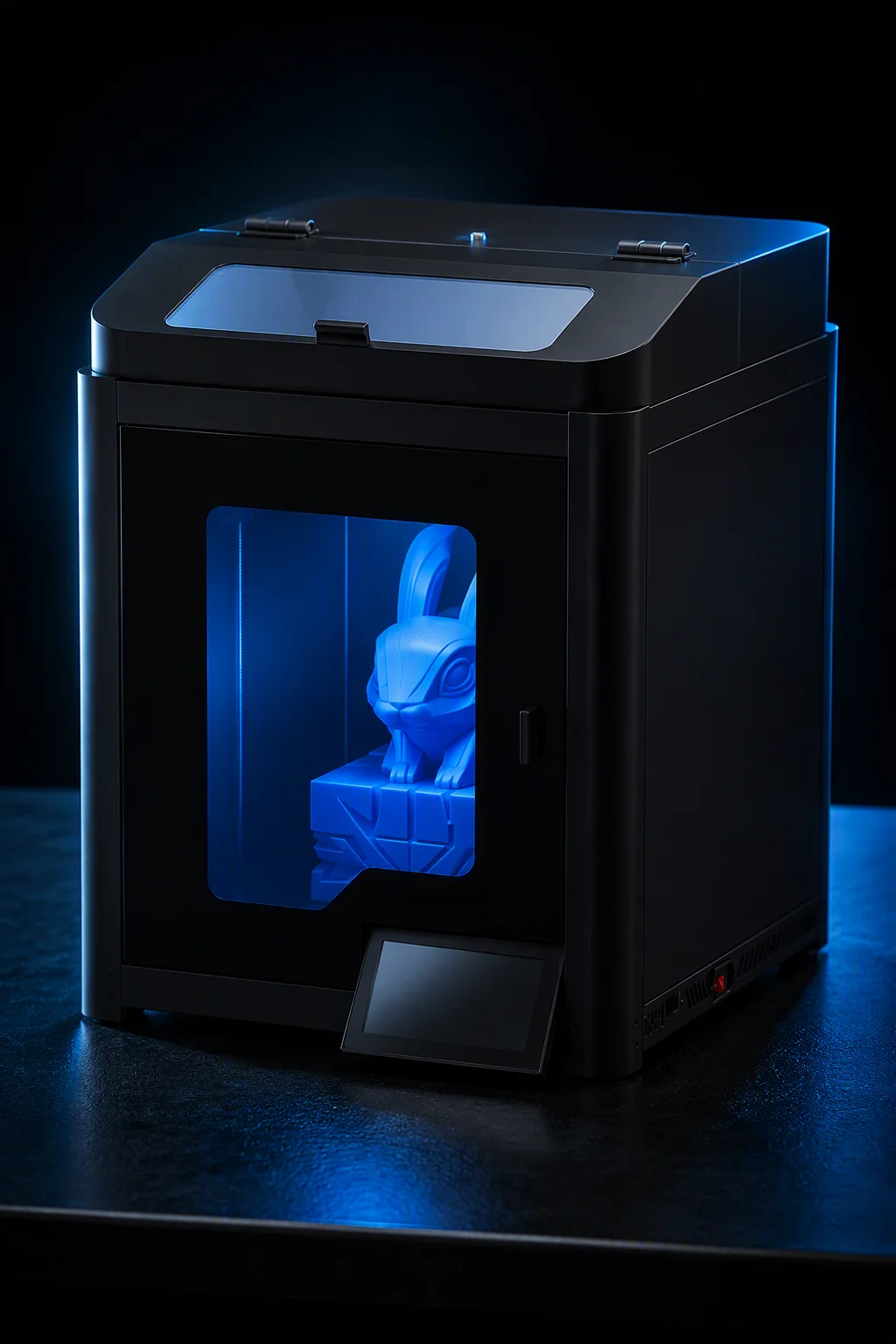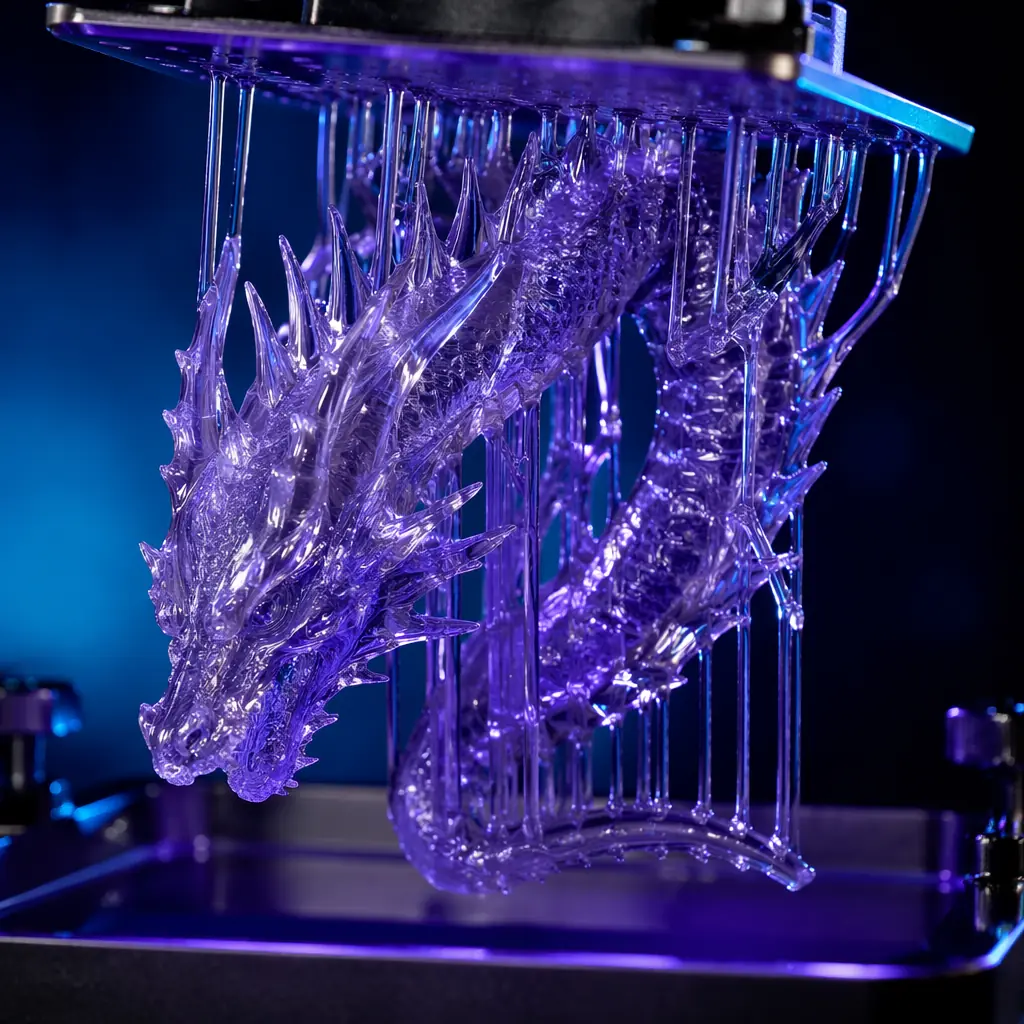
If your 3D printer distribution business is built entirely on FDM, you are leaving margin on the table — and ceding a growing market segment to competitors who understand that resin is not just another technology. It is a different business model. Higher consumables attachment. Higher average order value. And a customer who reorders resin every 4–6 weeks, not every 3–4 months like filament users.
The desktop resin market is projected to grow at 18% CAGR through 2028, outpacing FDM's 12% growth rate. Tabletop gaming alone drives an estimated $200M+ annual consumables market for resin and accessories. For distributors, the question is no longer whether to carry resin printers — it is how to build the product line profitably from shipment one.
Precise3D develops both FDM and resin platforms from our Shenzhen manufacturing base, giving us direct visibility into how distributors are building successful multi-technology portfolios. This guide distills what the top-performing distributors are doing in 2026.
The Resin Technology Landscape: SLA vs DLP vs MSLA
Not all resin printers are created equal. The technology choice directly affects your product positioning, price point, and target customer. Here is the landscape as it stands in mid-2026:
MSLA dominates the consumer segment for a simple reason: it delivers the best resolution-per-dollar ratio by a wide margin. A $300 MSLA printer regularly produces parts indistinguishable from a $3,000 SLA machine from five years ago. For distributors entering resin today, MSLA is the only sensible starting point. DLP and laser-SLA are niche plays for dental labs and engineering firms — valuable segments, but not where you build volume.
Our earlier FDM vs Resin comparison covers the broader portfolio strategy decision between the two technology families. This guide focuses exclusively on executing within the resin category.
The Consumables Model: Why Resin Is Different
The single most important insight for resin distribution is this: the printer sale is the appetizer. The consumables are the main course.
An FDM customer buys a printer and $40 worth of filament — and that filament lasts 2–4 months. A resin customer buys a printer and immediately needs:
- Resin (1 kg per month, minimum): $25–$40/kg for standard resin, up to $150/kg for specialty resins
- Isopropyl alcohol or water-washable solution: $15–$25/month
- Nitrile gloves: $10–$20 per 100-pack, used at ~3 pairs per print session
- FEP/PFA release film: $8–$15, replaced every 40–60 prints
A single resin printer customer generates $400–$600 per year in recurring consumables revenue — roughly 2–3× the initial printer MSRP. For a distributor with 500 active resin printer customers, that is a $200,000–$300,000 annual consumables business that grows with every printer sold.
This model changes your inventory strategy. Ordering resin printers without an accompanying consumables inventory commitment is the equivalent of selling coffee machines without stocking pods. Our engineering filaments guide covers the FDM consumables parallel — and the same stocking logic applies with even higher attachment rates for resin.
Who Buys Resin Printers? Customer Segmentation
Resin customers are not "FDM customers who want more detail." They are distinct segments with distinct buying triggers, price sensitivities, and support requirements. Understanding these segments determines which SKUs you stock and how you market them:
Start with tabletop gaming and general hobbyist. For distributors evaluating this area, our resin types guide covers it in depth. These two segments represent approximately 65% of the addressable resin market and have the lowest customer acquisition cost. Entry-level MSLA printers in the $200–$350 range dominate here. Once you have established inventory velocity in these segments, layer in the higher-margin jewelry and dental verticals with specialty resins and premium machines.
The engineering prototyping segment is particularly interesting for distributors with an existing FDM customer base. Many engineering teams run FDM for functional prototypes and resin for cosmetic/showcase models — capturing both sides of the workflow from the same customer multiplies your average revenue per account.
Resin Types: Building Your Consumables Portfolio
The consumables catalog is where resin distribution margin lives. Unlike filament, where PLA dominates 80%+ of volume, the resin market fragments across distinct chemistries, each serving a specific application. Your consumables strategy should mirror your printer SKU strategy:
The water-washable segment deserves special attention. By eliminating the need for IPA — which is regulated, flammable, and a shipping hazard in many jurisdictions — water-washable resins reduce the barrier to entry for first-time resin users. They now account for an estimated 25% of consumer resin sales For distributors evaluating this area, our resin troubleshooting guide covers it in depth. in North America and are growing faster than standard resin. Stock water-washable in your launch assortment alongside standard gray — it will be your second-best-selling SKU.
Safety, Compliance, and Customer Education
Resin printers carry a higher customer education burden than FDM. Uncured resin is a skin irritant and sensitizer. Improper disposal contaminates water systems. These are not hypothetical concerns — they generate the majority of negative reviews and customer service tickets for resin products.
Your product listing, quick-start guide, and customer onboarding materials must address these points explicitly:
- PPE requirements: Nitrile gloves (not latex — resin penetrates latex) and eye protection for every print session
- Ventilation: Resin printers should operate in a well-ventilated space. Carbon filter accessories reduce VOCs by approximately 60–70%
- Curing: Prints are only partially cured off the build plate. A UV curing station (sold as an accessory — additional revenue) completes the process
- Disposal: Liquid resin must never be poured down drains. Cure residual resin in sunlight or UV station, then dispose as solid waste
Distributors who invest in customer education see measurably lower return rates and higher repeat consumables purchases. Bundle a $20 accessory kit (gloves + microfiber cloth + funnel + filters) with each printer — it costs you $8 landed and prevents $80 in support tickets. See our distributor maintenance guide for more on reducing post-sale support costs.
Inventory Strategy: First-Container Decisions
Your first resin container order sets the template for every subsequent shipment. Getting the mix right means balancing printer units against consumables — because a container of printers with no resin to sell alongside them is a container of lost attachment revenue.
Recommended first-container allocation (by value):
- 60% printers: Entry-level MSLA (70% of printer mix) + mid-range MSLA (30% of printer mix)
- 25% resin consumables: Standard gray (50%) + water-washable (30%) + ABS-like (20%)
- 10% accessories: UV curing stations, FEP film 5-packs, build plate spares
- 5% PPE/safety kits: Gloves, microfiber cloths, silicone funnels
This mix generates immediate consumables attachment on every printer sale and establishes the recurring revenue stream from month one. A distributor who ships printers-only in their first container leaves an estimated $6,000–$10,000 in consumables revenue For distributors evaluating this area, our water-washable resin margins guide covers it in depth. on the table within the first 90 days — revenue that goes to Amazon or a competitor instead.
Precise3D offers co-packed starter kits For distributors evaluating this area, our SLA vs DLP vs MSLA guide covers it in depth. that bundle the printer, a 1 kg resin bottle, FEP film, gloves, and a funnel into a single carton. Your customer opens the box and prints within 20 minutes — no accessory shopping required. This dramatically improves first-print success rates and reduces "where do I buy resin?" support inquiries by an estimated 40%.
The Revenue Math: A Real Distributor Scenario
Let us put concrete numbers on the model. Assume a distributor with a modest initial commitment:
Year 2: you have not sold another printer — your existing 100 customers generate another $21,600 in consumables profit with zero acquisition cost. This is the compounding economics that make resin distribution structurally more profitable than FDM-only models.
Partnering with an OEM That Understands Resin
Not all Shenzhen manufacturers treat resin with the seriousness it deserves. Look for these signals in a potential OEM partner:
- They design and manufacture their own optical systems — not just assemble open-source MSLA kits from commodity components
- They offer co-packed starter kits as a standard SKU, not a custom request
- Their resin formulation is developed in-house or through a long-term exclusive supplier relationship — consistent resin chemistry across batches is critical for print repeatability
- They provide resin SDS (Safety Data Sheets) and TDS (Technical Data Sheets) in English for every SKU — non-negotiable for customs and retail compliance
Precise3D's R-Series resin printers are designed alongside our F-Series FDM machines at our Shenzhen facility, sharing common electronic architectures that reduce your technical training overhead. Our resin formulation partner supplies batch-certified resins For distributors evaluating this area, our FDM vs resin guide covers it in depth. with full traceability, and every R-Series printer ships with a USDA-certified bio-based standard resin as the starter consumable.
For distributors ready to build a resin product line, the 2026 window is open — the technology has matured, MSLA has commoditized the hardware to accessible price points, and the consumables business model is proven. The distributors who establish their resin supply chain now will own the customer relationships that compound for years. For the full portfolio picture, revisit our FDM vs Resin strategy comparison and our OEM evaluation framework.
Reviewed by the Precise3D engineering & OEM team. Compliance files that accompany the catalog are auditable at the certification register.
Start Your Resin Line
Launch a Profitable Resin Product Portfolio
Get spec sheets, sample prints, and a customized first-container proposal for the Precise3D R-Series. Co-packed starter kits available for qualifying distributors.