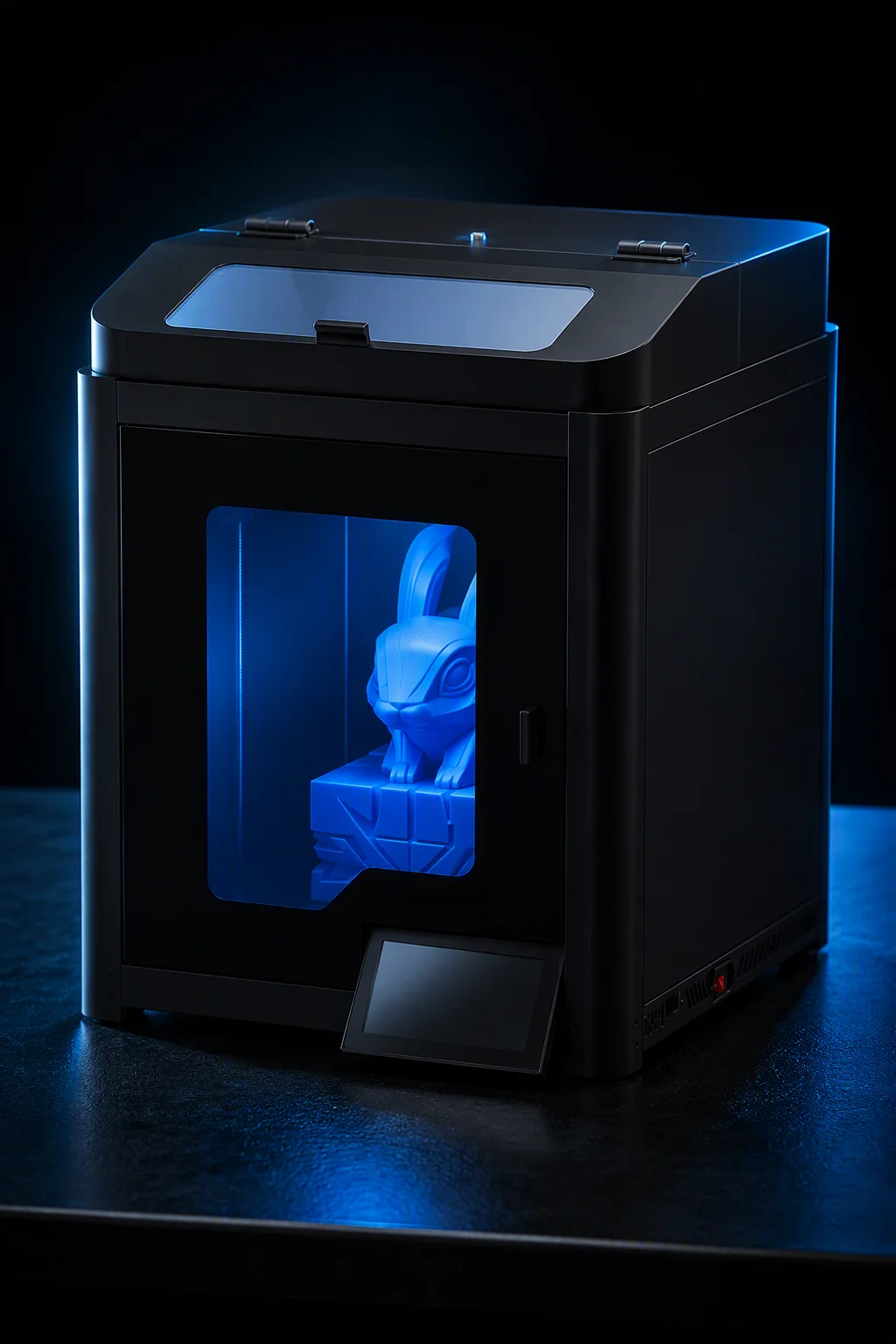
Ask any 3D printer distributor what their #1 stocking mistake was in their first year, and the answer is almost always the same: they bought too many mid-sized printers and not enough of the extremes. The 220×220×250mm "Ender 3 class" machine is the most crowded segment on the market — and the one where margins are thinnest. Meanwhile, compact 180mm machines for education buyers and large-format 350mm+ printers for professionals consistently deliver higher margins and face less competition.
Build volume isn't just a specification — it's a market segmentation tool. Each size category maps to a distinct customer profile with different willingness-to-pay, purchase frequency, and channel behavior. This guide breaks down the four build volume tiers, their economics, and how to structure a product line that captures demand across the full spectrum.
The Four Build Volume Tiers and Who Buys Them
Consumer and prosumer 3D printers cluster into four natural build volume bands — each serving a distinct buyer with different expectations around price, feature set, and use case:
Compact (180mm class):
The education and STEM segment. These machines sell in volume to schools, libraries, and coding academies. The buyer values safety certifications, enclosed chambers, and simplicity over raw capability. Margins are moderate (35-45%), but the real value is in institutional repeat orders — a single school district often buys 20-40 units at a time. This segment has the highest customer lifetime value of any tier because educators reorder the same SKU for years. A distributor who locks in a regional education contract typically sees 85%+ annual renewal rates.

Standard (220mm class):
The volume segment — and the most dangerous. This is where CoreXY and bedslinger architectures compete head-to-head, and where price wars are fiercest. Distributor margins here are thin (25-35%) and unit economics depend entirely on volume. The standard buyer is a first-time hobbyist who shops by price first, feature list second. Every distributor needs this tier — but you shouldn't build your business on it. Successful distributors use the 220mm class as a door-opener, then upsell buyers to the Plus tier on the second purchase. Retention data from our partner network shows that 38% of 220mm buyers upgrade to a 300mm+ machine within 18 months — capturing that upgrade path is where the real margin lives.
Plus (300mm class):
The sweet spot for distributor margins. The 300×300×350mm format is large enough for cosplay helmets, prototyping functional parts, and small-batch production — but still fits on a standard desk. Buyers here are enthusiasts who have outgrown their first printer and professionals who need reliability. They comparison-shop on features, not just price, which protects your margin. Typical distributor margin: 40-55%. This tier also has the strongest attachment rate for high-margin consumables (engineering filaments, specialty build plates).

Large Format (400mm+):
The premium tier. These machines print life-size props, furniture components, and industrial jigs in a single piece — eliminating the need for splitting and gluing. Unit volumes are low (a distributor might sell 5-10 per month vs. 100+ Standards), but per-unit profit is highest: $120-200 margin per machine at typical distributor pricing. The buyer is a professional or serious hobbyist — print farm operators, prop makers, engineering firms. They value enclosed chambers, dual Z-axis, and filament runout sensors. Support requirements are higher (these buyers call when something goes wrong), so don't stock large-format unless you have after-sales infrastructure in place.
Regional Build Volume Preferences: Not All Markets Want the Same Size
One of the most consistent patterns we see across our 200+ distributor network is that build volume preference varies dramatically by region — and ignoring these differences is a fast path to dead inventory:
North America stands out as the only region where the 300mm Plus tier outsells the 220mm Standard. American buyers consistently choose larger build volumes even when it means spending 60-80% more. If you're distributing in the US or Canada, your product line should be heavy on 300mm and 400mm machines — a 50/30/15/5 split (Plus/Standard/Large/Compact) outperforms the global average.
European distributors face the opposite dynamic.
Smaller living spaces mean a 400mm printer is a hard sell for a hobbyist in a Munich apartment. The 220mm Standard dominates, but the 180mm Compact tier is surprisingly strong — driven by school procurement programs that value desk footprint, safety certifications, and low noise. If you distribute in Europe, your inventory should lean 40/35/20/5 (Standard/Compact/Plus/Large). Crucially, European Compact buyers demand CE certification and RoHS compliance — budget compact machines without these marks are a non-starter.
How Build Volume Affects Your Shipping and Inventory Economics
Build volume doesn't just determine which customers you attract — it directly shapes your logistics costs. A 400mm printer occupies roughly 3.2× the carton volume of a 220mm machine. At typical FCL (full container load) rates from Shenzhen, this translates to:
These numbers have real strategic implications. A mixed container is almost always more profitable than a single-SKU container — filling the bottom layer with Compact units and the top with Standards increases total container value by 15-22% compared to shipping Standards alone. For a deeper dive into container optimization, see our complete shipping and logistics guide.
Warehouse space is the hidden cost most new distributors underestimate. A pallet of Large Format printers consumes nearly 4× the cubic meters of a Compact pallet. If you're operating a 200m² warehouse, a 50/30/15/5 inventory mix consumes roughly 65m² of floor space — leaving room for parts and consumables without needing expansion. Flip that to 20/20/30/30 and you'll need 110m² for the same unit count, potentially forcing a costly warehouse upgrade.
The Margin Stack: Why Bigger Isn't Always Better
Conventional wisdom says "sell the biggest printer for the highest margin." The data tells a more nuanced story:

Per-unit dollar margin peaks at the Large Format tier — a $400-800 FOB printer with 40% distributor margin yields $160-320 per sale. But Large Format also carries the highest support burden, slowest inventory turns (often 45-60 days vs. 14-21 for Standard), and the largest working capital requirement.
Margin per cubic meter of warehouse space peaks at the Plus tier.
A 300mm printer generates roughly $75-110 in margin while occupying 0.185m² of floor space (stacked 2-high). A 400mm printer generates $160-320 but occupies 0.320m² in the same configuration. The Plus tier delivers ~$450/m² in monthly margin vs. ~$350/m² for Large Format — and the Plus machine turns inventory 2-3× faster.
The Compact tier is a volume play with a kicker.
Per-unit margin is the lowest (~$32-54), but these machines sell in institutional quantities and have the highest consumables attachment rate. Education buyers who purchase 30 Compact printers almost always order filament, spare nozzles, and build plates from the same supplier — generating an additional $15-25/unit/year in recurring consumables revenue. Factor in consumables and the Compact tier's effective margin over 3 years rivals the Plus tier.
For a complete analysis of distributor pricing and margin strategy across all product categories, see our dedicated pricing guide.
Recommended Product Line Configurations by Distributor Type
There is no single "right" build volume mix. The optimal configuration depends on your channel strategy, storage capacity, and target customer profile. Here are three proven configurations from our partner network:
"Volume Retailer" is the most common configuration for new distributors selling on marketplaces. The 50% Standard allocation keeps inventory turning fast (14-18 day cycle), while the 30% Plus allocation captures higher-margin sales without consuming too much warehouse space. Start here if you're a generalist with no specific market niche.
"Premium Specialist" works for distributors who invest in showroom space and knowledgeable sales staff. The heavy Plus/Large allocation means higher per-unit margins and a differentiated catalog, but it requires strong product knowledge to sell effectively. This configuration typically sees 50% higher average order value than the Volume Retailer mix.
"Education Partner" is a specialized play that succeeds when you have relationships with school procurement departments. The 40% Compact allocation supports bulk classroom orders, while the Standard and Plus units serve teacher personal purchases and school maker spaces. The key to this model is certification documentation — education buyers in Europe and North America demand full compliance paperwork before they'll issue a purchase order.

Building Your First Order: A Practical SKU Plan
If you're placing your first container order with an OEM partner, here is a battle-tested starting configuration that balances cash flow, warehouse utilization, and market coverage:
At typical distributor markups, this $24,400 FOB investment generates approximately $41,000-48,000 in retail revenue — a 70-97% gross margin on landed cost depending on your local pricing environment. The 140-unit mix fills roughly half a 20-foot container, leaving room for filament spools, spare parts, and build plates that generate recurring revenue with minimal additional shipping cost.
Once this initial mix proves out in your market (typically 2-3 sell-through cycles), adjust the ratios based on which tiers move fastest. The data from your first container is worth more than any industry benchmark — track sell-through time per SKU religiously and let your local market dictate the second order.
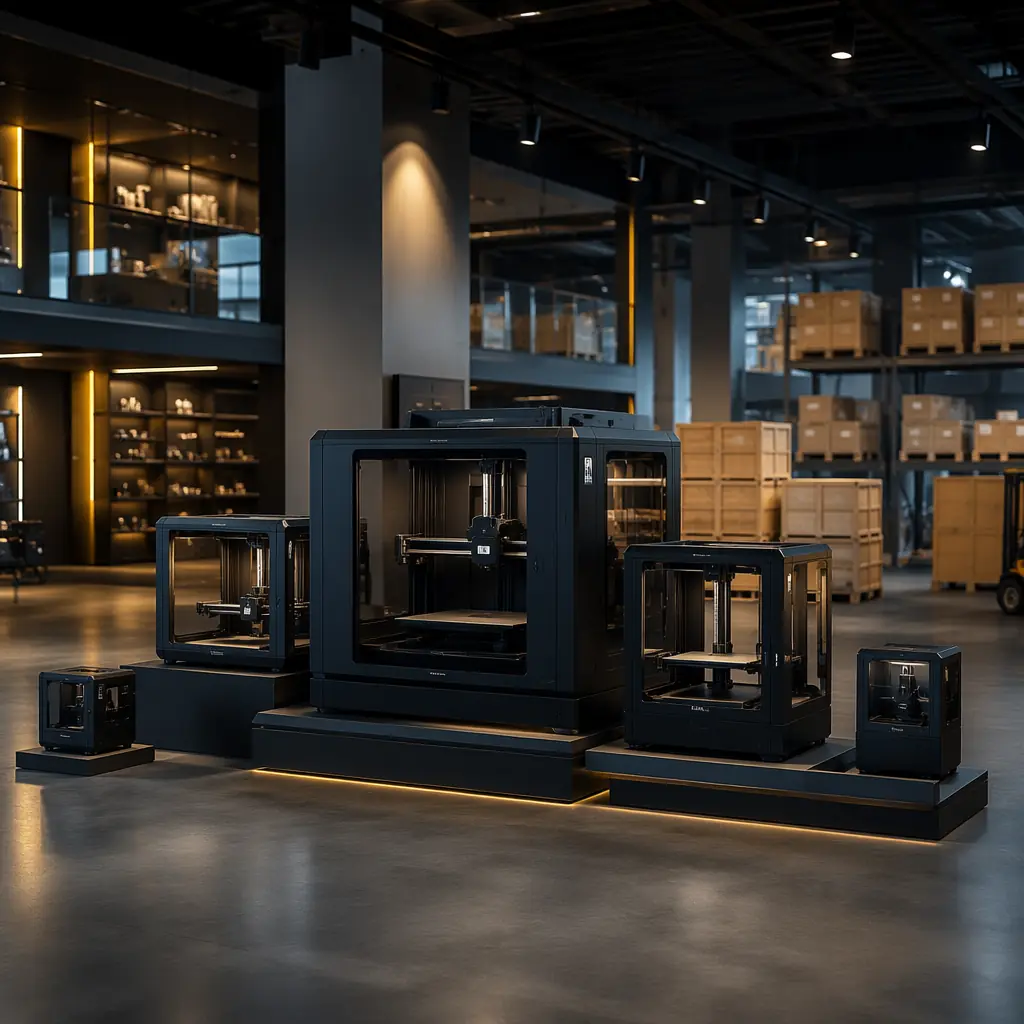
Reviewed by the Precise3D engineering & OEM team. Compliance files that accompany the catalog are auditable at the certification register.
Build Your Product Line
Get a Customized Build Volume Recommendation for Your Market
Tell us your target region and channel strategy. Our distribution team will provide a data-backed SKU plan with FOB pricing, container optimization, and projected margins — no commitment required.