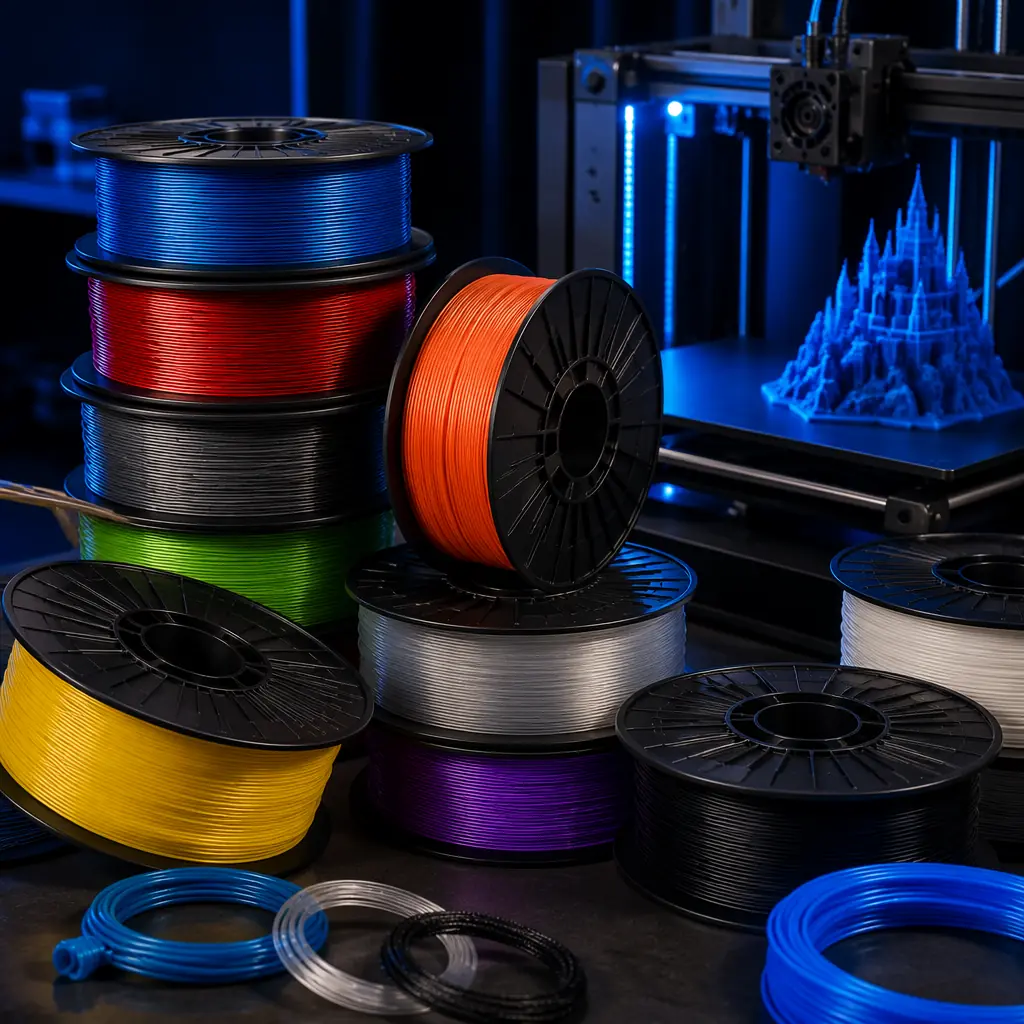
Here's a number that surprises most new 3D printer distributors: filament generates 2.7× more lifetime revenue per customer than the printer itself. A customer who buys a $300 printer will spend an average of $810 on filament over three years — and filament carries 50-70% gross margins compared to 25-40% on hardware. If your business plan treats filament as an afterthought, you're leaving the majority of your potential profit on the table.
But not all filament is created equal — and stocking the wrong materials in the wrong ratios is the fastest way to tie up working capital in spools that sit on shelves for months. This guide breaks down the four consumer-grade filament categories every distributor needs to understand: PLA, PETG, ABS, and TPU. We'll cover material properties, wholesale pricing, sell-through velocity by region, and the inventory ratios proven across our 200+ distributor network.
The Four Core Filaments at a Glance
Consumer 3D printing filament has consolidated around four materials that together represent over 92% of all spool sales globally. Each serves a distinct buyer segment with different price sensitivity, use case, and repeat-purchase behavior:
These four materials are the non-negotiable core of any filament inventory. Specialty materials like engineering-grade filaments (PA, PC, PEI) are higher-margin but much lower volume — treat them as a separate, premium SKU line that you build on top of this foundation.
PLA: The Volume King That Pays the Bills
PLA (Polylactic Acid) is the filament every distributor builds their business on.
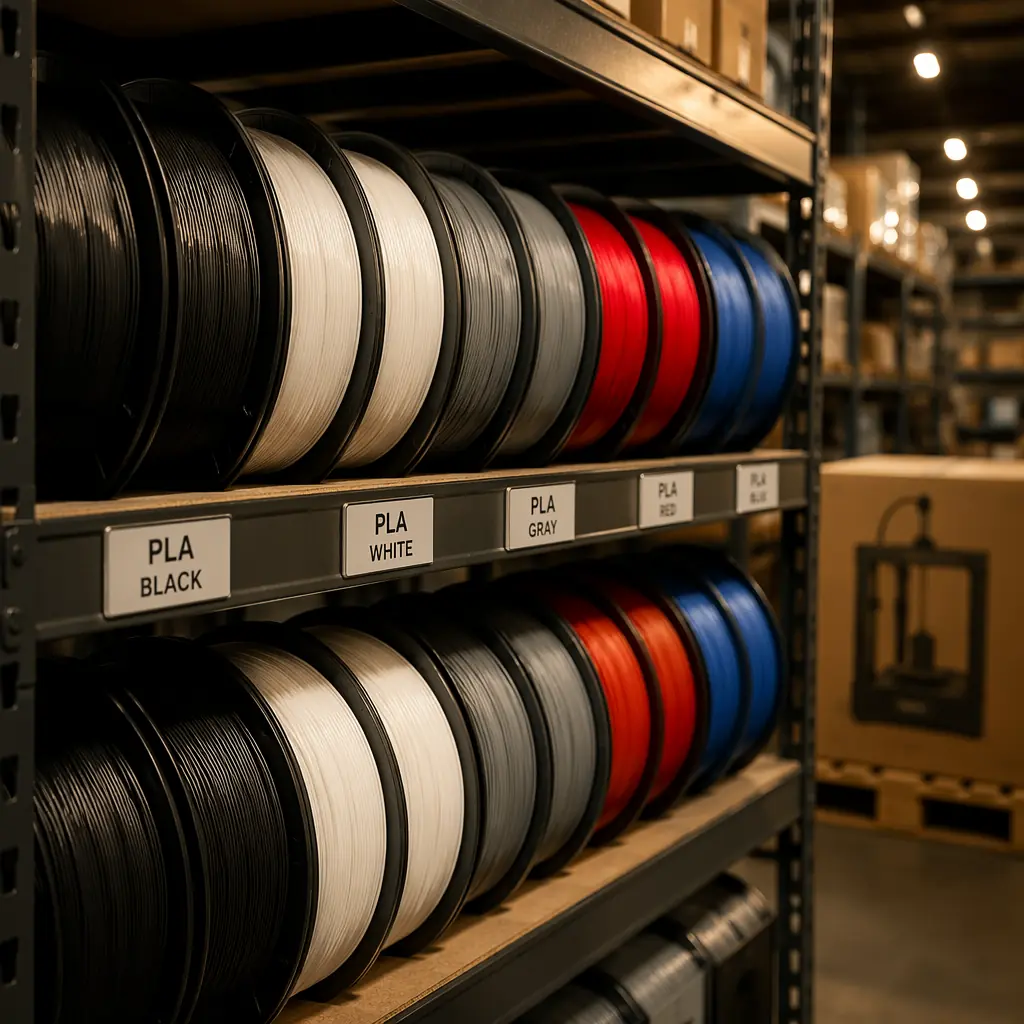
It represents nearly half of all spool sales globally, and for good reason: it prints at low temperatures on unheated beds, produces almost no warping, and comes in more colors and specialty variants (silk, matte, marble, wood-filled, glow-in-the-dark) than any other material. If a customer buys their first 3D printer, their first filament purchase is PLA roughly 85% of the time.
Wholesale economics:
At $3.50-$5.50/kg FOB from Shenzhen-based manufacturers, PLA offers the thinnest per-unit margin of the four core materials — typically 35-45% at retail. But what PLA lacks in per-spool profit, it makes up for in sheer velocity and repeat-purchase frequency. Our distributor data shows that PLA spools turn inventory in 7-12 days on average, compared to 18-25 days for PETG and 30-45 days for ABS. A single active customer buys 8-14 PLA spools per year.
Stocking strategy:
PLA should be 55-65% of your filament inventory by unit count. Within that allocation, 60% should be basic colors (black, white, gray) in 1kg spools, 25% should be color variety packs (red, blue, green, yellow, orange), and 15% should be specialty PLA variants (silk, matte, marble). The basic colors are your consistent sellers; the specialty variants are where you differentiate from competitors and capture higher margins (50-65% at retail for silk and matte finishes).
Regional note:
PLA dominance is universal, but the color mix varies. North American buyers strongly prefer matte and galaxy/silk variants (38% of PLA sales in specialty finishes). European buyers gravitate toward eco-branded PLA with sustainability messaging (recycled spools, bio-based packaging). Southeast Asian markets are more price-sensitive — basic colors at the lowest price point outsell specialty variants 4:1.
PETG: The Margin Workhorse for Functional Buyers
PETG (Polyethylene Terephthalate Glycol) is the highest-margin volume filament in the consumer market. It prints almost as easily as PLA — no enclosure required, minimal warping — but delivers mechanical properties closer to ABS: higher impact resistance, better layer adhesion, and temperature resistance up to 70-80°C versus PLA's 50-55°C. For customers printing functional parts, PETG is the default choice.
Wholesale economics:
PETG costs $4.50-$7.00/kg FOB, only slightly more than PLA, but commands retail prices 40-60% higher. A spool that costs you $5.50 wholesale reliably sells for $19-24 retail — a 71-77% gross margin. This is the best margin-to-velocity ratio of any filament in your catalog. PETG also has the strongest brand loyalty of any material: customers who find a PETG brand they trust rarely switch, making it an excellent private-label opportunity for distributors who want to build their own filament brand.

Stocking strategy:
PETG should be 20-25% of your filament inventory. The color palette is narrower than PLA — black, white, transparent, and gray cover 80% of PETG demand. Don't bother stocking PETG in 15 colors the way you would with PLA; 6-8 SKUs is sufficient. Transparent/natural PETG is a unique selling point that PLA can't match — it sells consistently to customers making light diffusers, lamp shades, and functional enclosures.
The PETG growth story:
PETG market share has grown from ~14% in 2023 to ~22% in 2026, driven by two trends. First, the rise of high-speed CoreXY printers has made PETG printing faster and more reliable. Second, the explosion of functional 3D printing — drone parts, GoPro mounts, workshop jigs — has created a customer base that needs material properties PLA can't deliver but doesn't want the hassle of an enclosed printer for ABS. Every distributor should be increasing their PETG allocation year-over-year; the 22% market share figure is still climbing.
ABS: The Niche That Won't Die (and Probably Shouldn't)
ABS (Acrylonitrile Butadiene Styrene) is the legacy workhorse of 3D printing — and the most misunderstood filament in a distributor's catalog. It dominated the early RepRap era because it was cheap, strong, and acetone-smoothable. But it requires an enclosed chamber, heated bed at 90-110°C, and emits styrene fumes during printing. As PETG has improved and enclosed CoreXY printers have become more affordable, ABS has steadily lost market share to easier-to-print alternatives.
So why stock it at all? Because ABS still owns three niches that no other consumer filament can touch: (1) acetone vapor smoothing for injection-molded surface finishes, (2) high-temperature applications up to 98°C where PETG softens, and (3) the automotive under-hood and Voron printer communities that are deeply committed to the material. These buyers are not price-sensitive — they'll pay $22-28/spool for quality ABS — and they are fiercely brand-loyal once they find a supplier whose filament prints consistently.
Stocking strategy:
ABS should be 8-12% of your filament inventory. Stock black and white only — the ABS color market is minimal. Unlike PLA and PETG, ABS is not a product you expand; it's a product you carry to capture specific customer segments who would otherwise buy from a competitor. One ABS spool sale often leads to a customer who also buys PLA and PETG from you, making ABS a strategic loss leader for customer acquisition in the functional-printing community.

Supplier quality matters enormously for ABS.
Cheap ABS warps, delaminates, and produces dimensional inaccuracy — and the ABS buyer community is vocal about bad filament on forums and Reddit. Source ABS from manufacturers with proven diameter consistency (±0.03mm or better) and vacuum-sealed packaging with desiccant. The $1.00-1.50/kg premium for quality ABS over budget ABS is the best money you'll spend on customer retention in this category.
TPU: The High-Margin Specialty That Every Distributor Should Carry
TPU (Thermoplastic Polyurethane) is the highest per-spool margin in consumer filament — and the most underserved market segment. At $8-13/kg wholesale and $28-38 retail, TPU delivers 65-72% gross margins on every spool sold. The catch? It represents only ~5% of the market, and printing with flexible filament is genuinely harder than rigid materials. TPU requires a direct-drive extruder (Bowden setups struggle with flexible filament), slow print speeds (20-40mm/s), and careful retraction tuning.
The TPU buyer is specific and valuable:
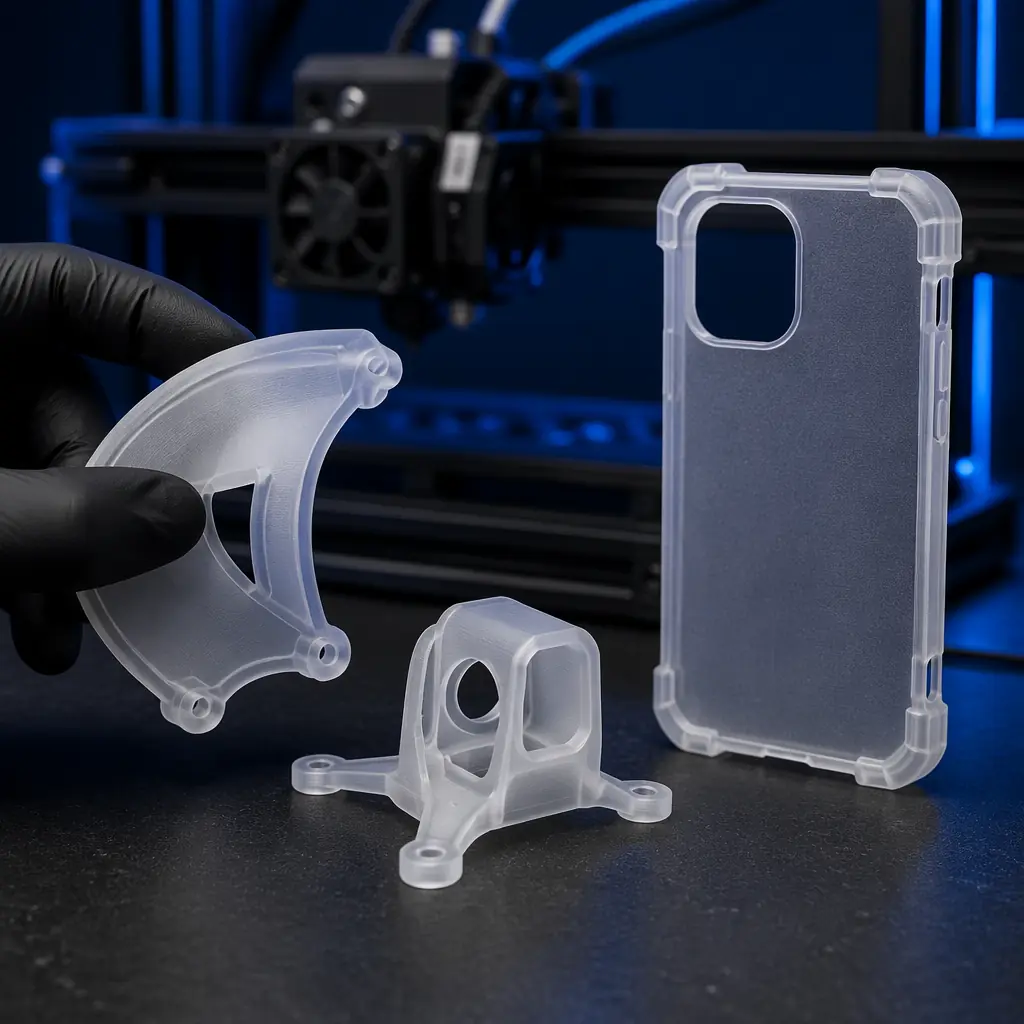
drone racing pilots printing camera mounts and antenna holders, phone case designers, cosplay armor makers who need flexible joint components, and industrial users printing gaskets and vibration dampeners. These buyers are technically sophisticated, buy 3-5 spools at a time, and have above-average loyalty because TPU filament quality varies dramatically between manufacturers. A distributor who stocks reliable TPU captures a customer who is unlikely to price-shop on Amazon.
Stocking strategy:
TPU should be 5-8% of your filament inventory. Two hardness levels cover 90% of demand: Shore 95A (firm-flexible, prints on most direct-drive printers) and Shore 85A (softer, for gaskets and wearable applications). Stock black and transparent only. TPU is the one filament where you should not compete on price — the customer who buys $8/kg budget TPU will have a terrible printing experience and blame you. Source quality TPU at $11-13/kg wholesale and position it as a premium product. The market will pay for reliability.
Regional Demand: What Sells Where
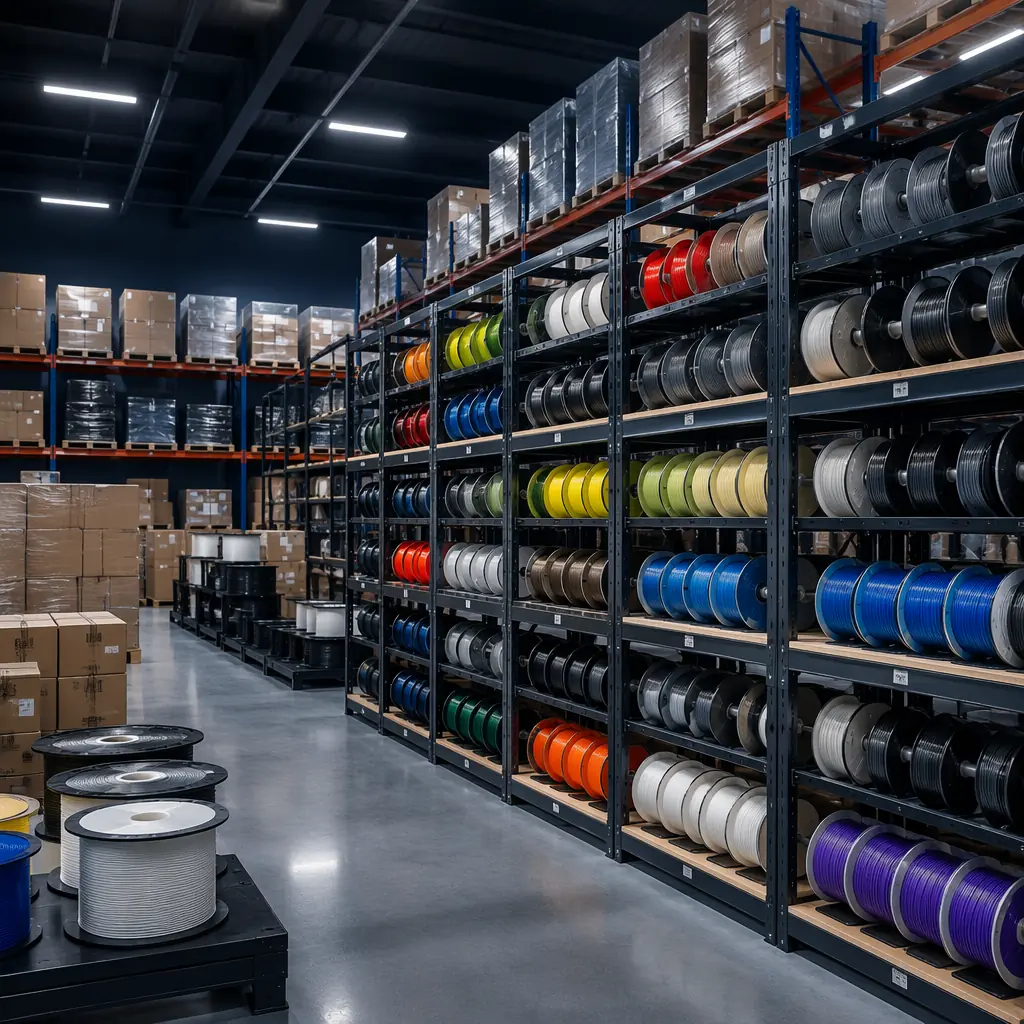
Filament demand isn't uniform across markets. Distributors who stock a one-size-fits-all inventory end up with PETG sitting on shelves in Southeast Asia and PLA specialty variants going unsold in the Middle East. Here's what our distributor data shows by region:
North America drives the global PETG trend.
US and Canadian buyers adopted PETG earlier and more aggressively than any other region. If you distribute in North America, your filament inventory should be closer to 42/28/8/7 (PLA/PETG/ABS/TPU) rather than the global average of 48/22/8/5. North American customers also have the highest willingness to pay for specialty PLA variants — matte, dual-color silk, and carbon-fiber-filled PLA all sell at meaningful premiums here.
Europe's eco-consciousness creates pricing power.
Western European buyers willingly pay 15-25% more for PLA filament marketed as "bio-based," "recycled spool," or "carbon-neutral shipping." This is not a negligible premium — a €18.99 eco-PLA spool carries €3-4 more margin than a standard €14.99 spool, with nearly identical wholesale cost. European distributors who don't offer an eco filament line are leaving €3-4/spool on the table for 20-30% of their PLA volume.
Filament Pricing and Margin Strategy
Filament pricing follows a predictable ladder that rewards distributors who understand the psychology of each tier:
The critical insight in this table is that specialty PLA and standard PETG deliver nearly identical margin percentages to TPU — but with 4-6× the sell-through velocity. A distributor who allocates $5,000 to PETG inventory will turn that capital 15-18 times per year. The same $5,000 in TPU might turn 4-6 times. Higher velocity at similar margin percentage means dramatically higher return on inventory investment. This is why PETG, not TPU, is the real margin engine of a filament catalog.
For guidance on structuring your overall pricing strategy across hardware and consumables, see our dedicated pricing guide — the interplay between printer margins and filament attach rates is where the most profitable distributors differentiate themselves.
Your First Filament Order: A Battle-Tested SKU Plan
If you're launching a filament line alongside your printer catalog, here is a starting configuration that covers 95% of customer demand with minimal dead stock risk:
At retail pricing, this $3,530 FOB filament order generates approximately $10,500-12,500 in revenue — a 3× return on cost at conservative pricing. The 690 spools fit on three standard pallets and can be consolidated with a printer shipment in the same container, absorbing minimal additional shipping cost when combined with a hardware order.
Scale this up as you validate sell-through.
The first order is about testing which SKUs move fastest in your specific market. Track sell-through data by SKU religiously for the first 60 days. The numbers above are a starting point — your second and third orders should be data-driven, doubling down on the winners and cutting the slow movers. A distributor who optimizes their filament mix based on actual sell-through data rather than industry averages will outperform their market by 20-30% on inventory turnover within 12 months.
Private Label vs. Branded: When to Build Your Own Filament Line
This is the strategic question that separates commodity filament resellers from distributors who build durable competitive advantages. Branded filament (eSun, Overture, Polymaker) comes with brand recognition, existing customer trust, and zero marketing investment from you — but margins are compressed to 30-40% and you're competing on price with every other reseller. Private-label filament — filament manufactured to your specifications with your brand on the spool — delivers 65-80% margins and builds long-term brand equity, but requires a minimum order quantity (typically 500-1,000kg per SKU) and investment in packaging design and quality control.
Our recommendation: start with a mix, and transition aggressively toward private label. Launch with branded PLA and PETG to build a customer base and validate demand. Simultaneously, place a private-label order for your top 3-4 best-selling PLA colors (black, white, gray, and one specialty). Once those private-label SKUs prove themselves on the shelf, expand to PETG and phase out the branded equivalents. Distributors in our network who completed this transition saw average margin improvement of 18-22 percentage points on filament — from ~48% blended margin with branded filament to ~68% with 70%+ private-label mix.
For a complete framework on building a differentiated product portfolio that avoids pure price competition, see our portfolio strategy guide.

Reviewed by the Precise3D engineering & OEM team. Compliance files that accompany the catalog are auditable at the certification register.
Stock Your Filament Line
Get a Customized Filament SKU Plan for Your Market
Tell us your target region and monthly printer volume. Our team will provide a data-backed filament inventory plan with wholesale pricing, container consolidation options, and private-label feasibility analysis — no commitment required.