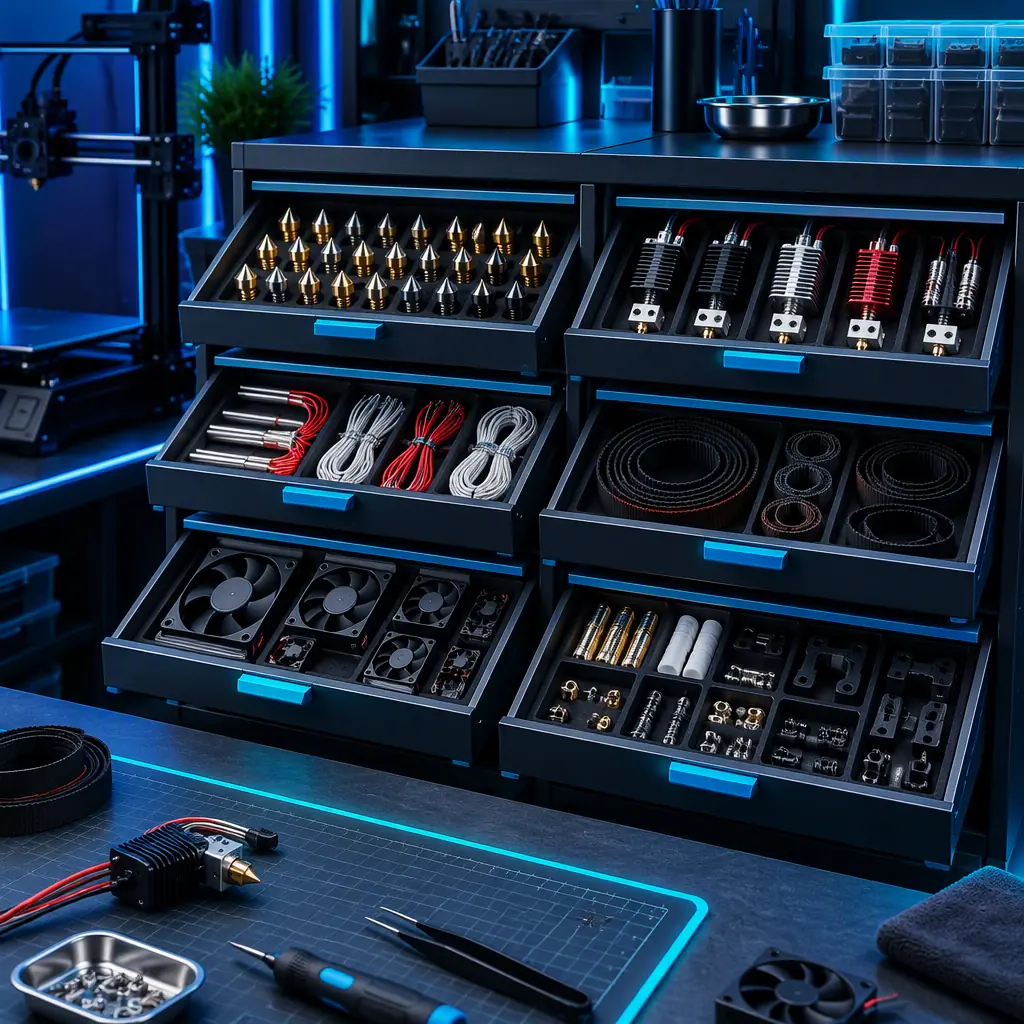
The Difference Between a Spares Catalogue and a Spares Kit
A catalogue lists everything a machine might ever need. A kit answers a narrower and more useful question: what has to be on the shelf for this specific model, in this specific customer's duty cycle, so that a breakdown is a same-day event instead of a two-week one. Most distributors have the first and not the second, which is why their customers still wait on international orders for a part that costs less than the shipping.
Spares kit design is a stocking problem, and it is solved with the same logic any maintenance organisation uses: rank parts by the product of how often they fail and how much damage their absence causes, then stock to a target service level rather than to a feeling about what is likely to break.
For distributors this is one of the more durable revenue lines available. A well-designed kit converts a flat equipment sale into a recurring consumable relationship, and it removes the single biggest source of customer frustration in the installed base.
Ranking Parts by Criticality, Not by Price
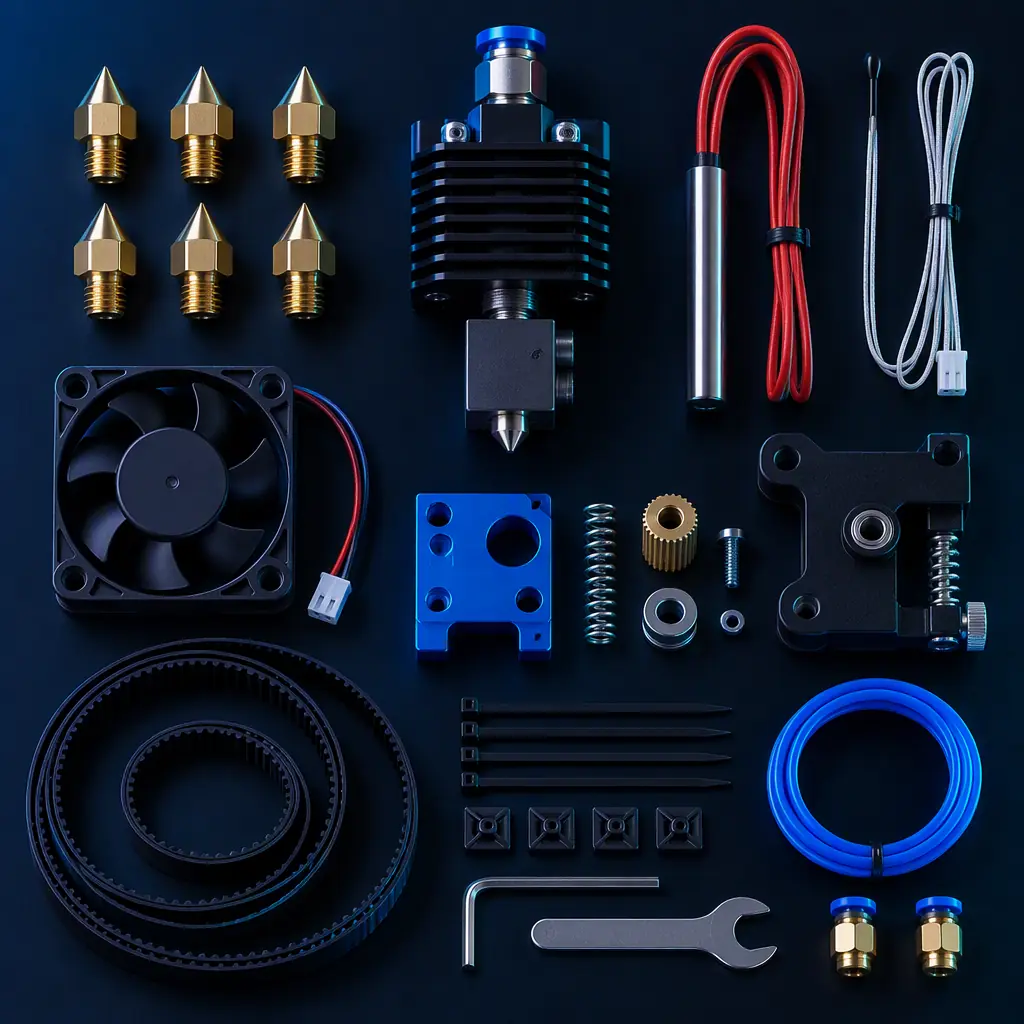
The instinct is to stock the expensive components because they feel important. The correct ranking ignores price and uses two measures: failure frequency and the cost of the machine being down while the part is sourced.
The pattern that emerges is consistent across fleets: the parts that stop a machine outright are rarely the expensive ones, and the expensive parts that would stop it are rarely the ones that fail. A kit built on the top five rows of that table covers the large majority of real breakdowns for a fraction of the inventory value of stocking mainboards.
What you're looking for: The answer names the parts that belong in the kit. If the list is long, the kit is a catalogue wearing a different label. If the list is empty, the service level is already adequate and the sale is a maintenance plan, not a parts package.
How Many of Each to Hold
Quantity is a service-level decision, not a guess. The two inputs are the expected failure rate over the replenishment period and the acceptable probability of running out.
A workable method for a distributor serving a known installed base:
- Estimate the fleet-wide failure count per part per quarter: number of machines of that model multiplied by observed failure rate for that part.
- Add a safety margin driven by lead time — a part arriving in three days needs less cover than one arriving in six weeks.
- Stock consumables by the box, not the piece. Nozzles and build sheets are predictable and cheap to hold in depth.
- Hold the cheap critical parts deeper than the expensive rare ones. A USD 30 hotend that stops a machine is worth holding in multiples.
- Review after every breakdown. A part that fails twice in a quarter moves up the ranking immediately.
The review step is what keeps a kit useful. Failure rates on a new model are estimated; six months of field data replaces the estimate with a number, and the kit should be rebuilt around it.

Tiering the Kit by Machine Duty Cycle
The same machine used for light prototyping and for production shifts has a different spares requirement. Tiering the offer matches it, and it gives the customer a visible upgrade path rather than a single take-it-or-leave-it package.
The consumables contract is the tier that compounds. It converts an unpredictable parts purchase into a predictable supply interval, which is better for the customer's planning and better for the distributor's cash flow than waiting to be called after a failure. The same logic underlies our consumables subscription guide.
Traceability: The Part of the Kit That Protects Everyone
A spares programme lives or dies on whether the parts that go into it are genuine and correctly specified. Counterfeit and mis-specified components are a real problem in this market, and a distributor who cannot demonstrate provenance carries the reputational risk when a substituted part destroys a customer's machine.
- Record the part number and source for every item in the kit, against the machine model it serves.
- Verify specifications, not just dimensions. A heater cartridge of the same physical size can differ in wattage and in connector thermal rating.
- Keep a revision mapping where a machine model has had more than one variant of a component across production runs.
- Document what was fitted on each service visit, so a later fault can be traced to the replacement rather than assumed.
The provenance discipline connects to a broader channel problem, because counterfeit and gray-market components often enter through exactly the parts channel a spares kit formalises. That topic is covered in our anti-counterfeit and parts authentication guide.
What you're looking for: If the answer requires reconstruction rather than a record, the kit is operationally useful but not defensible. Traceability is what allows a distributor to stand behind a repair, and it costs nothing beyond a log sheet.

Turning the Kit Into a Service Contract
A spares kit on its own is a stocked box. Wrapped in an agreement, it becomes a defined service level: parts held locally, a response time, a maintenance interval and a documented record. That transformation is commercial rather than technical, and it is where the recurring margin is.
The offer that works with most customers has three parts: the kit contents held at the distributor or at the customer's site, a scheduled inspection interval, and a stated resolution time for failures covered by the agreement. The interval matters because it makes the kit preventive rather than reactive — nozzles and build surfaces get replaced on a schedule instead of after a bad batch. That is the model set out in our maintenance plan guide and in our service level agreement guide.
The reliability figures that make the contract defensible come from the customer's own fleet, and the metrics worth agreeing on are covered in our reliability metrics guide. A distributor who can quote a measured mean time to repair for a machine model is selling something few competitors can match.
Precise3D on Serviceable Architecture
At Precise3D, spares strategy starts at the design stage. Our Pro X1 and OpenSource1 platforms use accessible hotend assemblies, field-replaceable motion components, standard-format fans and documented sensor mappings, so that a breakdown is a component swap rather than a factory return.
Every unit ships with CE LVD (EN 62368-1:2014+A11:2017) and RoHS (EU 2015/863) documentation, and our 3,500 sqm Shenzhen production network applies a documented control plan at incoming and outgoing QC. For distributors we supply the full spares mapping per platform — part numbers, specifications, and the replacement intervals that turn a stocked cabinet into a defined service level.
Reviewed by the Precise3D quality and engineering team. Failure frequencies, stocking quantities and service tiers described here are industry-typical examples provided for guidance and are not a specification for any particular machine. Build your own kit around observed field data for the models you actually service.
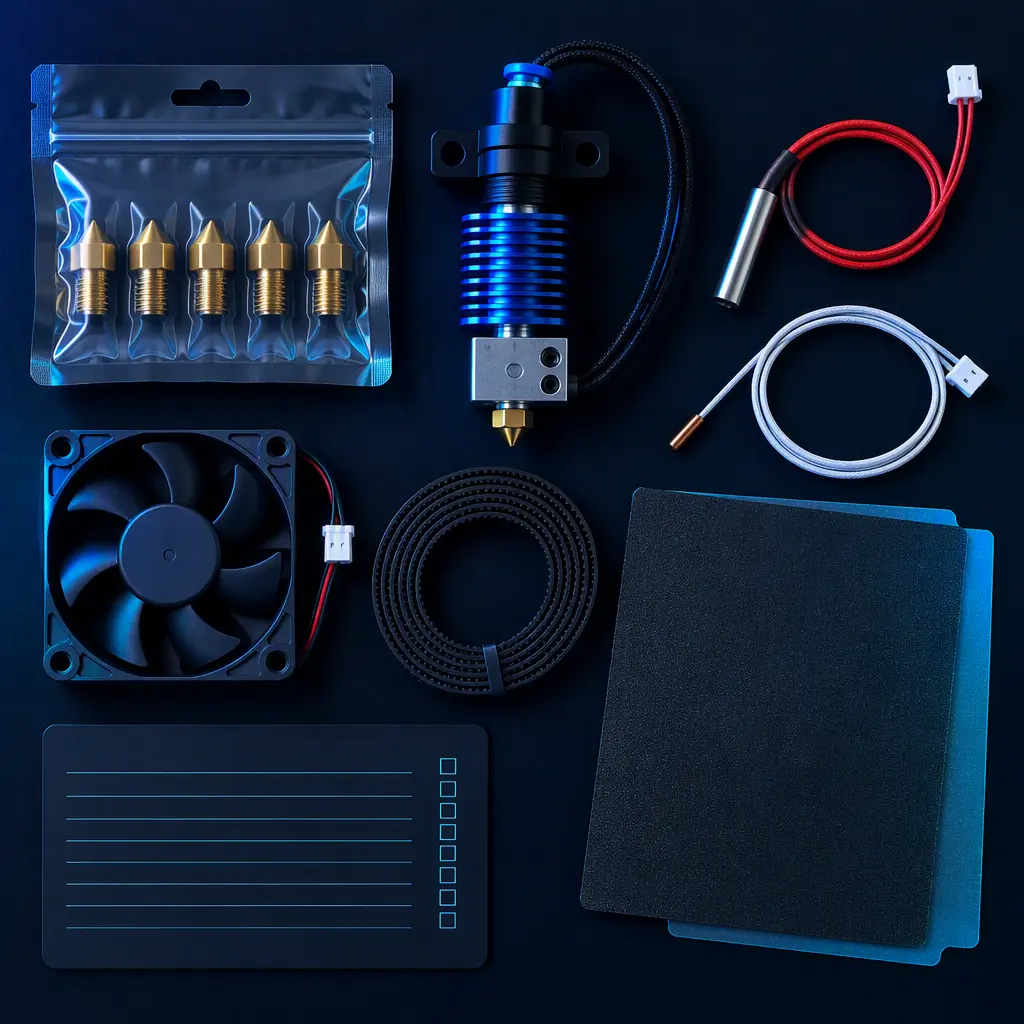
Designing a Spares Programme?
Want the Critical Spares Mapping for Each Platform?
Tell us which models are in your installed base and how hard they run. We will send the ranked critical spares list, the part numbers and specifications, and the replacement intervals that make a kit a service level instead of a shelf.