

Lead time is a chain, and a chain is only as fast as its slowest link. The reason buyers misjudge it is that they see only the two ends: they place an order and they receive a pallet. Everything between is invisible until it slips. The distributor's value is to make the middle visible, quote the link that is actually critical for this specific order, and then compress it.
Those segments run in a fixed order, and most of them can be partially overlapped. Knowing which can overlap is the difference between a six-week order and a ten-week one. For the commercial terms that sit alongside the timing, our Incoterms guide for 3D printer imports covers who carries the risk at each handover point.
Segment 1: Order Confirmation and Payment Clearing
Nothing starts until funds move or credit is confirmed. For a new buyer paying by telegraphic transfer this is typically 1-3 working days for the wire to clear, plus 1-2 days of internal PO and export-compliance review on the factory side. For an established buyer on terms, credit insurance or a documentary collection, the same step can take 5-10 days while the bank validates the instrument.
The lever here is payment method, not factory speed. A deposit against a proforma invoice with the balance before shipment starts production in 2-3 days. A full letter of credit adds days of bank scrutiny at both ends. Distributors who standardise on a deposit-plus-balance structure with their repeat customers consistently start production a week earlier than those running fresh LCs on every order. Our export payment and KYC guide covers how to run that structure without opening fraud exposure.
Segment 2: Factory Build and Quality Gate
Once payment clears, a standard-configuration order of a few hundred units is typically built in 10-20 working days. Two things extend it. First, customisation: a white-label enclosure, a custom nozzle package, a non-standard extruder, or firmware locked to a buyer's cloud platform adds engineering and revalidation, often doubling the build segment. Second, component availability: parts like high-quality linear rails, mainboards, and quality nozzles can carry their own 2-6 week lead time, and that is absorbed into the build window.
The lever is configuration discipline. A distributor who sells from a frozen catalogue configuration starts in the fast lane; one who allows per-order customisation on every unit will always be at the back. Where customisation is genuinely required, the fix is to pre-order the long-lead components against a forecast rather than against a signed PO. Our seasonal inventory planning guide covers how to time that buffer so it does not become dead stock.

Segment 3: Inspection and Documentation
A third-party inspection is where quality-assurance lead time lives, and it is almost always schedulable in parallel with the last days of the build. A basic pre-shipment inspection is booked 2-3 days out and completed in one site visit, producing a report within 48 hours. A full factory audit with a sample test-print, dimensional check, and functional run adds a week or more.
The lever is to book the inspector before the build finishes, using a provisional completion date. Distributors who wait until the last printer rolls off the line before calling the agency lose the 3-5 days the agency needs to slot the visit. The documentation set (commercial invoice, packing list, bill of lading instructions, certificate of origin, and any conformity evidence for the destination market) can be prepared during the build and released the moment goods are packed. Our shipping and logistics guide lists the document set per destination in full.
Segment 4: Freight Booking and Ocean Transit
This is the largest single fixed cost in the timeline and the one the buyer can least influence on a given order. A direct China-to-Europe or China-to-US container sailing takes 25-40 days on the water. Air freight cuts transit to 3-7 days at roughly 6-10 times the cost. The real lever is not speed but reliability of booking: during peak season, space on premium sailings tightens and a booking made late can slip a week or more.
The commercial decision is a cost-time trade. For a distributor selling a fleet rollout on a fixed customer date, air-freighting the first batch to start installation while the balance sails is often worth the premium, because the customer starts making money with the printers while the ocean container is still at sea. For a stock replenishment order with no fixed date, sea freight is correct every time. Our shipping guide and the temperature-controlled shipping guide cover when each mode is right.
Segment 5: Customs Clearance and Last-Mile
Customs adds 3-10 days when the paperwork is clean and can add far more when it is not. The variables that cause delay are almost always documentation: an HS code that is challenged, a missing certificate of origin that costs a duty preference, or a conformity document the destination market requires that the shipment does not carry. Duties and VAT assessment adds a day or two once the entry is accepted.
The lever is to have the destination requirement mapped before the goods ship, not after they arrive. A distributor who knows their market's conformity and labelling rules ships completed goods; one who discovers them at the port pays for storage while an engineer who is not in the country tries to fix a document. Last-mile delivery from port to the customer's site is then 1-3 days domestic, and it is the one segment the customer can watch in real time.
What you want to hear: for a hard date, either prior import experience or a willingness to let the distributor own the conformity paperwork. If the customer has a hard date and no import history, split the order and air-freight the first batch so the rollout can start. A customer with no fixed date and prior history is safe on an all-sea-freight, standard-configuration order with a quoted 6-9 week door-to-door window.
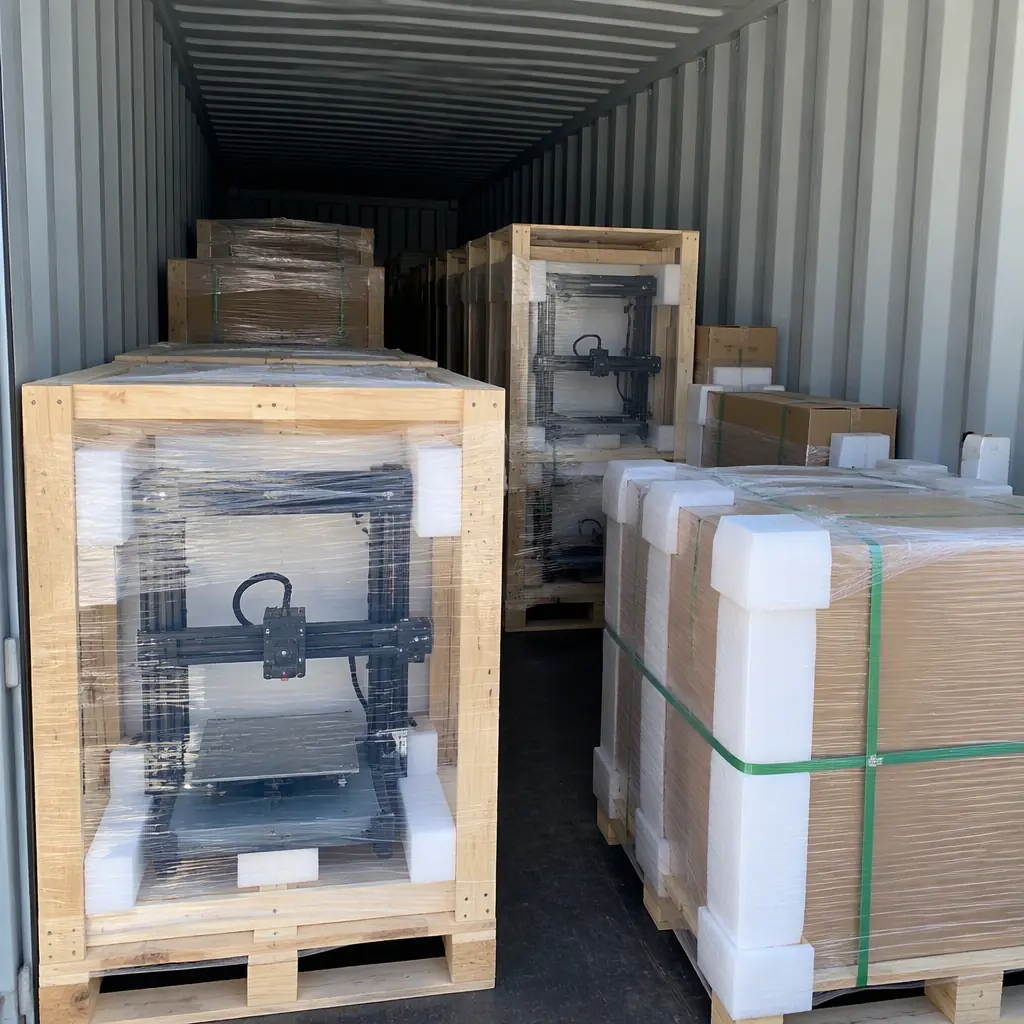
What an Honest Lead-Time Quote Looks Like
A distributor who wants repeat orders should quote the chain, not the factory. The format that works is a two-number promise: a standard-configuration, sea-freight, established-customer window (typically 6-9 weeks door to door) and an expedited window with air freight and a pre-booked inspection (typically 4-5 weeks). Anything tighter than three weeks requires an air shipment of an already-built unit, and a distributor should only promise that if the unit actually exists in stock.
The strategic payoff is trust. Buyers compare distributors on the number they are given, and the one who quotes eight weeks and delivers eight weeks beats the one who quotes four and delivers eleven, even though the second sounded better on the call. Under-promising on the tail segments, payment and customs, is where the reliable reputation is made. Our distributor financial KPIs guide covers the working-capital implications of holding a buffer that lets you shorten the quote honestly.
Reviewed by the Precise3D engineering & OEM team. Compliance files that accompany the catalog are auditable at the certification register.
Supply Chain Support
Need a Lead Time You Can Actually Promise?
We build to a frozen catalogue configuration, pre-book inspections and publish a segmented lead-time table by destination. Tell us your market and required date and we'll quote the chain, not a guess.