Capabilities
Full-Stack 3D Printer
Engineering & Manufacturing
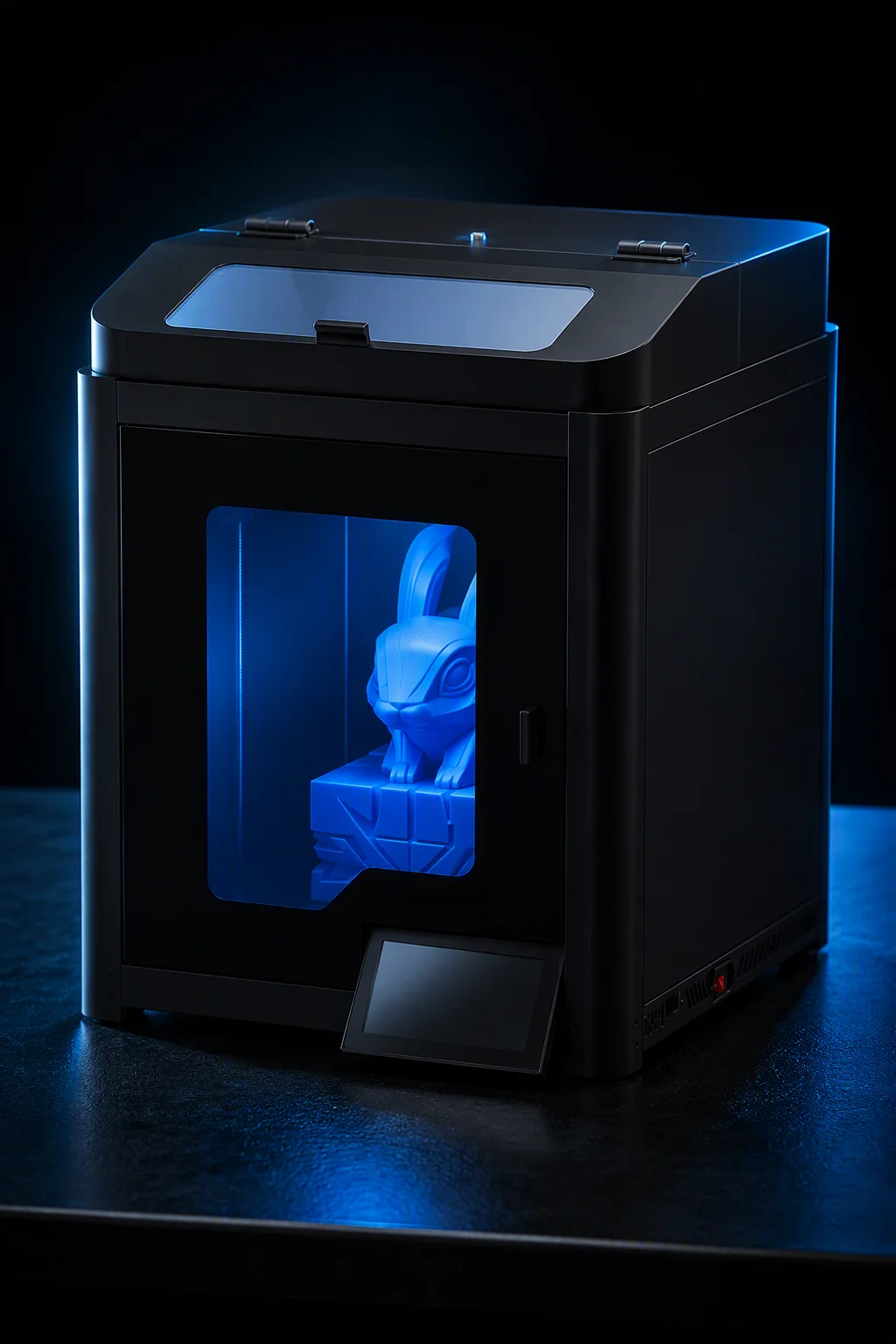
From mechanical design and firmware development to materials science and quality assurance — we build every layer of the 3D printer. Choose what you need customized, and we deliver a ready-to-market product with your brand on it.
Engineering Overview
Three Engineering Pillars, One Integrated Platform
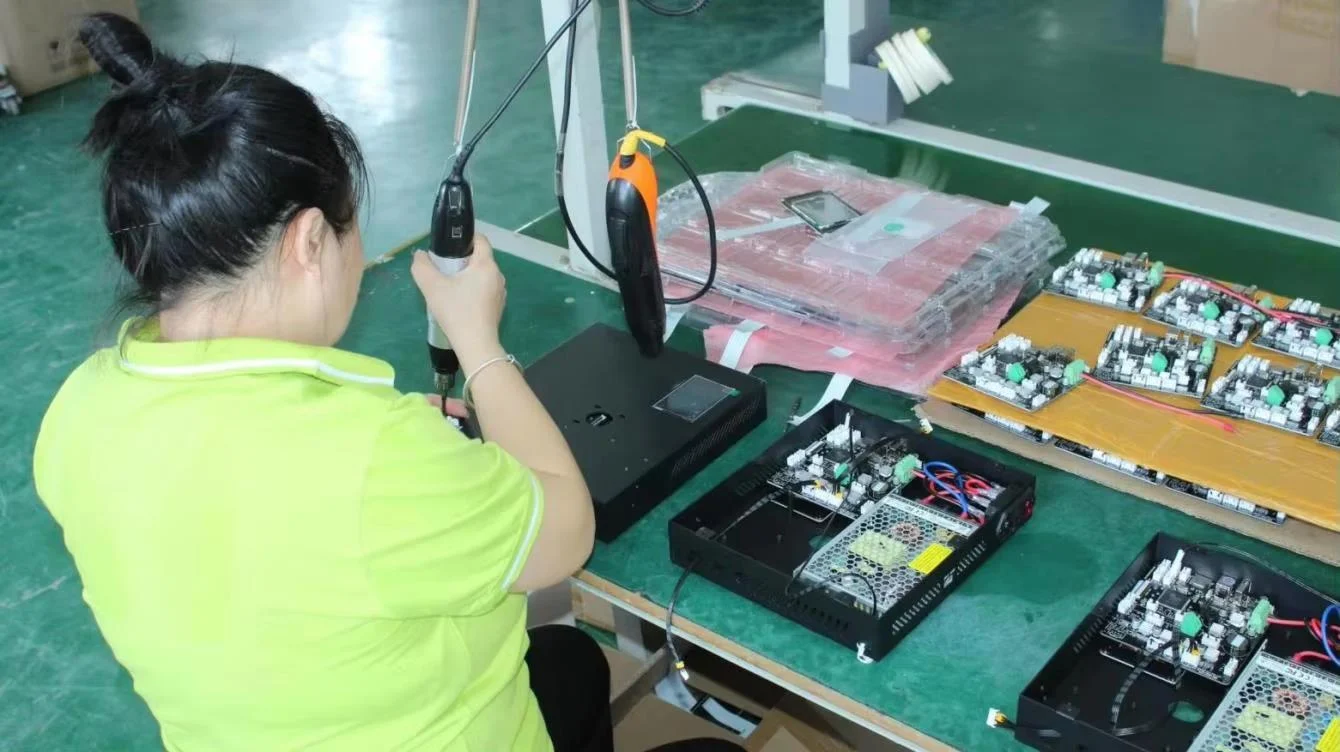
Precise3D operates an integrated R&D and manufacturing facility where mechanical, electrical, software, and materials engineering converge under one roof. This vertical integration eliminates the delays and quality gaps that plague multi-vendor supply chains. Every aspect of your printer — from the motion system to the boot screen — is designed, tested, and validated as a unified system.
Our engineering group — around 15 R&D engineers alongside production, firmware, and QC staff within our Shenzhen manufacturing network — covers industrial design, mechanical engineering, embedded systems, firmware development, materials science, and quality assurance. Products ship to Europe, North America, South America, and Asia, serving distributors, retailers, educational institutions, and OEM partners.
Core Capabilities
What We Build For You
Three specialized engineering teams work in parallel to deliver a complete, market-ready product — or you can engage individual capabilities for targeted needs.
OEM & Customization
Mechanical, electrical, enclosure, and branding customization. From enclosure color and silkscreened logos to custom extruder configurations, build volume variants, and regulatory certification management. Your brand on a printer engineered to your exact specification.
- ✓Enclosure design, color matching & silkscreening
- ✓Custom hotend, extruder & electronics configuration
- ✓Branded packaging, documentation & unboxing experience
- ✓CE (LVD) & RoHS compliance files; other markets scoped per project
- ✓Custom branding from 100 units
Firmware & Software
Custom Marlin and Klipper firmware builds, branded touchscreen UI themes, pre-tuned slicer profiles, white-label mobile apps, and REST APIs. Your software stack carries your brand identity from boot screen to cloud dashboard.
- ✓Custom Marlin & Klipper firmware development
- ✓Branded boot screen, UI themes & multi-language support
- ✓Pre-tuned Cura, PrusaSlicer & Orca Slicer profiles
- ✓White-label mobile app (iOS/Android) & web interface
- ✓REST API, SDK & cloud connectivity integration
Materials Engineering
Materials testing bench for the filament set our machines support. Temperature towers, retraction tuning, speed calibration, and bed adhesion checks per material — with complete print profile packages and co-branded filament programs for partners.
- ✓Filament compatibility matrix with print profiles
- ✓Temperature, retraction & speed calibration per material
- ✓Nozzle material R&D (brass, hardened steel, ruby)
- ✓Mechanical, thermal & chemical resistance testing
- ✓Co-branded filament program for distribution partners
R&D Infrastructure
Where Your Product Is Engineered
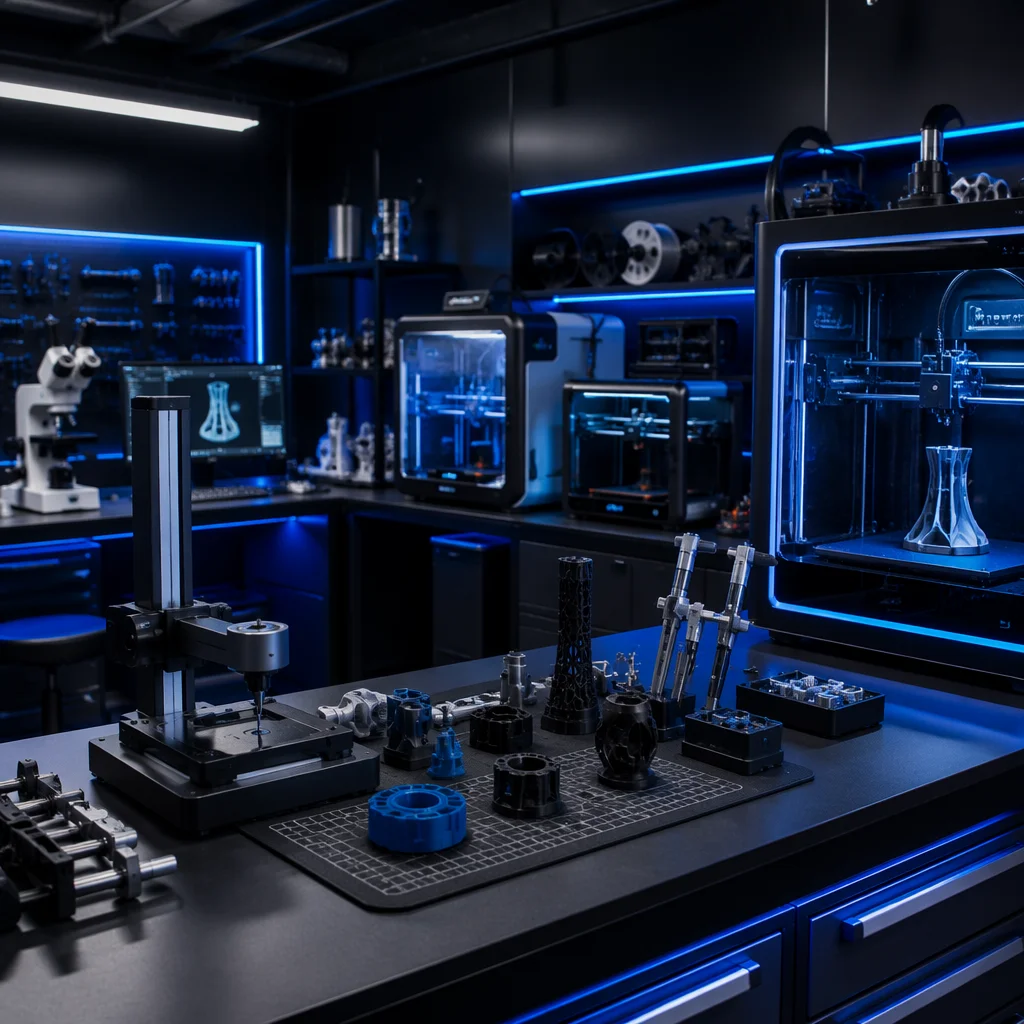
Within the Shenzhen network, the R&D work — mechanical design, electronics prototyping, firmware development, and materials testing — runs beside the production floor, so iteration from concept to production sample is short and the floor sees what the designers build.
Mechanical Design Lab
SolidWorks and Fusion 360 for parametric design. FEA simulation for structural rigidity and thermal analysis. In-house CNC machining for rapid prototypes. Full kinematics testing rigs for CoreXY, bedslinger, and delta architectures.
Electronics & Firmware Lab
PCB design and prototyping with Altium Designer. 32-bit and 64-bit controller development. TMC stepper driver tuning with oscilloscope validation. Environmental chamber testing for thermal cycling and EMI compliance.
Materials Testing Lab
Universal testing machine for tensile and flexural strength. DSC (Differential Scanning Calorimetry) for glass transition and melting point analysis. Environmental chamber for UV aging, humidity, and thermal cycling. Microscope imaging for layer adhesion and surface quality.
Print Farm Validation
Validation builds run on a bank of machines beside the cells and test benches. New hardware revisions accumulate continuous print hours through the validation cycle before release — with camera monitoring and temperature logging on the runs that matter.
Quality & Certifications
Global Standards, Factory-Direct Quality
Every Precise3D product is built to a documented QC sequence on the floor and ships with the compliance file we actually hold — CE (LVD) and RoHS, third-party verified. Certification for other markets is scoped per project, honestly and in advance.
Quality Control System
The QC sequence runs from incoming component inspection through in-process checkpoints to the final audit. Each printer is power-tested and runs the standardized benchmark print on the dedicated burn-in line, and critical components — motion system, heated bed, power supply — get full inspection at receipt.
- ✓Incoming component inspection (IQC)
- ✓In-process checkpoints across the assembly cells
- ✓Burn-in with benchmark print on the aging line
- ✓Final QA audit with record verification
- ✓Pre-shipment inspection with binder documentation
Equipment & Metrology
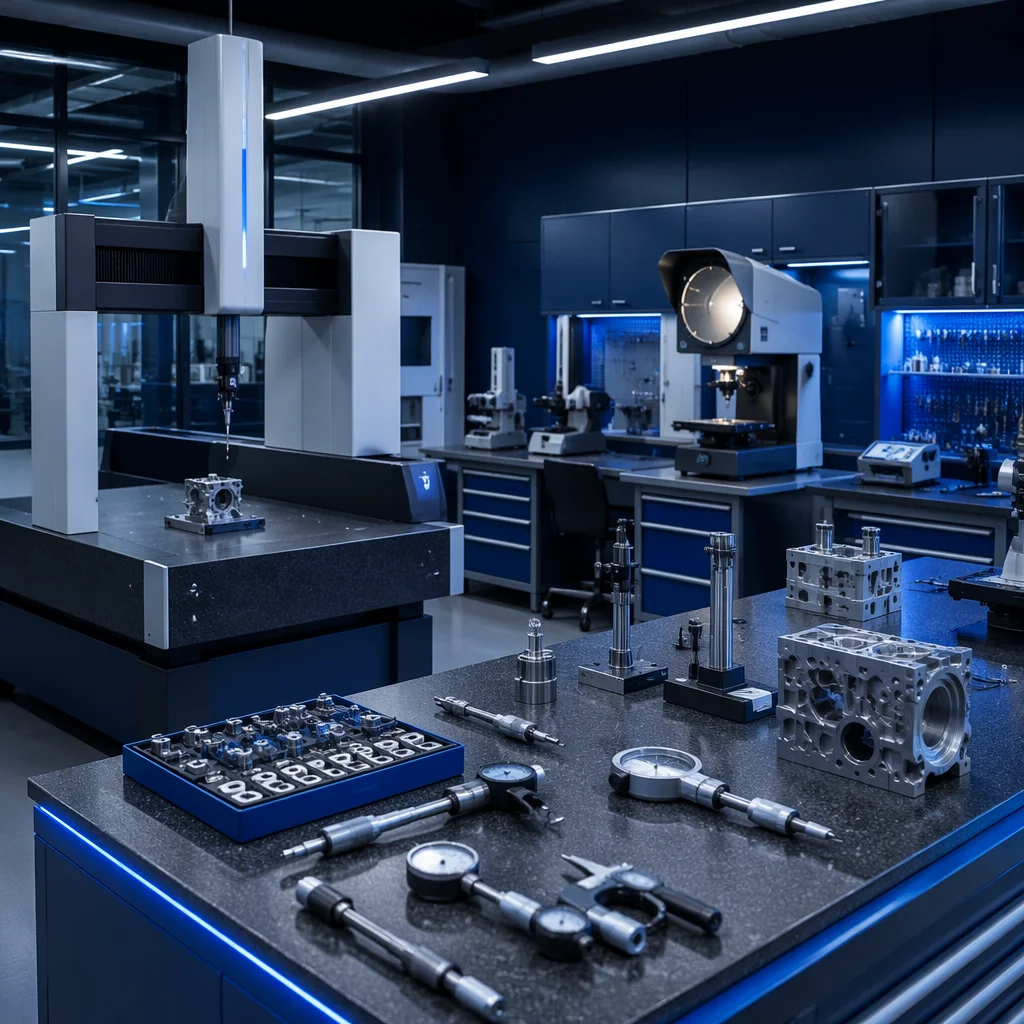
Our QC benches are equipped with gauges, meters, and test fixtures for dimensional verification, electrical checks, and thermal stress screening. Equipment is kept on a calibration schedule with the instrument's identity recorded against the inspection it ran.
- ✓CMM (Coordinate Measuring Machine) for dimensional accuracy
- ✓Hi-pot tester for electrical safety (dielectric withstand)
- ✓Thermal camera for heated bed uniformity verification
- ✓Sound level meter for acoustic compliance testing
- ✓Vibration analyzer for motion system characterization
Certifications
Pre-Certified for Global Markets
Our base platforms carry the credentials we hold. For customized OEM variants, we manage the compliance assessment so your branded product's paperwork matches what it actually is.
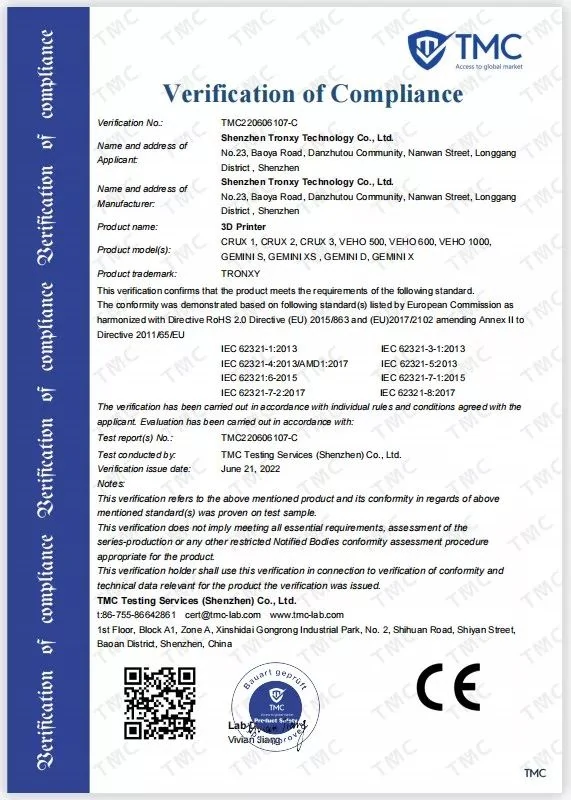
CE (LVD) Verification
Third-party verification of compliance per EN 62368-1:2014+A11:2017, LVD 2014/35/EU.
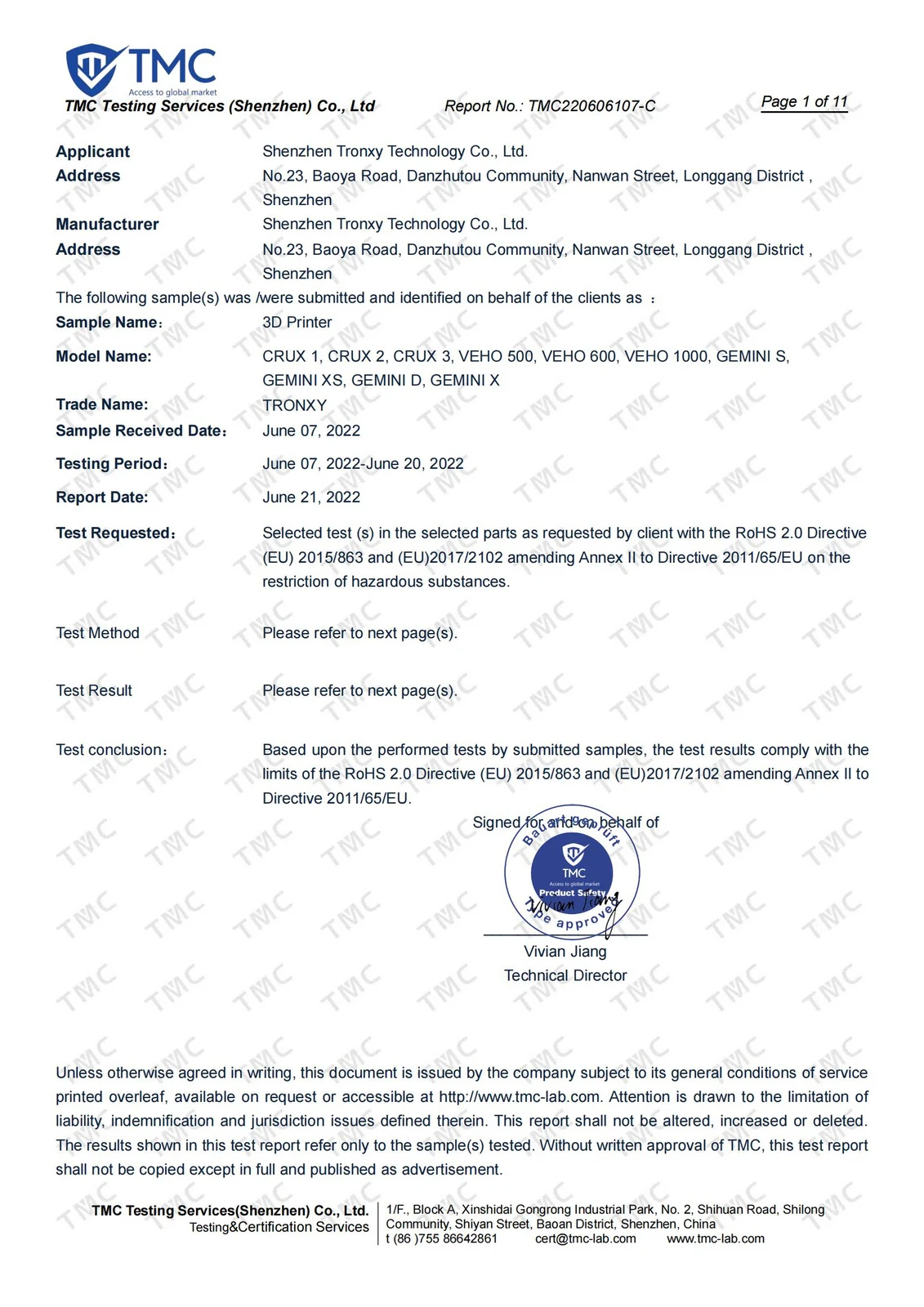
RoHS Report
EU 2015/863 restricted substance compliance — report on file.
More compliance documents available on request — audit every report
Technology Platforms
Motion Systems & Architectures
The production network builds across the major 3D printer kinematic architectures. Choose the platform that fits your market positioning, and the engineering group optimizes every subsystem around it.
| Architecture | Speed Class | Precision | Complexity | Best For | Example Models |
|---|---|---|---|---|---|
| CoreXY | High | High | Medium | Professional, enthusiast, print farm | Pro X1, Custom variants |
| Bedslinger (i3-style) | Good | Good | Low | Entry-level, education, consumer | Creator C1, Start S1 |
| Delta | High | Medium | High | Tall objects, high-speed demo | Custom only |
| IDEX (Dual) | Good | High | High | Multi-material, multi-color | Custom only |
| Large Format | Good | Medium | High | Industrial, furniture, prototyping | Custom only |
All architectures support customization across enclosure, electronics, firmware, and materials profiles. Contact our engineering team for a platform recommendation based on your target market and price point.
How We Work With You
The OEM Partnership Process
From initial specification to mass production, a structured process keeps your project on time and on budget. Timeline is scoped per project — customization depth, certification needs, and order size all move it.
1. Specification
You define your requirements: build volume, speed targets, materials support, enclosure design, branding, firmware, target certification needs, and market price point. We translate this into a technical specification document with bill of materials (BOM), timeline, and MOQ estimate.
2. Engineering Sample
We build 3-5 prototype units incorporating all agreed customizations. These samples are fully functional and represent the production-intent design. You review, test, and provide feedback. Typically 4-6 weeks from specification approval.
3. Compliance & Pilot
We manage the compliance scope for your target market: what we hold is filed, what we need is tested with an accredited lab, and what we cannot deliver is stated up front. A pilot run validates the full manufacturing process — you approve before ramp-up.