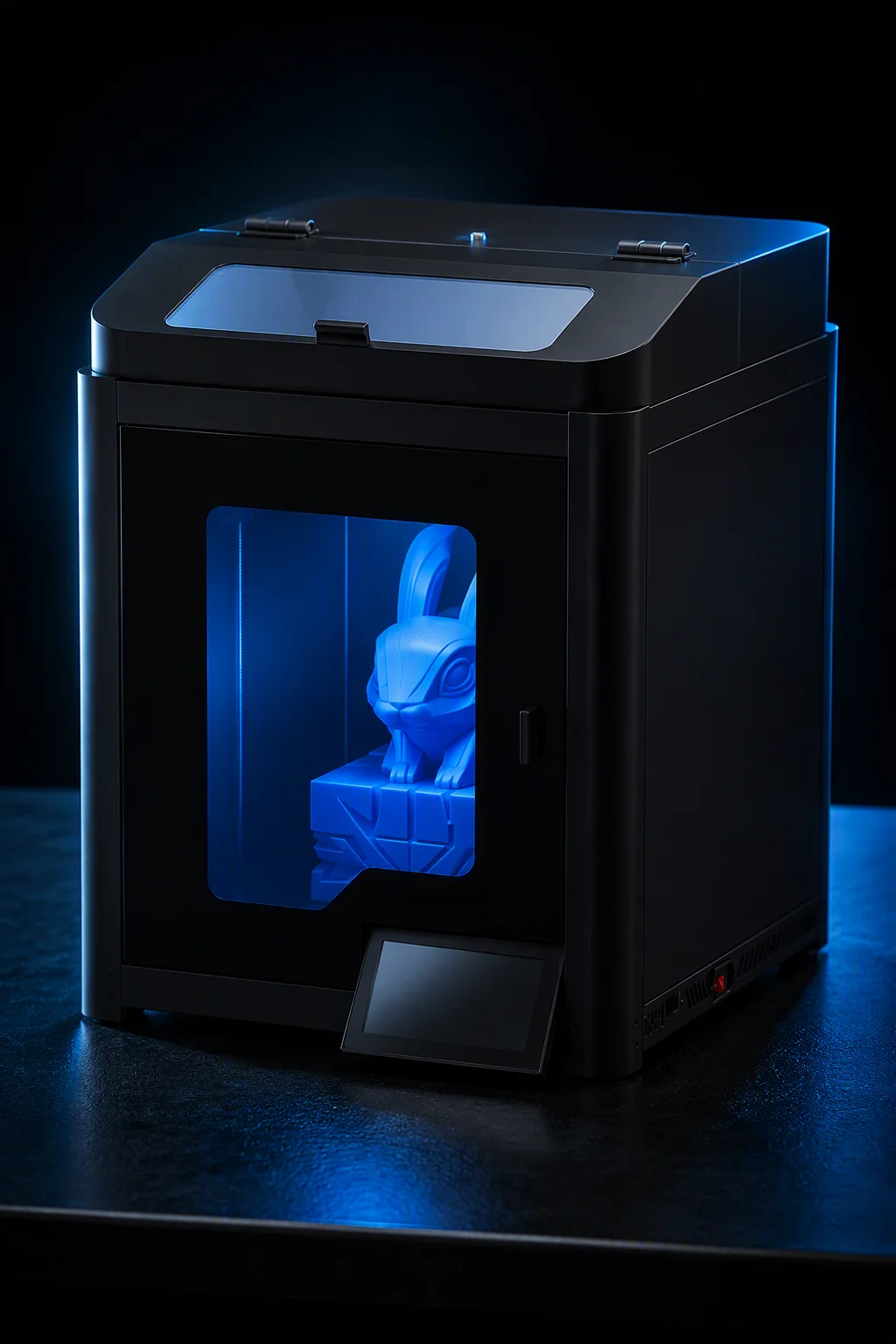
Enclosed Precise3D printer on the OEM line

Industries · Jewelry & Fashion

Fine Detail.
Fine Jewelry.

Fine-detail 3D printing for investment casting patterns, custom jewelry design, fashion accessories prototyping, and mold making. Fine-detail nozzle options, castable filaments, and tuned profiles for professional jewelers and fashion designers.

Industry Overview

How 3D Printing Is Reshaping Jewelry Manufacturing

For centuries, jewelry manufacturing followed the same fundamental workflow: a master model is hand-carved in wax by a skilled artisan, a mold is made, wax patterns are injected, and cast in precious metal. This process, refined over millennia, has one critical bottleneck -- the wax carver. A master carver produces a limited number of intricate ring patterns per week. A 3D printer running overnight produces casting patterns at a fraction of the labor cost, freeing artisans for finishing, setting, and design.

The jewelry industry is not replacing artisans -- it is augmenting them. Designers create in CAD software (Rhino, MatrixGold, ZBrush) where they can iterate infinitely before committing to physical production. The printed pattern is then processed through the same casting workflow jewelers have used for generations: investment, burnout, pour. The difference is that one designer with one printer can output the pattern volume that previously required a bench of five wax carvers. For jewelry manufacturers, this represents both a cost transformation and a creative liberation -- designs that were too complex to carve by hand (interlocking parts, hollow structures, generative patterns) become printable.

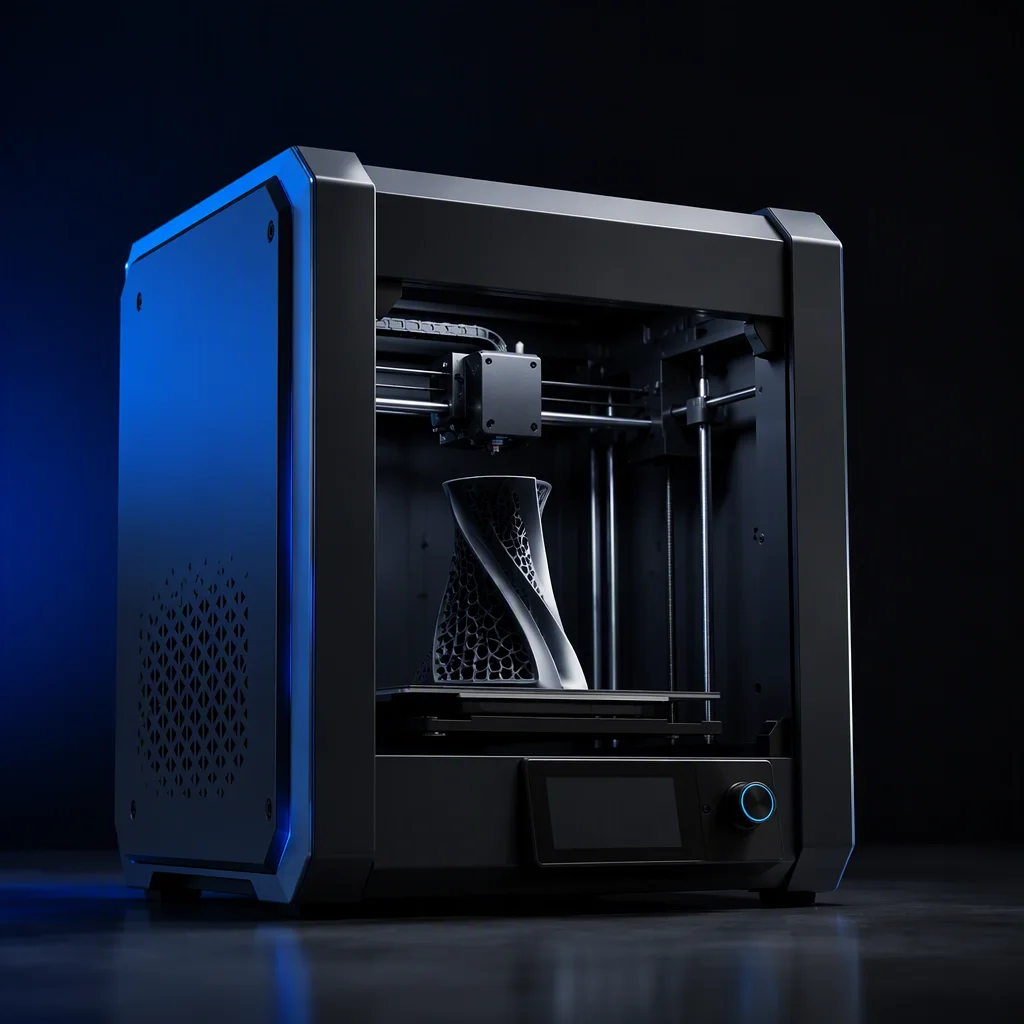
High-detail 3D printed jewelry casting pattern

Key Applications

Jewelry, Fashion & Luxury Goods Applications

Investment Casting Patterns

The highest-value application for jewelry 3D printing. Print a detailed pattern in castable filament, invest it in plaster, burn out the pattern in a kiln (typically 6-8 hour cycle, peaking at 730°C), and pour molten metal into the resulting cavity. Our castable filament has been validated with gold (10K-24K), silver (sterling, argentium), platinum, palladium, and brass. Ash residue after burnout is less than 0.05% by weight -- clean enough that casting houses report zero porosity defects attributable to pattern residue in independent testing.

Custom & Bespoke Jewelry Design

Custom commissions -- engagement rings, family crest signets, memorial pieces -- run on a digital-to-physical workflow: a customer's sketch or verbal description is modeled in CAD, a physical prototype is printed for client approval, revisions are made, and the final casting pattern is printed. The whole consultation-to-casting-ready path compresses from weeks of wax carving to a couple of days, and a client who can hold the physical piece before committing to production makes the decision far more easily.

Fashion Accessories Prototyping

Handbag hardware, belt buckles, shoe embellishments, zipper pulls, eyewear frames, watch components -- fashion accessories share jewelry's requirement for fine detail and aesthetic surface finish. Designers iterate buckle proportions, test clasp mechanisms in functional ABS before committing to brass tooling, and produce runway samples at a speed impossible with traditional prototyping. Sampling cycles that were outsourced to a model maker become in-house iterations of days, enabling last-minute design changes ahead of Fashion Week deadlines.

Mold Making for Production

For jewelry produced in quantity, the fastest path from CAD to production mold is through 3D printing. Print a master pattern in high-detail filament, post-process to a mirror finish, and create a room-temperature vulcanizing (RTV) silicone mold around it. This mold then produces wax injection patterns at production volume. The printed master must survive mold-making compression without deformation, so pattern material selection matters as much as detail quality.

Technical Requirements

What Jewelers & Designers Demand

The resolution, material, and surface-finish requirements for jewelry are an order of magnitude finer than general-purpose 3D printing. Our hardware is configured specifically to meet them.

Resolution & Detail

Fine-detail nozzle options with tuned minimum-layer-height profiles capture: stone-setting prongs, filigree and pierced-work patterns, micro-pave texture, engraved text, and crisp hallmark stamps. Rings print in hours rather than days, with surface quality that needs minimal post-processing before investment. Jewelry profiles are pre-tuned and ship installed on the jewelry edition.

Castable Filament Performance

Our castable filament is a wax-polymer compound formulated for clean burnout and low expansion. Our documented burnout profile is compatible with phosphate-bonded and gypsum-bonded investments across gold, silver, and platinum alloys. A complete casting protocol document -- burnout schedule, flask quenching guidance, and troubleshooting guide -- is included with every spool.

Surface Finish & Post-Processing

The transition from printed pattern to polished jewelry requires post-processing. We document a validated finishing workflow: (1) light vapor smoothing to eliminate visible layer lines without eroding fine detail, (2) support removal with flush cutters and a heated scalpel for delicate sections, (3) surface refinement with 800-3000 grit micromesh, (4) optional pre-polish with tripoli compound applied by soft wheel. A detailed post-processing guide with step-by-step photography is included in the jewelry edition documentation package.

Technology Comparison

FDM Casting Patterns vs. Resin: The Honest Comparison

CriterionFDM castable filamentResin (SLA/DLP)
Ash residueLower — cleaner burn, less porosity pittingSilica ash from photoinitiators can pit cast surfaces
Post-processingPrint, remove supports, investWash (IPA), post-cure, then invest
Consumables & wasteFilament only — no liquid waste streamResin trays, FEP film, IPA, liquid disposal
Detail ceilingFine, but above ~0.3–0.5mm features, dedicated nozzles neededHighest — sub-0.3mm filigree and micro-pave possible
ThroughputUp to ~100 patterns/day on one machineResin plate batches, faster at small sizes
Best forDaily casting patterns, large smooth surfaces, workshops running bothMicro-pave under 1mm stones, extreme filigree, high-volume micro-detail

Recommended Products

Jewelry-Optimized Printer & Material Packages

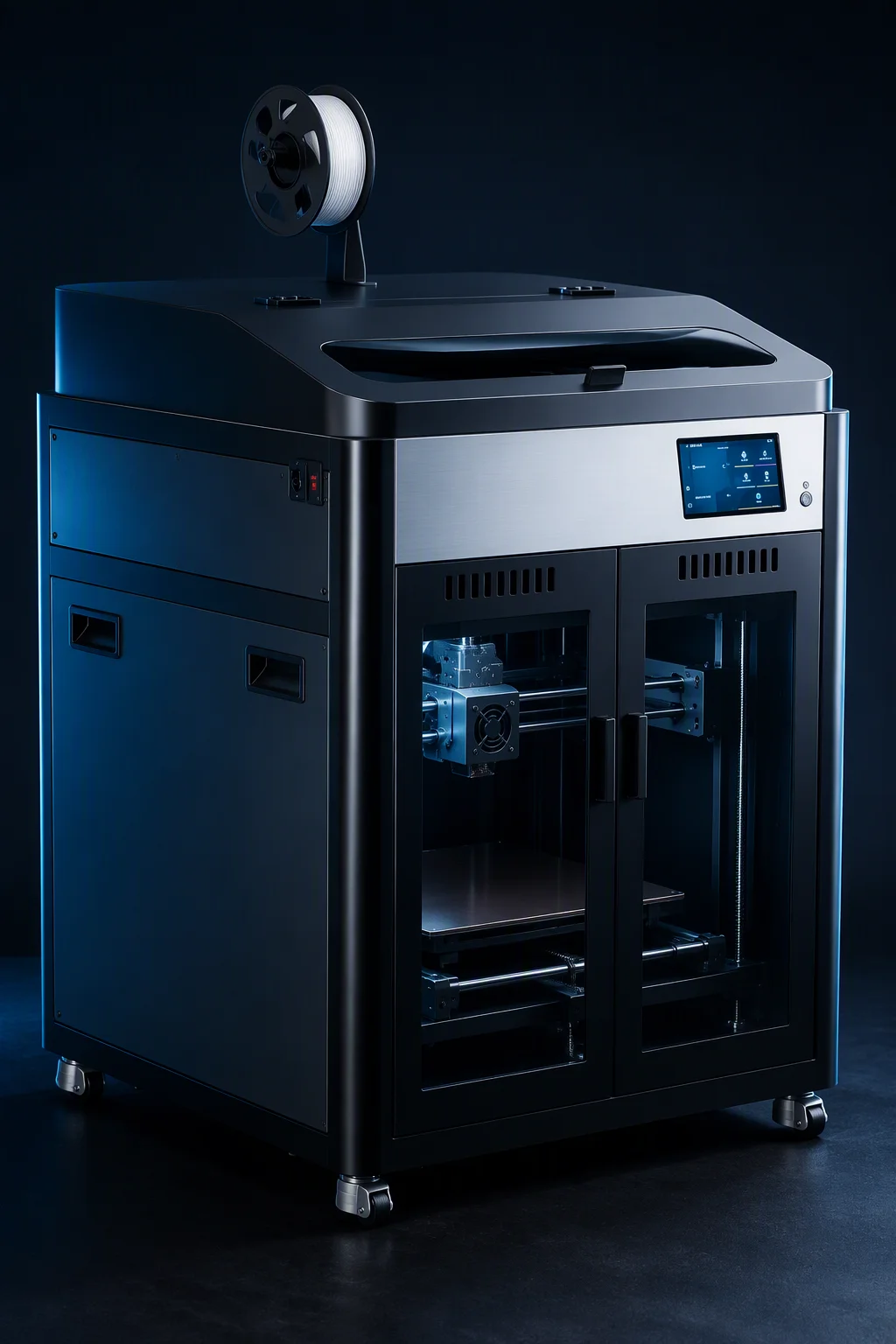
Pro X1 jewelry edition with fine nozzle for casting patterns
Jewelry Edition

Pro X1 Jewelry

Configured specifically for casting pattern production. Ships with a fine-detail nozzle, pre-tuned profiles for castable filament, and a starter kit: 2 spools of castable filament, post-processing tool set, and the complete casting protocol guide. Enclosed chamber ensures warp-free prints for delicate patterns.

  • Nozzle 0.4mm standard (fine options)
  • Layer Height Tuned fine-detail profiles
  • Build Volume 500×500×500mm
  • Batch Runs Overnight pattern printing
Request Jewelry Quote
Creator C1 fashion design edition for accessories prototyping
Design Studio Edition

Creator C1 Fashion

The versatile studio companion for fashion designers and boutique jewelers. Multi-material capability: print prototypes in PLA for fit checks, flexible TPU for wearable tech housings, and castable patterns for metal production -- all on one machine. Silent operation suitable for design studio environments.

  • Build Volume 330×330×400mm
  • Nozzle Options 0.4mm (fine options on request)
  • Materials Castable, PLA, TPU, PETG
  • Enclosure Full — enclosed
Request Studio Quote

End-to-End Workflow

From Digital Design to Cast Metal

CAD Design

Design in industry-standard jewelry CAD software. We provide export presets for Rhino + MatrixGold, ZBrush, Blender, and 3Design. Key guidelines: maintain wall thickness above 0.4mm for castable patterns, add 1.5-2.5% scale factor for metal shrinkage (varies by alloy), orient stone settings perpendicular to build plate for maximum detail. Our Jewelry Design Guide PDF covers modeling best practices with illustrated examples.

Print & Post-Process

Print with pre-tuned jewelry profiles (0.05mm layers, 15mm/s outer wall speed for maximum detail). Remove supports with flush cutters -- castable filament supports separate cleanly without tearing. Light vapor smoothing (optional, 15-30 second exposure) eliminates layer visibility. Weigh the pattern to estimate metal weight (pattern weight × specific-gravity multiplier for target alloy). Attach casting sprue with a wax pen at 110°C.

Investment & Burnout

Invest in phosphate-bonded investment for high-temperature alloys (platinum, palladium) or gypsum-bonded for gold and silver. Follow our documented multi-stage burnout schedule -- staged ramps and holds up to peak temperature, then cool to casting temperature. The schedule has been developed for clean pattern removal in production casting.

Cast & Finish

Cast using standard jewelry techniques: torch or induction melting, centrifugal or vacuum casting machine. Quench in water after cooling to handling temperature. Finish with standard jewelry bench workflow: sprue removal, file, sand (220-3000 grit), pre-polish, final polish with rouge. Customers report finish time is equivalent to or shorter than hand-carved wax patterns, as printed surfaces are more consistent than hand-cut ones.

Jewelry & Fashion Partnership

Supply the Jewelers, Casting Houses & Design Studios in Your Market

Distributors: we provide castable filament samples, jewelry-focused print profiles, completed casting demo pieces for trade shows, and the full casting protocol documentation. Whether your customer is an independent goldsmith or a 50-person casting house, we support your sales cycle with the material validation data and workflow documentation that professional jewelers require before adopting a new technology.