
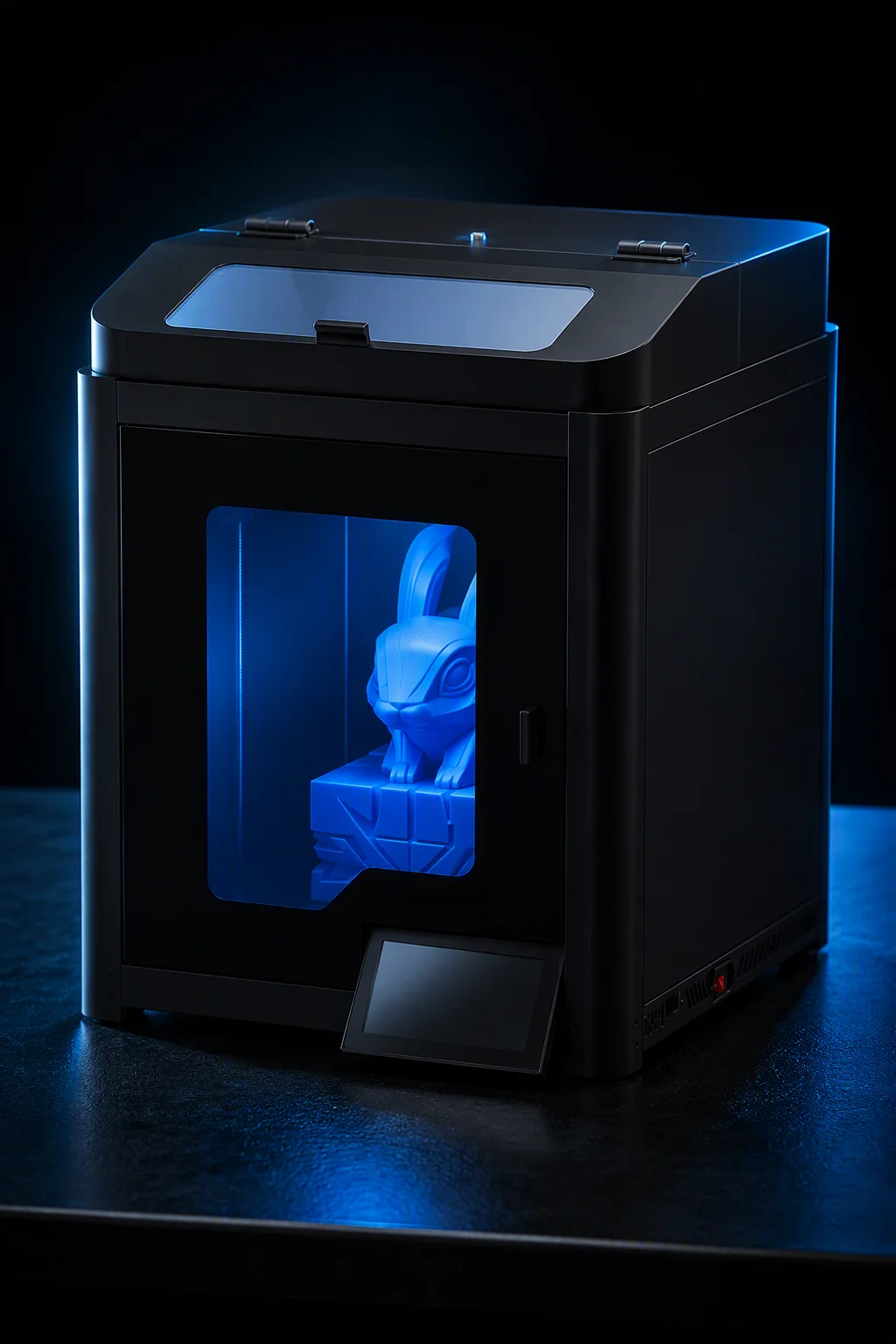
Technology
The Engineering
Behind the Print
Precise3D printers are built on proven technical foundations. Explore the kinematics and material science that deliver consistent, high-quality results — and why these choices matter for your customers.
Technical Deep Dives
Core Foundations
Two technical pillars define every Precise3D printer: a motion system engineered for speed without compromise, and a materials platform tested across six polymer families.
CoreXY Kinematics
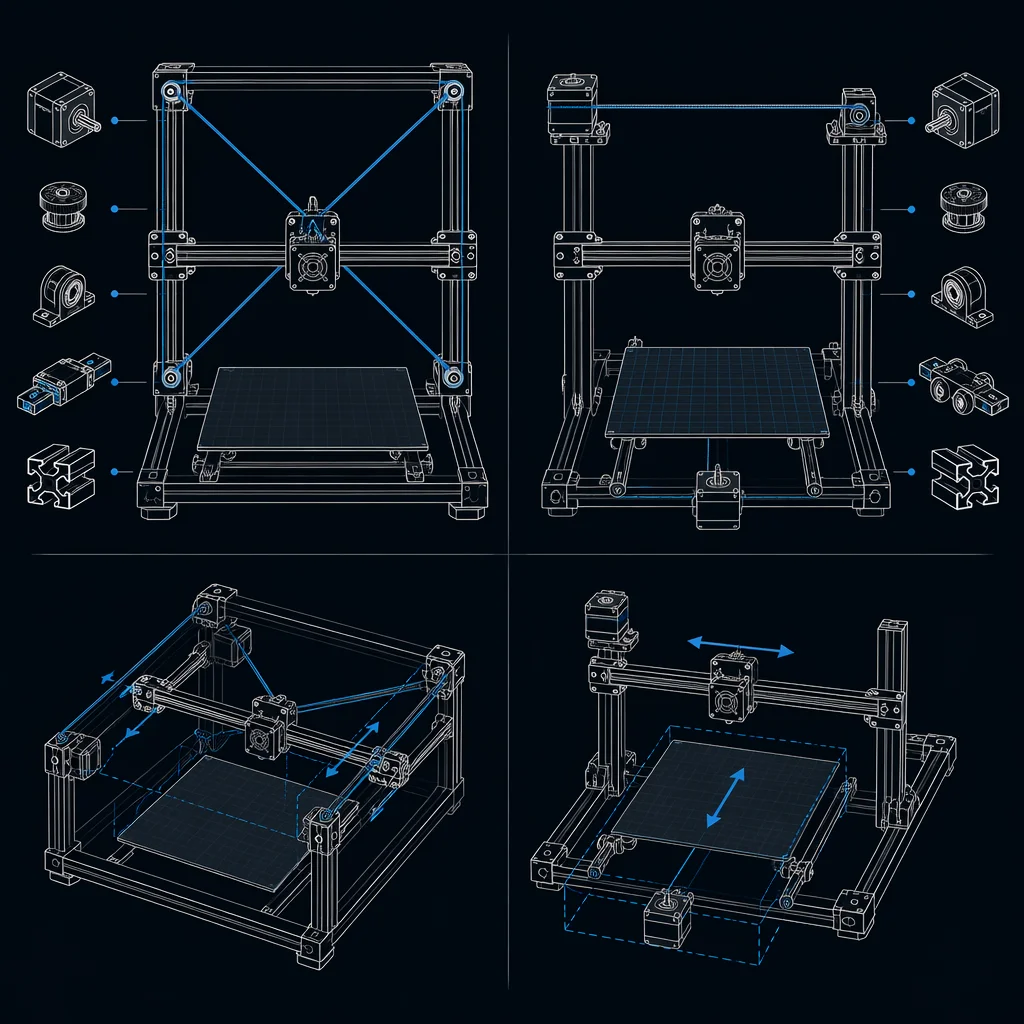
Understand the belt-driven motion system that delivers high-speed printing at up to 600mm/s with minimal vibration. Compared to bedslinger and delta architectures, CoreXY keeps the bed stationary on Z — meaning tall prints stay stable and heavy beds don't limit acceleration. This is why professional-grade printers choose this architecture.
- Stationary bed — ideal for tall prints
- Lower moving mass = higher acceleration
- Minimal vibration at high speed
Material Science
A comprehensive guide to 6 polymer families — PLA+, PETG, ABS/ASA, TPU, Nylon, and Polycarbonate. Learn about glass transition temperatures, tensile strength, impact resistance, and hygroscopic behavior. Includes a material selection matrix matching polymer properties to real-world application requirements.
- 6 polymer families compared
- Mechanical properties and application matrix
- Storage, drying, and handling best practices
Kinematics Comparison
CoreXY vs. Bedslinger vs. Delta
Each kinematics architecture has trade-offs. Here is why CoreXY is the professional standard for consumer 3D printers.
CoreXY
Bed only moves on Z-axis (slow, precise). XY gantry driven by two stationary motors via a single belt loop. Low moving mass enables high acceleration with minimal ringing. The gold standard for enclosed consumer printers.
Bedslinger (Prusa-style)
Bed moves in Y, print head in X. Simple mechanical design but bed mass limits Y acceleration. Tall prints can wobble as bed shifts. Good for budget printers but limited at high speed.
Delta
Three arms control the effector via vertical carriages. Extremely fast in Z, very tall build volumes possible. Great for vase-mode prints but calibration is complex and effective XY resolution varies by position.
Visual Reference
Technology in Practice
Charts and diagrams illustrating how CoreXY speed scaling and material properties translate into real-world printing performance.
Why This Matters
What Our Technology Means for Your Business
Technical architecture directly impacts your customer experience, support costs, and competitive positioning. Here is how Precise3D's technology choices translate into business advantages for our distribution partners.
Fewer Support Tickets
CoreXY kinematics with auto-bed leveling and filament run-out detection eliminate the top three causes of failed prints. Our partners report 40% fewer tier-1 support calls compared to bedslinger-based competitors — saving money on every unit sold.
Higher ASP, Better Margin
CoreXY enclosed printers position at a premium to open-frame bedslingers. The visible build quality — rigid frame, enclosed chamber, quiet operation — justifies the higher price point and reduces price-shopping comparisons.
Future-Proof Platform
Our firmware supports over-the-air updates via Wi-Fi. New features — material profiles, print modes, UI improvements — are delivered without hardware changes. Your customers' printers get better over time, building brand loyalty and repeat purchases.