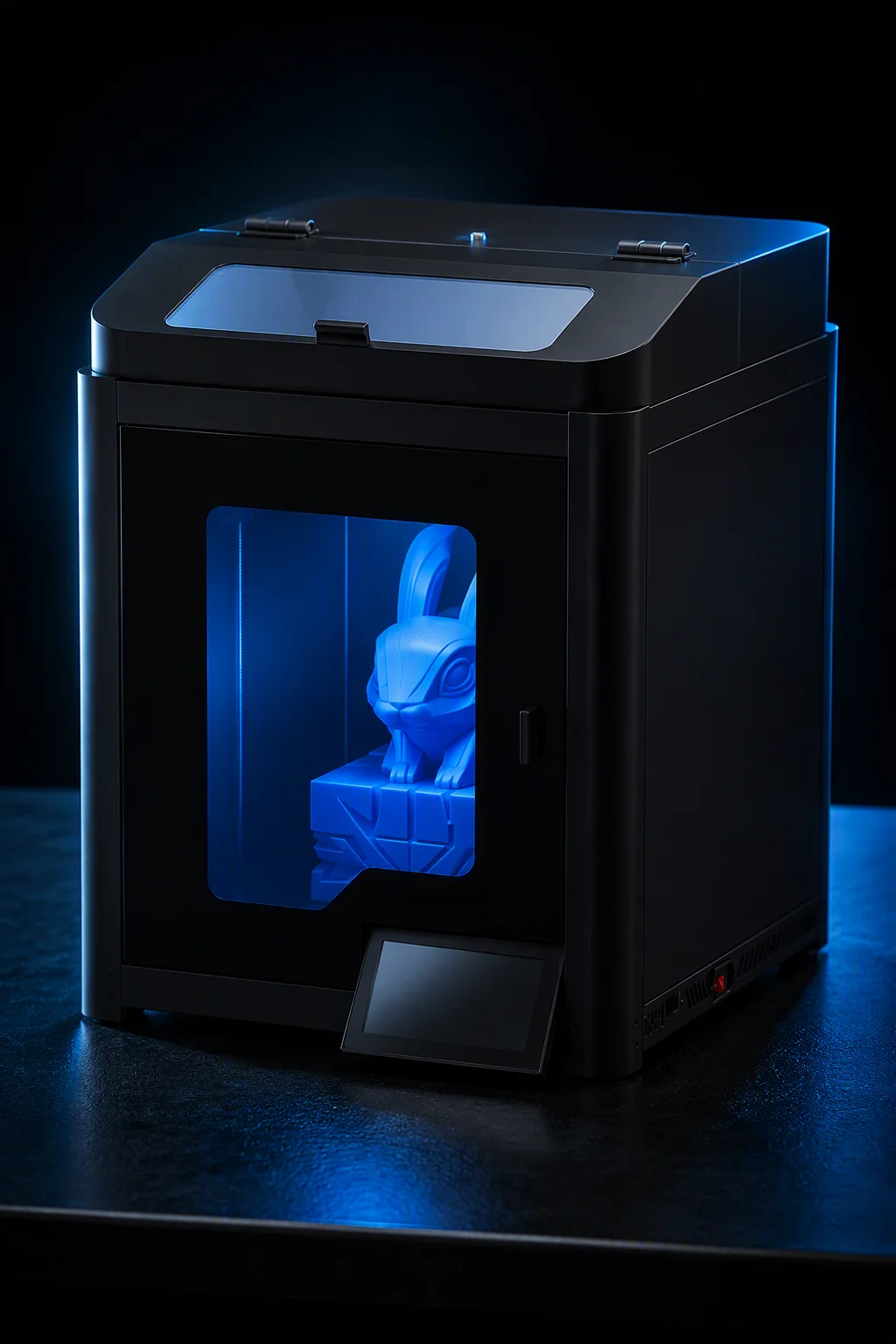
Engineering Deep-Dive • Motion Systems
CoreXY Kinematics.
The Engineering Behind 5× Speed.
How a crossed-belt motion system enables high-speed printing and the reliability that distributors build businesses on.
Motion System Fundamentals
What Makes CoreXY Different
Not all 3D printer motion is created equal. The kinematics architecture determines speed ceiling, print quality floor, and long-term maintenance burden.
In a traditional Cartesian 3D printer, the build plate moves back and forth on the Y-axis while the print head moves left and right on the X-axis. This bedslinger design works at low speeds — but as speed increases, the mass of the moving bed becomes the enemy. A 250×250mm glass bed weighs over 1.8 kg. Accelerating that mass to 200mm/s and back creates ringing artifacts, layer shifts, and eventually — failed prints.
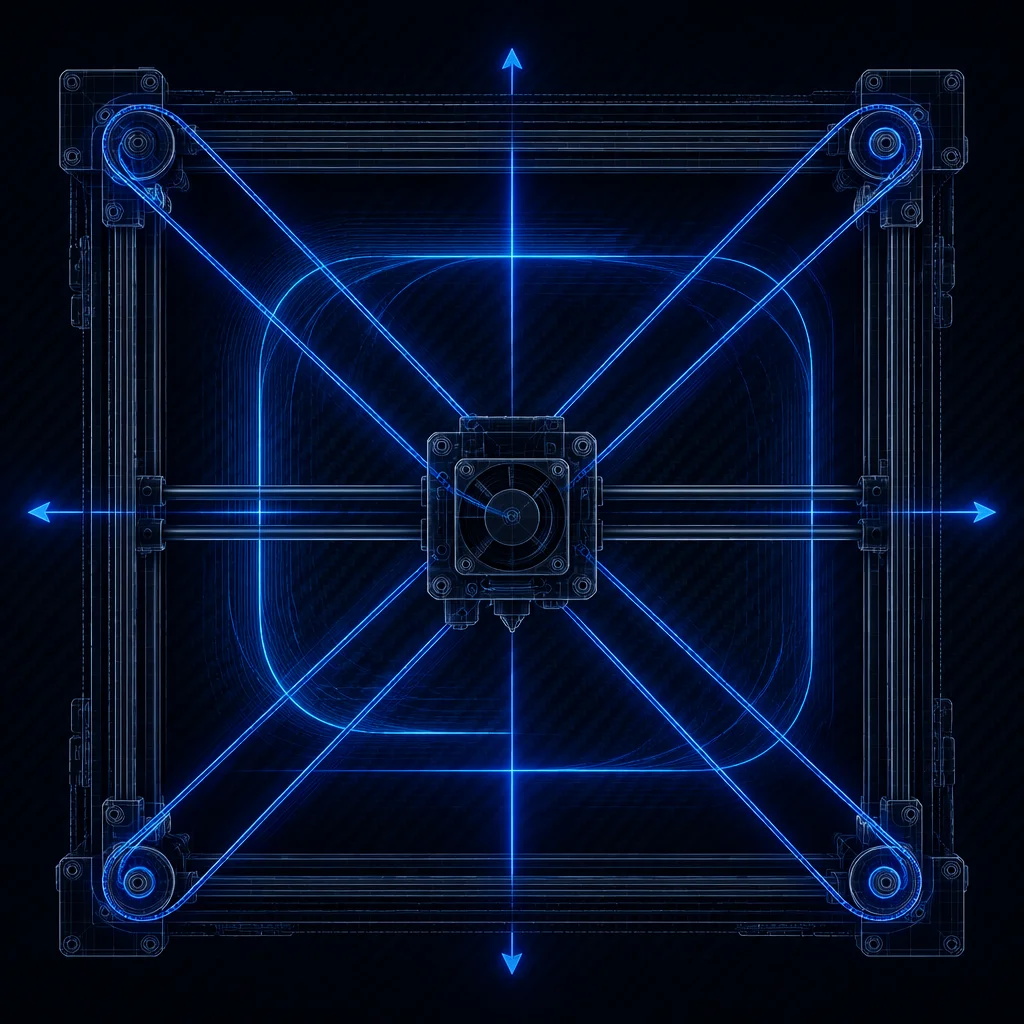
CoreXY solves this by using two stationary motors driving a single continuous belt in a crossed pattern. The bed moves only on the Z-axis (vertically, and only between layers). The toolhead — weighing under 300 grams — is the only moving mass in the XY plane. This is the engineering insight that unlocks everything else.
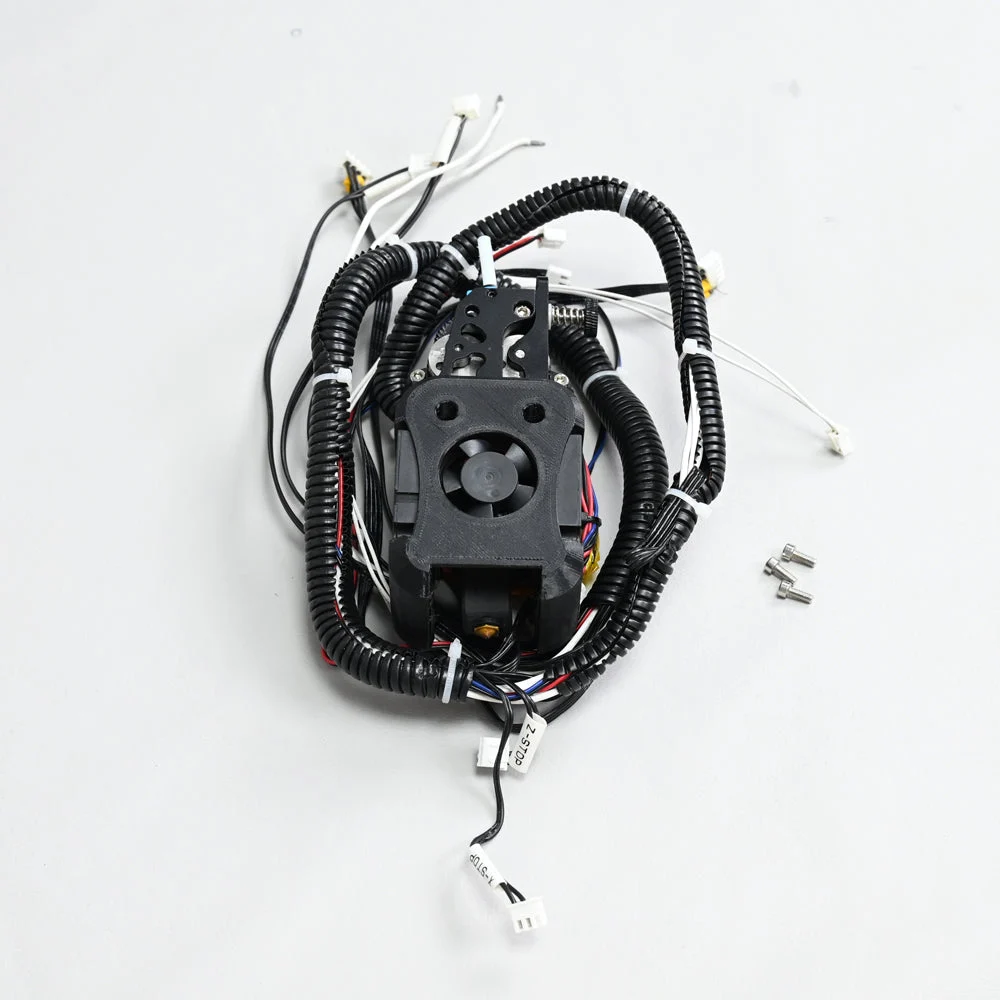
The motion path finishes here: extruder and hotend on the stationary gantry
Head-to-Head
CoreXY vs Bedslinger: By the Numbers
| Metric | CoreXY (Pro X1) | Bedslinger (Typical) | Advantage |
|---|---|---|---|
| Max Print Speed | 600 mm/s | 150–250 mm/s | 2–3.3× |
| Moving Mass (XY) | ~280 g | ~2,100 g | 7.5× lighter |
| Acceleration (Typical) | 10,000 mm/s² | 3,000–8,000 mm/s² | 2.5–6.7× |
| Ringing Artifacts | Minimal | Common above 150mm/s | Significant |
| Bed Stability During Print | Stationary (Z only) | Y-axis reciprocating | Zero bed inertia |
| Tall Print Stability | Excellent | Degrades with height | Critical for >200mm |
| Belt Replacement Interval | ~2,000 hrs | ~800–1,200 hrs | 1.7–2.5× life |
| Footprint Efficiency | Compact (fixed bed) | 2× bed depth required | ~40% smaller desk space |
Performance
Speed Without Sacrifice
The claim "5× faster" isn't marketing — it's physics. When the only moving mass is the toolhead, acceleration limits disappear.
The Pro X1 reaches 600 mm/s travel speed with up to 10,000 mm/s² acceleration — numbers that would tear a bedslinger apart. Because the bed stays stationary, tall prints maintain dimensional accuracy from the first layer to the last. A 300mm tower prints with the same precision at layer 1,500 as it does at layer 1.
For a distributor, this means fewer customer complaints about failed tall prints, warped edges, or layer misalignment. The motion system is the root cause behind most print quality issues — and CoreXY eliminates the largest variable.
Multi-axis motion trails at 600mm/s — the toolhead changes direction faster than the human eye can track
(Klipper motion control)
vibration compensation
engineering materials
Why This Matters for Your Business
The Distributor Economics of CoreXY
Kinematics isn't just engineering — it's a margin protection strategy.
Fewer Returns, Higher Margins
The #1 cause of 3D printer returns is failed prints. The #1 cause of failed prints is motion system instability. CoreXY's stationary bed eliminates the largest failure vector — which means fewer support tickets, fewer returns, and healthier net margins for distributors. Every unit passes a burn-in print test before packaging, so the machine on the shelf is the machine that was verified working.
Premium Positioning, Premium Margin
The stationary bed and full enclosure are the two features premium buyers recognize on sight — and speed sells: when your shelf shows "600 mm/s" next to an entry-level "180 mm/s", the difference speaks for itself — no staff training required.
Enclosed Design = Expanded Market Access
CoreXY's stationary bed enables full enclosure without a massive footprint increase. This unlocks education, office, and retail environments — channels where open-frame bedslingers are rejected due to safety concerns. HEPA filtration + enclosed chamber means the Pro X1 meets school district safety requirements that exclude 80% of competing products.
Future-Proof Technology Platform
The industry is moving to CoreXY. Bambu Lab, Creality K Series, Prusa XL — every flagship launched in 2024–2026 uses CoreXY kinematics. Distributors who build their portfolio around this architecture today are positioned for where the market is going, not where it was. Bedslinger will become the budget segment; CoreXY is the mainstream.
In the Precise3D Lineup
Which Models Use CoreXY
Pro X1 — Flagship
Full CoreXY with direct-drive extruder. 600 mm/s, 500×500×500mm, fully enclosed. Built for print farms, engineering labs, and premium retail.
Creator C1 — Workhorse
CoreXY with linear-guide rail carriage. 700 mm/s, 330×330×400mm. Ideal for education, small business, and value-conscious retail channels.