
The Capability Problem Every Distributor Hits
A 3D printer distributor can advertise a product, but what the customer is actually buying is a working printer that stays working, and that is a service promise fulfilled by a technician. In the first year a distributor can absorb service demand with one or two capable people, usually the founder and an early hire who learned the product by taking it apart. That works until it does not, and it stops working exactly when volume grows: the two people who know the product are now a bottleneck, every field call routes through them, and the customer's experience of the brand depends on whether one of them is available.
Hiring does not solve this, because a competent printer technician is not available in the general labour market. The skill is specific: it is the combination of mechanical competence, electrical diagnosis, firmware fluency and product knowledge that only exists inside this product category. A distributor that grows by hiring generalist service staff and giving them a manual produces a bench that can follow a script and cannot diagnose. The alternative is a certification programme that takes the knowledge the early hires hold and deliberately transfers it, tier by tier, into a bench that scales without losing depth.
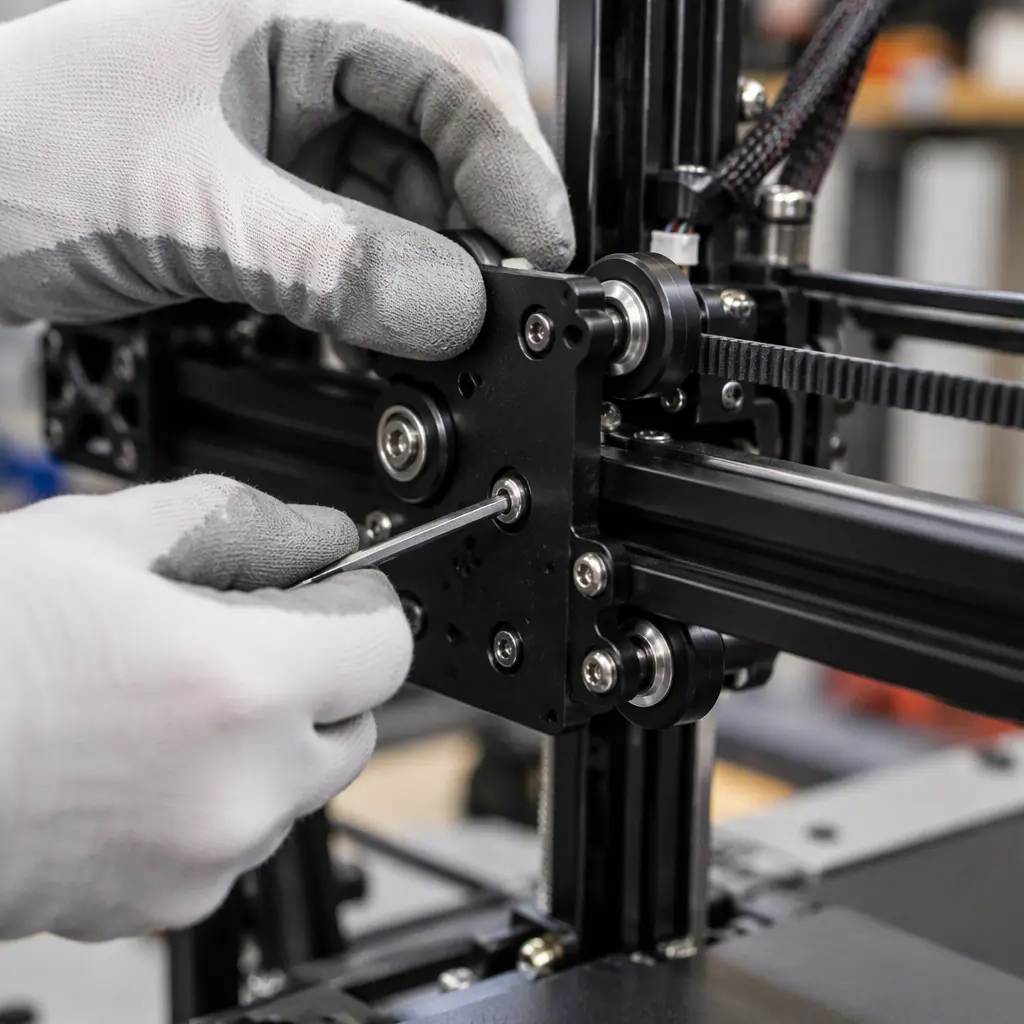
Why the Certification Ladder Beats Ad-Hoc Training
Ad-hoc training produces an uneven bench. One technician learns a repair by watching someone else do it, another learns it from a video, a third never encounters it until a customer reports it, and there is no way for the distributor to know which capabilities are covered until a job exposes the gap. The result is that job assignment becomes guesswork, and the distributor discovers the limits of the bench on a customer's site, which is the worst place to discover anything. The faults the bench is expected to clear are mostly known ones, and the catalogue of those, from the common print failures a technician meets first to the less frequent assembly faults, is set out in our guide to print failure diagnosis.
A ladder fixes this by making capability explicit and cumulative. Each tier names the tasks a technician at that tier can complete unaided, and a technician cannot hold a tier without a demonstrated competence at every task in it. That single property, explicitness, is what makes the ladder useful. It tells the dispatcher who can be sent on which job, it tells the technician what the path to the next tier is, and it tells the customer, if the distributor chooses to publish it, what level of work they are buying.
What Each Tier Must Actually Prove
A tier is only as credible as the check behind it, and the check has to be a demonstration rather than an attendance record. Sitting through a training module proves exposure; completing a repair on a live unit under observation proves capability. The difference matters because the whole purpose of the ladder is to let the distributor trust the tier without watching the work.
At the lower tiers the checks are mechanical and can be run on a bench unit in a morning. At the higher tiers the check must include diagnosis, because diagnosis is where technicians diverge and where a script-follower fails. A Tier 3 candidate who can swap a controller board but cannot decide whether a symptom points to the board or the power supply is not a Tier 3 technician, regardless of how many board swaps they have completed.
- Tier 1. Complete a full commissioning on an unassisted unit and clear three common first-line faults within a stated time.
- Tier 2. Replace a hotend, extruder assembly, a motion component and a bed heater, and return each to specification with a test print.
- Tier 3. Diagnose a set of unlabelled electrical faults to root cause, and perform a firmware flash and configuration recovery.
- Tier 4. Take an ambiguous multi-unit fault, classify it, and produce an escalation pack a factory would accept.
- Tier 5. Certify another technician at Tier 2 or above, and own the correctness of that judgement.
The Tier 4 check is worth calling out because it tests something the lower tiers do not: judgement under ambiguity. A technician at this tier has to look at a cluster of complaints and decide whether it is one batch, one component or one customer's process, which is the classification covered in our guide to early-life failure and DPPM escalation. That is a different skill from repair, and it is the skill a growing distributor most needs and most lacks.
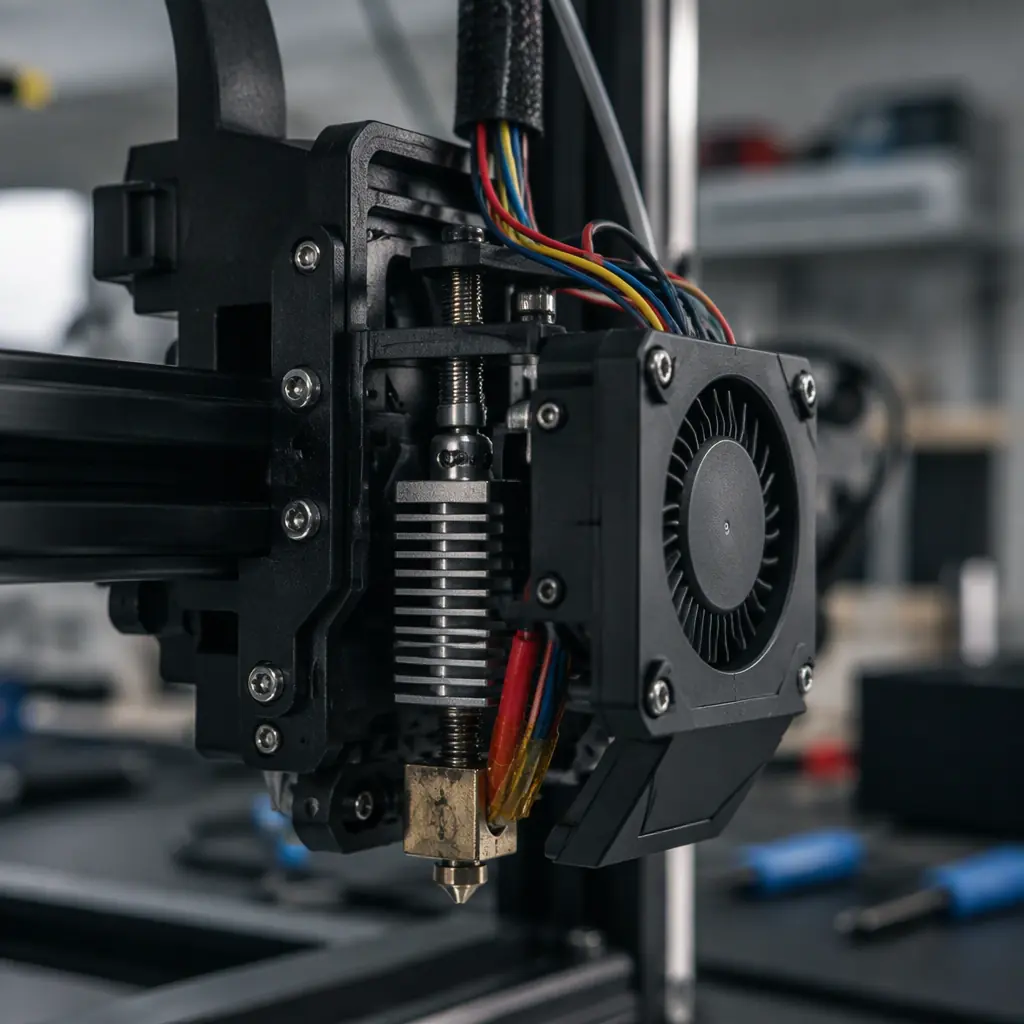
What you're looking for: Whether the tier reflects the range of work the technician can handle when the request arrives unlabelled, which is how most real service requests arrive.
If it fails: The technician is over-tiered. Move them down a tier on the dispatch board and set a specific competence check as the path back up, rather than letting an inflated tier route unsuitable jobs to them.
Boundary Condition: A tier lapsed by a lapsed check must be treated as lapsed. A certification that is not re-verified on a stated interval is a claim, not a standard.
Delivering the Training Without Stopping the Business
The practical obstacle to a certification programme is that the people who need to train are the same people who are busy on the jobs that fund the business. A programme that requires formal classroom time will be postponed indefinitely, because classroom time has no customer attached to it and productive time does. The programme has to be built into the work rather than alongside it.
Three mechanisms do this. First, pair the higher tier with the lower tier on real jobs, so the training happens on billable work and the pair-versus-solo ratio is the training investment. Second, record the knowledge that leaves with a technician in a form the bench can use, which means a fault library rather than prose documentation, and the fault library is built from the jobs the bench actually does rather than from a manual. And third, make the competence check itself the training goal, so a technician preparing for a tier upgrade is working toward a demonstration rather than sitting through a course.
The Economics: Rate Uplift and Retention

A certification programme is a cost until it is priced, and it is priced through the service rate. A certified bench can charge more for the same hour because the customer is buying a technician who has demonstrated they can diagnose rather than one who will follow a script, and distributors who publish their tiers consistently find that customers accept the uplift because it maps to something the customer can see. The uplift compounds as the tier rises, and the Tier 4 work, the multi-unit fault and the escalation pack, is premium service that a lower-tier bench cannot offer at any price.
The retention effect is the larger part and the harder to see. A trained technician who holds a tier and can see the path to the next one has a reason to stay that a technician with no ladder does not, and the cost of replacing a Tier 3 or Tier 4 technician is not only the recruitment but the product knowledge that walks out with them. A certification ladder gives that knowledge a home in the fault library and the checks, which reduces what walks out when a person does. The staffing side of this, hiring and building the team around the bench, is covered in our guide to hiring and team building, and the customer-facing value of a certified bench shows up directly in service contract pricing, covered in annual service contract pricing. The tier structure is also what lets the distributor stand behind an SLA it can actually meet, as set out in our guide to service level agreements.
Bottom Line
A distributor's moat is the bench, not the price list. A certification ladder is the instrument that turns knowledge held by one or two people into capability held by a team, and it does so with four ingredients: explicit tiers that name the work each one can do unaided, competence checks that demonstrate capability rather than record attendance, training delivered on live jobs rather than in a classroom the business will never fund, and a service rate that prices the tier the customer is buying. Build the ladder and the distributor can grow the bench deliberately. Skip it and the business is only ever as capable as the two people it cannot afford to lose.
Service Partner Programme
Technical Depth, Backed by the Factory
Precise3D supports distribution partners with documented service procedures, a fault and repair knowledge base, and factory escalation paths for the faults a bench escalates.