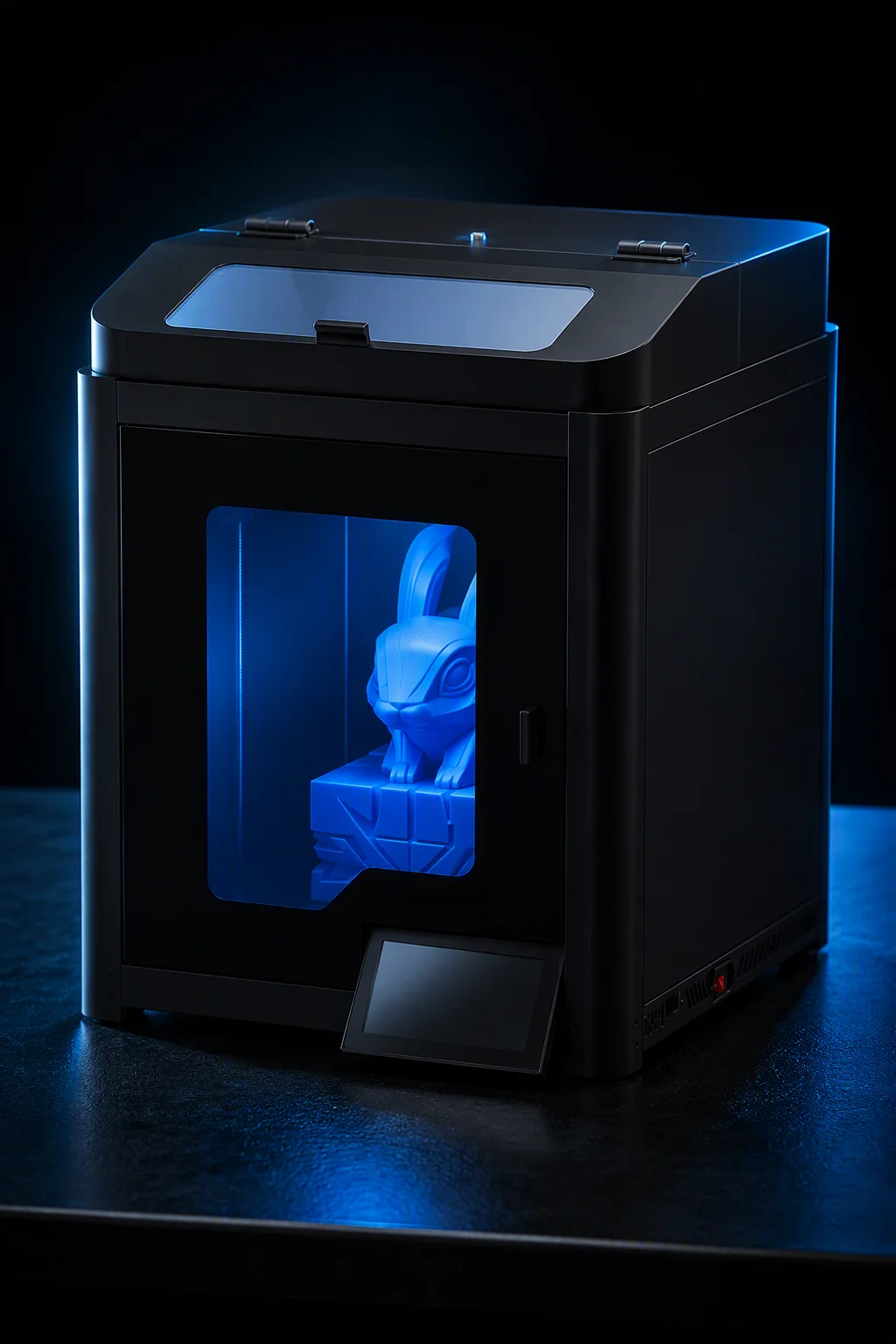
When a 3D printer customer's first print fails, the filament doesn't stick, the part warps and detaches mid-print, the first layer peels, the overwhelming majority of these failures trace back to one variable: bed adhesion. Not the printer. Not the slicer settings. Not the filament quality. The interface between the build plate and the first layer of extruded plastic. Every 3D printer sold creates a downstream demand for adhesion products that continues for the life of the machine. A single active user consumes 3-6 glue sticks, replaces 1-2 PEI sheets, and experiments with 1-2 specialty coatings per year. $45-120 in recurring consumable revenue per printer, year after year, with gross margins that routinely exceed 70%. This guide gives distributors the product knowledge, pricing frameworks, and bundling strategies to capture that revenue stream.
The Bed Adhesion Product Landscape: Seven Categories
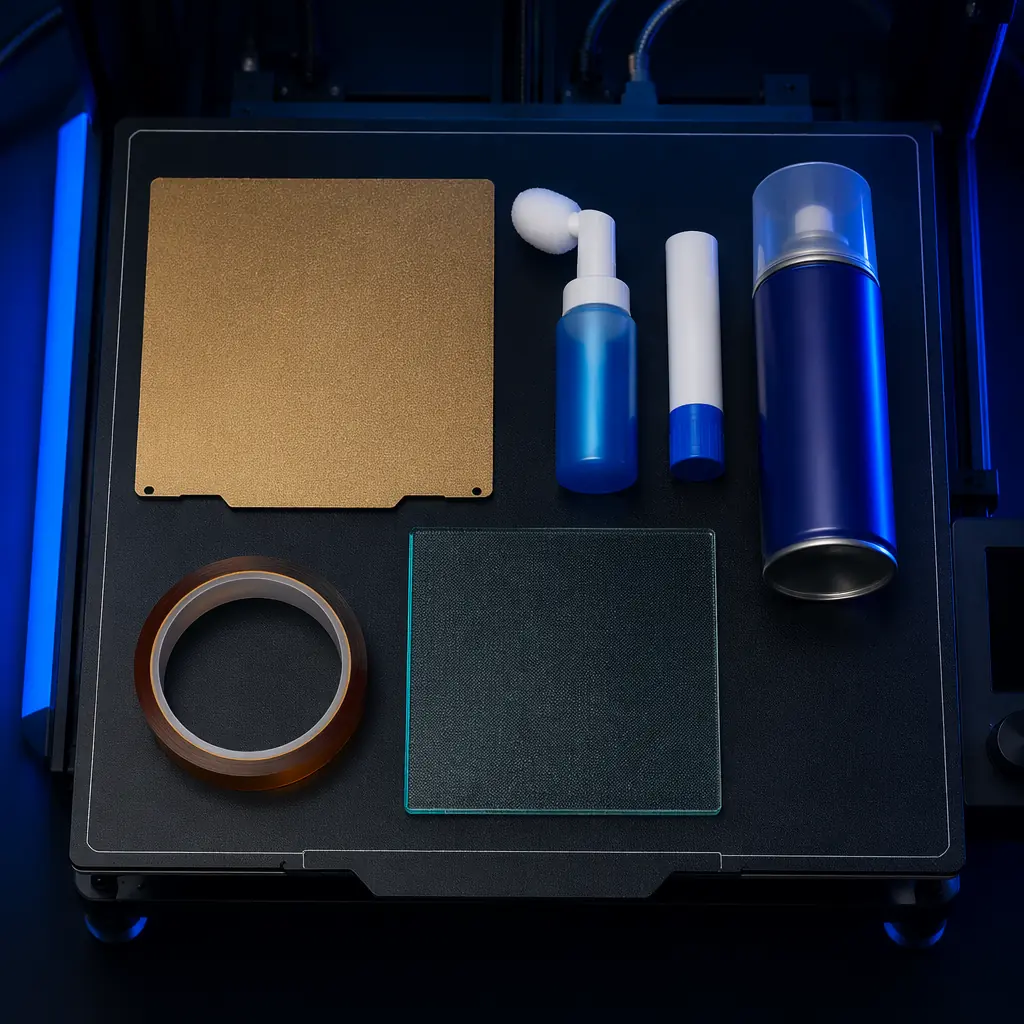
Bed adhesion products fall into seven distinct categories, each serving different printer types, filament materials, and customer skill levels. The categories are not interchangeable. A product that works perfectly for PLA on a 60°C bed will fail catastrophically with ABS at 100°C or PETG at 80°C. Matching the product to the customer's printer and filament is the core skill that separates a knowledgeable distributor from a commodity reseller.
Kapton tape, despite its low unit price, generates the highest annual revenue per user because of its frequent replacement cycle: every 5-10 prints for heavy users. Distributors who bundle a 6-pack of Kapton tape with every printer sale capture $40-60 in consumable revenue before the customer makes their first reorder. For premium printer positioning, our distributor pricing strategy guide covers how to build consumable attach rates into your margin planning.
Glue Sticks: The Universal Entry Point
PVP-based glue sticks (polyvinylpyrrolidone, not the PVA school glue that leaves sticky residue) are the most widely used bed adhesion product across all printer types and skill levels. They work on heated and unheated beds, with PLA, PETG, ABS, and TPU, and they cost $3-8 per stick. The mechanism is simple: PVP dissolved in water forms a thin film on the build plate that provides a moderately adhesive surface at room temperature and releases cleanly when cooled below 30°C. The film is water-soluble, a damp cloth removes it completely, no scraping required.
The key product differentiator for distributors is not the glue stick formula (nearly all PVP glue sticks perform identically) but the packaging format. Standard 21g sticks fit the hand comfortably but last only 15-25 prints. Jumbo 40g sticks provide 2× the coverage at only 1.5× the cost, making them the better value proposition for print farm customers. The 3-pack and 6-pack bundles are the highest-volume SKUs, customers who buy a single stick convert to a 6-pack purchase within 60 days at a 65% rate, meaning the single-stick SKU exists primarily as a trial product, not a revenue driver. See our consumables bundling guide for multi-pack economics.
Regional note: In Southeast Asian and Latin American markets with high ambient humidity (70%+ RH), PVP glue stick performance degrades because the film absorbs moisture and loses adhesion. Stock liquid adhesives as the primary product in these regions.
Liquid Adhesives: Magigoo, 3DLac, and Dimafix, The Premium Tier
Liquid bed adhesives represent the premium tier of the adhesion aftermarket, with per-unit prices 3-5× higher than glue sticks and gross margins in the 55-70% range. The three dominant brands each serve a different niche:
Magigoo (Malta-based, €12-18 per 50ml bottle, 100-150 applications per bottle) is the category leader in Europe and North America. The product differentiator is the applicator format, a foam dabber integrated into the bottle cap that applies a thin, uniform layer without brushes or spatulas. The formulation is optimized for PLA and PETG; the dedicated Magigoo PA and Magigoo PP products for nylon and polypropylene respectively carry 30% price premiums. Distributors should stock the Original (PLA/PETG) as the core SKU and add PA/PP variants only when a customer base includes industrial users. The shelf life is 24 months unopened, 12 months after opening, inventory turnover below 6 months is recommended.
3DLac (Spain-based, €8-12 per 200ml aerosol can, 80-120 applications) competes on price-per-application, roughly €0.08-0.12 per print versus €0.10-0.18 for Magigoo. The aerosol format provides faster application (3 seconds to spray vs 15 seconds to dab) but delivers less uniform coverage. Overspray onto printer components is a known issue that generates customer complaints. 3DLac dominates the Latin American and Southern European markets where price sensitivity is higher. The 400ml professional can (€14-18) is the margin-optimized SKU for B2B customers.
Dimafix (Spain-based, €15-25 per 120ml pen applicator, 60-80 applications) is the highest-priced option and targets the engineering materials segment specifically, ABS, ASA, polycarbonate, and nylon where bed temperatures of 90-110°C cause most adhesives to degrade. The pen format applies a precise film with zero waste, but the application time (30-45 seconds) makes it impractical for print farms. Dimafix is the recommended upsell product for customers who have experienced print failures with standard adhesives on high-temperature materials. Our engineering filaments guide covers the material compatibility matrix in detail.
PEI Sheets and Carborundum Glass: The Semi-Permanent Surface
PEI (polyetherimide) spring steel sheets and carborundum-coated glass plates occupy a different position in the adhesion product hierarchy: they are semi-permanent build surfaces that reduce, but do not eliminate, the need for consumable adhesives. A textured PEI sheet provides sufficient adhesion for PLA and PETG at moderate bed temperatures (50-70°C) without any additional adhesive, but ABS, nylon, and polycarbonate still require a glue stick or liquid adhesive applied on top of the PEI. The revenue opportunity for distributors is therefore a bundled product: the PEI sheet as the base upgrade ($15-40, 40-55% margin) plus the adhesive consumable as the recurring attachment.
The PEI sheet replacement cycle (6-18 months) is driven by three failure modes: surface damage from PETG over-adhesion (PETG bonds too strongly to smooth PEI, tearing the surface on part removal, textured PEI eliminates this but provides less grip for PLA), cleaning abrasion (acetone and IPA degrade the PEI surface over 50-100 cleaning cycles), and physical damage from scraper tools. The most profitable distribution strategy is to stock textured PEI as the default bundle with every printer ($20-25 at the mid-range, 45-50% margin) and position the smooth PEI as a premium upgrade for PLA-only users who need mirror-finish bottom layers. Our print surfaces guide covers the PEI vs glass vs G10 comparison in depth.
Carborundum glass (borosilicate glass coated with a silicon carbide micro-texture) provides the most durable adhesion surface, 2+ years of daily use without degradation, but at a higher unit cost ($18-35) and with a weight penalty that limits its use to stationary-bed printers (bedslingers with Y-axis speeds above 300mm/s produce ringing artifacts from the added mass). The carborundum surface works best with PETG and ABS, where the micro-texture provides mechanical grip without the chemical bonding that damages PEI. Distributors selling into education and print farm segments should stock carborundum glass as the premium build plate option, the 2-year lifespan and zero-consumable operation appeal to institutional buyers who value predictability over upfront cost.
Bundling Strategies: Turning Every Printer Sale Into Recurring Revenue
The profitability of bed adhesion products comes not from the margin on the first sale, which is healthy at 50-80% but small in absolute dollars, but from the repurchase cycle. A correctly bundled printer sale creates a customer who returns every 2-4 months to restock consumables, each transaction carrying negligible customer acquisition cost. Three bundling tiers have proven effective across our distributor network:
- Starter Kit (bundle with every printer): 1× PEI spring steel sheet (textured, sized to the printer model) + 3-pack PVP glue sticks + 1 roll Kapton tape. Distributor cost: $8-14. Retail value: $22-35. The customer has everything they need for the first 50-80 prints and develops a usage pattern for the consumables before they run out. The first reorder arrives 4-8 weeks after the printer purchase. This bundle costs less than 2% of the printer's retail price and increases the 90-day consumable reorder rate from 18% to 47%, based on our distributor survey data.
- Pro Kit (upsell at checkout, +$25-35): Everything in the Starter Kit + 1× Magigoo Original (50ml) + 1× replacement PEI sheet. The Magigoo introduces the customer to the premium liquid adhesive tier. If the customer reorders Magigoo on their next purchase (35-40% conversion rate), the Pro Kit has effectively recruited them into a higher-margin recurring revenue stream. The spare PEI sheet reduces the friction of replacement when the original surface eventually degrades. The customer already has the replacement part and only needs to be reminded to install it.
- Print Farm Subscription ($15-25/month): 6-pack glue sticks + 2 rolls Kapton tape + 1 replacement PEI sheet delivered every 60 days. Print farm operators running 10-50 printers consume consumables on a predictable schedule, 1 glue stick per 1-2 weeks per printer, 1 PEI sheet replacement every 3-4 months per printer. A subscription eliminates the procurement overhead for the customer while locking in a recurring revenue stream for the distributor with essentially zero churn. Our consumables subscription guide covers the subscription model economics in detail.
Regional Market Preferences and Stocking Strategy
Bed adhesion product preferences vary significantly by region, driven by differences in ambient humidity, dominant filament types (PLA in consumer markets vs ABS/engineering materials in industrial markets), and price sensitivity. A distributor stocking a single global SKU set will overstock products that underperform in their region and miss the products their customers actually want.
Europe (EU, UK): Magigoo and 3DLac split the market roughly 50/50. Dimafix has strong penetration in Germany and the Netherlands where engineering materials are widely used. Environmental regulations favor water-based products over solvent-based.
Southeast Asia (Indonesia, Vietnam, Thailand): High humidity (70-90% RH) makes PVP glue sticks unreliable. 3DLac aerosol dominates the price-sensitive segment. Kapton tape is used more heavily than in any other region due to its moisture resistance. PEI sheets must be stored in sealed packaging with desiccant, surface oxidation in high humidity reduces adhesion within 2-3 weeks of exposure.
Latin America (Brazil, Mexico, Argentina): Price sensitivity is the highest of any region. 3DLac aerosol is the market leader. Generic (unbranded) PVP glue sticks outsell branded options 3:1. PEI sheets are a premium product limited to the top 20% of the market.
The minimum viable product line for a distributor entering the bed adhesion category is four SKUs: one 6-pack PVP glue stick bundle (the volume driver), one Magigoo Original 50ml (the premium upsell), one textured PEI sheet in the most common size (235×235mm, covering 60%+ of consumer printers), and one Kapton tape roll (the highest repurchase-frequency SKU). From these four products, a distributor serving 200 active printer customers generates $9,000-14,000 in annual consumable revenue at 50-70% gross margin. A revenue stream that requires no additional customer acquisition cost beyond the initial printer sale. For distributors building their consumables portfolio from scratch, our accessories bundling strategy provides the step-by-step framework.
Reviewed by the Precise3D engineering & OEM team. Compliance files that accompany the catalog are auditable at the certification register.
Consumables & Aftermarket
Stock bed adhesion consumables for your market with factory-direct pricing
We supply PEI sheets, glue sticks, and adhesion products sized to every printer in our product line, with bulk pricing for distributors, private-label packaging options, and drop-ship fulfillment to your customers.