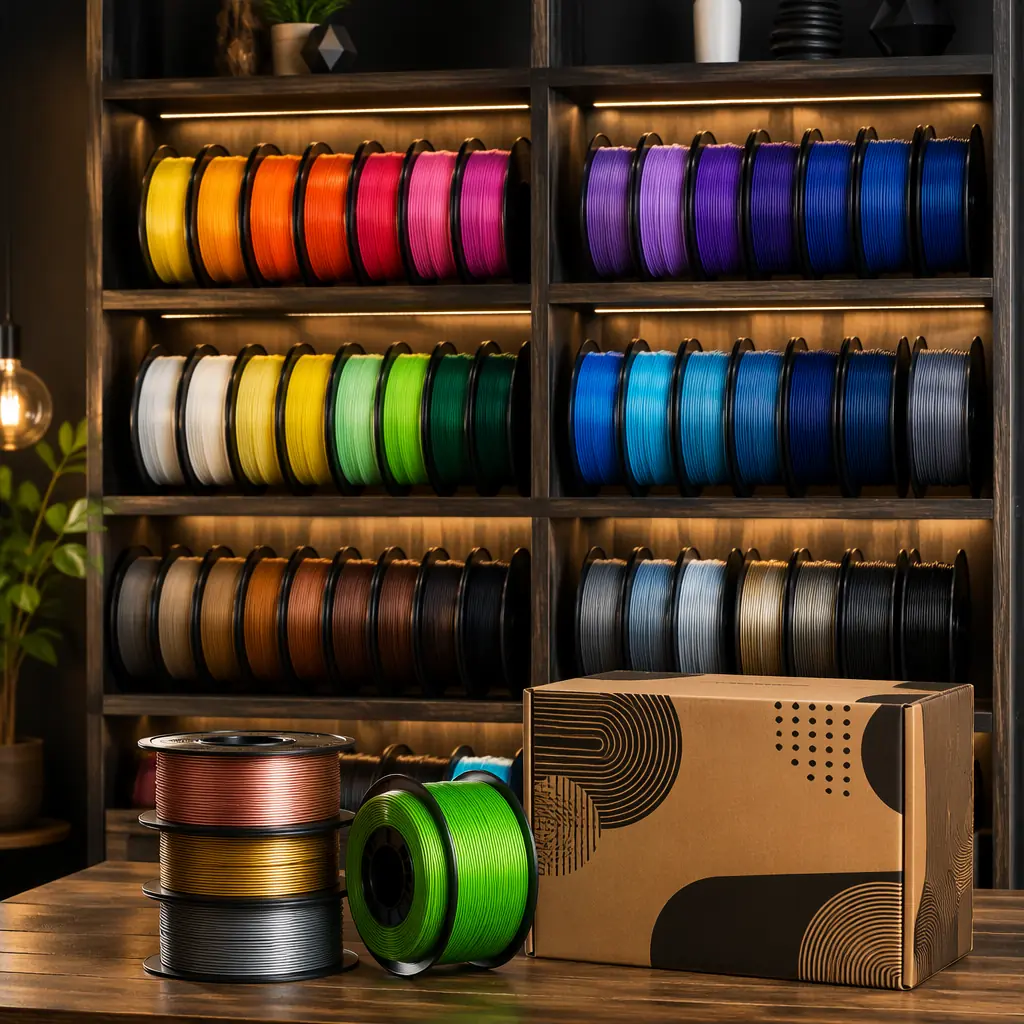
The 3D printer distribution business has a structural problem hiding in plain sight: the average customer relationship generates 70% of its lifetime value after the printer sale, but that revenue arrives unpredictably, a spool of filament here, a replacement nozzle there, an LCD panel eight months later. Unpredictable revenue makes inventory forecasting impossible, cash flow lumpy, and business valuation lower than it should be. A consumables subscription program solves all three problems simultaneously. It converts sporadic consumable purchases into predictable monthly recurring revenue (MRR). It increases customer lifetime value by 2–3× by capturing reorders that would otherwise go to Amazon or a competitor. And it transforms your business from a transactional reseller, valued at 0.5–1.0× revenue, into a recurring-revenue business valued at 3–5× revenue by acquirers and investors. This guide covers the complete system: tier design, pricing, churn prevention, fulfillment logistics, and the margin math that makes subscriptions the single highest-ROI initiative in 3D printer distribution.
The Economics: Why Subscriptions Transform Your Business Model
Let's start with the numbers that matter. A distributor with 500 active printer customers, each consuming an average of $22/month in filament and consumables:
That's with 500 customers. Scale to 1,000 customers at 60% subscription capture, and the subscription program alone is generating $13,200/month in revenue, $158,400/year, with near-zero customer acquisition cost because every subscriber came through a printer sale you already closed. The marginal cost of adding a subscriber is the cost of the consumables themselves plus fulfillment. There's no advertising spend, no sales commission, no trade show booth. This is the business model that our consumables bundling guide lays the foundation for. Subscriptions are the next evolution from bundled one-time sales to recurring automated revenue.
But subscriptions don't build themselves. The difference between a program with 60% capture and 5% capture comes down to four decisions: how you design the tiers, when you present the offer, how you handle fulfillment, and how aggressively you manage churn. Let's build each piece.
Tier Design: Three Subscription Levels That Maximize Capture Rate
The most common mistake in subscription design is offering too few options: usually just "1 spool/month", which captures only heavy users and alienates everyone else. A three-tier structure captures hobbyists, enthusiasts, and production users in a single program:
Starter Tier ($19.99/month, 38% margin):
One spool of PLA or PETG, customer's choice of color, delivered monthly. This tier targets first-time printer buyers who are still figuring out their consumption rate. The price point is low enough that it's an impulse decision at checkout: "Would you like your first month of filament for $14.99? You'll save 25% versus buying individually." At 25% of printer buyers opting in, a distributor selling 20 printers/month adds 5 subscribers/month. After 12 months: 60 subscribers × $19.99 × 38% = $456/month in margin from the starter tier alone.
Maker Tier ($39.99/month, 42% margin):
The sweet spot. Two spools (choice of PLA, PETG, ABS, or TPU) plus one consumable accessory, a replacement nozzle, a PEI sheet, or a FEP film, rotated quarterly so subscribers build a consumables inventory without thinking about it. This tier targets customers who've been printing for 3+ months and have established their consumption rhythm. The accessory rotation is the secret: it introduces subscribers to consumables they didn't know they needed, which increases their total spend and reduces the likelihood they'll price-shop individual items on Amazon. Our nozzle consumables guide and print surfaces guide detail which accessories generate the highest reorder rates, use those as your rotation anchors.
Pro Tier ($74.99/month, 40% margin):
Four spools (any material including engineering filaments) plus two accessories. This tier targets print farm operators, education labs, and professional users who burn through 3–5 spools per week. The value proposition isn't savings, it's predictability. A print farm operator running 20 machines doesn't want to think about filament inventory. They want it to arrive on the 1st of every month, in the right colors, without placing an order. The Pro tier delivers that predictability, and the margin per subscriber ($30/month) makes it worth the fulfillment complexity. For volume filament economics, our filament stocking guide covers the bulk purchasing math that makes Pro-tier margins work.
Why: This discount is enough to make the subscription an easy decision but small enough to preserve margin. At 20% off a 40% margin product, you're still earning 20% net margin. And the customer acquisition cost is zero because they're already your printer customer. Don't race to the bottom on price. Race to the top on convenience.
When to Present the Offer: The Subscription Decision Window
Timing is the single largest lever in subscription conversion. Present the offer at the wrong moment and 95% of customers say no. Present it at the right moment and 30–50% say yes. The "right moment" is predictable:
Moment 1, Printer purchase checkout (25–35% conversion):
"Start with your first month of filament for 25% off. $14.99 for a spool of PLA in your choice of color, delivered when your printer arrives. Cancel anytime." This is the highest-converting moment because the customer is already spending $200–$800 on a printer; an additional $14.99 is a rounding error. The key phrase is "delivered when your printer arrives", it frames the subscription as part of the purchase experience, not a separate decision.
Moment 2, The "second reorder" email (15–25% conversion):
A customer who has purchased filament from you twice has demonstrated a consumption pattern. Send an automated email after their second filament order: "You've ordered filament twice in the last two months. Want us to just send it automatically? Switch to a subscription and save 20% on every spool. Plus we'll throw in a free nozzle with your first subscription box." The "free nozzle" is a $3 item that increases conversion by 8–12 percentage points in testing, because it transforms "subscribe to save money" into "subscribe to get something free right now."
Moment 3, Printer anniversary (10–15% conversion):
Six months after purchase, send: "Your Precise3D printer is 6 months old. By now, you've probably gone through 6–12 spools. A subscription would have saved you $35–70. Want to start saving for the next 6 months?" The retrospective framing, showing the customer what they already spent and what they would have saved, is more effective than forward-looking projections. People respond to loss framing more than gain framing.
These three moments, automated through your e-commerce platform or CRM, together capture 30–50% of active customers into the subscription program. The implementation is straightforward: set up triggers for each moment, draft the email templates once, and let the system run. The ongoing cost is zero. For the full e-commerce integration playbook, our e-commerce strategy guide covers the platform-specific automation tools.
Fulfillment Logistics: Making Subscriptions Operationally Viable
The operational challenge of a subscription program is not the first box, it's the fiftieth. A poorly designed fulfillment system turns subscriptions from a revenue asset into a time sink that consumes your team's entire week. Here's the lean fulfillment system that scales from 50 to 500 subscribers without adding headcount.
Inventory buffer rule:
Stock 2× the monthly subscription volume for each SKU. If you have 100 Maker-tier subscribers choosing from 6 filament colors, you're shipping 200 spools/month. Stock 400 spools across those 6 colors, roughly 65–70 of each, to absorb a color preference swing (everyone wants black this month) without stocking out. Filament shelf life is 12–18 months for PLA, 24+ months for PETG and ABS when sealed with desiccant, so overstocking by 2× carries minimal waste risk. Our filament drying and storage guide covers the storage practices that keep inventory viable.
Pick-and-pack cadence:
Batch all subscription orders to a single day per month, the 1st or the 15th, rather than fulfilling ad-hoc as orders arrive. A batch of 100 subscription boxes takes 4–6 hours for one person with a well-organized pick station. Fulfilling 3–4 boxes per day takes 30–45 minutes each (context-switching overhead) and consumes 15–20 hours per month. Batch processing reduces fulfillment labor by 60–70%.
Shipping cost optimization:
A single spool shipped domestically costs $4–7 in postage. Two spools in a single box costs $6–9. Four spools costs $8–12. The shipping cost per spool drops from $4–7 to $2–3 as the box size increases. Which is why the Maker and Pro tiers have higher margins despite lower percentage discounts. Build your tier pricing around the shipping cost curve: the subscription discount is offset by the shipping efficiency of larger boxes. For international distributors, our shipping and logistics guide covers bulk freight strategies that apply to consumable shipments as well.
Churn Prevention: Keeping Subscribers Past Month Three
The average subscription box program loses 15–25% of subscribers in the first three months and stabilizes at 5–8% monthly churn thereafter. Reducing early churn is the single highest-ROI activity in the entire subscription program. A subscriber who stays for 24 months is worth 8× more than one who cancels after 3 months.
Churn reduction tactic 1, The "surprise accessory" in month two:
Include a free accessory in the second month's box, a $3–5 item like a brass nozzle variety pack, a 3D-printed filament clip set, or a print removal tool, with a handwritten note: "Thanks for being a subscriber. Here's a little something for your toolkit." This single gesture reduces month-two churn by 30–40% because it triggers reciprocity: the subscriber feels they've received value beyond what they paid for, and canceling right after receiving a gift feels wrong. Cost: $3–5 per subscriber. Return: an additional 6–8 months of subscription revenue. ROI: 50–100×.
Churn reduction tactic 2, The "pause, don't cancel" option:
When a subscriber clicks "cancel," present them with a one-click option to pause for 1–3 months instead. A subscriber who's accumulated too much filament and needs to work through their backlog will cancel permanently. Give them a pause button, and 40–50% will choose it. And 60% of those who pause will resume within three months. The technical implementation is a single feature toggle in your subscription management platform. The financial impact: each paused subscriber who resumes is worth $280–560 in lifetime value.
Churn reduction tactic 3, The "skip a month" feature:
Allow subscribers to skip one month per quarter without canceling. This handles the "I'm going on vacation" and "I over-ordered last month" use cases that would otherwise lead to cancellation. Implementation cost is minimal, it's a calendar skip in your subscription management tool. Impact: 15–20% reduction in voluntary churn.
For the broader customer retention framework, our customer communities and loyalty guide covers the community-building strategies that complement the subscription program. A subscriber who's also part of your user community has 50% lower churn than a subscriber who only receives boxes.
The Technology Stack: What You Need to Run a Subscription Program
You don't need a custom development project to launch a subscription program. The off-the-shelf tools are robust, affordable, and integrate with the e-commerce platforms distributors already use:
The subscription management platform handles recurring billing, failed payment retry logic (typically 3–5 retry attempts over 7–14 days before cancellation), customer self-service (pause/skip/upgrade/downgrade), and basic analytics. Integration with your shipping platform (ShipStation, Shippo, Pirate Ship) automates label generation and tracking. The total technology cost for a 500-subscriber program is $150–300/month. Roughly 1.5–3% of the $10,000–13,000/month in subscription revenue that 500 subscribers should generate.
One integration that matters more than it seems:
Connect your subscription platform to your inventory management system. When a customer's subscription includes "1 spool of PLA, customer's choice of color," and they change their color preference mid-cycle, your inventory forecast needs to reflect the change before the next batch fulfillment run. A manual reconciliation process, checking subscription preferences against inventory before each monthly batch, takes 30 minutes and prevents the "we ran out of black PLA for 15 subscribers" problem that generates 15 support tickets in a single day.
Launch Sequence: From Zero to 100 Subscribers in 90 Days
Here's the step-by-step launch plan that gets a subscription program from concept to 100 subscribers in one quarter:
Week 1–2, Infrastructure:
Select and set up your subscription platform. Build the three tiers with correct pricing, SKU mapping, and shipping rules. Create the three email automation triggers (purchase checkout, second reorder, printer anniversary). Write the templates. Test the entire flow end-to-end with your own credit card, place a dummy printer order, trigger the checkout offer, subscribe to the Maker tier, and confirm that the first box ships correctly. Fix everything that breaks before a real customer sees it.
Week 3–4, Soft launch to existing customers:
Email your 50 most active existing customers, the ones who've ordered filament from you 3+ times in the past 6 months, with a personal invitation: "We're launching a filament subscription program and you're the first to know. First month at 50% off if you join in the next 7 days." This generates 10–20 initial subscribers who serve as your test cohort. Watch their behavior: do they change colors? Do they skip months? Do they upgrade or downgrade? Their behavior patterns will inform your tier adjustments before you open the program to all customers.
Week 5–8, Full launch:
Activate all three email automation triggers. Add the subscription offer to your printer product pages. Announce the program in your next customer newsletter. Target: 30–50 new subscribers in the first month of full launch, driven primarily by the checkout-offer trigger on new printer sales.
Week 9–12, Optimize and scale:
Analyze the first cohort's behavior. Which tier has the highest churn? Which email trigger converts best? Which accessory in the Maker tier generates the most positive feedback? Adjust tier composition, pricing, and trigger timing based on real data. Target: 80–120 total subscribers by end of quarter, with monthly churn below 10%.
For the financial benchmarking framework that tells you whether the program is performing, see our financial KPIs guide. The key metrics: MRR growth rate (target >10% month-over-month in the first six months), subscriber acquisition cost (should approach zero since subscribers come from existing customers), and lifetime value to customer acquisition cost ratio (LTV:CAC, should exceed 5:1 within 12 months).
The Exit Value Bonus: What Subscriptions Do to Your Business Valuation
A 3D printer distribution business generating $500,000/year in revenue with zero recurring revenue is typically valued at 0.5–1.0× annual revenue, $250,000–$500,000, by acquirers in the additive manufacturing space. That same business with $60,000/year in subscription revenue ($5,000/month MRR) commands a blended valuation: the transactional portion at 0.75× plus the subscription portion at 3–4× annual recurring revenue. The math:
The subscription program adds $40,000–290,000 to your business valuation. And the cost to build it is a weekend of setup plus $200/month in software. For the full exit strategy and M&A framework, our distributor M&A guide covers valuation multiples, deal structures, and how to position your business for acquisition. But the short answer is: recurring revenue changes everything. It's the difference between selling a job and selling a business.
The consumables subscription program is the most direct path to recurring revenue in 3D printer distribution. It costs almost nothing to launch, captures revenue you're already losing to competitors, and compounds predictably month over month. The only question is whether you start building it before your competition does.
Reviewed by the Precise3D engineering & OEM team. Compliance files that accompany the catalog are auditable at the certification register.
Start Your Partnership
Ready to Bring consumables subscription program to Your Market?
Start with the consumables subscription program spec sheet, then validate every claim against the certification register.