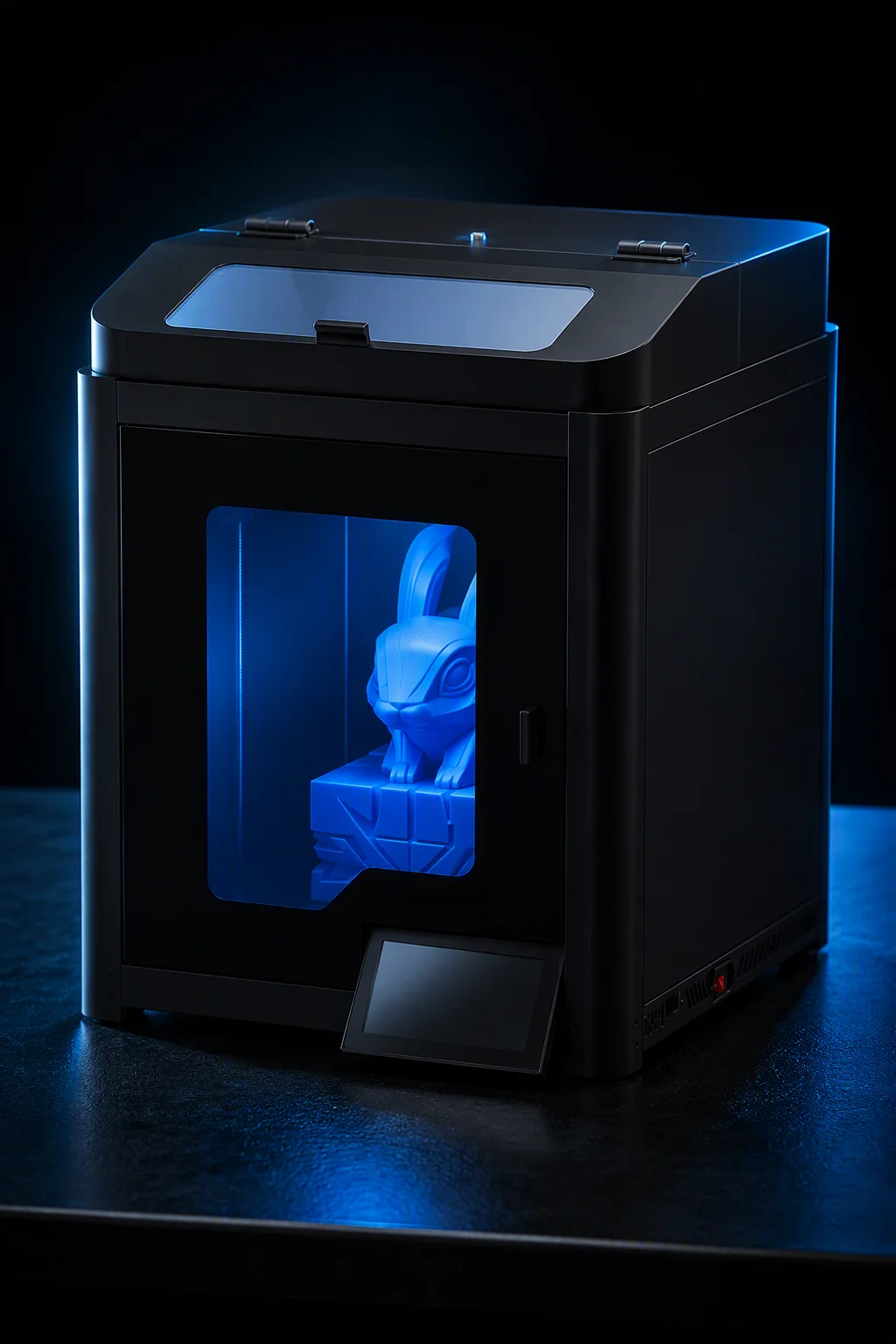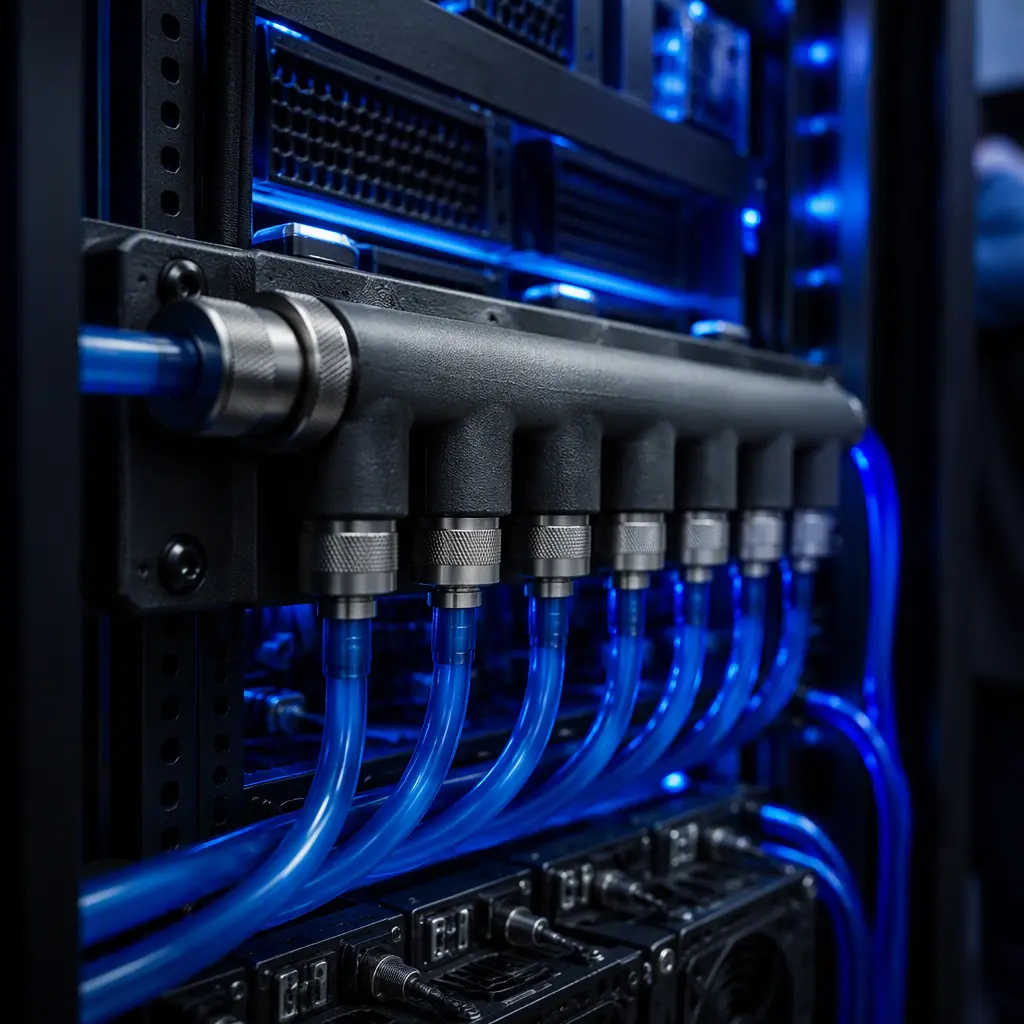
A colocation operator in Ashburn, Virginia was quoted $11,400 and an 8-week lead time to machine custom liquid-cooling manifolds for a 42-rack GPU cluster retrofit. Instead, it printed the manifolds in PA12 on two industrial FDM printers, 126 parts, $1,850 in filament, 11 days including design iterations, and the cluster went live on schedule. Data centers are now the fastest-growing buyer of industrial 3D printing because the industry is rebuilding itself around liquid cooling, custom airflow, and dense cabling, and almost none of that hardware is off-the-shelf. For distributors, this is a high-ticket, technically sticky vertical where a single account can consume more engineering filament in a year than a hundred consumer customers.
Why Data Centers Are the Fastest-Growing 3D Printing Vertical
Three structural forces make data centers a compounding opportunity. First, liquid cooling adoption: GPU-based AI training racks routinely exceed 30-40 kW per rack, past the practical limit of air cooling, so hyperscalers and colos are retrofitting direct-to-chip and rear-door liquid cooling at scale. Every retrofit needs manifolds, distribution headers, tubing routing hardware, and mounting brackets, custom geometry, low volume, urgently needed. Second, customization is structural: every data hall has different rack layouts, aisle widths, and cooling loop configurations, so standard parts never fit. Third, the maintenance cycle is real: cooling loops need service, gaskets wear, blanking panels get modified, and cable trays are re-routed, a steady stream of replacement and modification work. For the general tooling economics of this kind of custom manufacturing, see our manufacturing tooling guide.
The Application Clusters That Buy
Data center buyers respond to specific applications, not to "3D printing" pitches. The five clusters that actually purchase:
1. Liquid-cooling manifolds and distribution hardware. Manifold bodies, distribution headers, tube-to-manifold adapters, drain valves, and mounting brackets for CDUs (coolant distribution units). PA12 and PA12-CF are the workhorse materials, chemical-resistant to coolant, dimensionally stable, and printable on industrial FDM. A single 42-rack cluster retrofit consumes 50-150 printed parts.
2. Airflow management parts. Blanking panels for empty rack U-spaces, cold-aisle containment baffles, perforated-tile flow directors, and fan shroud adapters. These are simple but ubiquitous: a 1,000-rack facility can need 4,000+ blanking panels, and standard sizes never match mixed-vendor racks. Flame-retardant materials (UL 94 V-0) are mandatory in plenum spaces. See our certification & compliance guide for UL ratings.
3. Cable management and routing hardware. Custom D-rings, vertical cable managers, fiber-routing troughs, and rack-rail mounted guides. Every rack has a unique cable path; printed parts eliminate the cable-spaghetti that blocks airflow and complicates maintenance.
4. Custom server and rack tooling. GPU mounting brackets, drive-cage adapters, PCIe support arms, and heatsink shrouds for non-standard hardware. These are high-value because a custom GPU bracket machined in aluminum costs $300-900 and takes weeks; a printed PA12-CF version costs $15-40 and ships in days. Our consumer electronics guide covers the adjacent electronics-hardware demand.
5. Sensor mounts and environmental hardware. Temperature/humidity sensor brackets, leak-detection cable clips, air-pressure sensor mounts for containment monitoring. Data centers instrument everything, and every sensor needs a custom mount in an unusual location.
Materials That Survive the Data Hall
Data center environments punish the wrong material: warm air, coolant exposure, static discharge, and flame-code scrutiny. The material map distributors should stock:
Two traps: (1) coolant compatibility, propylene-glycol coolant slowly degrades some filaments, so manifolds must be validated against the specific coolant chemistry, not assumed safe; (2) static, near server internals, non-ESD materials can discharge and damage equipment, so ESD-safe grades are a requirement, not a premium. The high-temperature material properties that matter in hot-loop applications are covered in our PEEK/PEI/PPSU industrial materials guide.
Economics: Custom Machining Is the Competition
Data center buyers compare printed parts against machined aluminum and injection-molded minimums. The numbers that close the sale:
For the distributor, the attractive number is account value: a single colocation facility can spend $10,000-60,000/year on printed parts and engineering filament once it adopts in-house printing, and the engineering relationship (design support, material validation, print profiles) makes switching costs structural. The ROI framework for pitching this to a facility manager is in our TCO/ROI calculator guide.
The Distributor Playbook: Entering the Data Center Vertical
The winning playbook has five moves:
1. Sell the engineering relationship, not hardware. Data center buyers are engineers; they respond to validated print profiles, coolant-compatibility test data, and design support. Position as the "cooling hardware partner," not a printer reseller.
2. Stock PA12 and PA12-CF as the anchor line. The manifold cluster is the highest-ticket, most recurring application. Keep both grades in stock with published chemical-resistance data, that document pack is your sales tool.
3. Bundle a design service. Offer 3D-scanning of existing rack layouts and a CAD-to-print service as a line item ($150-400/job). It shortens time-to-first-part and locks in the account. The service-and-support model that makes this work is in our after-sales support strategy.
4. Target retrofit projects, not new builds. New hyperscale builds use engineered, qualified parts; retrofits (GPU clusters into existing halls) need custom hardware fast. Retrofit projects are where printed parts win. Our rapid prototyping guide covers the fast-iteration workflow these projects demand.
5. Sell flame-retardant compliance as a feature. UL 94 V-0 certified materials for plenum spaces are non-negotiable in most jurisdictions; a distributor who documents compliance removes the facility manager's risk. The full compliance landscape is in our certification & compliance guide.
Common Pitfalls in the Data Center Vertical
Five mistakes account for most failed data center initiatives: (1) ignoring coolant chemistry, a manifold that degrades in propylene glycol fails catastrophically, so validate materials against the specific loop chemistry; (2) selling non-ESD parts for server-adjacent use, one static discharge incident ends the account; (3) missing flame-retardant requirements in plenum spaces, which can void insurance and fail inspection; (4) undersizing manifold walls, printed manifolds need 2.5-3.5 mm walls plus post-print pressure testing at 2x operating pressure; and (5) treating this like a consumer vertical, data center buyers expect engineering data, validation, and documentation, not hobbyist support. For the dimensional-accuracy baseline that manifold and bracket designs depend on, see our tolerances & dimensional accuracy guide.
Getting Started: The First 90 Days
A 90-day entry plan: Month 1 . Stock PA12, PA12-CF, and flame-retardant ABS/PC with documented material data, and identify 8-10 target accounts (regional colocation providers, managed hosting companies, enterprise data center teams) in your territory. Month 2 . Run two pilot projects at cost-plus-10% (a blanking-panel batch and a manifold retrofit are ideal first wins) and document the results with photos and pressure-test data. Month 3 . Convert pilots to full accounts with design-service retainers, publish one case study with measured numbers ("126-part manifold retrofit: 11 days vs 8-week quote"), and begin attending data center industry meetups where facility engineers gather. If you already sell into electronics or cooling markets, our telecom & 5G infrastructure guide shows how the same infrastructure-hardware account model transfers.
Reviewed by the Precise3D engineering & OEM team. Compliance files that accompany the catalog are auditable at the certification register.
Enter the Data Center Vertical
Ready to Supply Data Center Hardware?
Get wholesale pricing on industrial printers, PA12/PA12-CF and flame-retardant material lines with published chemical-resistance data, and the design-service playbook that wins colocation accounts.