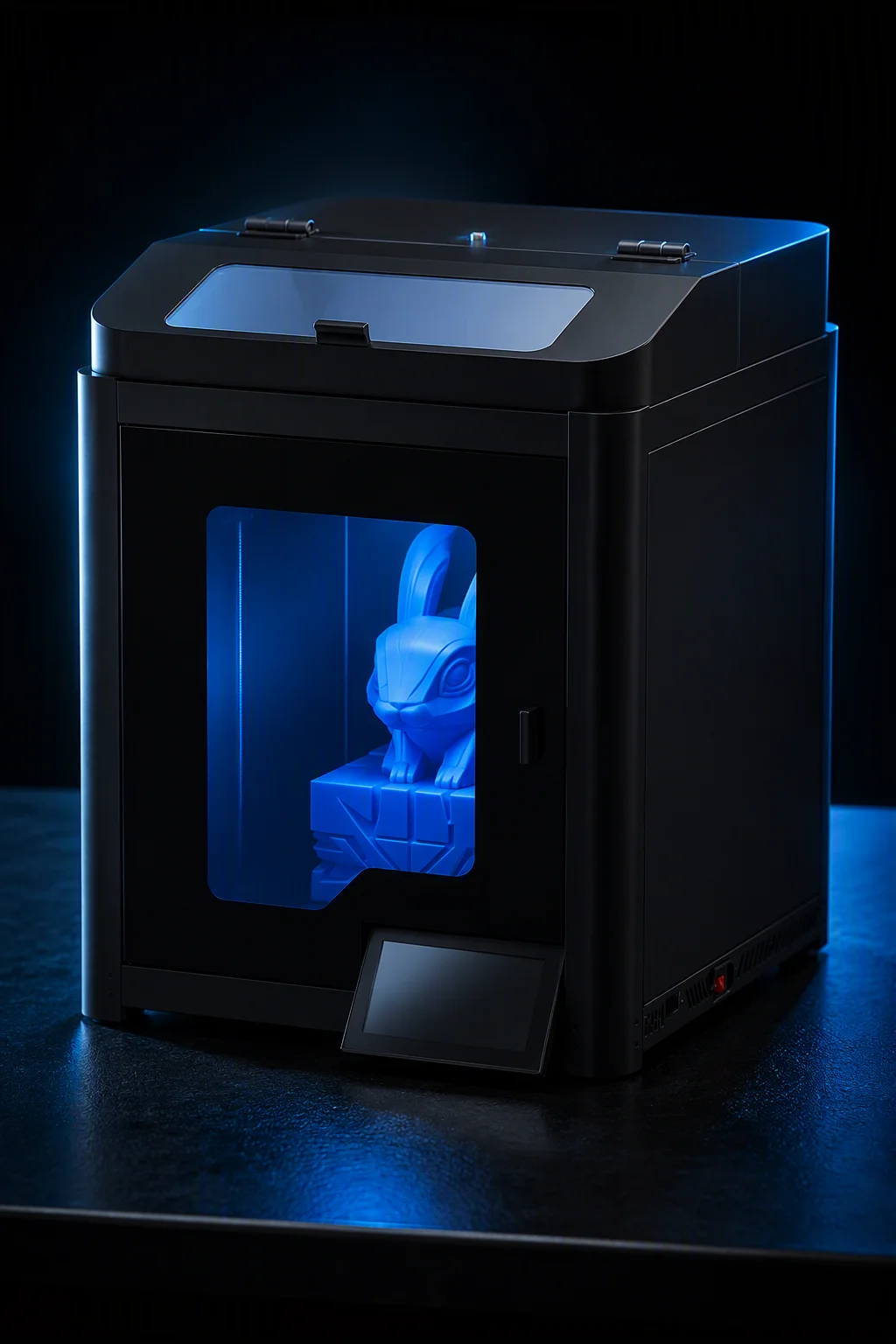
What an Aged Print Fleet Actually Costs
Distributors sell the first machine and then live with it for seven to ten years. That second half of the relationship is where the economics get interesting, because a printer's cost curve is not flat: consumable and failure cost rises with age, resale value falls faster than most owners expect, and the machine's real worth is measured in parts per hour that still meet tolerance rather than in parts per hour it could theoretically produce.
This guide covers the four numbers that decide whether a machine stays in service, is rebuilt, or is retired: the discounted cost of keeping it, the resale value curve by age and condition, the rebuild threshold where new parts stop paying back, and the fleet refresh cycle that avoids a wall of simultaneous failures. The audience is a distributor advising a customer, or a print farm deciding what to do with the machines already on its floor.
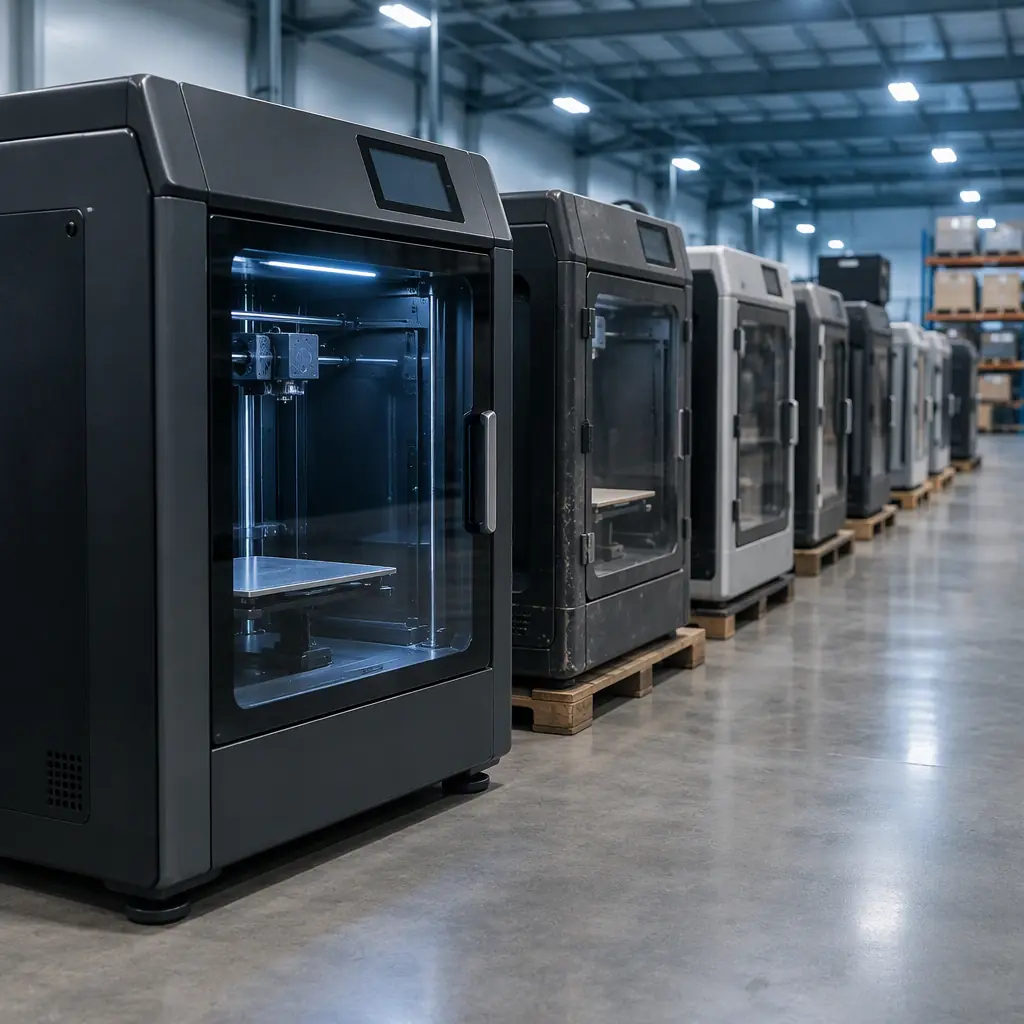
The Retain, Rebuild or Retire Decision
Every machine over five years old should carry one of three verdicts, reviewed annually. Without an explicit review, the default verdict is retain, and retain is what produces a fleet where everything fails in the same quarter.
The percentages are deliberately crude because a precise calculation is not needed to make the decision, but the cost side must be built from the machine's own history. A machine with a clean maintenance record and a good spares pipeline is a different proposition from an identical model that has already consumed two hotends and a main board.
Modelling the Cost of Keeping an Old Machine
Build the comparison over three years, because that is the horizon over which a replacement pays back and the horizon over which an old machine's failure rate becomes expensive. Four lines go into the keeping cost:
- Parts consumption. Actual spend on that machine over the last twelve months, taken from the service log rather than estimated. Multiply by 1.25 to reflect the rising failure rate with age.
- Downtime. Hours lost multiplied by the contribution margin per machine-hour, not by revenue. A machine idle for six hours has cost the margin on the parts it did not make.
- Yield loss. Failed prints and parts scrapped at inspection, priced at material plus machine time. Watch the trend, not the average.
- Space and auxiliary. Floor area, extraction capacity and power that the old machine occupies and that a newer, denser machine could use for more output.
A worked example makes the shape of the answer clear. A six-year-old engineering printer consuming €1,900 in parts per year, losing 80 hours to downtime at a contribution of €18 per machine-hour, scrapping 4 percent of parts at €6 of material each and producing 3,000 parts per year, costs roughly €1,900 + €1,440 + €720 = €4,060 per year to keep, before space. Over three years with a modest escalation that is close to €13,000. Against a replacement that carries a warranty and a lower failure rate, the keeping cost is usually between 55 and 80 percent of the capital cost of the new machine, with no residual value at the end of the period.
The Resale Value Curve by Age and Condition
Resale prices for enclosed FDM printers behave in a characteristic way: the first year is brutal, the middle years are relatively flat, and the last years fall to the value of the recoverable parts. The curve is also steeper for consumer-origin prosumer machines than for industrial platforms, because the consumer market releases a new generation every year that resets expectations.
Two practical consequences follow. First, the worst financial moment to sell a machine is at eighteen months, when the value has already dropped by half and the machine is still perfectly serviceable. Second, the value of a four-year-old machine is dominated by condition documentation rather than by hours: a machine with a maintenance log, current belt and bearing records and a clean enclosure sells for materially more than an identical machine with no history. That documentation is something a distributor can create and sell as part of a support programme, as covered in our trade-in programme guide.
Rebuild Threshold: When New Parts Stop Paying Back
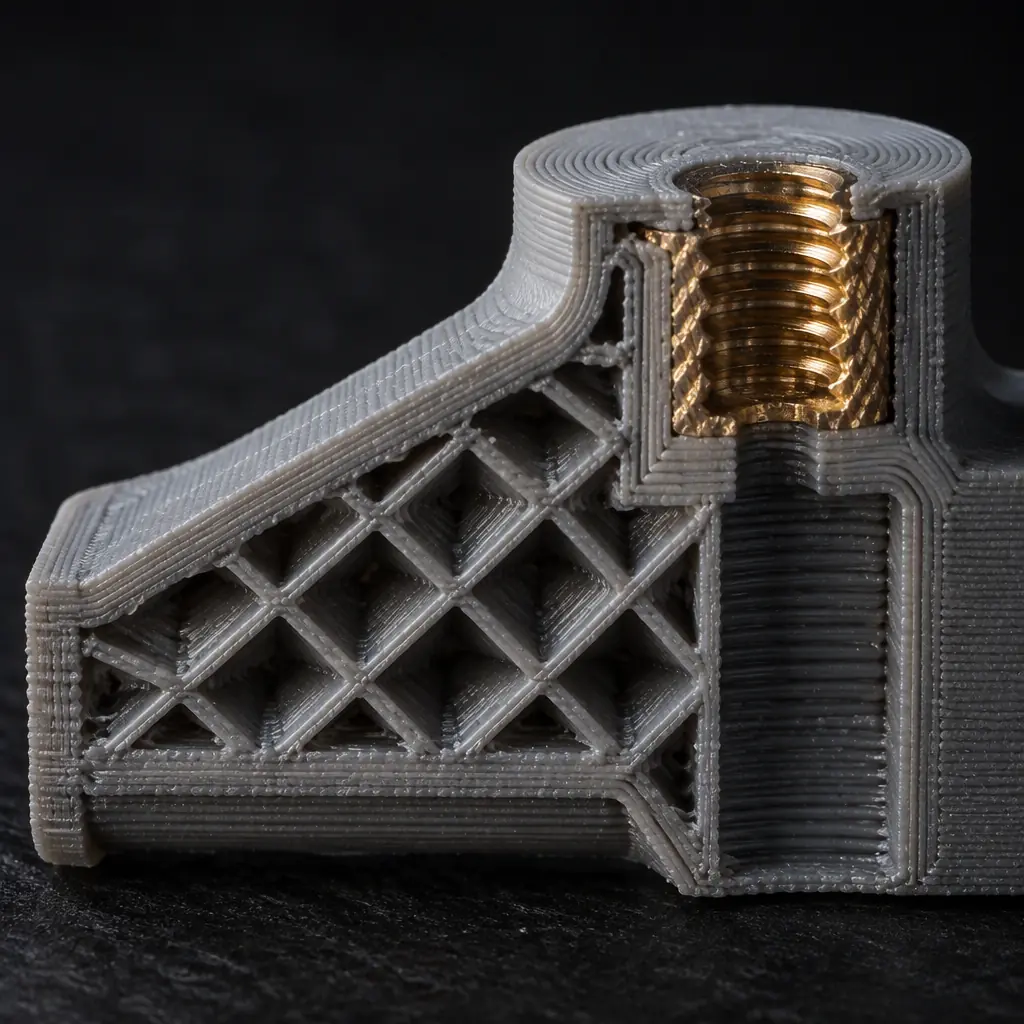
A rebuild returns a machine to serviceable condition by replacing the parts that carry wear while keeping the structure. It becomes uneconomic at a definable point, and that point is best expressed as a fraction of the cost of equivalent new capacity.
- Motion system. Belts, idlers and linear components carrying wear: typically €150 to €400 on a mid-size machine, worth it if the frame is rigid and the rails are not pitted.
- Hotend and extruder. Full replacement €80 to €250. Worth it whenever the machine is otherwise sound, because it restores dimensional consistency directly.
- Electronics and control. Main board, drivers, screen: €150 to €450. Worth it only if firmware is still supported and the spares will exist for the next three years.
- Chamber seals, heaters and insulation. Cheap, and the highest return per euro on an engineering machine, since degraded seals raise both energy use and warping.
Add the parts, add the labour at the distributor's own service rate, and compare with the price of the new machine that would deliver the same output. Below 60 percent, rebuild usually wins on cash flow. Between 60 and 85 percent, the decision turns on tolerance: if the frame or gantry has lost geometry, no amount of new parts restores it, and the machine should not be rebuilt regardless of the arithmetic. Above 85 percent there is no case, except where the machine's format is unique and a replacement is not available in the same footprint.
Fleet Refresh Cycling and the Failure Wall
Fleets bought in one batch fail in one batch. A farm that bought thirty identical machines in a single quarter will, seven years later, face thirty machines crossing their wear thresholds within a few months of each other. That is a cash problem and a service-capacity problem at the same time, and it is entirely avoidable.
The control is to set a refresh cycle and stagger it deliberately. A five-year cycle on a thirty-machine fleet means retiring and replacing six machines per year, which is a predictable capital line and a predictable service workload. The staggering is done by buying in tranches from the start, and by re-phasing at the first refresh rather than at the wall.
Technology capture matters here. Over five years, hotend flow capacity and motion control have moved far enough that a new machine replaces about one and a half old machines at equal footprint, which changes the refresh maths in favour of cycling earlier than the wear thresholds alone would suggest. The productivity side of that argument is set out in our print farm economics guide, and the grading that sets the price of the machine you are retiring is in our refurbished market guide.
Reading Machine Health Before It Fails
The condition data that makes a refresh decision defensible comes from five checks, all of which can be taken in a single visit and compared against the machine's own baseline:
- Backlash on each axis. Measure with a dial indicator and a programmed move; more than 0.05 mm on a hobby-origin machine or 0.02 mm on an industrial platform signals motion wear.
- Squareness and gantry skew. Print a large calibration square and measure diagonals; a drift of more than 0.3 mm across 200 mm is a structural warning.
- Hotend thermal response. Time to reach 250 °C and stability under flow; slower response indicates a degrading heater or thermistor.
- Belt and bearing condition. Visual and audible, recorded with a date so trends are visible.
- Yield trend by machine. Scrap rate per machine over six months, which is the single strongest predictor of imminent failure.
Backlash measurement in practice, including the jig and the programmed move, is covered in our calibration and metrology programme guide. A machine with a rising scrap trend and stable mechanics usually has a degrading hotend or a drifting thermistor, both cheap to correct. The same trend with moving mechanics does not. Related diagnostics are in our maintenance guide and in the reliability and uptime guide.
What Replacement Actually Buys
Replacement is not primarily an energy or a speed purchase. Measured against a five-year-old machine of the same class, a current platform typically delivers: higher hotend flow, so the same part prints faster at equal quality; better first-pass yield through improved first-layer and input shaping control; lower failure rate with a warranty; spare parts availability for the next cycle; and firmware support that keeps the machine compatible with fleet software.
The productivity gain is real but should be modelled, not assumed. A 30 percent reduction in print time on a machine already running 60 percent utilised delivers 7,200 additional machine-hours per year across a twenty-machine fleet, which is the number that pays for the refresh. If utilisation is already at 90 percent, the gain is smaller in hours but larger in relief of a constraint, which is worth more than the hours suggest.
Machines at end of support deserve special attention. Where firmware updates have stopped and spares are being sourced from third parties, the risk is not gradual degradation but a single unavailable part taking a machine out permanently. That scenario is covered in our end-of-life service parts guide, and the stocking response in our last time buy guide.
Precise3D on Long-Life Platforms and Documented Spares
Our platforms are designed for a five-to-seven-year service life with a documented spares commitment: a published list of wear parts with part numbers, an availability commitment covering the refresh cycle, and firmware maintained across the platform generation rather than abandoned at model change. Frame and motion components are specified for the loads of continuous farm operation, and chamber and heater assemblies use replaceable modules so a rebuild restores thermal performance without structural work.
For distributors advising a fleet owner, the practical value is that a refresh proposal can include a spares availability statement the customer can hold you to. Machine documentation, wear-part lists and MOQ terms are available on request with MOQ from 100 units.
Reviewed by the Precise3D engineering team. Resale percentages, cost figures and measurement thresholds are industry-typical ranges for orientation and are not a specification for any particular machine or market. Validate against local market data before advising a customer.
Planning a Fleet Refresh?
Ask for Wear-Part Lists and a Spares Availability Statement
Tell us your fleet size, age profile and materials. We will send the wear-part list with part numbers, the availability commitment across the refresh cycle, and rebuild guidance for the machine classes you run.