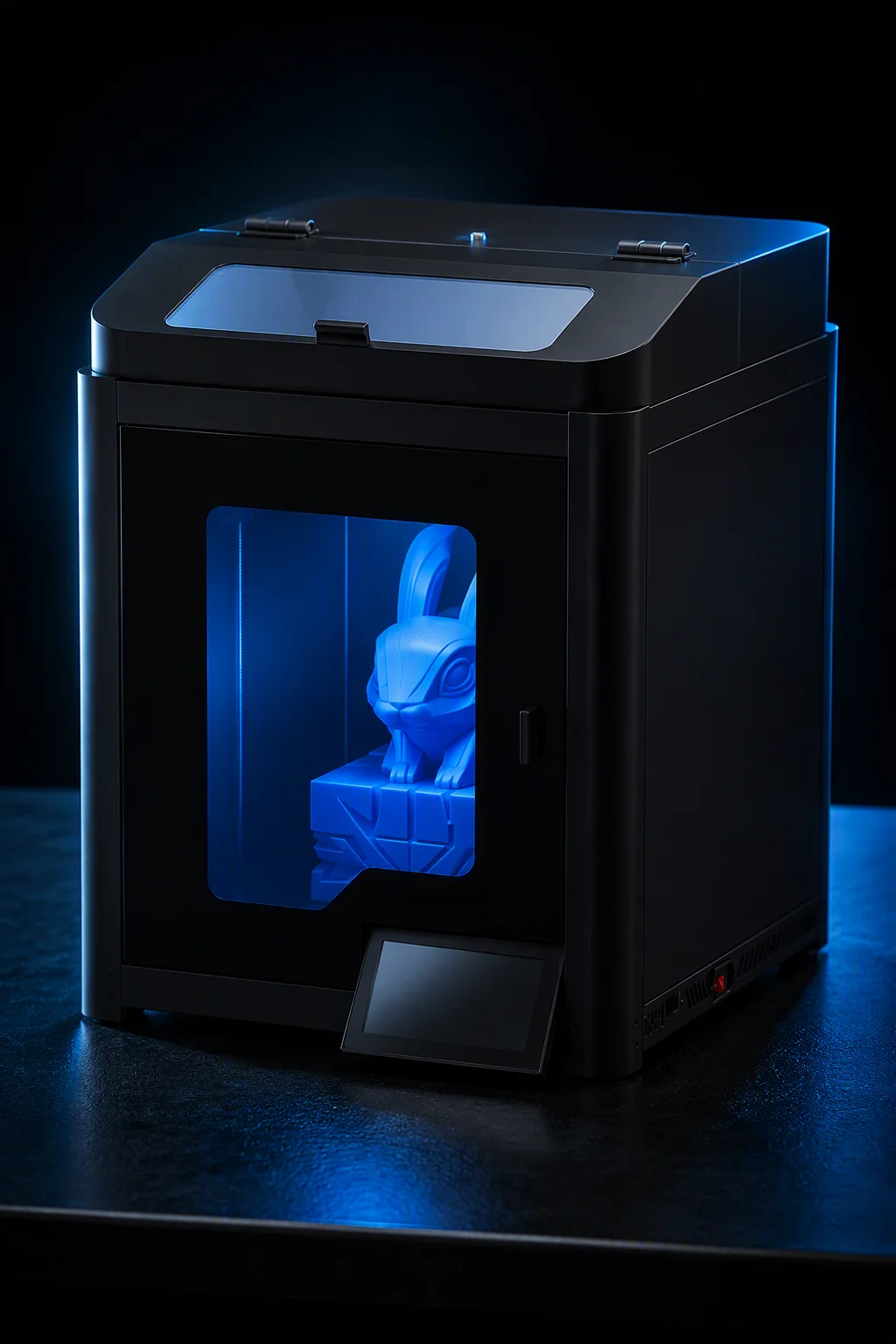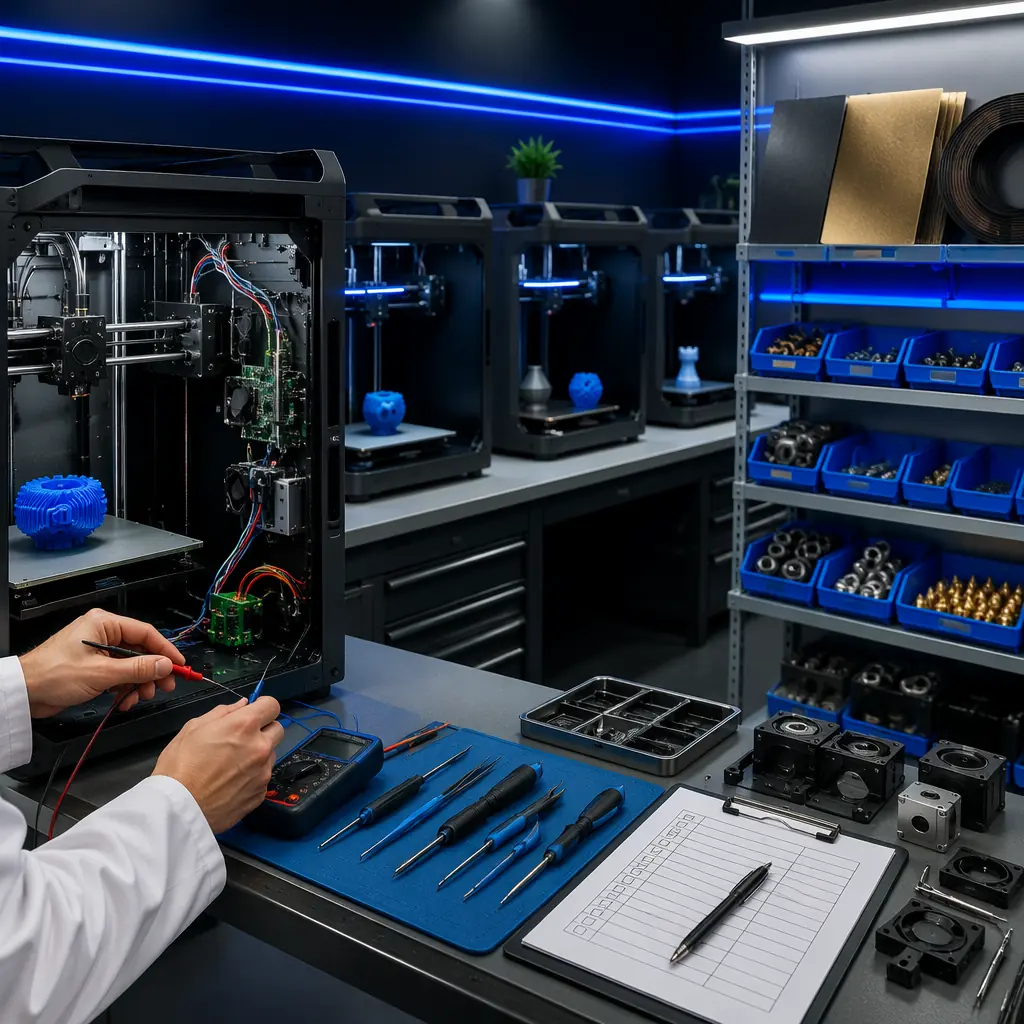
Every 3D printer distributor has customers who want a printer but cannot afford the new-unit price. Schools with $500 budgets, startups bootstrapping their first prototype lab, makerspaces stretching grant money across 10 machines. These customers currently buy from eBay, Facebook Marketplace, or liquidation auctions — where they get no warranty, no support, and no relationship with a supplier who will sell them filament for the next five years.
This is the refurbishment opportunity. A distributor who offers certified pre-owned printers at 40–60% of new price with a 90-day warranty captures three things: the initial sale margin (typically 30–45% on refurbished vs 20–35% on new), the recurring consumables revenue (which is identical regardless of whether the printer was new or used), and the upgrade path (when the customer's business grows, they upgrade through you — not through a competitor). This guide covers the complete operational playbook, built from 15 Precise3D distribution partners who have operated refurbishment programs for 2+ years.
The Market: Who Buys Pre-Owned 3D Printers and Why
Understanding the buyer profile is essential because refurbished printer customers have fundamentally different needs than new-unit buyers — and those needs create specific sales and support structures.
Education buyers dominate the refurbished market for a structural reason: their budgets are fixed annually, and a $400 refurbished printer fits within a classroom discretionary fund where a $1,200 new printer requires a purchase order, three approvals, and a 6-week procurement cycle. Selling refurbished printers to schools is not competing with your new printer sales — it is capturing a market segment your new printers cannot reach. See our education market guide for curriculum bundling strategies.
Sourcing Quality Units: Where to Find Refurbishable Printers
The quality of your refurbishment program starts with sourcing. A printer with 3,000+ print hours, a bent Z-rod, and a burnt-out mainboard is not refurbishable — it is scrap. The economics only work when the required repairs cost less than 25% of the expected resale price.
Trade-in programs (highest quality, highest volume).
Offer existing customers a trade-in credit toward a new printer when they return their old unit. A $150–250 credit on a $1,200 new printer costs you less than the margin on the new unit, and you acquire a known-history printer for refurbishment. The customer's maintenance records tell you exactly what has been replaced and when — eliminating the diagnostic guesswork that eats margin in refurbishment. See our pricing strategy guide for trade-in credit structuring.
Print farm decommissioning (high volume, consistent models).
When a print farm upgrades to newer, faster models, they decommission fleets of 20–100 identical printers. These units have high print hours but typically excellent maintenance records (print farms track everything). Buy the entire fleet at $80–150/unit, refurbish the best 60%, and part out the rest for spares. The identical-model advantage means your refurbishment process can be standardized — one set of procedures, one spare parts inventory, one calibration profile. The print farm operations guide covers how to approach farm operators for decommissioning deals.
Customer returns and demo units (zero acquisition cost).
Every distributor accumulates units that cannot be sold as new: customer returns within the 30-day window (often perfectly functional), trade show demo printers with 15 hours of print time, and units with cosmetic damage from shipping. These are your highest-margin refurbishment inventory because the acquisition cost is zero. A demo printer with 15 hours and a scratch on the side panel sells for 65% of new price at 90% gross margin.
Financial check: If you pay $150/unit and sell 66% of them at $500 each, your effective cost per sold unit is $225. At a $500 sale price with 30 minutes of refurbishment labor ($15) and $30 in replacement parts, your gross margin is 46% — competitive with new printer margins and with zero manufacturer dependency.
The 12-Point Refurbishment Checklist
A refurbished printer is not a used printer that powers on. It is a unit restored to a defined performance standard with documented inspection and new wear components. The distinction determines whether your customer returns in 3 months because the hotend clogged — or comes back to buy filament because the printer worked perfectly.
The always-replace items (belts, nozzle, build surface) cost $15–35 total and eliminate 80% of post-sale support issues. The if-worn items should be replaced prophylactically on any unit with more than 500 estimated print hours. For the calibration procedures in step 10, see our advanced calibration guide and maintenance guide. For motion system specifics, the motion system guide covers wear patterns and replacement thresholds.
Pricing Pre-Owned Printers: The Framework That Maximizes Margin
Pricing refurbished printers is not a simple percentage of new price. It depends on printer age, print hours, model desirability, and — most importantly — whether the manufacturer still supports the model with firmware updates and spare parts. An actively supported model with 500 hours and new wear components can command 65% of new price. A discontinued model with 2,000 hours struggles at 35%.
The margin sweet spot is Grade B. A $1,200-new printer acquired for $150 (trade-in), refurbished for $50 in parts and labor, and sold at $600 (50% of new) yields a 400% return on refurbishment cost and a 67% gross margin on the sale. And Grade B buyers consume filament at the same rate as new-unit buyers — so the lifetime value of the customer relationship is nearly identical. For consumables bundling strategies with refurbished units, see our consumables bundling guide.
Warranty and Support: The Difference Between "Used" and "Refurbished"
The single factor that separates a distributor's refurbished printer from a private eBay sale is the warranty. A 90-day warranty on a $600 printer costs approximately $30–50 in expected claims (based on 8–12% claim rate and $30 average claim cost) — a fraction of the price premium it commands. Customers pay 15–25% more for a refurbished unit with warranty vs an equivalent used unit without one.
The warranty structure should be simple and specific:
- Covered: Print quality defects attributable to refurbishment work (layer shifting from loose belts, extrusion inconsistency from improperly calibrated e-steps, bed adhesion failure due to worn build surface). Hotend clogs from manufacturing defects in the replacement nozzle. Mainboard failure not caused by user modification.
- Not covered: User-induced damage (wrong voltage, filament jam from user error, crash from incorrect slicer settings). Cosmetic issues documented in the pre-sale condition report. Consumable wear (nozzles beyond 500 hours, PEI sheets, belts).
The warranty is also your upsell vehicle. Offer a 12-month extended warranty for $79 — roughly 10% of the printer price and 80% gross margin. At a 15% attachment rate, extended warranties add $12 in pure profit per refurbished unit sold. The warranty and returns guide covers full SLA structures for both new and refurbished programs. For after-sales support infrastructure, see our after-sales support guide.
The Upgrade Cycle: How Refurbished Sales Feed New Printer Sales
The most overlooked benefit of a refurbishment program is that it accelerates the customer upgrade cycle. A school that buys a $400 refurbished printer today is not a lost new-printer sale — it is a customer who will need a second printer in 12 months, and that second purchase is more likely to be a new unit because they have now validated the technology with their own budget.
The data from our distribution partners shows a clear pattern: 34% of refurbished printer buyers purchase a new printer from the same distributor within 18 months. The refurbished unit served as a low-risk entry point that built trust in both the technology and the distributor relationship. Without the refurbished option, those customers would have bought from eBay — and their second purchase would have gone to the lowest bidder, not the distributor who supported them through their learning curve.
The upgrade pitch is straightforward: when the refurbished printer customer comes in for their third spool of filament, ask them what they would print if they had a larger build volume, a heated chamber, or multi-material capability. The answer to that question is your next new-printer sale. For the complete distributor growth framework, see our portfolio strategy guide and distributor startup guide. For competitive positioning with refurbished inventory, see the competitive brand landscape guide.
The used 3D printer market is not a threat to new printer sales — it is a growth engine hiding in plain sight. The distributors who build refurbishment programs now will own the upgrade path for an entire generation of price-sensitive customers who would otherwise buy from faceless online marketplaces. And in a market where customer acquisition cost is rising and new-printer margins are compressing, a refurbishment program is not optional — it is a structural competitive advantage.
Reviewed by the Precise3D engineering & OEM team. Compliance files that accompany the catalog are auditable at the certification register.
Build Your Refurbishment Program
Precise3D Distributor Partnership — Refurbishment Playbook, Trade-In Templates & Certified Pre-Owned Support
Precise3D distribution partners receive our complete refurbishment operations manual, 12-point inspection checklist templates, trade-in program marketing materials, and access to our spare parts catalog at distributor pricing. We also provide refurbishment training for your technical team and co-branded "Certified Pre-Owned" certification seals. Contact us to discuss partnership terms and launch your refurbishment program.