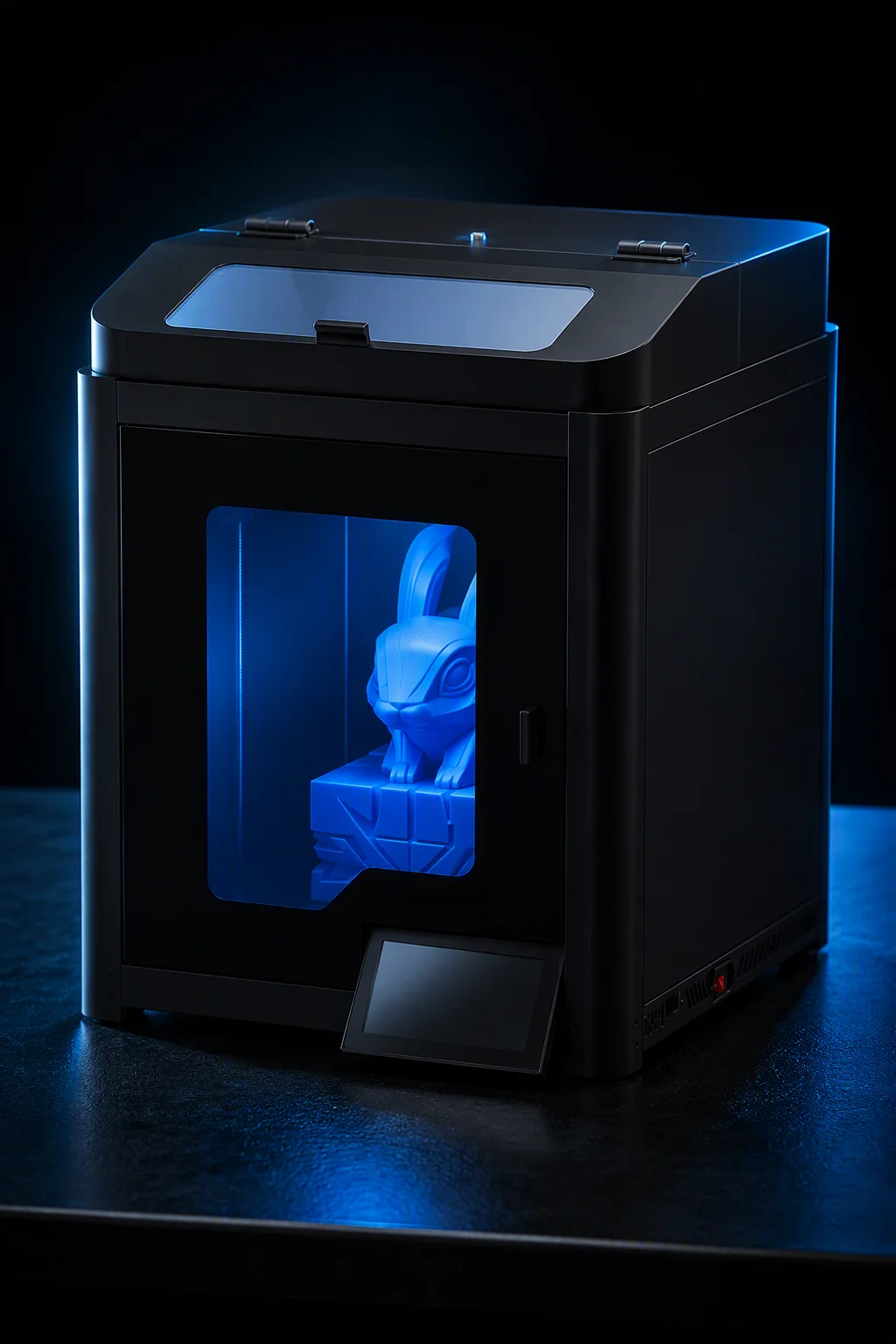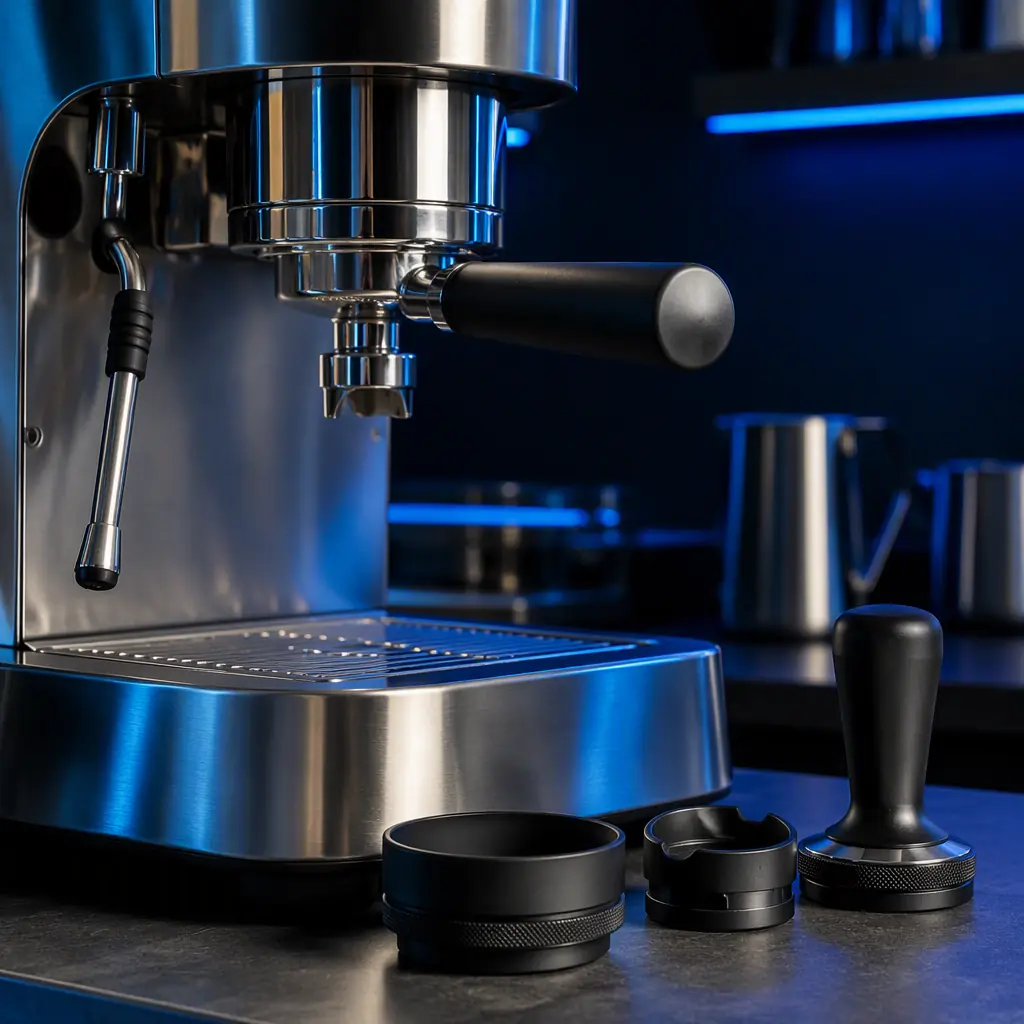
The coffee equipment industry is a $70+ billion global market that splits into four buyer groups: espresso machine and grinder manufacturers (OEMs in Italy, Germany, and Switzerland plus a fast-growing Chinese tier), commercial equipment service companies that maintain machines in cafés, hotels, and offices, roasteries that buy roasting machines and packaging lines, and café operators who continuously upgrade tampers, funnels, and workflow tools. Every group shares one structural trait: coffee machines are engineered for 15-25 year service lives, parts catalogs for old models are routinely discontinued, and custom espresso tools are a culture where baristas pay $80-200 for a precision tamper. That combination, long-lived machines, discontinued parts, and premium hand tools, makes coffee one of the most naturally recurring verticals for 3D printing, and a strong consumables account type for distributors who understand its rhythm.
Why Coffee Equipment Is Buying 3D Printers
Four structural facts make coffee a durable buyer. First, legacy parts obligations: a commercial espresso machine sells for $8,000-25,000 and is expected to run for two decades, so manufacturers and service networks are legally and commercially bound to supply spare parts for machines that are no longer tooled; the same spare-parts economics that drive our spare parts & aftermarket revenue guide apply at machine level. Second, food-grade precision: espresso extraction happens at 90-96°C and 9 bar, so replacement parts must hold dimensional tolerance against heat, pressure, and daily chemical cleaning, a specification profile that favors engineering thermoplastics over machined metal for many non-pressure parts. Third, customization culture: baristas and café owners buy personalized tampers, dosing funnels, portafilter handles, and latte-art tools as status objects, and unit-of-one production is exactly what no mold can serve. Fourth, low-volume OEM tooling: grinder burr carriers, hopper lids, and machine brackets are produced in volumes of 500-5,000 units per year, below the injection-molding breakeven, which is why OEMs now print them; the make-or-buy decision framework is in our injection molding vs 3D printing guide.
The Applications That Actually Buy
Six clusters generate the orders. The buyers are espresso machine OEMs, grinder manufacturers, commercial service companies, roasteries, café groups, and specialty-coffee tool brands.
1. Discontinued and legacy spare parts. The flagship application: gaskets, steam wand tips, water-tank floats, button housings, and drip-tray inserts for machines 5-25 years old. A printed group-head gasket costs $0.30-1.50 and ships same week; the tooling to injection-mold it costs $5,000-15,000 and takes 8-12 weeks. The part-versus-tool math is the same one we develop in our spare parts revenue guide.
2. Grinder components. Burr carriers, hopper lids, declumper flaps, and adjustment-knob mechanisms for commercial grinders. These are wear parts on machines that grind 20-60 kg of coffee per day in busy cafés, and they fail on a predictable cycle, the recurring-replacement model mirrors our annual service contract guide.
3. Portafilter tools and barista accessories. Dosing funnels, WDT tools, calibrated tampers, distribution tools, and knock-box inserts. This is the premium hand-tool market: a single café buys 3-8 tampers at $60-200 each, and specialty tool brands sell thousands of units a year of designs that change every season, the small-batch production economics are covered in our print farm operations guide.
4. Roastery and packaging parts. Bean hoppers, chaff collectors, sample-roaster triers, and packaging-line changeover parts. Roasters are mechanically simple but bespoke, and most have no parts catalog at all, they print what breaks.
5. Café fixtures and workflow tools. Portafilter holders, steam-wand cleaning stations, syrup bottle racks, and bar-back organizers. Retail fit-out logic transfers directly from our retail fixtures & displays guide.
6. OEM low-volume production. Machine brackets, cable guides, nameplate bezels, and jigs for assembly lines. A mid-size espresso machine OEM can consume 200-800 printed production parts per month across its line, the scale economics are in our TCO & ROI calculator guide.
Materials for Coffee Equipment
Coffee buyers work in three material worlds, food-contact, hot/wet, and structural:
Two realities dominate material conversations. First, food contact: any part that touches coffee, water, or steam needs food-safe materials with documented compliance, the regulatory framework is in our food-safe 3D printing guide. Second, thermal cycling: espresso machines cycle from cold to 96°C hundreds of times a day, so parts near the group head need nylon or PEEK, not PLA; the engineering-material selection logic is covered in our engineering filaments guide.
From Discontinued Part to Delivered Order: The Coffee Workflow
The workflow that wins coffee accounts has five stages. Identify the part . Service companies work from exploded diagrams and call out gaskets, seals, and small plastics; teach them that anything non-pressure under 200°C is printable. Scan or model . Most legacy parts are reverse-engineered from a physical sample; pair printer sales with a 3D scanner bundle using the playbook in our scanner + printer bundle guide. Match the material . Food-contact and thermal requirements decide TPU versus nylon versus PEEK before a single gram is printed. Print and validate . Verify fit on the actual machine, test under heat and cleaning chemicals, then document the material datasheet; the qualification workflow is in our certification & compliance guide. Stock and repeat . The winning service companies maintain a digital parts library and print on demand, turning a one-off gasket into a 200-part-per-month relationship.
Budget Reality: Printed vs Tooled
The comparison that closes coffee accounts:
The distributor math compounds because coffee equipment is a consumables-rich vertical: every espresso machine consumes group gaskets, cleaning tablets, backflush detergent, water filters, and shower screens on a monthly cycle, the recurring-revenue model is developed in our consumables & accessories bundling guide.
The Distributor Playbook: Entering Coffee
Five moves win coffee accounts:
1. Target the service companies first. Independent espresso service companies and regional coffee equipment distributors are the highest-intent buyers, they face discontinued-part calls weekly and already bill for parts. Build a target list of 20-30 service companies and machine dealers in your territory.
2. Lead with the legacy-parts pitch. The pitch is "any discontinued part, printed in food-safe material, shipped in 48 hours." Bring a demo kit of three real parts: a group gasket, a grinder part, and a custom tamper, coffee buyers approve what they can hold.
3. Bundle the material ecosystem. Nylon, food-safe TPU, PETG, and PEEK are the anchors; the margin is in filament subscriptions, nozzles, build plates, and finishing supplies. The bundling mechanics are in our consumables bundling guide.
4. Offer scanning-to-part services. Most service companies do not own CAD skills. A distributor that pairs printer sales with reverse-engineering services captures the account before the parts library exists, the services-stickiness logic is in our after-sales support strategy.
5. Work the café upgrade cycle. Cafés rebrand and upgrade tools every 2-4 years, and new shop fit-outs happen constantly in growing urban markets. Time outreach to fit-out season and pair hardware with the seasonal inventory planning playbook from our seasonal inventory guide.
Common Pitfalls in Coffee Accounts
Five mistakes cost distributors coffee business: (1) selling PLA for hot/wet parts. PLA deforms above 55°C and fails food-contact expectations; the honest recommendation is nylon or food-safe TPU for anything near the group head; (2) ignoring food-safety documentation . Parts that touch coffee need documented material compliance, and a contamination incident ends the account (the framework is in our food-safe regulatory guide); (3) underestimating thermal cycling . A part that survives one heat test can crack after 500 thermal cycles; test for fatigue, not just fit; (4) treating cafés like consumers . A 12-location café group is a commercial account with real service and consumables demand; and (5) skipping surface finish . Baristas judge tools by feel, so a raw layer-line tamper reads as "prototype"; sell post-processing from day one using the finishing workflow in our post-processing & finishing guide.
Getting Started: The First 90 Days
A 90-day entry plan: Month 1 . Identify 20-30 target accounts (espresso service companies, grinder dealers, roasteries, café groups) and stock the coffee material set: food-safe TPU, nylon PA12, PETG, plus nozzles, build plates, and finishing consumables. Month 2 . Produce a finished demo kit (group gasket, grinder part, custom tamper) with material datasheets, run two pilot jobs at cost-plus-10% (a legacy gasket batch and a café tool set), and offer scanning-to-part service to one service company. Month 3 . Convert pilots to full accounts with filament subscriptions and a 48-hour parts SLA, publish your first measured case study ("legacy group gasket: 10 weeks → 2 days, $0.40/part"), and open one roastery account. The printer investment model that justifies the distributor's own machines is in our TCO & ROI calculator guide. The sustainability angle also lands with modern roasteries. The recycled and low-waste filament playbook is in our sustainable & recycled filament guide.
Reviewed by the Precise3D engineering & OEM team. Compliance files that accompany the catalog are auditable at the certification register.
Enter the Coffee Equipment Market
Ready to Supply Espresso & Coffee Equipment Companies?
Get wholesale pricing on engineering printers, food-safe TPU and nylon filament lines, 3D scanners, nozzles, build plates, finishing supplies, and the coffee-market playbook that wins service companies and roasteries.