In 2024, the University of California system added a sustainability clause to all equipment procurement contracts: suppliers must provide a lifecycle environmental impact statement for purchases over $5,000. The Dutch government now requires 50% recycled content in publicly funded maker spaces by 2027. EU corporate sustainability reporting directives (CSRD) are pushing mid-size manufacturers to audit their entire supply chain for carbon footprint — including the 3D printers on their factory floor. If you're a 3D printer distributor who hasn't built a sustainability product line, you're invisible to a growing segment of the highest-value buyers in the market. Here's how to build one — and how to profit from it.
The Sustainability Opportunity: It's Not a Niche — It's a Procurement Requirement
Sustainable 3D printing has moved from "nice to have" to "required to bid" in three of the four largest distributor customer segments: education (35% of RFPs now include sustainability criteria, up from 8% in 2022), enterprise manufacturing (EU CSRD compliance is driving supplier audits down to the equipment level), and government/public sector (green procurement policies are spreading from the EU to North America and APAC). Only the consumer/hobbyist segment remains price-driven without sustainability requirements — and that segment generates the lowest margins.
Distributors who build a sustainability product line capture three revenue streams: (1) recycled and biodegradable filament sales at 15-25% premium pricing over virgin materials, (2) energy-efficient printer models that qualify for government green procurement programs, and (3) filament recycling services that turn customer waste into recurring revenue. The third stream is the most defensible — once a university starts sending you their failed prints and support material for recycling, switching costs are high. For how these streams fit into your overall portfolio, see our portfolio strategy framework.
Recycled Filaments: The Product Line That Sells Itself
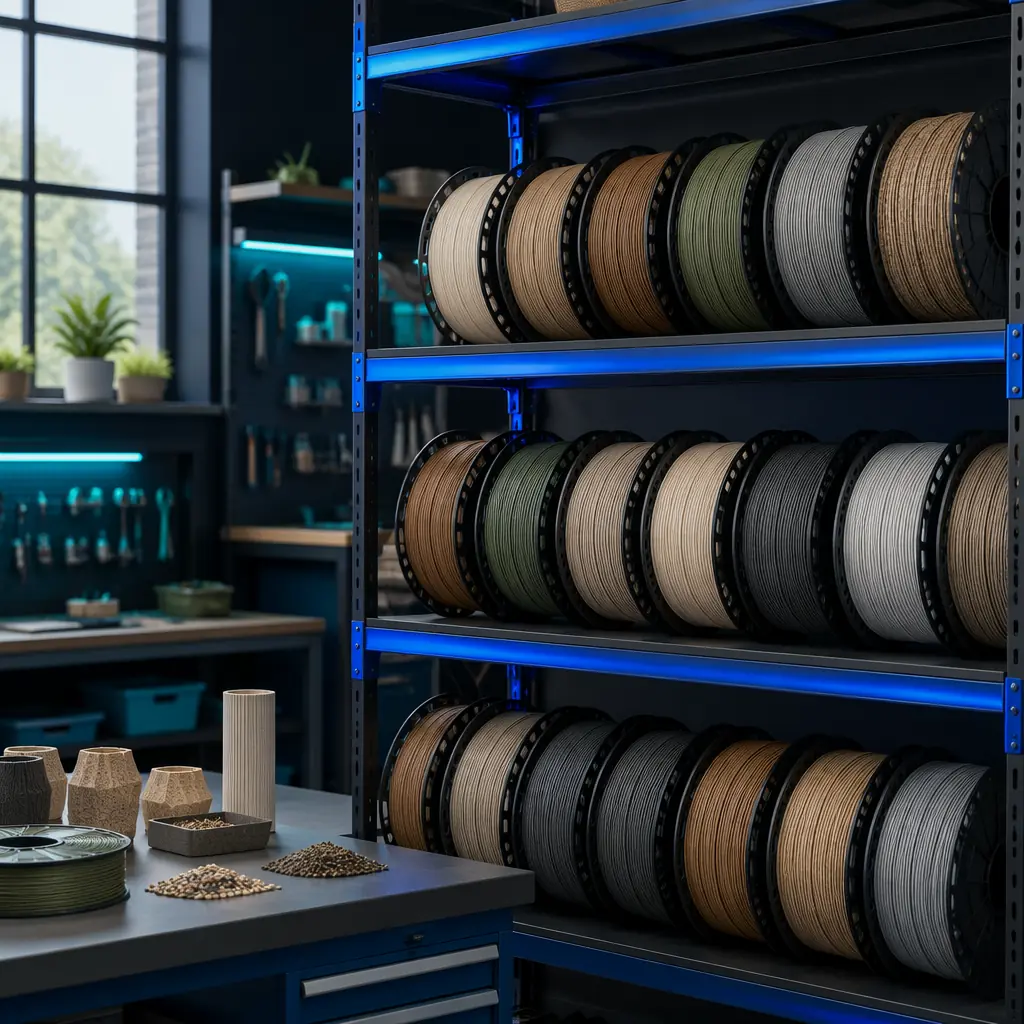
Recycled 3D printing filament — primarily rPLA (recycled PLA) and rPETG (recycled PETG) — is the fastest path to a sustainability product line. These filaments are manufactured from post-industrial waste (factory offcuts, failed prints, support material) or post-consumer waste (recycled PET bottles for rPETG). They print with the same settings as virgin material — no retraining, no support calls, no compatibility issues. The only difference is the price: rPLA retails at $25-32/kg vs $18-22/kg for virgin PLA, a 35-45% premium that customers willingly pay because it checks a procurement box.
The margin structure for a distributor stocking recycled filament:
Compare to virgin PLA at $8/kg margin and virgin PETG at $10/kg margin — recycled filament earns 19-33% higher margin per kg while carrying a sustainability story that differentiates you from every competitor selling the same virgin spools. A university lab printing 3 kg/day generates $10,400/year in recycled filament revenue at $540/year higher margin for you than virgin material. For the full filament stocking economics, see our filament stocking guide.
Energy-Efficient Hardware: The Spec That Wins Government Bids
Government and institutional buyers increasingly evaluate equipment on energy consumption — not just purchase price. A 3D printer that draws 350W at the wall during a PLA print costs roughly $0.42/day in electricity at $0.12/kWh. Over a 3-year lifecycle running 8 hours/day, that's $368 in electricity — nearly the purchase price of an entry-level printer. An energy-efficient model drawing 180W costs $189 over the same period, saving the institution $179 per printer. Multiply by 20 printers in a university lab and the electricity savings alone pay for two additional printers.
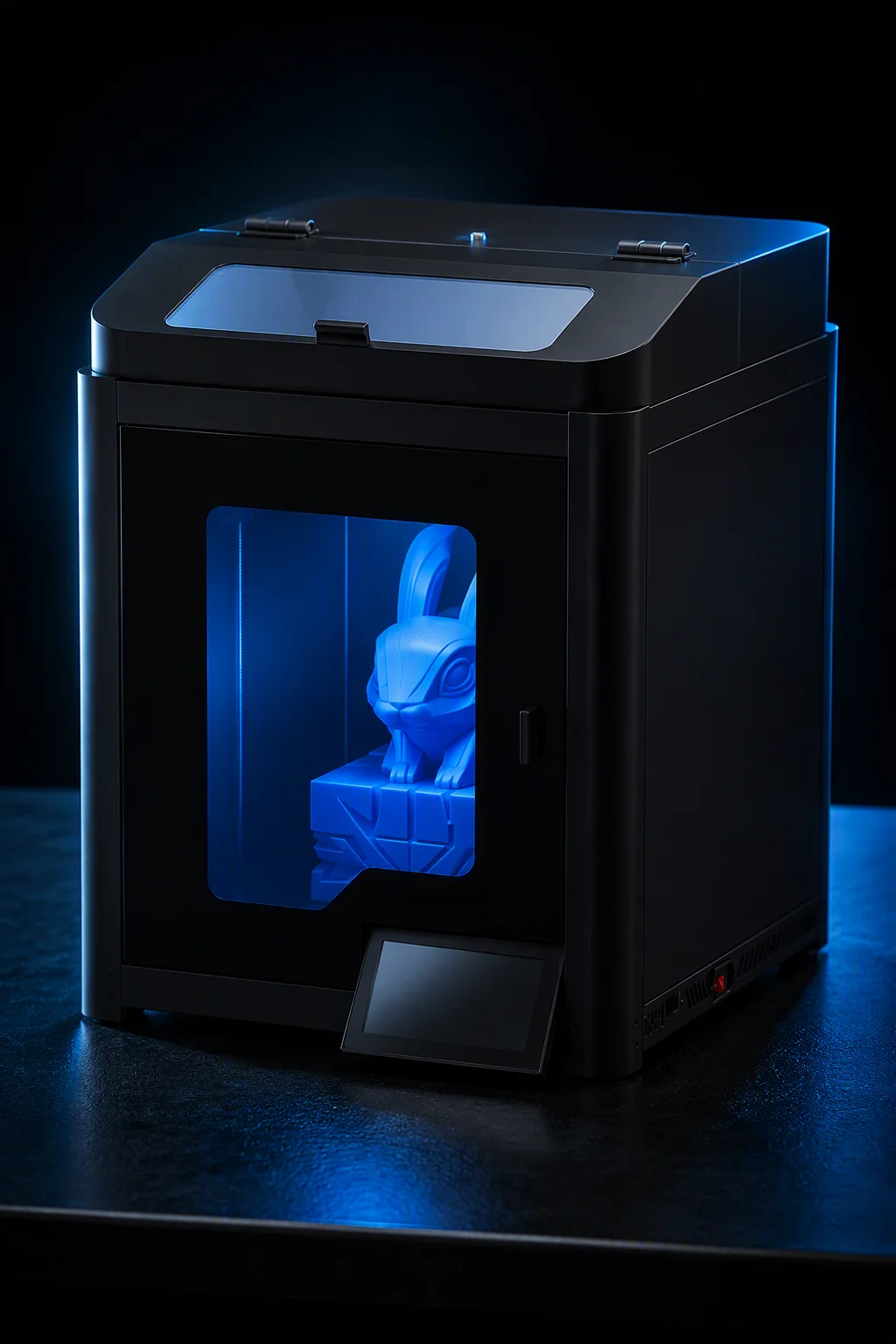
The energy efficiency features that matter for procurement: (1) heated bed auto-shutoff after print completion (some printers keep the bed at 60°C indefinitely if not programmed to shut down — a silent energy drain), (2) efficient power supplies (80 Plus Bronze rating or better), (3) sleep/standby modes that drop power draw below 5W when idle, and (4) enclosed chambers that reduce heating energy by 30-40% compared to open-frame printers. For the enclosure comparison, see our enclosed vs open-frame guide. For power supply quality assessment, review our PSU selection guide.
Filament Recycling Machines: The Recurring Revenue Engine
The most ambitious sustainability play for distributors is offering filament recycling as a service. The model: you sell or lease a desktop filament recycler (machines like the Filabot or 3devo shredder-extruder combo, $3,000-8,000 wholesale) to institutional customers, then sell them the service of collecting, shredding, and re-extruding their waste into usable filament. Or you handle it yourself: customers ship you their failed prints and support material, you recycle it, and ship back spools of rPLA at $18/kg — less than your retail rPLA price but pure margin since the raw material was free.
$185/month per client doesn't sound transformative — until you have 10 university clients generating $1,850/month in near-zero-acquisition-cost margin, plus the original equipment sale, plus virgin filament orders for materials they can't recycle (flexible TPU, abrasive carbon-fiber-filled filaments). The recycling service also creates switching costs: a university that sends you 15 kg/month of waste isn't going to change filament suppliers over a $2/kg price difference. For the industrial materials that require separate recycling streams, see our engineering filaments guide.
Biodegradable and Bio-Based Materials: Beyond PLA
PLA is technically biodegradable — but only in industrial composting facilities at 58°C for 60+ days. In a landfill or ocean, it persists for decades. The next generation of truly biodegradable materials addresses this gap: PHA (polyhydroxyalkanoate) filaments biodegrade in marine environments within 6 months; bio-based PA11 (castor-oil-derived nylon) offers engineering-grade mechanical properties with a 70% lower carbon footprint than petroleum-based PA12; and wood-filled PLA composites contain 30-40% renewable content and produce a wood-like finish without post-processing.
These materials are currently 2-3x the price of standard PLA — PHA retails at $55-75/kg — but they serve a specific buyer: university sustainability programs, eco-focused design studios, and manufacturers marketing "green" products to consumers. One distributor in our network stocks three PHA colors (natural, black, white), sells 40-60 kg/month to five university clients, and earns $18-22/kg margin — more per kilogram than they earn on an entire entry-level printer. For the full advanced materials landscape, see our industrial materials guide.
How to Market Sustainability Without Greenwashing
The fastest way to destroy your credibility with institutional buyers is to claim sustainability without evidence. Procurement officers at universities and government agencies are trained to spot greenwashing — vague claims like "eco-friendly" or "green" without specific data. Your sustainability marketing must be specific and verifiable: "This rPETG filament contains 85% post-consumer recycled content, verified by [certification body]. Each spool diverts the equivalent of 12 PET bottles from landfill."
The marketing assets that convert: (1) a one-page lifecycle impact sheet for each product (energy consumption per print hour, recycled content percentage, end-of-life disposal instructions, carbon footprint estimate), (2) third-party certifications (EU Ecolabel, TUV Green Product, USDA BioPreferred for bio-based content), (3) a sustainability page on your website that links to these assets, and (4) case studies with named customers who achieved specific sustainability goals using your products. "University of X reduced lab plastic waste by 340 kg/year using our rPLA filament and recycling program" is far more powerful than "we offer eco-friendly filament." For the B2B marketing strategy that supports these claims, see our digital marketing playbook.
Building the Sustainability Product Line: A Phased Approach
You don't need to launch everything at once. A phased rollout manages risk and tests demand before committing significant capital:
Phase 1 (Month 1-3):
Add 3-5 recycled filament SKUs (rPLA in black/white/gray, rPETG in black) to your existing filament lineup. Order minimum quantities (50-100 kg total, ~$800-1,600 investment). Create the one-page lifecycle impact sheet. Add a "Sustainable Options" section to your website and quote templates. Target: 2-3 education customers trying recycled filament.
Phase 2 (Month 4-6):
Expand to bio-based materials (wood-filled PLA, PHA sample packs). Develop the recycling-as-a-service pilot with one university partner using a desktop recycler. Create the first customer case study. Target: 5-8 recurring recycled filament customers, $500-1,000/month in sustainable filament revenue.
Phase 3 (Month 7-12):
Launch recycling-as-a-service to all education and enterprise customers. Stock biodegradable PHA and bio-based PA11 in commercial quantities. Pursue third-party sustainability certifications for your product line. Target: $2,000-4,000/month in combined sustainable product and recycling service revenue. For the education market entry strategy, see our education market guide.
Reviewed by the Precise3D engineering & OEM team. Compliance files that accompany the catalog are auditable at the certification register.
Build a Greener Product Line
Ready to Add Sustainable 3D Printing to Your Portfolio?
Get wholesale pricing on recycled filaments, energy-efficient printer models, and recycling equipment. We'll help you build the sustainability product line that wins institutional contracts.