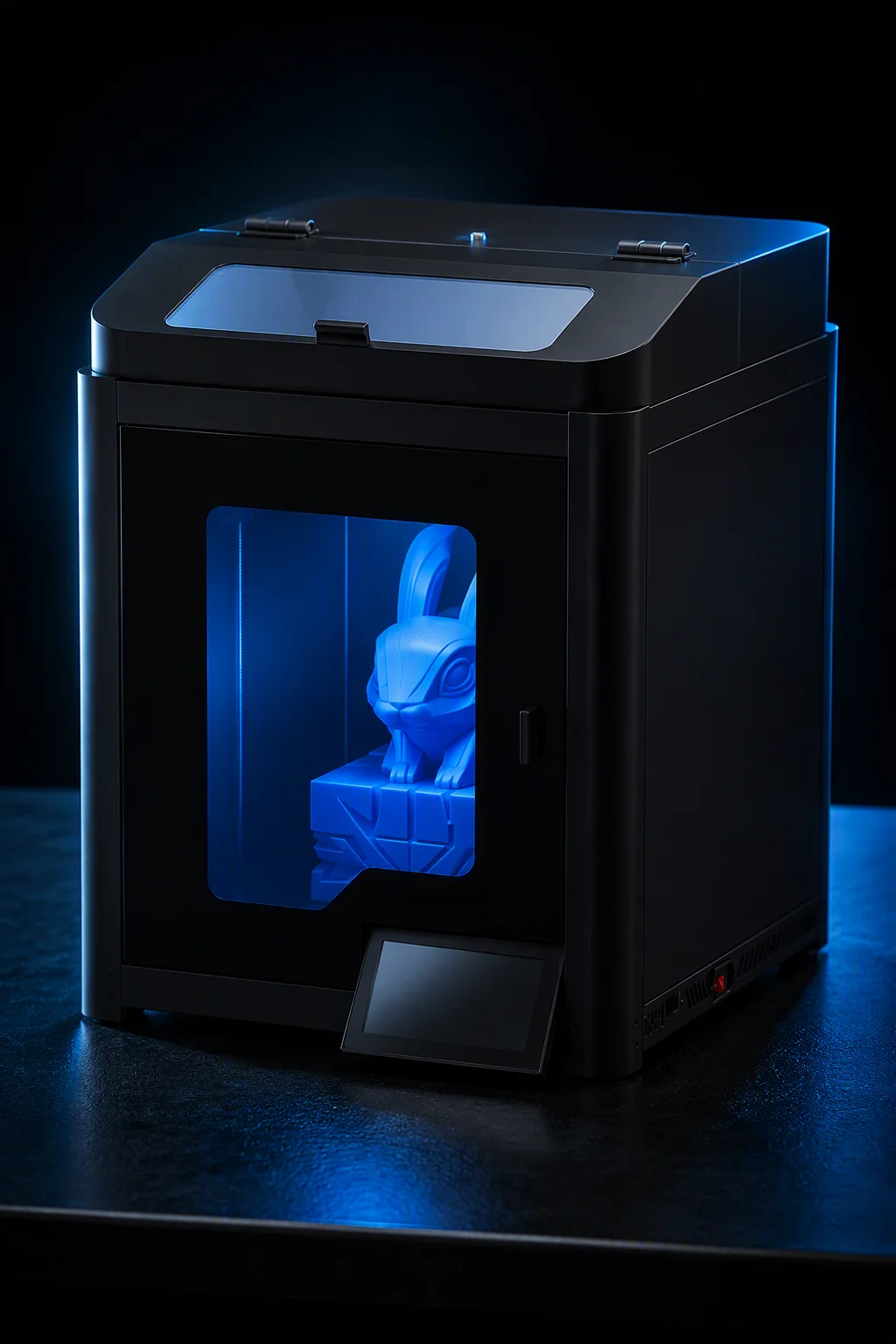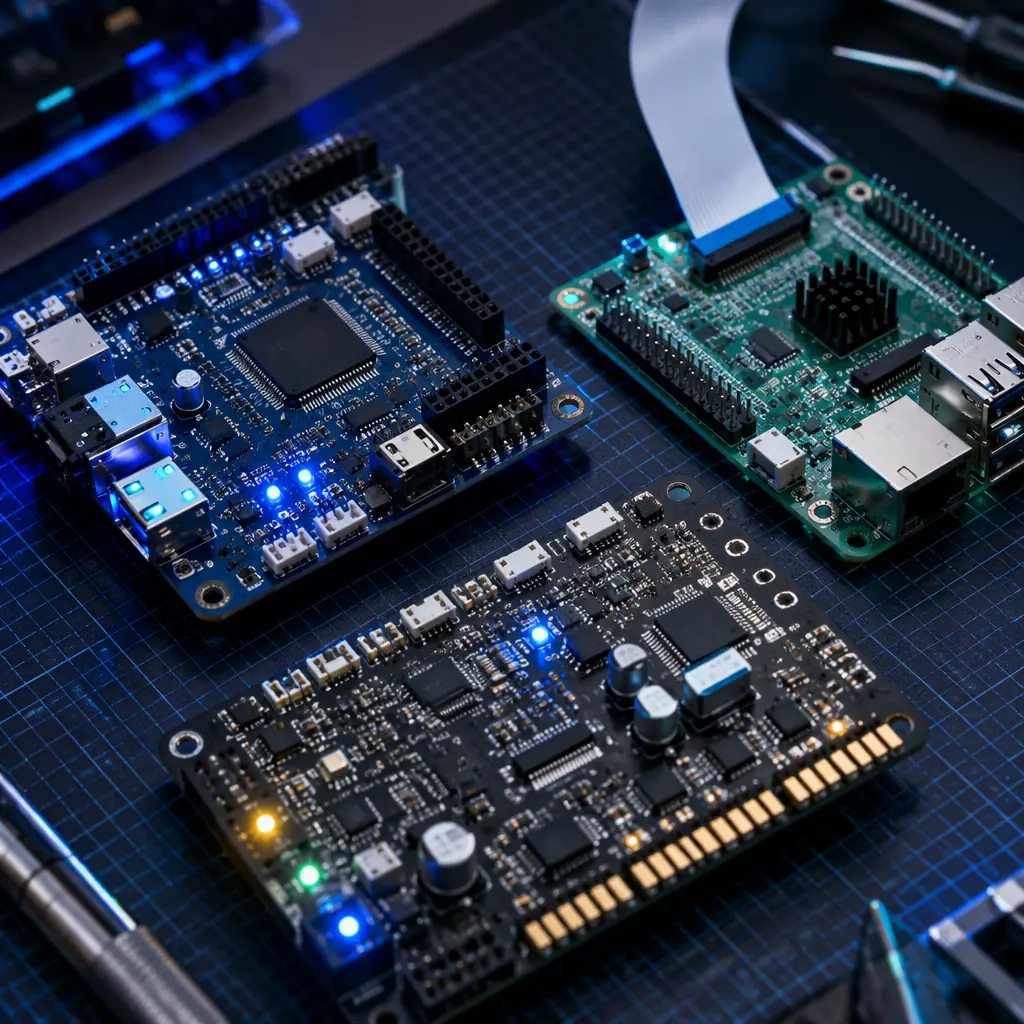
Ask ten experienced 3D printer distributors what separates a profitable printer line from a support-nightmare, and nine will mention firmware by the third sentence. Not the frame. Not the hotend. The firmware — the invisible code that translates G-code into motion — determines whether a customer unboxes a printer and starts printing, or unboxes a printer and opens a support ticket. Marlin, Klipper, and RepRap Firmware are the three dominant options in 2026, and each one attracts a fundamentally different buyer, produces a different support profile, and opens or closes different revenue streams for the distributor. Here is the comparison that no datasheet provides: how firmware choice impacts your P&L.
Why Firmware Matters to a Distributor's Bottom Line
Firmware is not a technical detail for engineers to debate on forums. It is a business variable that touches every part of the distribution model. A Marlin printer ships ready-to-print and generates fewer support tickets — but it also attracts price-sensitive buyers who comparison-shop on Amazon and leave thin margins. A Klipper printer ships with a performance ceiling that justifies a 20–40% price premium — but it requires a companion single-board computer (Raspberry Pi or equivalent), adding a $35–80 BOM cost and a setup step that generates 2–3x more first-week support tickets. A RepRap Firmware printer runs on Duet electronics, attracts the high-end engineering and industrial buyer, and can command a 50–100% price premium over an equivalent Marlin machine — but the total addressable market is smaller and the buyer expects a level of technical sophistication from the distributor's support team.
The firmware decision is a segmentation strategy disguised as a technical spec. Choose the right firmware for each market segment, and you multiply margin while containing support costs. Choose wrong, and you either leave money on the table or drown in tickets from the wrong buyers. For a deeper look at how motion hardware interacts with firmware capabilities, see our stepper driver and motherboard guide, and for the performance ceiling unlocked by Klipper's input shaping, read our high-speed printing guide.
Marlin: The Workhorse for First-Time Buyers and Bulk Sales
Marlin runs on approximately 68% of consumer FDM printers shipped globally in 2025. It is the default firmware for Creality, Anycubic, Elegoo, and most sub-$500 machines. Marlin's dominance is not about technical superiority — it is about ecosystem maturity. With over 4,000 configuration examples, a 15-year development history, and native support for virtually every 8-bit and 32-bit controller board in existence, Marlin is the path of least resistance for manufacturers. For distributors, that translates into the widest selection of OEM partners and the lowest per-unit firmware licensing cost: zero.
Marlin buyer persona:
First-time 3D printer owner, education buyer, print farm operator running 20+ identical machines, price-sensitive consumer. These buyers value reliability over performance. They want a printer that works out of the box with the slicer defaults they found on YouTube. They rarely modify firmware — if they update at all, they download a pre-compiled binary from the manufacturer's website.
Marlin distributor economics:
Support tickets per 100 units sold in the first 90 days average 12–18 for Marlin printers from an established manufacturer (down from 25–35 for generic clones). The dominant ticket categories are bed leveling (not firmware-related) and first-layer adhesion (not firmware-related). Firmware-specific tickets — configuration errors, flashing failures, feature requests — account for fewer than 5% of total tickets. Return rates for Marlin printers average 4–7% in consumer channels, primarily due to mechanical defects rather than firmware dissatisfaction.
Klipper: The Performance Upgrade That Commands a Premium
Klipper represents the fastest-growing firmware segment in consumer 3D printing. It offloads kinematic calculations to a Linux single-board computer (typically a Raspberry Pi) and uses the printer's microcontroller only for step pulse generation — a split architecture that enables input shaping, pressure advance, and smooth printer movements at speeds of 300–500 mm/s with acceleration of 10,000–50,000 mm/s². Klipper's market share grew from an estimated 8% of new consumer printers in 2023 to roughly 22% in 2025, driven by the "speed wars" among manufacturers and customer demand for CoreXY printers that print 2–4x faster than equivalent Marlin machines.
Klipper buyer persona:
Enthusiast, experienced maker upgrading from a first printer, small print farm operator optimizing throughput, engineering professional who values tunability. These buyers research firmware before purchasing hardware. They are willing to pay 30–60% more for a Klipper-native printer over an equivalent Marlin printer. They are also 2–3x more likely to purchase upgrades (hotends, nozzles, build plates) and 4x more likely to buy a second printer within 12 months.
Klipper distributor economics:
The margin story is compelling. Wholesale Klipper printers cost $180–500 (the BOM adder for the companion computer is $35–80), and retail at $300–900 — gross margins of 35–50% are achievable. However, support tickets per 100 units in the first 90 days average 30–45, driven by WiFi configuration, firmware flashing, and config file editing. The ticket volume is higher, but the ticket type is different: Klipper buyers self-diagnose mechanical issues and only escalate config-level problems, which can often be resolved by sending a corrected printer.cfg file. Return rates for Klipper printers average 3–5%, lower than Marlin despite higher ticket volume, because the buyer arrived with higher expectations and received performance that met them.
RepRap Firmware (RRF): The Premium Niche for Industrial Buyers
RepRap Firmware (RRF) runs on Duet3D electronics and occupies a small but profitable niche: approximately 4–6% of consumer printers but a disproportionate share of premium ($800+) and industrial-leaning machines. RRF's architecture is fundamentally different from Marlin and Klipper: it runs on a dedicated 32-bit ARM microcontroller with a built-in web interface (Duet Web Control), requires no external Raspberry Pi, and supports features like true multi-tool tool changing, CAN-FD expansion for complex motion systems, and object cancellation mid-print. The costs are higher — a Duet 3 Mini 5+ mainboard retails for $120–170 versus a $30–50 BTT SKR board — but the reliability and feature set justify the price for buyers who treat their printer as production equipment.
RRF buyer persona:
University lab manager, dental lab technician, engineering firm prototyping department, advanced hobbyist building a custom CoreXY or tool-changing printer. These buyers are specification-driven: they compare datasheets, not TikTok reviews. They require CAN bus expansion, native multi-extruder support without hacks, and a web interface that does not depend on an external computer. Price sensitivity is low — the Duet board cost is a line item, not a decision factor.
RRF distributor economics:
The addressable market is smaller, but margins are the highest in the category. Wholesale RRF printers range from $350–1,200, retailing at $600–2,500. Gross margins of 40–60% are standard. Support tickets are low: 8–12 per 100 units in the first 90 days, because the buyer is technically sophisticated and the Duet hardware is extensively documented. Return rates are below 2%. The challenge is inventory management — you cannot move 500 units per month of a $1,500 printer the way you can move 500 units of a $250 Marlin printer. RRF is a margin play, not a volume play. For customers considering RRF for advanced applications, our guides on industrial materials and IDEX dual extrusion complete the premium toolkit.
How to Build a Three-Tier Portfolio That Maximizes Margin
The optimal portfolio strategy is not to pick one firmware — it is to carry one printer in each tier and position them as a progression. A customer enters at the Marlin tier ($250–400 retail), upgrades to Klipper ($500–800), and the most demanding subset eventually graduates to RRF ($1,000+). Each tier captures a different margin profile and a different share of wallet over the customer's lifetime.
Why it works: Marlin printers acquire customers. Klipper printers upgrade them. RRF printers retain the most profitable segment. A distributor who only stocks Marlin leaves 60% of the potential margin on the table. A distributor who only stocks RRF starves for volume.
The Marlin tier should account for 50–60% of unit volume and 30–40% of gross profit. The Klipper tier should target 25–35% of units and 35–45% of profit — it is the profit engine. The RRF tier handles 5–10% of units but delivers 15–20% of profit through the highest margins and lowest support costs. This is not theoretical: it mirrors the actual revenue mix reported by multi-brand distributors in Europe and North America who carry printers across all three firmware ecosystems.
For distributors building a print farm vertical, Klipper's remote management and input shaping advantages make it the dominant choice — our print farm economics guide breaks down the per-unit ROI. For education buyers, Marlin's simplicity and zero-configuration setup reduce IT support burden and teacher frustration — see our education market guide. For dental and engineering labs, RRF's CAN-FD expansion and native multi-tool support make it the only viable option for production-grade workflows.
Reviewed by the Precise3D engineering & OEM team. Compliance files that accompany the catalog are auditable at the certification register.
Build Your Portfolio
Get a Custom Firmware Strategy for Your Market
Tell us which segments you serve — consumer, education, print farm, or industrial — and we'll recommend the firmware mix that maximizes your margin while minimizing support costs.