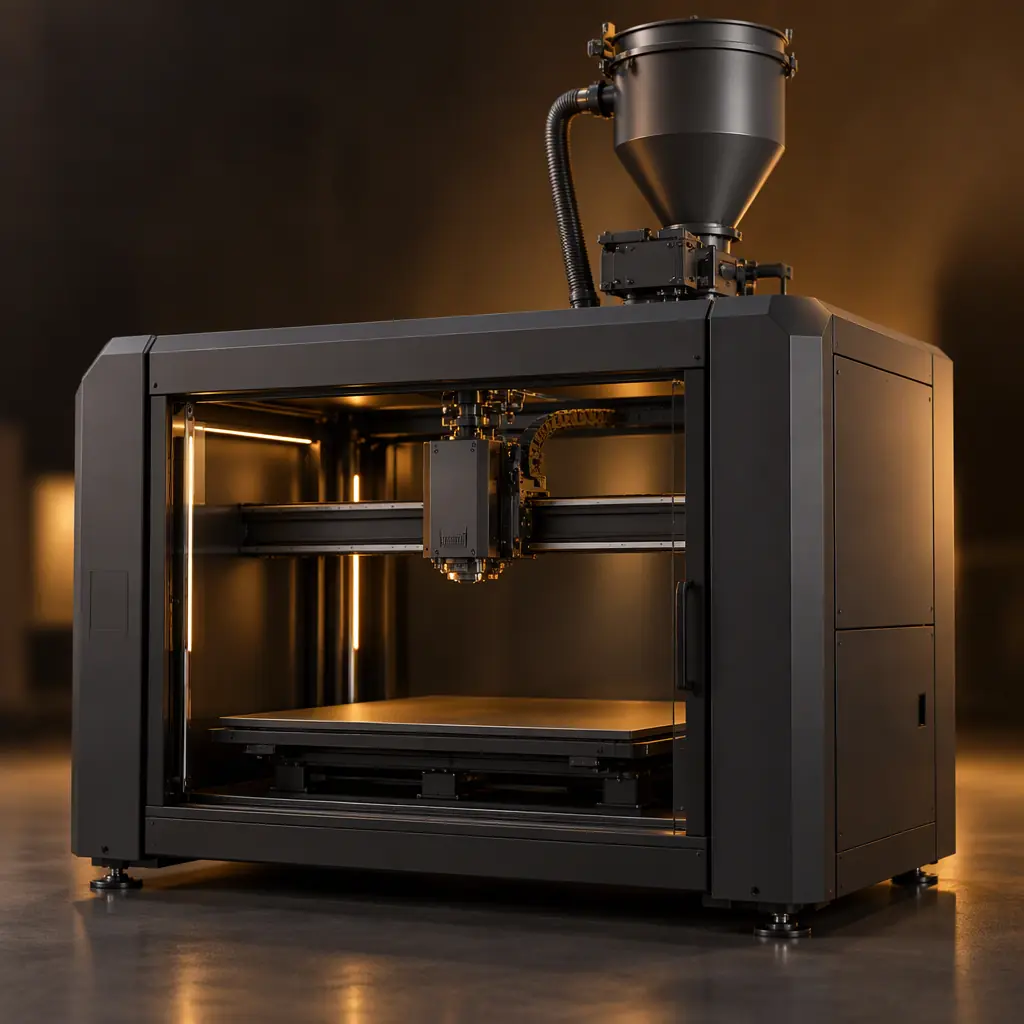
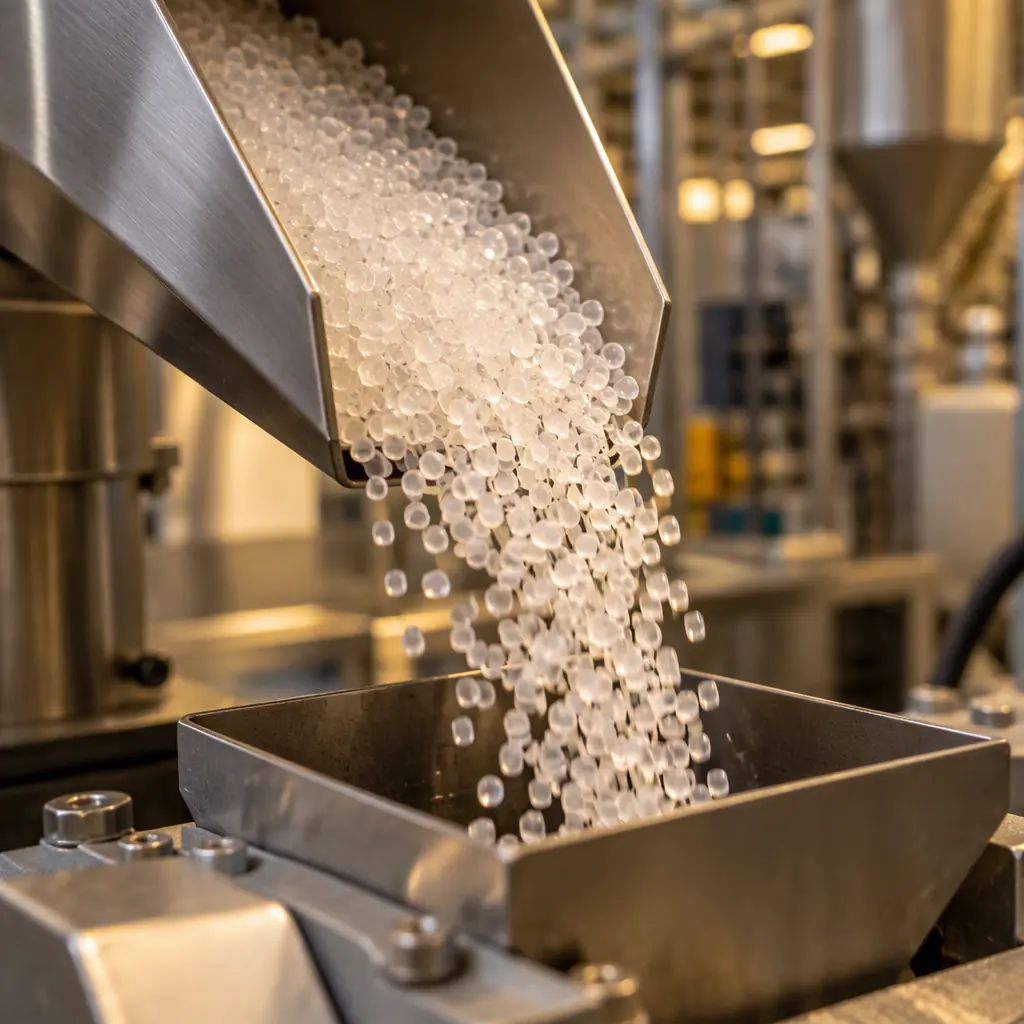
A filament printer never sees polymer. It sees a 1.75 mm strand that has already been melted, filtered, extruded, cooled, measured, wound, and packaged. Every one of those steps costs money, and the customer pays for all of them whether or not their part needs a strand. Pellet extrusion removes the strand from the equation. The machine melts granulate directly and pushes it through the nozzle with a screw. That is the whole idea, and it is why the segment has grown from a handful of custom machines to a category with commercial options from entry-level to industrial.
The trade-off is not free. Pellet systems bring a material-handling problem that filament machines simply do not have: feeding, drying, and metering free-flowing granulate reproducibly. This guide quantifies both sides. For how the fill level of a hopper and the melt pressure relate to each other, our extruder troubleshooting guide covers the failure modes that show up on the filament side of the same physics.
What Actually Drives the Cost Per Kilo Gap
The retail price of filament is roughly 5-15x the bulk resin price. That multiple is not profit, it is process. Breaking it down per kilogram at typical volumes:
- Resin pellet cost: $1.50-4.00/kg for commodity PLA, PETG, ABS, and PA at tonne quantities, higher for engineering grades and filled compounds.
- Additives and colour masterbatch: $0.20-1.20/kg depending on whether the compound is natural, coloured, or reinforced.
- Extrusion and filtering: the polymer is melt-filtered to remove contamination that would jam a 0.4 mm nozzle. This is the single largest processing cost, because a contaminated spool is a customer complaint.
- Drying and spooling: strand must be moisture-controlled and wound without tangles. This is why so much filament arrives under-dried and prints badly.
- Packaging, brand, distribution, and margin: the vacuum bag, the box, the shipping weight, the distributor markup.
The result: a compound that costs $2.50/kg as pellets ships as filament at $18-24/kg for a mid-tier brand, and $35-45/kg for a premium engineering grade. Pellet extrusion lets a customer buy at or near the resin price and absorb the handling complexity themselves.
The Dryer Is Not Optional, and It Is Not Cheap
The most common reason a customer's first pellet machine disappoints is moisture. Filament arrives vacuum-sealed and pre-dried; pellets arrive in a bag or a bulk sack, exposed to ambient humidity from the moment the seal is broken. Hygroscopic polymers, PA, PC, TPU, PETG, and most filled compounds, absorb water that at extrusion temperature flashes into steam and produces voids, weak layer adhesion, and a rough surface. A filament user can get away with drying a spool for a few hours in a cheap box. A pellet user cannot, because the granulate sits in an open hopper feeding continuously and re-absorbs moisture from the air.
This means a pellet installation needs a proper desiccant or hot-air dryer with a hopper that keeps material at dew point while it is being consumed. Budget $400-2,000 for a dryer sized to the machine's consumption rate, and add the floor space. A machine with a 5 kg/hour melt rate needs a dryer that can keep up with 5 kg/hour continuously, not a 5 kg batch dryer. Distributors who quote the machine without quoting the dryer are setting up a support call.
Screw Versus Filament Drive: Different Physics, Different Failure Modes
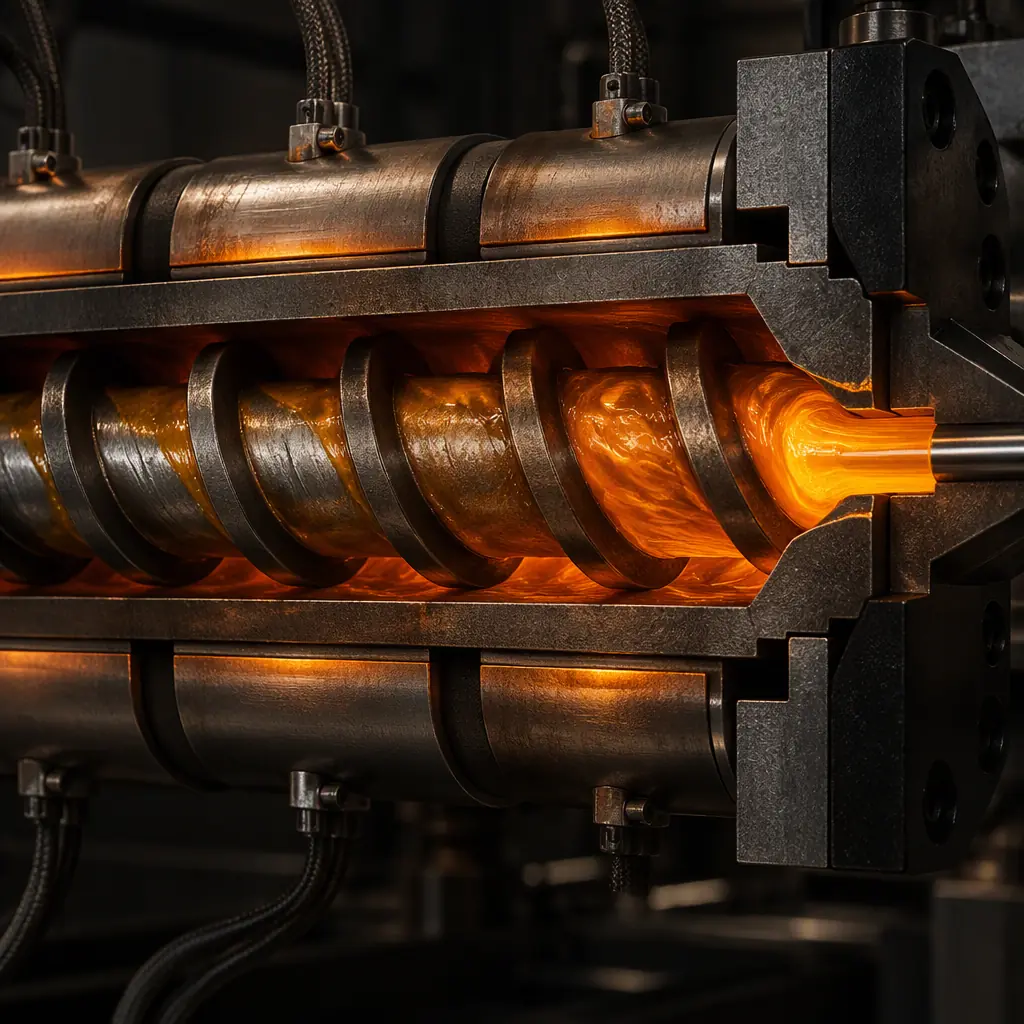
A filament printer grips a solid strand with a toothed gear and pushes it into a heated chamber where it melts. A pellet printer conveys loose granules along a heated screw, compacting them into a melt plug before the nozzle. The screw does three jobs at once: conveying, melting, and metering. That gives pellet machines excellent volumetric throughput and the ability to use cheap, recycled, or highly filled material, but it also means the operator must understand screw speed, barrel temperature zones, and back-pressure, which a filament user never touches.
The practical consequence for a distributor is support load. A pellet machine customer who calls with a printing defect is not asking about a clogged nozzle, they are asking about screw wear, feed-throat bridging, or inconsistent melt. This is closer to injection moulding support than to desktop FDM support. If your team is built around filament troubleshooting, either train for the screw-side failure modes or partner with the machine vendor's application engineers. Our hotend and nozzle technology guide covers the nozzle side of that conversation, which is the part that overlaps with filament machines.
Break-Even: The Volume Where Granulate Wins
Run the arithmetic with representative numbers. A filament-fed large-format machine costs $6,000-12,000. A comparable pellet-fed machine costs $15,000-40,000, and adds a dryer at $400-2,000 plus installation. Take the midpoint: a $25,000 pellet system versus a $9,000 filament system, a capital delta of $16,000. Assume the customer prints 8 kg a month.
At 8 kg/month, filament at $22/kg costs $176/month. Pellets at $3/kg cost $24/month. The saving is $152/month, which repays a $16,000 premium in 105 months, just over eight years. The pellet machine never pays back. At 60 kg/month the same numbers give a saving of $1,140/month and a payback of 14 months, comfortably inside the asset life. The break-even sits around 10-12 kg/month against a cheap filament machine and falls to 4-6 kg/month when the alternative is a premium engineering filament at $40/kg, because the gap you are closing scales with the filament price.
Where Pellets Win Beyond Raw Material Price
Cost per kilogram is the headline, but three secondary advantages often matter more to a specific buyer. First, part scale: a pellet machine can push 5-20 kg of material through a large nozzle in a single job, which is the only practical way to print furniture-scale or tooling-scale parts without welding sections together. Second, filled and recycled compounds: glass-fibre, mineral, and wood-filled materials are far cheaper and more available as pellets than as filament, and recycled regrind that would never survive a filament extrusion line runs fine through a screw. Third, anisotropic strength: the thick beads and high inter-layer pressure of pellet extrusion produce parts that are closer to isotropic than thin-bead FDM, which matters for load-bearing tooling. Powder-bed users face the same sourcing question from the other direction, which our SLS nylon powder sourcing guide covers.
For a customer whose parts are large, filled, or structurally loaded, the material saving is a bonus on top of a capability they cannot get any other way. That is the segment to lead with when the pure cost arithmetic is marginal. Our detailed cost economics comparison walks the same model with sensitivity to machine class and material grade.
Which Customers to Target, and Which to Talk Out of It
Not every high-volume customer is a pellet candidate. The machine rewards users who can commit to a single material for long runs and who have the process discipline to manage drying and screw parameters. It punishes users who switch materials frequently or who expect filament-grade surface finish on small detailed parts.
- Good fit: print farms running large parts in one or two materials, service bureaus doing tooling and jigs, industrial customers printing end-use fixtures with filled compounds, recyclers printing regrind, and any user above roughly 25 kg/month of a single material.
- Poor fit: multi-material and multi-colour users, customers printing small detailed parts where a 0.8 mm nozzle ruins the feature size, prototyping labs that change material weekly, and hobbyists below 5 kg/month who will never recover the capital.
The honest distributor conversation is to sell a pellet machine to the customer who has already measured their material consumption and can name the kilogram figure, and to keep that customer on filament if they cannot. The follow-up question that separates the two is simple, and it is the one to ask in the demo.
What you want to hear: a firm kilogram number above 25, a single dominant material, and round-the-clock utilisation. Below 10 kg/month or a different material every week, recommend a large-format filament machine and revisit the pellet conversation when the volume arrives. Ask whether the customer already owns a dryer, because a no answer means the first month will otherwise be spent diagnosing wet-material defects.
Stocking and Service Implications for Distributors
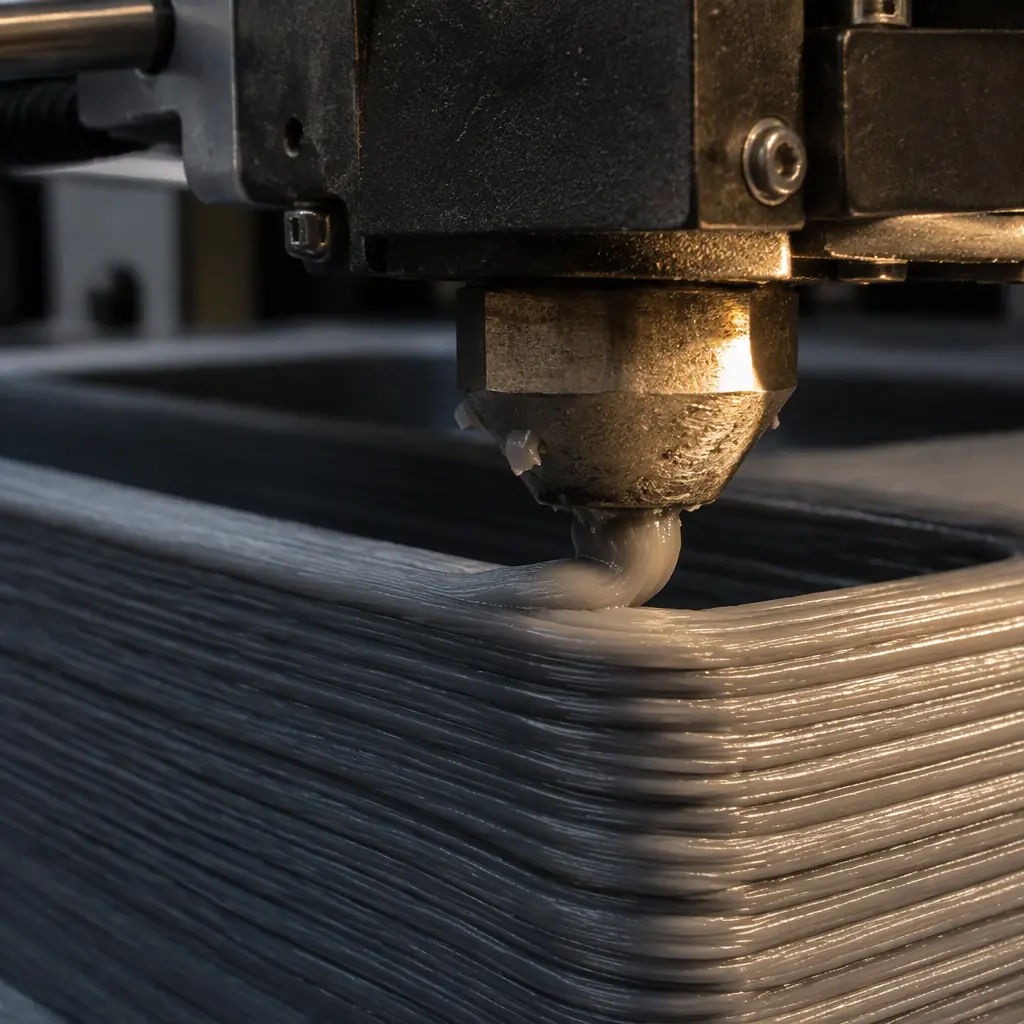
Adding pellet extrusion to a catalogue changes the aftersales profile. The consumable is no longer a spool but a bulk sack, which means freight weight and bag handling, and the value moves from repeat spool purchases to machine service. That inverts the usual 3D printer distributor revenue model, where consumables carry the margin. A pellet customer buys material cheaply and seldom, so the distributor's margin has to come from the dryer, the feed system, application support, and spare screws and barrels, which wear and are routine replacement items.
The upside is stickiness. A customer who has plumbed a dryer, dialled in a screw profile, and built a workflow around a specific granulate is far harder to displace than a filament user who swaps brands on price. For distributors willing to invest in application engineering, pellet extrusion converts a transactional buyer into an installed base. Our consumables and accessories bundling guide covers how to price the supporting hardware so the account stays profitable when the material margin collapses.
Reviewed by the Precise3D engineering & OEM team. Compliance files that accompany the catalog are auditable at the certification register.
Large-Format Portfolio
Evaluating Pellet Extrusion for Your Market?
We supply both filament and pellet-fed large-format platforms, with distributor pricing, dryer and feed-system configuration support, and spare screw and barrel supply. Tell us your customers' monthly volumes and we'll model the break-even with you.