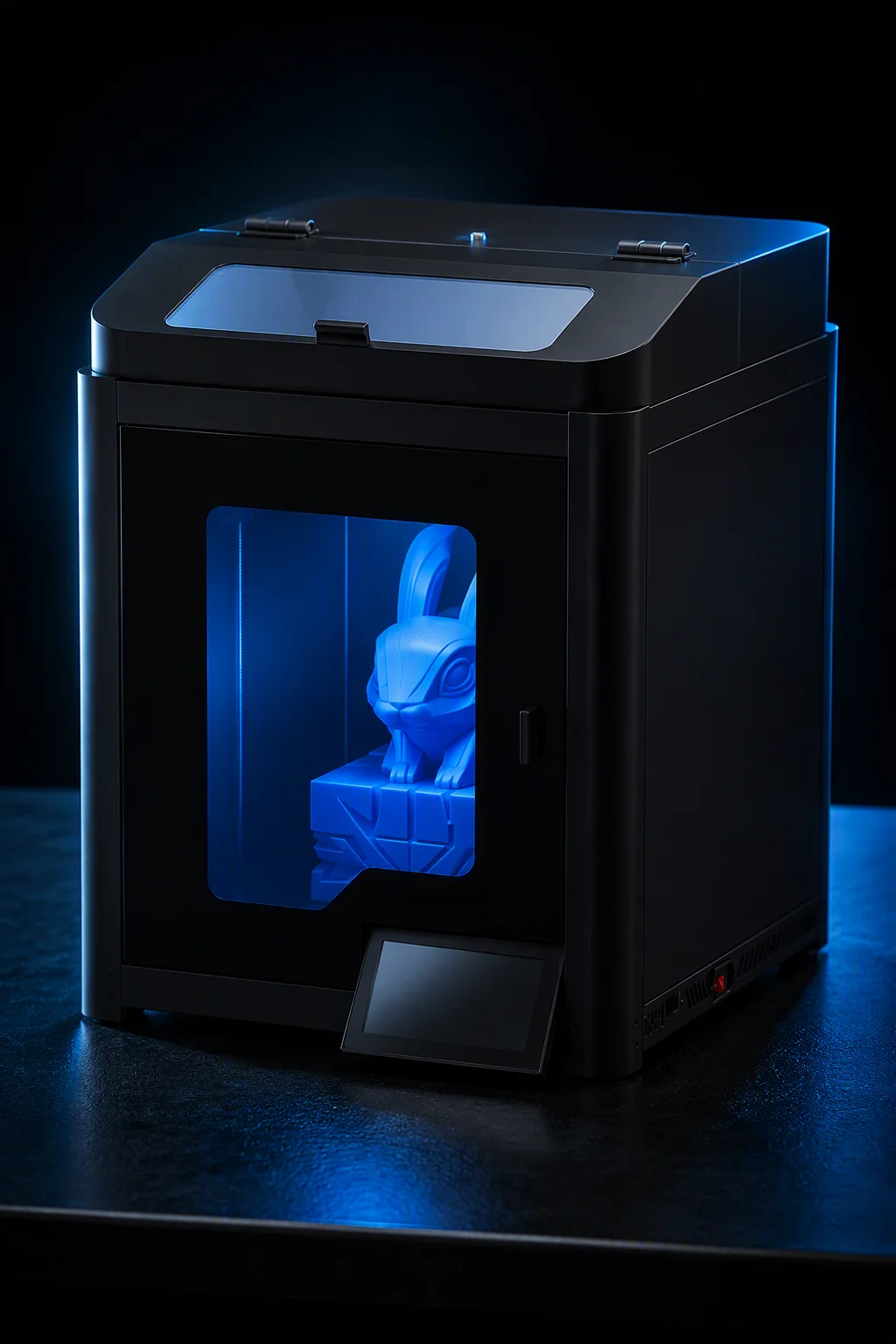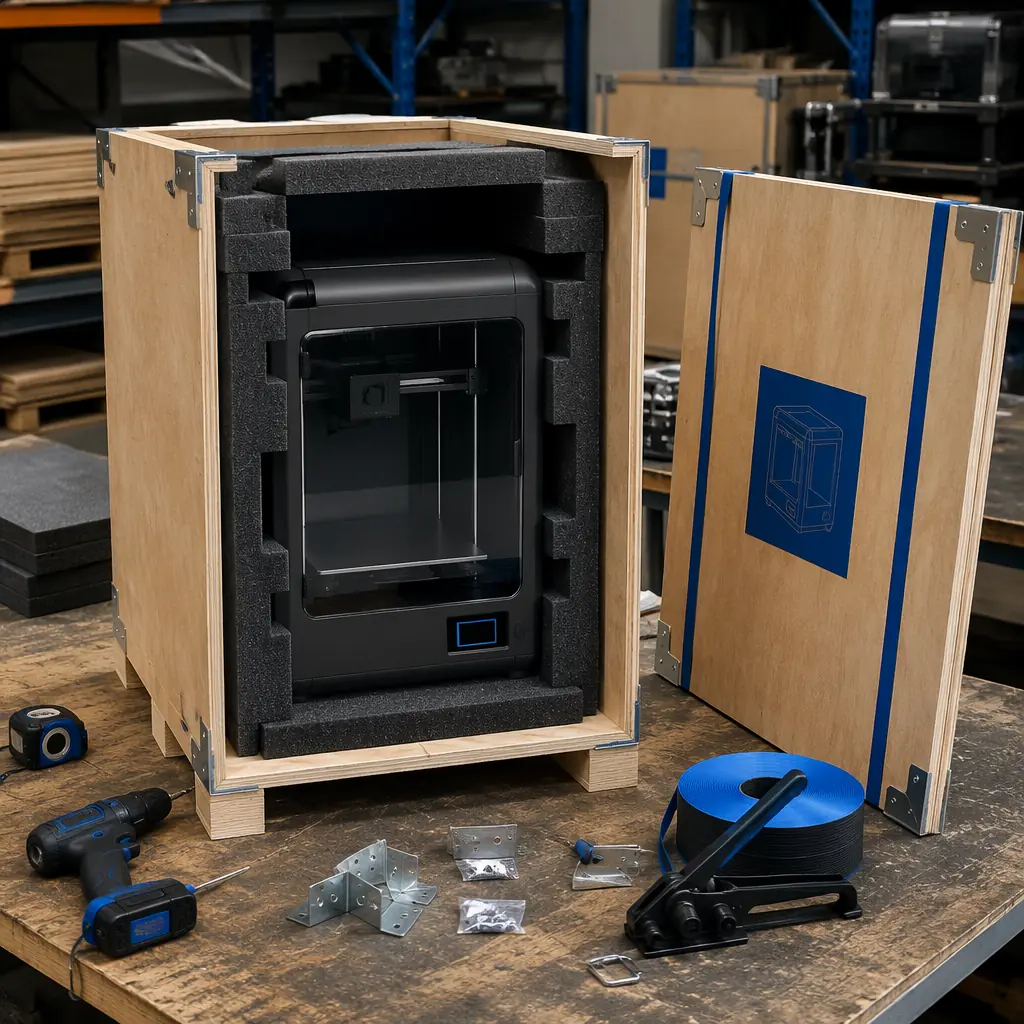
Industry data from freight forwarders and 3D printer distributors tells a consistent story: 8-12% of consumer and prosumer 3D printers shipped internationally sustain some form of transit damage, bent lead screws, cracked frames, dislodged print beds, shattered LCD screens. At $350-800 FOB per unit, a 10% damage rate on a 100-unit shipment means $3,500-8,000 in pure loss before you've sold a single unit. And the root cause isn't rough handling. It's packaging that was designed for domestic truck delivery being used for international container shipping. Here is how to specify packaging that actually protects your inventory.
Why Standard Factory Packaging Fails International Shipping
Most Chinese 3D printer factories ship domestically in single-wall corrugated cartons with molded EPS foam inserts. This packaging is designed for one journey: factory to Chinese distributor, by truck, in a climate-controlled environment, handled maybe twice. International shipping adds five stress factors that standard packaging was never designed to handle:
When a distributor receives printers with bent Z-axis lead screws, the damage didn't happen at any single moment, it accumulated across 40 days of micro-movements, humidity-weakened packaging, and one final forklift jolt that the compromised carton couldn't absorb. For a complete logistics overview, see our shipping from China guide.
The Four Packaging Tiers: What to Specify by Order Value
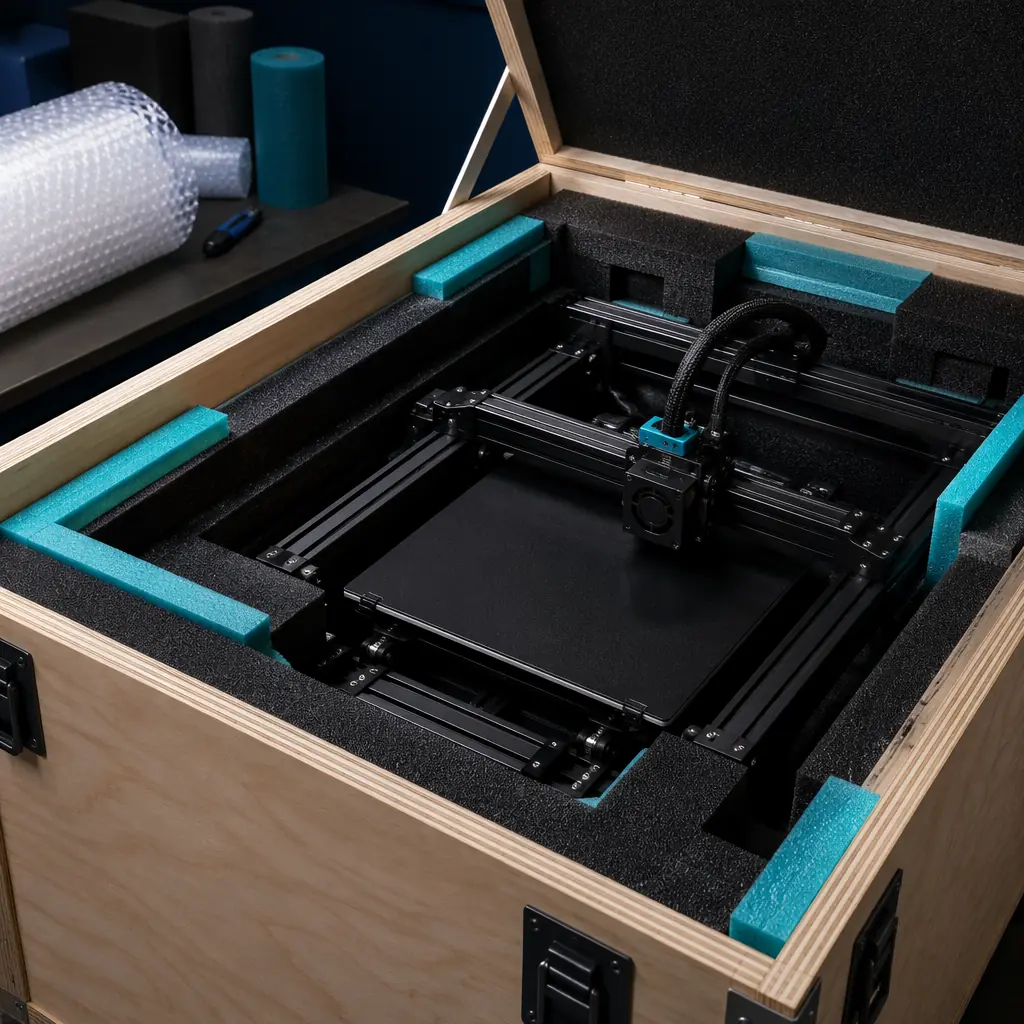
Not every order needs military-grade crating. The right packaging specification depends on your unit value, destination, and sales channel. Here are the four tiers that experienced distributors use:
Tier 1 (double-wall carton + EPE foam) is the minimum upgrade every international distributor should specify. Double-wall corrugated (BC flute, 6-7mm thickness) has 2.5x the compression strength of single-wall. Combined with closed-cell EPE foam (which doesn't absorb moisture the way EPS does), this alone reduces damage rates from 8-12% to 3-5%. The $3-5/unit cost pays for itself if it prevents one damage claim per 50 units.
Tier 2 (triple-wall + EVA + VCI) adds a vapor corrosion inhibitor bag that prevents rust on steel linear rails, lead screws, and fastener hardware. This matters enormously for sea freight through tropical routes (Shenzhen → Southeast Asia → Middle East → Europe), where 40 days of salt-humid air inside a container will rust unprotected steel even if the printer never gets wet. EVA foam is denser than EPE and provides better vibration damping for precision components like linear rails and bed leveling sensors. For printers with sensitive electronics, see our guide on stepper drivers and motherboard protection.
Component-Specific Protection: What Breaks and How to Prevent It
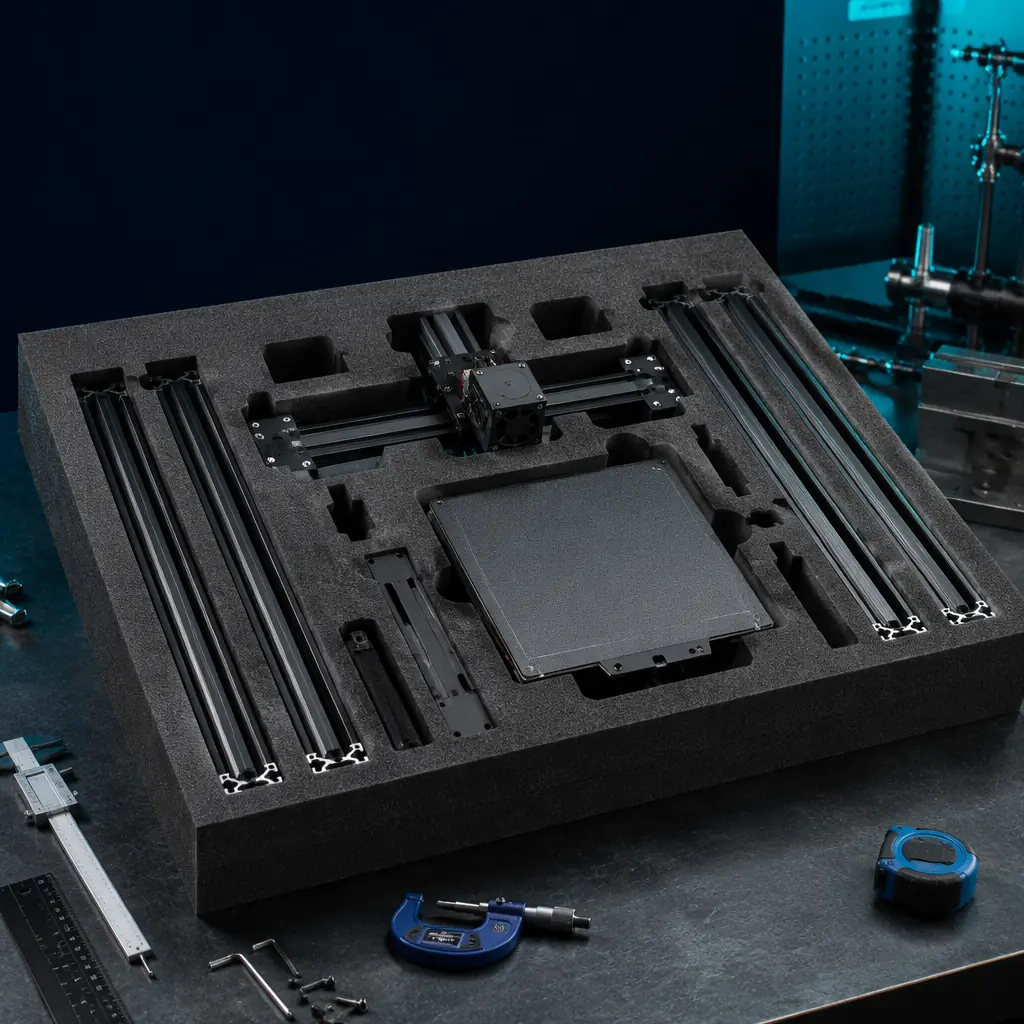
Not all 3D printer components are equally vulnerable. Based on distributor damage claim data, here are the failure points ranked by frequency and the packaging fix for each:
The LCD screen is the #1 failure point because it's the most exposed rigid glass surface on the printer. Standard packaging often leaves the screen face unprotected behind a thin layer of PE foam. The fix costs about $0.40/unit: a 2mm EVA sheet cut to screen dimensions, adhered to a rigid cardboard backing, placed over the screen before the outer foam goes on. Distributors who specify this one change typically see LCD damage claims drop by 70-80%.
Bent lead screws are insidious because the damage is often invisible until the customer prints their first tall object and sees Z-banding. The fix: have the factory slide each lead screw into a rigid PVC or cardboard tube before packing, or route a full-depth channel in the foam that immobilizes the screw along its entire length, not just at the ends. See our maintenance guide for post-arrival calibration procedures.
Moisture Control: The Silent Inventory Killer
You can crate a printer perfectly against physical impact and still lose it to moisture. Ocean containers experience extreme humidity cycling: daytime solar heating drives moisture out of packaging materials into the air, nighttime cooling condenses it onto metal surfaces. Over 30-40 days, this cycle creates corrosion that's slow enough to go unnoticed on arrival but severe enough to cause warranty claims 3-6 months later when stepper motors seize or linear bearings develop pitting. Effective moisture control:
The humidity indicator card is the cheapest insurance policy in logistics: a 5-cent card that changes color if internal humidity exceeds 60% RH, telling you instantly whether the crate seal held. If the card is blue on arrival, the crate did its job. If it's pink, you know to inspect that printer before selling it. Potentially avoiding a warranty claim that costs 50-100x the card price.
Palletization Standards That Prevent Forklift Damage
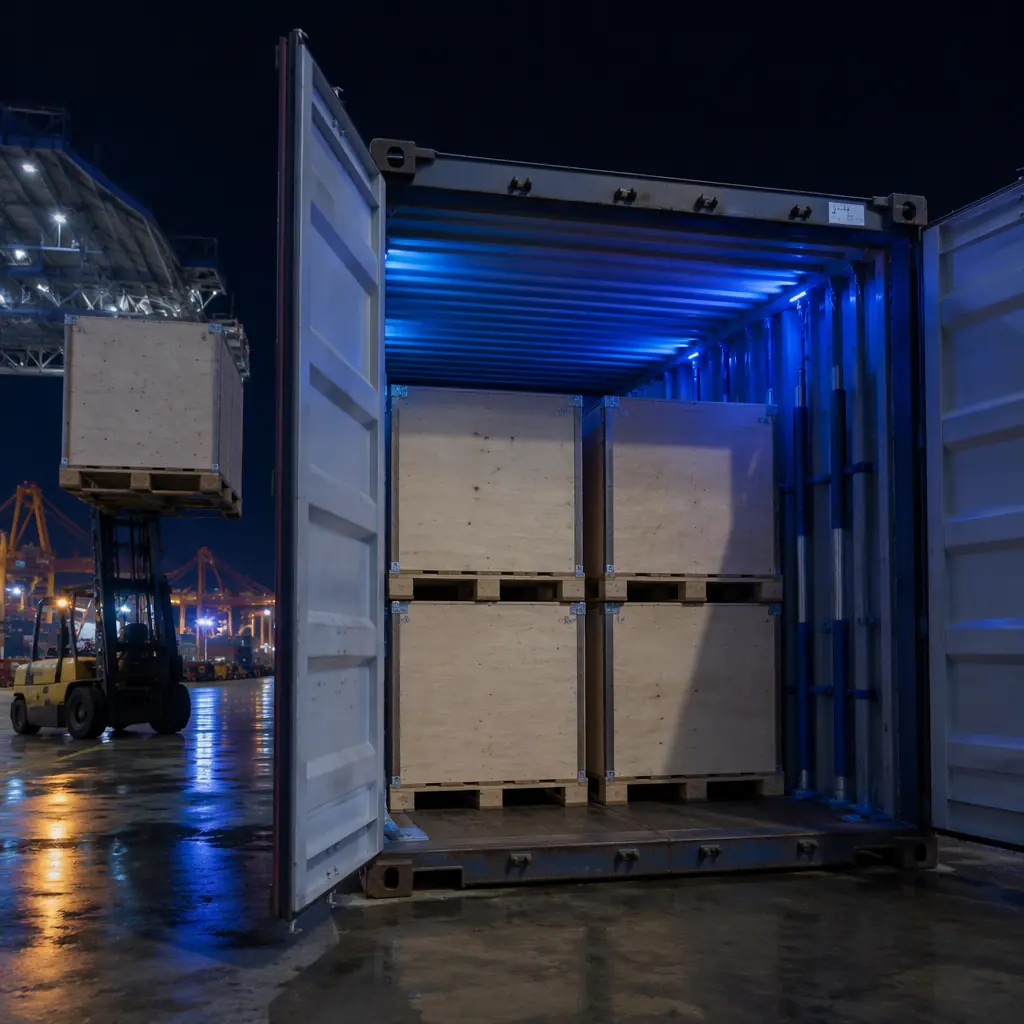
The most violent moment in a printer's journey isn't the ocean crossing, it's the forklift pickup at the destination warehouse. A forklift operator moving 40 pallets per hour doesn't have time for gentle placement. Three palletization rules prevent the majority of handling damage:
Never overhang the pallet.
Cartons or crates that extend beyond the pallet edge get crushed when adjacent pallets are pushed together in the container. Specify that all packaging must fit within the pallet footprint (standard: 1200×1000mm for Europe, 1200×800mm for Asia, 48×40 inches for North America).
Strap, don't just wrap.
Polyester strapping (2 straps per direction) prevents cartons from shifting during container loading and unloading. Stretch wrap alone isn't enough, it tears under the shear forces of container movement. Two polyester straps with edge protectors cost about $0.60/pallet and eliminate the most common cause of crushed boxes.
Stack to the pallet's capacity, not the container's.
A standard export pallet holds 4-6 consumer 3D printers depending on carton size. Stacking more to "fill the container" puts 2-3x the design load on the bottom carton, which is the one most likely to arrive crushed. For maximum container utilization without damage, see our coverage of inventory and SKU planning.
Document packaging damage with the factory.
Every crate should include a damage inspection protocol: photograph the crate exterior before opening, video the unboxing if external damage is visible, and file a claim within 48 hours of delivery. The factory's liability for transit damage depends on the Incoterms in your purchase agreement. For FOB shipments, the risk transfers at the port of loading, which makes your packaging specification the only real protection. Our warranty returns and reverse logistics guide covers the full claims process from dock to credit.
Reviewed by the Precise3D engineering & OEM team. Compliance files that accompany the catalog are auditable at the certification register.
Protect Your Inventory
Specify Packaging That Arrives Intact
We offer Tier 1-4 packaging options with full moisture protection, custom foam cutouts, and palletization standards built for international shipping. Every printer leaves our factory ready for 8,000 miles.