
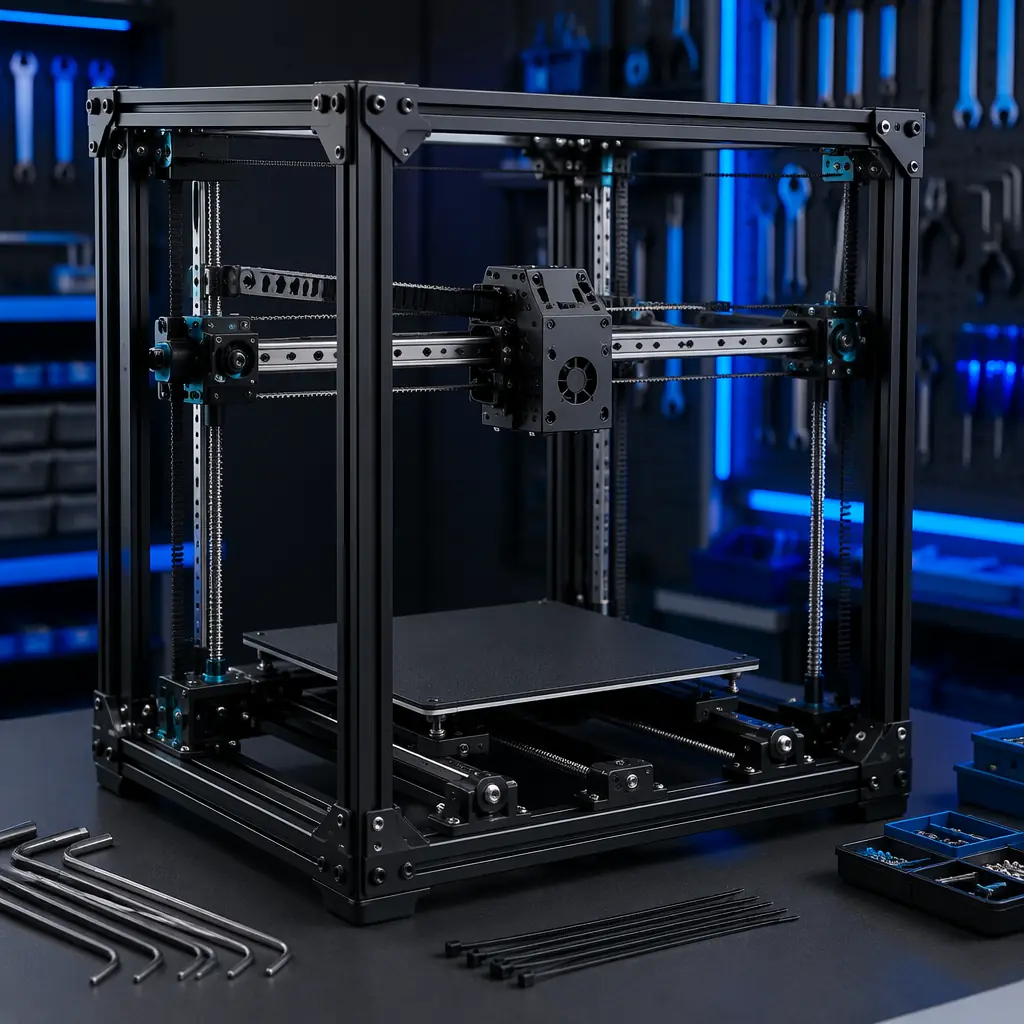
Every 3D printer distributor faces this decision within the first six months: carry semi-assembled kits with higher per-unit margins, or stock fully pre-assembled printers that sell faster but leave less room on the invoice. The tension is real. A partially assembled printer that arrives as a frame-plus-components kit can carry a landed cost 20–30% lower than the same machine fully assembled — because assembly labor in Shenzhen runs $4–8 per hour, and a 45-minute assembly process costs the factory roughly $5. That $5 saved becomes approximately $15–25 at distributor wholesale and $30–50 at retail. But the hidden costs — support tickets, returns from assembly errors, lost sales to customers who want out-of-the-box operation — can erase every dollar of that margin advantage and then some. This guide lays out the economics, the regional segmentation, the assembly-level sweet spots by customer type, and how to build a product mix that captures the margin of kits without absorbing the support burden of a pure-kit portfolio.
The Real Economics of Assembly Level: Beyond the FOB Price
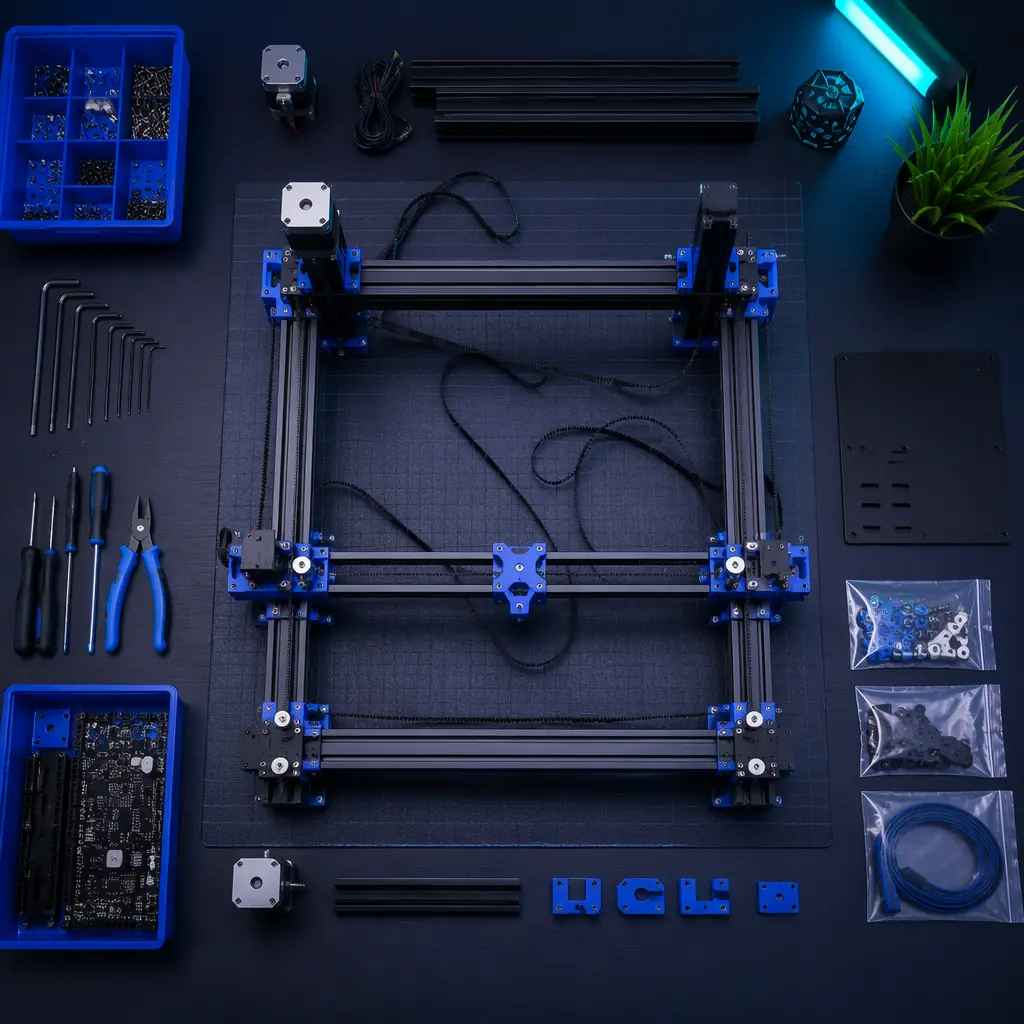
The factory price difference between a 95%-assembled printer and a 60%-assembled semi-kit is typically $8–18 at the FOB level for a mid-range bedslinger or CoreXY machine. That looks small on a per-unit basis — but it compounds across a container of 200 units into $1,600–3,600 in direct cost savings. The distributor who buys kits pockets that difference. The question is whether the downstream costs — support, returns, customer acquisition friction — exceed that savings. Based on aggregated data from Precise3D's distributor network of 200+ partners across 40 countries, they often do, but not always.
The key insight from this data: support tickets do not increase linearly with assembly difficulty — they jump in step changes. Moving from 95% to 80% assembly roughly doubles support tickets. Moving from 80% to 60% doubles them again. Each jump represents a new class of failure mode that didn't exist at the previous assembly level: loose belts at 80%, misaligned gantry at 60%, incorrect wiring at 50%. The distributor's break-even calculation must account for the fully loaded cost of a support ticket — not just technician time, but the probability that a frustrated customer never buys filament or accessories from you again. At an estimated lifetime value of $200–400 per customer (printer + 18 months of consumables), a single lost customer wipes out the margin advantage of 15–25 kit units.
For a detailed breakdown of how pricing strategy interacts with support costs across your entire portfolio, see our distributor pricing and margin guide.
Regional Segmentation: Where Kits Win and Where They Lose
The kit vs pre-assembled decision is not universal — it varies dramatically by region, driven by three factors: local labor costs, customer expectations shaped by the dominant retail channel, and shipping economics.
North America and Western Europe — pre-assembled dominates: In markets where the dominant 3D printer brands (Bambu Lab, Prusa) ship fully assembled or near-fully-assembled machines, customer expectations have been set accordingly. A distributor offering a kit that requires 3 hours of assembly competes not just against other kits, but against the customer's memory of unboxing a Bambu Lab P1S and printing in 15 minutes. The result: kits in these markets generate 2–3x the support tickets of the same kit sold in markets where kits are the norm. The exception is the dedicated enthusiast segment — the customer who owns three printers already and views assembly as part of the hobby. But that segment represents roughly 15% of the addressable market in North America, not a majority. For the education and institutional channels, pre-assembled is effectively mandatory. Our education market guide covers why schools will not accept kits regardless of the price advantage.
Southeast Asia, South Asia, and Africa — kits have structural advantages: In markets where end-user assembly labor is effectively free (the customer does it themselves) and price sensitivity is high, the $30–50 retail price gap between a kit and an assembled printer is often decisive. A $199 kit printer vs a $249 assembled printer — a 25% price difference — converts fundamentally different customer segments. Additionally, shipping costs for fully assembled printers are higher: an assembled printer occupies roughly 2–3x the volumetric weight of the same printer in kit form because the frame cannot be nested and the packaging must include rigid foam cutouts rather than dense component boxes. In regions where air freight or last-mile courier costs are high relative to the product price, the shipping savings on a kit can exceed the FOB assembly savings. For a comprehensive analysis of cross-border logistics costs, see our shipping and logistics guide.
Latin America and Middle East — the hybrid sweet spot: These markets represent the strongest case for the 80–90% partial assembly level. Customers expect a printer that works with minimal setup but are more tolerant of minor assembly steps (attaching the gantry, mounting the screen) than North American buyers. The labor cost for in-country assembly — if the distributor chooses to add value locally — is $3–8 per hour, making it economical to receive semi-kits and do final assembly in a local warehouse. This captures the FOB savings without exposing the end customer to assembly complexity. The printer arrives at the retailer or end customer in a "90% ready" state that requires under 30 minutes of final setup.
Assembly Level by Customer Segment: A Decision Matrix
Different customer segments have fundamentally different tolerance for assembly — and different expectations about what "ready to print" means. Mapping assembly level to segment is the highest-ROI exercise a distributor can do before placing their first order.
The pattern is clear: any customer segment where the printer is a tool for producing revenue — manufacturers, dental labs, print farms, retail — has near-zero tolerance for assembly. The cost of downtime (a manufacturer waiting 4 hours for a printer to be built instead of producing parts) dwarfs any assembly savings. The enthusiast segment is the only segment where kits consistently outperform pre-assembled on customer satisfaction, because assembly is part of the product experience, not an obstacle to it. For the strategic framework on matching printers to market segments across your entire portfolio, see our portfolio strategy guide.
What you're looking for: If the answer is "start printing parts for a paying client" — pre-assembled only. If the answer is "enjoy building it while watching a YouTube tutorial" — a kit is not just acceptable, it is preferred. The 30-minute test reliably predicts support ticket volume better than any demographic survey.
Shipping Economics: The Hidden Cost Multiplier
The assembly level doesn't just affect the product cost — it dramatically changes the shipping cost per unit, and in some trade lanes this dwarfs the assembly savings.
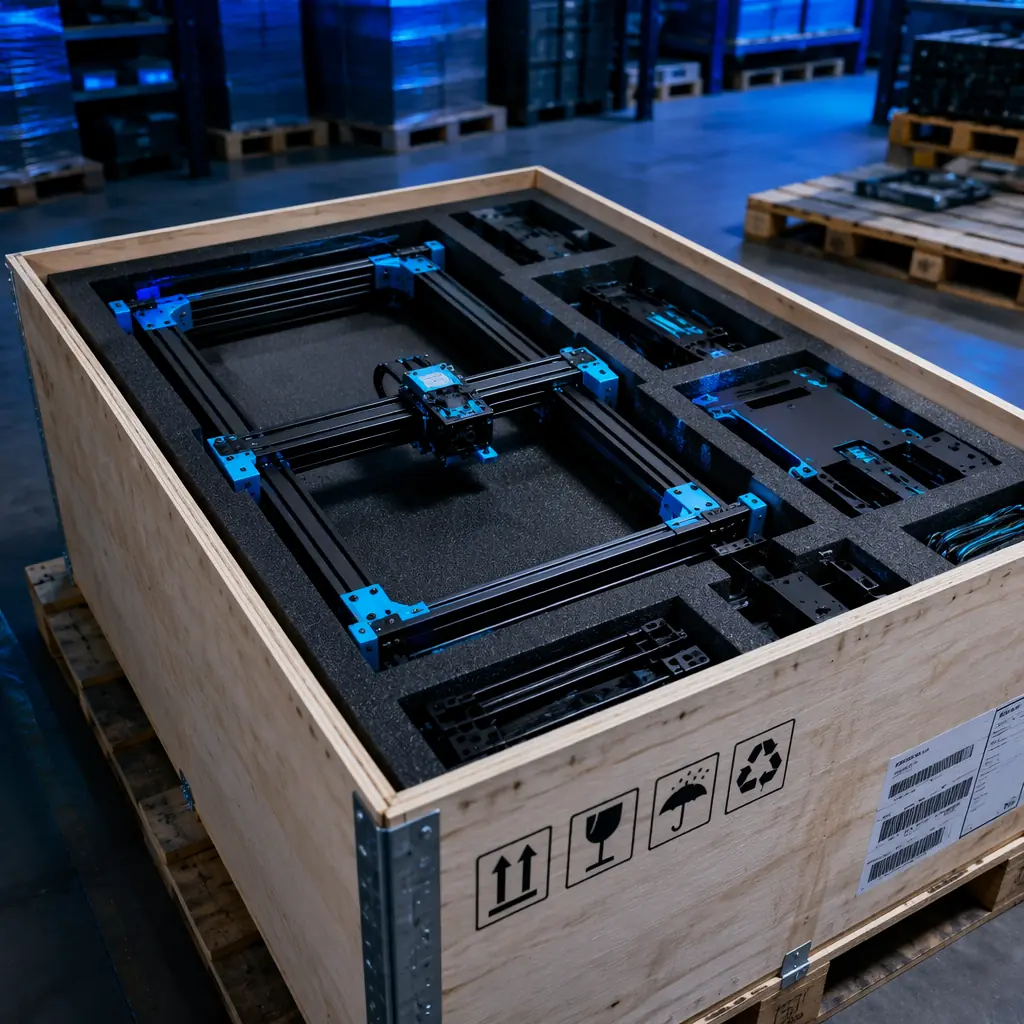
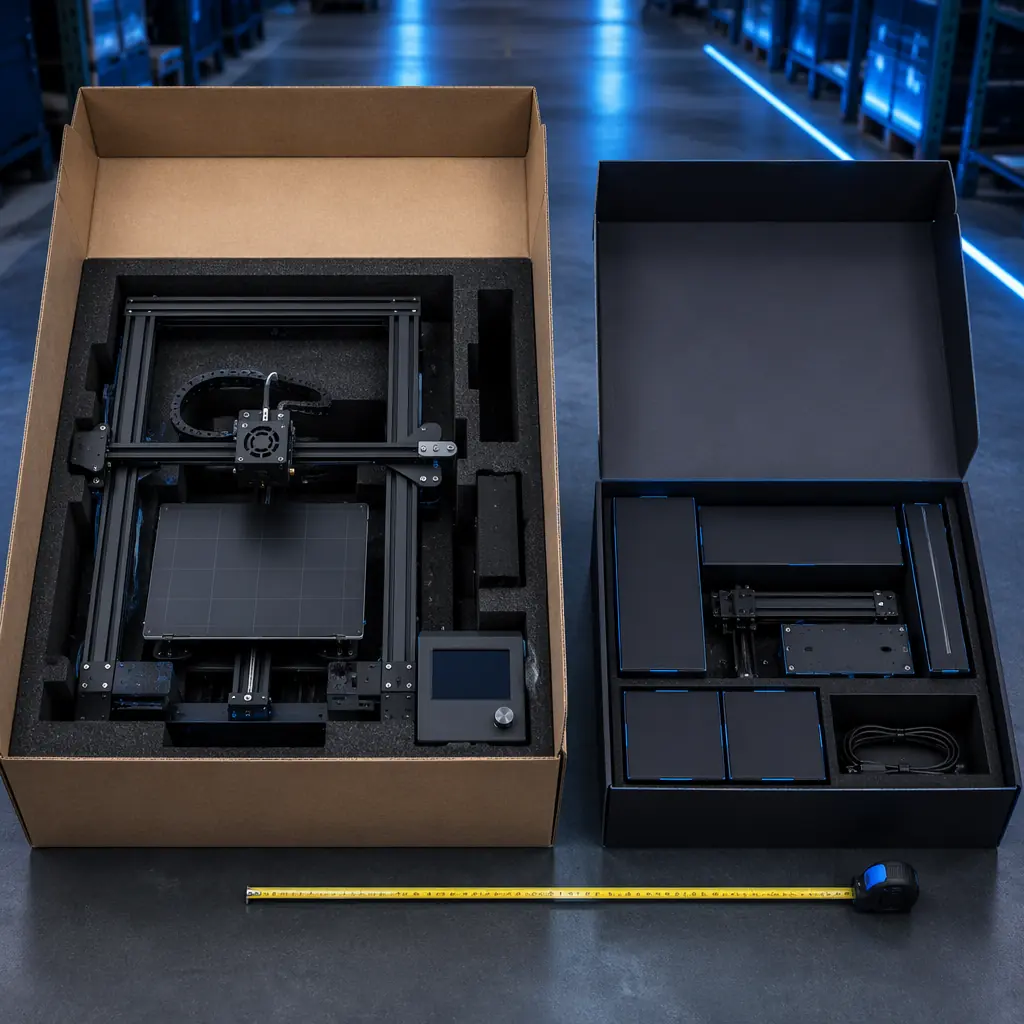
A fully assembled 3D printer ships in a box roughly 500 × 500 × 600 mm (0.15 m³) with custom foam cutouts that protect the assembled structure. The same printer as a semi-kit — frame disassembled, components in nested boxes — occupies roughly 400 × 300 × 200 mm (0.024 m³), a volumetric reduction of 84%. For sea freight at approximately $80–120 per cubic meter, the difference is modest: $12 vs $3 per unit. But for air freight or express courier at $5–8 per kg volumetric (dimensional weight), the difference is $75–120 vs $12–20 per unit — a $60–100 per-unit gap that completely reverses the economics of kits vs pre-assembled. In markets served primarily by air freight (much of Africa, Central Asia, Pacific Islands), kits are the only economically viable option below the $500 retail price point.
Volumetric efficiency also affects warehousing: a distributor who stocks 500 assembled printers needs roughly 75 m³ of warehouse space. The same 500 units in kit form need about 12 m³. At warehouse lease rates of $8–15 per m² per month in typical distribution hubs, that's a $500–900 monthly difference — not transformative for a large distributor, but meaningful for a startup operating from a 50 m² unit. For guidance on inventory planning and SKU management, see our inventory management guide.
The Assembly-Level Sweet Spot: What "80% Assembled" Actually Means
Between the extremes of a fully assembled printer and a bag of components lies a spectrum of intermediate assembly levels. The goal is to find the level that captures most of the FOB savings while eliminating the assembly steps that generate the most support tickets. Based on Precise3D's analysis of 12,000+ distributor support tickets, three assembly steps account for approximately 65% of all kit-related support issues: belt tensioning, gantry squaring, and hotend wiring. A printer that arrives with these three steps completed at the factory — but with the frame, screen, and spool holder left for the customer — captures roughly 70% of the FOB savings of a full kit while avoiding 65% of the support tickets. That is the assembly-level sweet spot.
Concretely, an "80% assembled" printer should arrive with: the motion system fully built and tensioned to target frequency, the gantry squared to within 0.5 mm across the full travel, the hotend and extruder wired and tested, and the bed mounted and leveled. The customer attaches the gantry to the base frame (4–8 bolts), mounts the screen and spool holder (2–4 bolts), connects 2–3 labeled cables, and runs the auto-leveling routine. Total customer assembly time: 20–40 minutes. Total assembly steps requiring any mechanical judgment: zero. The belt tension is already correct. The gantry is already square. The wiring is already tested. The customer is assembling, not calibrating. For the calibration steps that matter after assembly, see our auto bed leveling technology guide.
This sweet spot also creates a natural upsell path: the distributor can offer the 80% kit as the base SKU and a 95% pre-assembled version for a $30–50 premium. The premium covers the additional factory labor plus a margin markup, and the customer self-selects into the support profile they prefer. Data from Precise3D's distributor partners shows that when both options are offered side by side, 55–65% of customers choose the pre-assembled version — confirming that the market will pay for convenience, but also that a significant minority actively prefer the lower price of the kit. Offering both captures both segments without forcing either to compromise.
Building the Product Mix: A Practical Framework
The optimal product mix for most distributors follows a simple rule: pre-assembled for your volume SKUs (the 2–3 models that generate 60%+ of revenue), partial assembly for your specialty and high-end models, and kits only if you have a dedicated enthusiast channel with its own support resources. The specific numbers will vary, but the framework is consistent across regions and segments.
Step 1 — Start with pre-assembled for your lead SKU: The printer you sell the most of should arrive ready to print within 15 minutes of unboxing. This is the printer that defines your brand's reputation. If your volume seller generates support tickets, every customer who has a bad experience tells their community — and in 3D printing, communities are tight and vocal. The marginal FOB savings on a kit version of your lead SKU are almost never worth the brand risk.
Step 2 — Add partial assembly for high-end models: Your $800+ printers sell to customers who are more technically capable on average and more willing to spend 30 minutes on setup in exchange for a $50–80 price reduction. The partial assembly approach — 80% built, all calibration done at the factory — preserves the premium feel while capturing margin. For insights on building a premium product tier, see our buyer's guide by price tier.
Step 3 — Offer kits only through a dedicated channel: If you have a strong enthusiast community or a separate brand targeting the DIY market, kits can be profitable. But they should not share a support queue with your pre-assembled customers. The support skills, response time expectations, and resolution paths are fundamentally different. A separate email alias, a separate knowledge base section, and ideally a separate phone line or chat queue prevents your pre-assembled customers from waiting behind a 45-minute belt-tensioning walkthrough. For the complete picture on building distributor support infrastructure, see our after-sales support strategy guide.
Step 4 — Track support cost per assembly level: The data in the tables above is based on Precise3D's aggregate distributor network. Your specific numbers will differ based on your customer demographics, your support team's expertise, and the specific printer models you carry. Track support tickets by assembly level for at least six months before making the kit vs pre-assembled decision permanent. What the data will almost certainly show: the fully loaded cost of a support ticket — including the lifetime value of customers lost to frustration — is higher than the FOB savings on kits for all but the most technically sophisticated customer segments.
Start Your Partnership
Ready to Bring Precision Printing to Your Market?
Join our network of 200+ global distributors. Competitive pricing, dedicated support, and fast fulfillment.