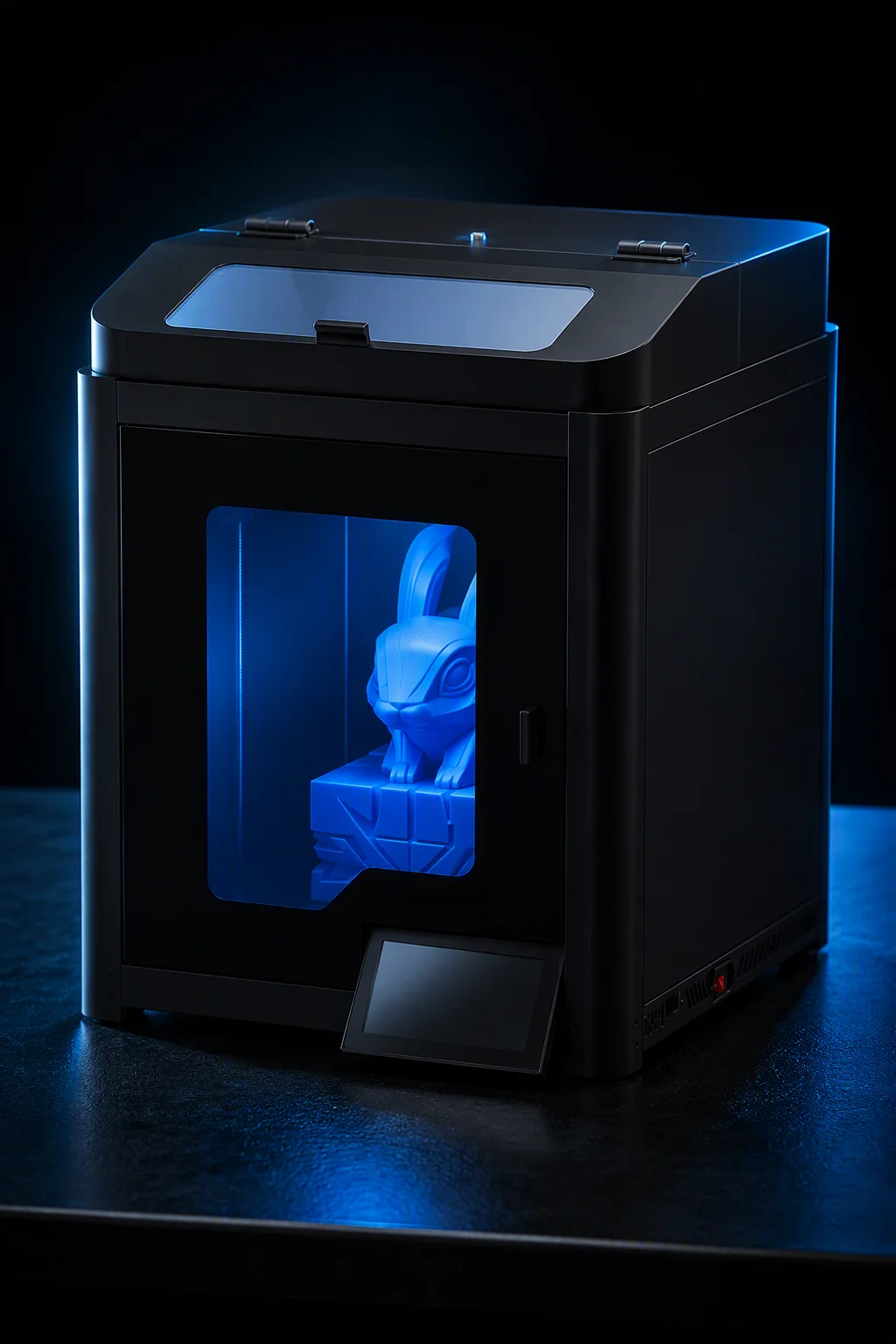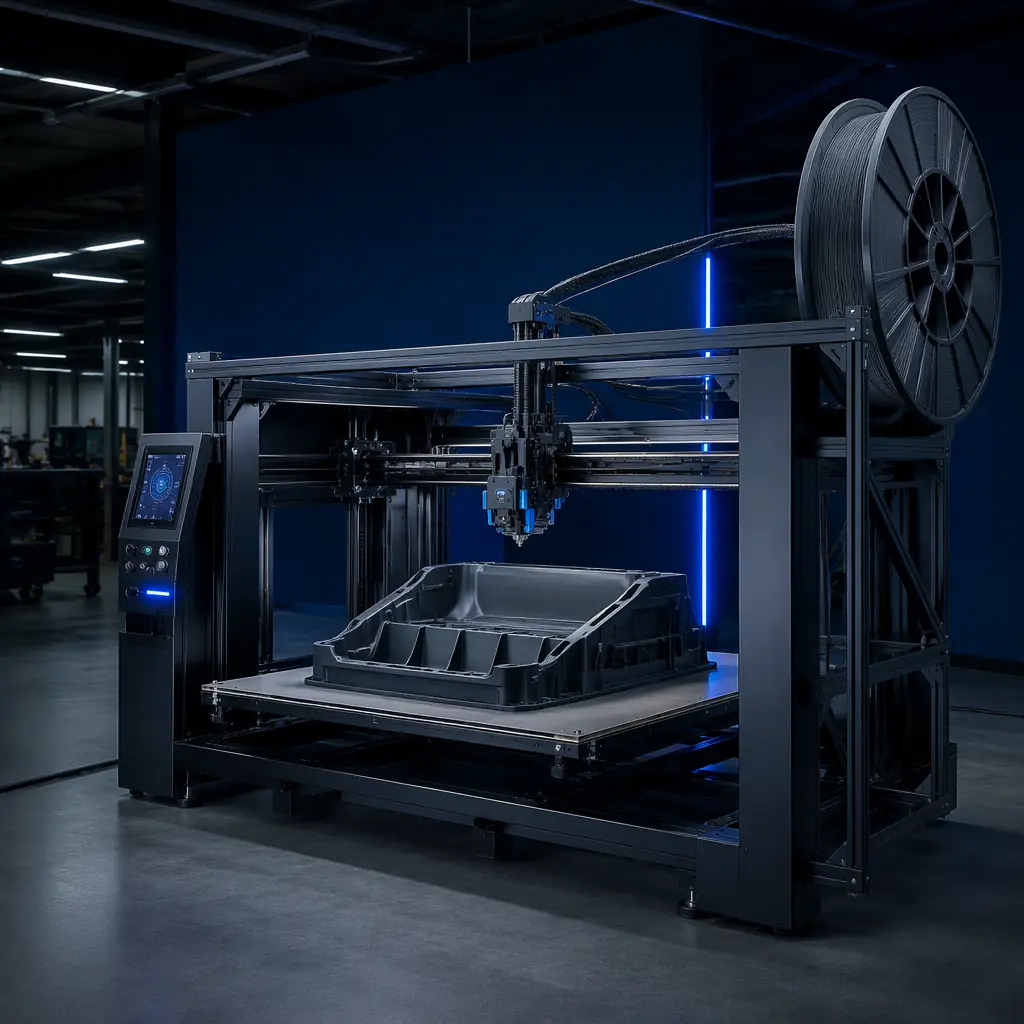
A standard desktop 3D printer with a 220×220mm build plate costs $200–400 wholesale and competes on Amazon reviews. A large-format 3D printer with a 600×600mm build plate costs $8,000–25,000 wholesale and competes on application engineering, onsite installation support, and material qualification. The customer isn't comparing your price to three other listings — they're comparing your ability to print a full-scale foundry pattern in one piece against their current workflow of gluing six smaller prints together. That is a completely different sales conversation, and it's one where the distributor who understands the applications wins the deal, not the one who quotes the lowest price.
At Precise3D, we've seen large-format printer inquiries from our distributor network increase 4.7× in the last 18 months, driven by structural shifts in tooling, foundry, aerospace, marine, and architectural model-making. The customers driving this demand are not hobbyists upgrading from an Ender — they are manufacturing companies replacing subtractive processes (CNC machining, pattern-making, hand layup) with additive manufacturing, and they need a distributor who speaks their language. This guide covers the technology categories, the five customer profiles that buy large-format machines, the margin and recurring revenue structure, and the distribution capabilities required to enter this segment successfully.
What Defines "Large-Format" — Beyond Build Volume
Build volume is the headline spec, but large-format 3D printers are defined by four dimensions that distinguish them from desktop and prosumer machines — and all four dimensions matter for the distribution model.
The distribution model flips:
a desktop printer distributor makes money on hardware margin. A large-format distributor makes money on installation services (15–25% of deal value), consumable supply agreements (recurring monthly), and annual support contracts. The hardware margin becomes the smallest piece of the total customer lifetime value. Our distributor pricing and margin guide breaks down the unit economics across printer tiers — large-format occupies a tier where services and consumables overtake hardware as the primary revenue driver within 18 months of installation.
The Five Customer Profiles That Buy Large-Format 3D Printers
Large-format customers don't buy a printer — they buy a manufacturing capability. Understanding what each profile is actually trying to produce determines which technology, which materials, and which support model you recommend. Get this wrong and you lose credibility on the first call. Get it right and the sale closes with minimal price negotiation.
Profile 1 — Foundries and Pattern Shops:
These customers are replacing traditional wood or foam patterns with 3D printed patterns for sand casting. They need build volumes of at least 600–800mm in one dimension (often Z), the ability to print in engineering materials that survive the sand-molding process (ASA, PC, or specialized casting filament), and surface finish quality that minimizes post-processing. A typical foundry buys 1–3 large-format machines and consumes 40–80 kg of filament per month per machine. The sale is driven by ROI: a 3D printed pattern costs $200–500 in material and 48 hours of print time vs. $2,000–5,000 and 2 weeks for a CNC-machined wood pattern. For distributors, this profile has the highest recurring consumable revenue of any large-format segment.
Profile 2 — Aerospace Tooling and Fixture Manufacturers:
These customers print assembly jigs, drill fixtures, and composite layup tools. Requirements include: build volumes of 500–1,000mm, high-temperature materials (PEI/ULTEM at 180°C+ chamber temperature, PPSU at 140°C+), and dimensional stability across multi-day prints. Material certification (material traceability documentation, lot-level test coupons) is non-negotiable. Deal sizes are the highest in the category — $25,000–80,000 per printer — but the qualification cycle is 3–9 months. Distributors entering this profile should partner with the manufacturer on joint qualification support. For the material options that serve this segment, see our industrial-grade materials guide and the heated chamber technology comparison.
Profile 3 — Marine and Boatbuilding:
This emerging segment uses large-format 3D printing for plug molds, hull section mockups, and custom interior components. Build volume requirements are the largest of any profile — 800mm–1.2m+ — because boat parts are inherently large. Materials are typically engineering-grade PETG, ASA, or glass-filled nylons for UV and moisture resistance. The key sale driver: a 3D printed hull plug that replaces a hand-carved foam plug saves 200–400 labor hours and eliminates multiple iterations of filling and fairing. These customers typically need 1 machine only — it's a single-sale profile with limited consumable volume (5–15 kg/month), but the hardware deal is large enough to justify the sales effort.
Profile 4 — Architectural Model Makers and Theme Park Fabricators:
These customers print large-scale architectural models, terrain topographies, and themed entertainment props. Requirements: build volumes of 500mm–1m, good surface finish (layer heights of 0.1–0.2mm with minimal post-processing), and the ability to print in PLA or PETG at low cost. This is the most price-sensitive large-format profile — the machine competes against CNC foam cutting and manual model-making, not against other 3D printers. Distributors succeed here by bundling the printer with slicing software training and model-splitting consultation (how to break a 3-meter building model into printable segments and assemble them). Consumable volume is moderate (10–25 kg/month), and the customer typically needs ongoing technical support for the first 6 months — a natural entry point for a support contract.
Profile 5 — General Industrial Tooling (Jigs, Fixtures, EOAT):
The broadest profile — any manufacturing company that uses custom jigs, fixtures, or end-of-arm tooling on their production line. Build volume needs are moderate (400–600mm), materials are typically engineering-grade PETG, ABS, or carbon-fiber-filled nylons, and the sale is ROI-driven: a 3D printed EOAT gripper that costs $80 in material and 6 hours replaces a CNC-machined aluminum gripper that costs $1,200 and takes 2 weeks. This is the highest-volume sales opportunity for distributors — there are thousands of manufacturing plants that could benefit from a single large-format printer for tooling, but most have never considered it. Our distributor startup guide covers how to identify and approach these customers in your region.
Technology Categories — Pellet vs Filament vs Pellet-Filament Hybrids
Large-format 3D printers fall into three technology categories with dramatically different cost structures, and the category you choose determines your target customer, your margin profile, and your competitive positioning.
Filament-based large-format is the entry point for most distributors. The machines use the same FFF/FDM technology as desktop printers, scaled up with larger frames, higher-flow hotends (50–120 mm³/s vs. 15–25 mm³/s for desktop), and heated chambers. The key technical spec to evaluate is volumetric flow rate — a large-format printer with a 500×500mm bed but a 20 mm³/s hotend will take 3 days to print a part that a 60 mm³/s machine prints in 18 hours. Our high-speed printing technology guide covers flow rate benchmarks across printer tiers.
Pellet-extrusion systems use raw plastic pellets (the same feedstock as injection molding) instead of filament, reducing material cost by 80–95%. A kilogram of ABS filament costs $25–40; a kilogram of ABS pellets costs $3–5. For a foundry consuming 60 kg/month, that's the difference between $1,500 and $180 in monthly material cost — a savings that pays for the higher hardware price within 12–18 months. However, pellet systems require more expertise: the extruder must be tuned for each material's melt-flow characteristics, and surface finish is generally coarser than filament-based prints. The distribution model for pellet systems typically includes commissioning and training services that add $3,000–8,000 to the deal.
Pellet-filament hybrids offer the best of both worlds: use cheap pellets for large structural parts and switch to filament for fine-detail components that require better surface finish. For distributors, the hybrid category is attractive because it captures a broader range of applications within a single customer — and the consumable supply relationship covers both pellet and filament sales. The tradeoff is higher initial machine cost and slightly more complex support requirements.
Distribution Economics — The Deal Size and Recurring Revenue Math
The unit economics of large-format distribution are fundamentally different from desktop and prosumer printers. A distributor who understands this structure can build a 7-figure revenue practice with fewer than 30 active customers.
Hardware margin:
Large-format printers carry wholesale-to-retail markups of 20–35%, but competition is on application capability, not price. A distributor who can demonstrate that their recommended printer can print a customer's specific part — with a sample print of the actual geometry — can command the high end of the margin range. A distributor who quotes price only competes against every other reseller and earns the low end.
Installation and commissioning:
Large-format machines typically require 1–3 days of onsite installation: uncrating, positioning, leveling, enclosure assembly, ventilation connection, initial calibration, and test print. This is a billable service at $800–2,500/day depending on regional labor rates. For a $20,000 printer deal with 2 days of installation at $1,500/day, the installation revenue alone is $3,000 — 15% of the hardware price, earned at 60–80% gross margin.
Recurring consumable revenue:
A large-format filament-based printer operating 16 hours/day consumes approximately 0.8–2.5 kg of filament per day, depending on nozzle size and infill density. At an average of 1.5 kg/day × 25 operating days/month = 37.5 kg/month. At a wholesale cost of $18/kg and retail price of $35/kg, the distributor earns $637/month in consumable gross profit per machine. A pellet-based machine at 2× the consumption rate and lower material cost might earn $300–500/month — but the customer saves $1,000+/month, making it an easier sale. Our consumables bundling guide covers how to structure supply agreements that lock in this recurring revenue.
Annual support contracts:
Priced at 8–15% of the hardware value per year, covering remote diagnostic support, firmware updates, and priority spare parts shipping. For a $20,000 printer, that's $1,600–3,000/year in recurring revenue at 70%+ gross margin. A distributor with 25 large-format machines under support contract has a $40,000–75,000 annual recurring revenue stream before selling a single additional printer.
By Year 3, a 25-machine large-format portfolio generates $165,000–556,000 in annual recurring revenue from consumables, support contracts, and spare parts — revenue that arrives every month regardless of whether you sell new hardware. This is the structural advantage of large-format over desktop distribution: the annuity stream scales with the installed base, and switching costs are high because each machine is qualified to a specific printer-material-workflow combination. For a comparison with the broader product portfolio strategy, see our portfolio strategy guide.
What Distributors Need to Build Before Selling Large-Format
Large-format distribution requires capabilities that desktop distribution does not. Distributors who attempt to sell large-format machines with a desktop support model will generate returns, warranty claims, and disappointed customers. Here are the four capabilities to build before taking your first large-format order.
1. Application Engineering Capability: You need someone on your team who can look at a customer's part drawing, determine whether it's printable at scale, recommend the right material and orientation, and estimate print time and material consumption. This doesn't require an engineering degree — it requires experience running large-format prints and understanding how large parts warp, how to design support structures for 50 kg prints, and when to split a model vs. print it in one piece. The distributor who can say "send me your STEP file and I'll tell you exactly how we'll print it" wins the deal over the distributor who says "our printer can handle up to 1 meter."
2. Logistics and Installation Infrastructure: A 600×600×800mm large-format printer in its shipping crate weighs 120–250 kg and requires a pallet jack or forklift to move. Distributors need a freight forwarding relationship, a local warehousing capability (even if it's a rented space), and a technician who can perform onsite installation. For distributors in countries where Precise3D ships container loads, the logistics piece integrates with your existing import operations — see our shipping and logistics guide for the sea freight, customs, and duty framework.
3. Consumable Supply Chain: Large-format customers consume filament in 5 kg, 10 kg, or 25 kg spools — not the 1 kg spools used by desktop printers. Your consumable supply chain must support bulk spool formats, and your pricing must reflect the volume discount that large-format customers expect. A customer buying 40 kg/month of ABS expects to pay $25–35/kg, not $40/kg. The margin is lower per kg but the absolute dollar volume is 20–40× higher than a desktop customer buying 1 kg/month. For the full filament stocking framework, see our filament stocking guide.
4. Spare Parts Inventory: When a large-format printer in a foundry goes down mid-print, the customer is losing a 3-day print worth $400–800 in material and machine time. They need a replacement hotend, thermistor, or heater cartridge shipped same-day, not in 2 weeks from China. Distributors must stock critical spares locally: hotend assemblies, thermistors, heater cartridges, build surface sheets, and belt kits. The investment is $2,000–5,000 in initial spare parts inventory — recouped on the first 2–3 emergency replacements. Our after-sales support guide covers the spare parts stocking framework in detail.
The 90-Day Entry Plan for Large-Format Distribution
You don't need all four capabilities on day one. Here is a staged approach that lets you enter the large-format segment with manageable investment and scale as you close deals.
Days 1–30 — Training and Demo Unit:
Order one large-format demo unit (recommended: a 500–600mm filament-based model at the $8,000–12,000 wholesale level). Spend the first 30 days running it daily: print large parts in PETG, ABS, and ASA; learn the slicing parameters for different layer heights and nozzle sizes; print parts for local manufacturers as free demos. By day 30, you should have: 5–10 completed demo parts to show prospects, reliable print-time and material-consumption estimates for quoting, and hands-on experience with the machine's maintenance requirements. Track every print — the data you collect in these 30 days becomes your sales collateral.
Days 31–60 — Pipeline Development:
Identify 20–30 manufacturing companies in your region that produce tooling, jigs, fixtures, patterns, or large custom parts. Contact the production manager or manufacturing engineer — not purchasing. Your opening: "I have a large-format 3D printer running in my shop. Send me a part drawing and I'll print a sample for free so you can evaluate the technology." The free sample print is your highest-conversion lead generation tool. Expect 10–15% to send a part file, and 50% of those to request a quote after seeing the sample. If you're new to B2B industrial sales, our market segments guide covers how to match printer tiers to customer profiles.
Days 61–90 — First Deal and Repeatable Process:
By day 90, the goal is to close your first large-format sale, document the entire sales-to-installation process, and build a repeatable playbook. The first deal will take longer than subsequent deals because you're learning the application engineering conversation, the freight logistics, and the installation process simultaneously. Document everything — the questions customers asked, the objections they raised, the technical details that mattered. This becomes your sales playbook for deal #2 through #20.
Reviewed by the Precise3D engineering & OEM team. Compliance files that accompany the catalog are auditable at the certification register.
Distributor Partnership
Ready to Add Large-Format 3D Printers to Your Portfolio?
Join our network of global distributor network. Large-format printers with 500mm–1m+ build volumes, engineering material qualification support, installation training, and a consumable supply chain designed for industrial-scale recurring revenue.