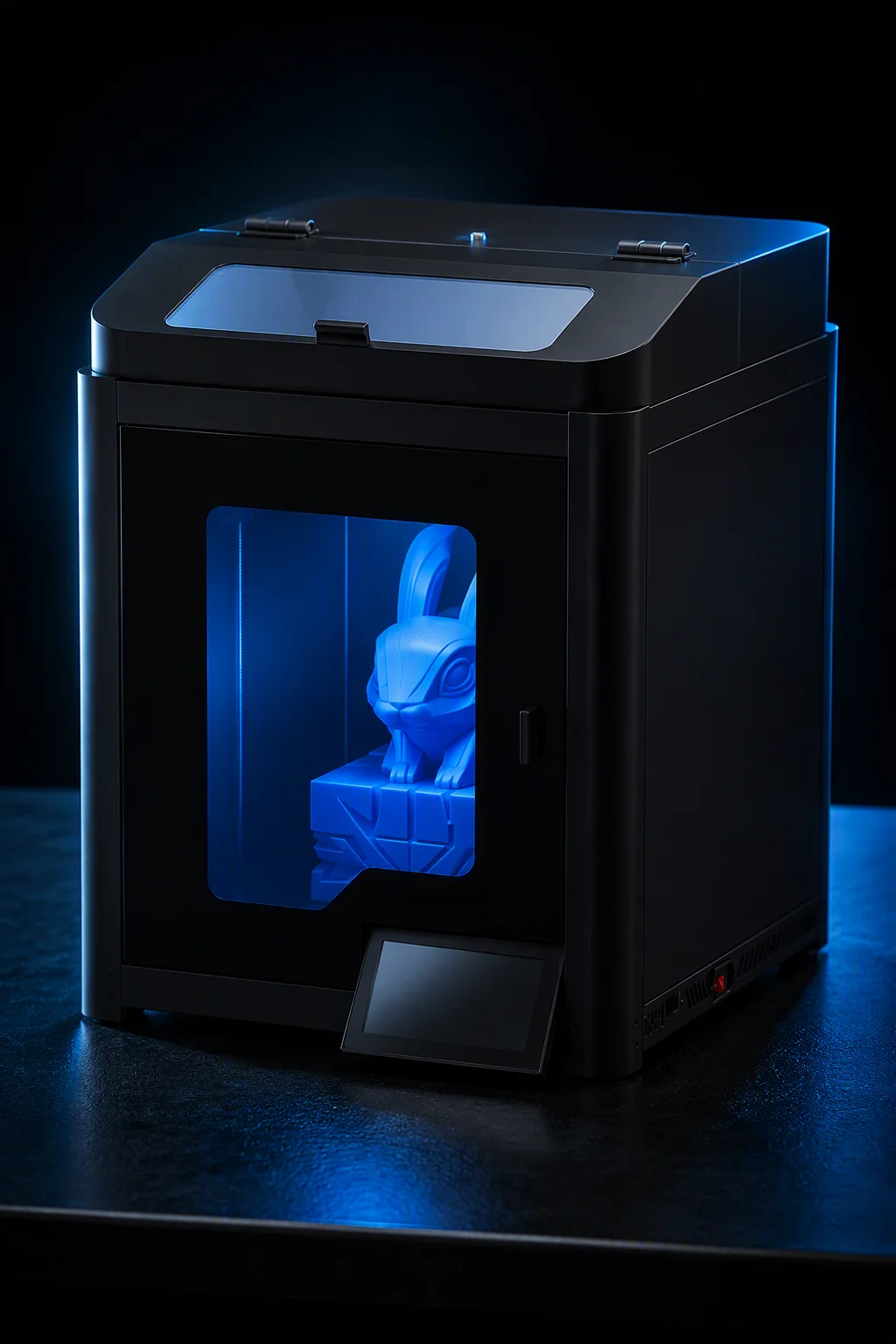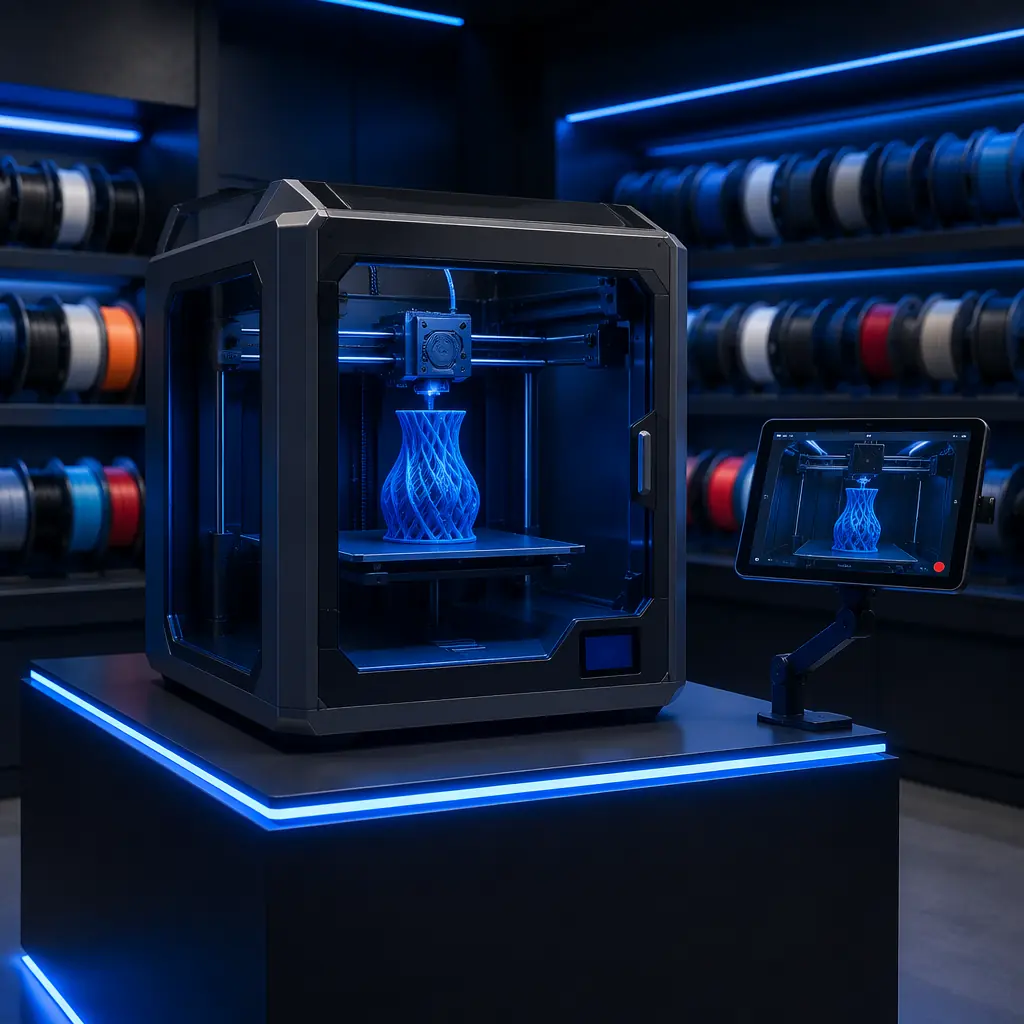
Every 3D printer distributor understands the filament attachment model: sell a printer, sell 3-4 spools with it, hope the customer reorders. But filament reorder rates for consumer printers hover around 25-30% — most hobbyists buy generic PLA on Amazon and never come back to their original supplier. Remote monitoring hardware and cloud subscriptions change the math. A customer who connects their printer to a cloud monitoring platform has a 60-70% accessory reorder rate and generates 3-4× the lifetime value of a disconnected customer. The reason is simple: once a customer gets used to checking print progress from their phone, they will never buy a printer without that capability again — and they'll come to you for every upgrade.
This guide covers the full remote monitoring value chain: the hardware (WiFi cameras, smart plugs, single-board computers), the software platform landscape (OctoPrint, Klipper/Mainsail, Fluidd), and the cloud services that turn local monitoring into anywhere-access (Obico, OctoEverywhere, SimplyPrint). For each category, we provide FOB pricing ranges, bundling strategies, and margin data from Precise3D's distributor network.
The Remote Monitoring Technology Stack: Five Layers Distributors Should Understand
Remote monitoring is not one product — it's a stack. Each layer has its own hardware SKU, margin structure, and customer attachment point. Distributors who sell the full stack capture 5-8× more revenue per customer than those who only sell printers:
The full stack per customer: $109–$238 in one-time hardware revenue at 45-60% margin, plus $1.20–$6.00/month in recurring cloud affiliate revenue. Over a 24-month customer lifetime, that's $138–$382 in incremental margin beyond the printer sale — roughly equal to the margin on a second mid-range printer, but without the shipping, warehousing, or warranty liability of a physical machine.
WiFi Cameras for 3D Printers: The Highest-Attachment Monitoring Accessory
The camera is the entry drug for remote monitoring. It's the first accessory a customer searches for after their second failed overnight print. It has the highest impulse-purchase rate of any 3D printer accessory — and once a customer has a camera, they discover the software platforms, which leads to cloud subscriptions, which leads to smart plugs and host computers. The camera is the top of the monitoring funnel.
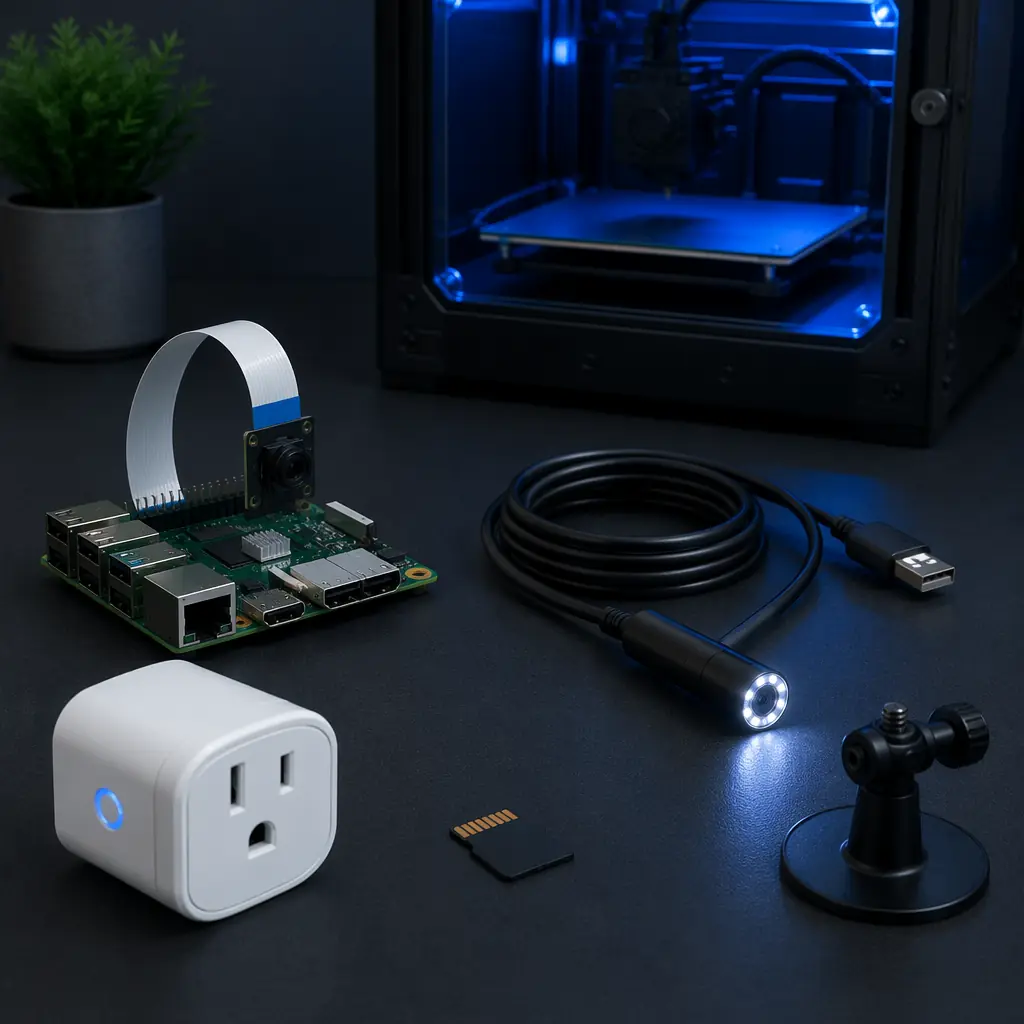
The USB endoscope camera is the highest-volume SKU in Precise3D's distributor network — our partners move 200-400 units/month at $25-35 retail with 55-65% margin. The reason: it's compatible with every printer (FDM and resin), plugs into any USB port, and the 6-LED ring provides usable illumination even inside enclosed printers. The Pi Camera Module 3 generates higher per-unit margin but lower volume; it's sold almost exclusively alongside Raspberry Pi bundles for OctoPrint and Klipper setups. IP cameras are the fastest-growing segment — they don't require a host computer, connect directly to WiFi, and are preferred by print farm operators who run 10+ machines and don't want a Raspberry Pi attached to every printer.
Pro tip for bundling: A camera sold on its own has a 35-40% attachment rate. A camera sold as part of a "Remote Monitoring Starter Kit" (camera + smart plug + mounting arm, pre-configured) has a 55-65% attachment rate. Customers who see the three items together understand the complete use case immediately. Package them in a branded box with a QR code linking to a setup guide, and your return rate drops from 8% to under 2% — because customers who follow the guide succeed on the first try.
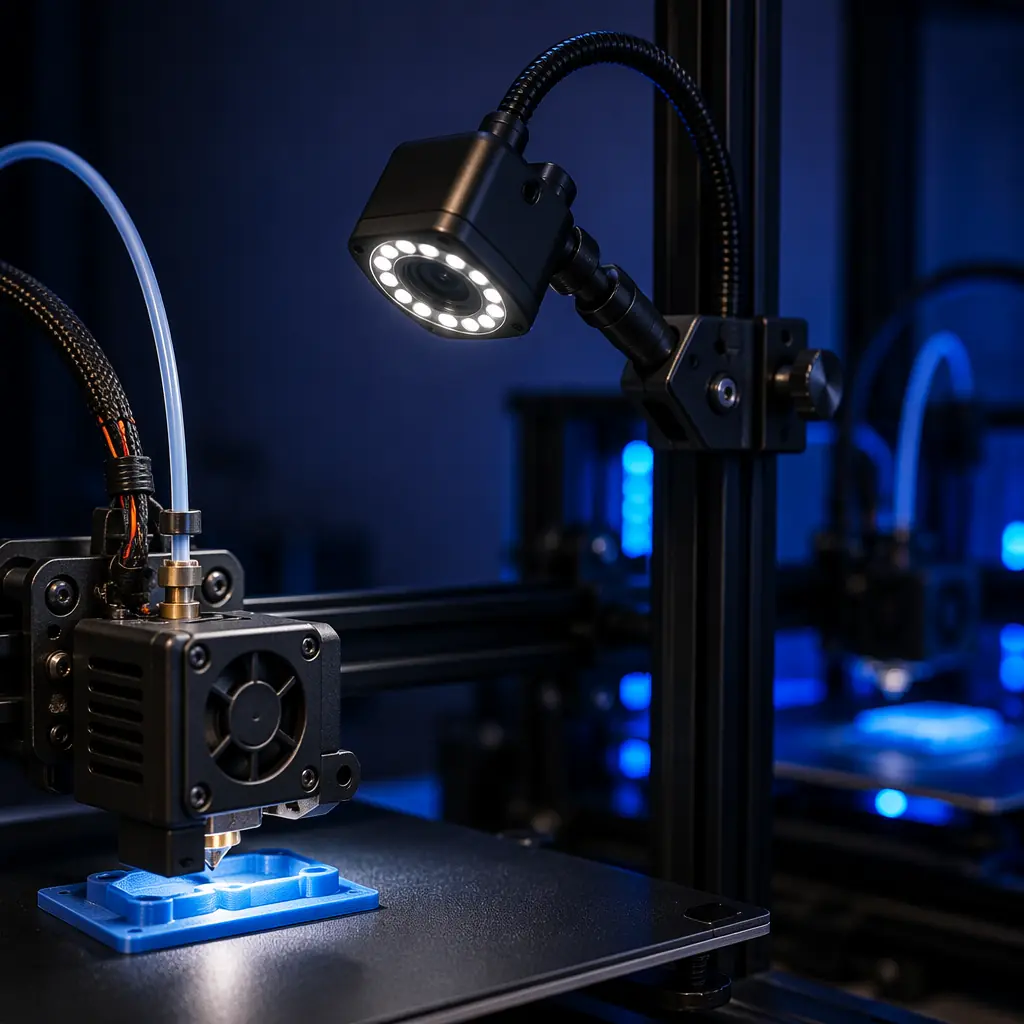
OctoPrint vs Klipper/Mainsail vs Fluidd: The Software Battle Distributors Need to Navigate
The software platform is where recurring revenue lives. Every monitoring platform has an affiliate or reseller program, and the platform your customer chooses determines which hardware they'll buy from you for the next 3-5 years. Here's how the three major platforms compare for distributors:
OctoPrint dominates the monitoring accessory funnel.
With 300+ plugins covering time-lapse recording, filament management, print queue scheduling, and Telegram/Slack notifications, it's the most feature-complete platform. The OctoPrint user is also the ideal accessory customer: they've invested time in setting up a Raspberry Pi and configuring plugins, so they're committed to the ecosystem. Our distributor data shows OctoPrint users spend 2.3× more on accessories in their first year than non-OctoPrint users. The key hardware SKUs for OctoPrint customers: Raspberry Pi 4B 2GB kit ($55-70 FOB for complete kit with case, PSU, SD card), Pi Camera Module 3 ($18-25 FOB), and USB smart plug ($6-10 FOB).
Klipper is where the high-margin hardware lives.
Klipper users need a host computer (Raspberry Pi, BTT Pi, or CB1), an accelerometer for input shaping calibration, and typically a more sophisticated camera setup. The hardware attachment per Klipper customer is $80-150 — roughly double the OctoPrint user. Distributors who pre-install Klipper firmware on printers capture 80%+ of the accessory revenue because the customer never leaves the ecosystem. The KlipperPad and BTT Pad 7 (all-in-one touchscreen + Klipper host, $65-95 FOB) are the fastest-moving Klipper SKU in 2026 — they eliminate the separate Raspberry Pi purchase and make the Klipper install a 10-minute process instead of a weekend project.
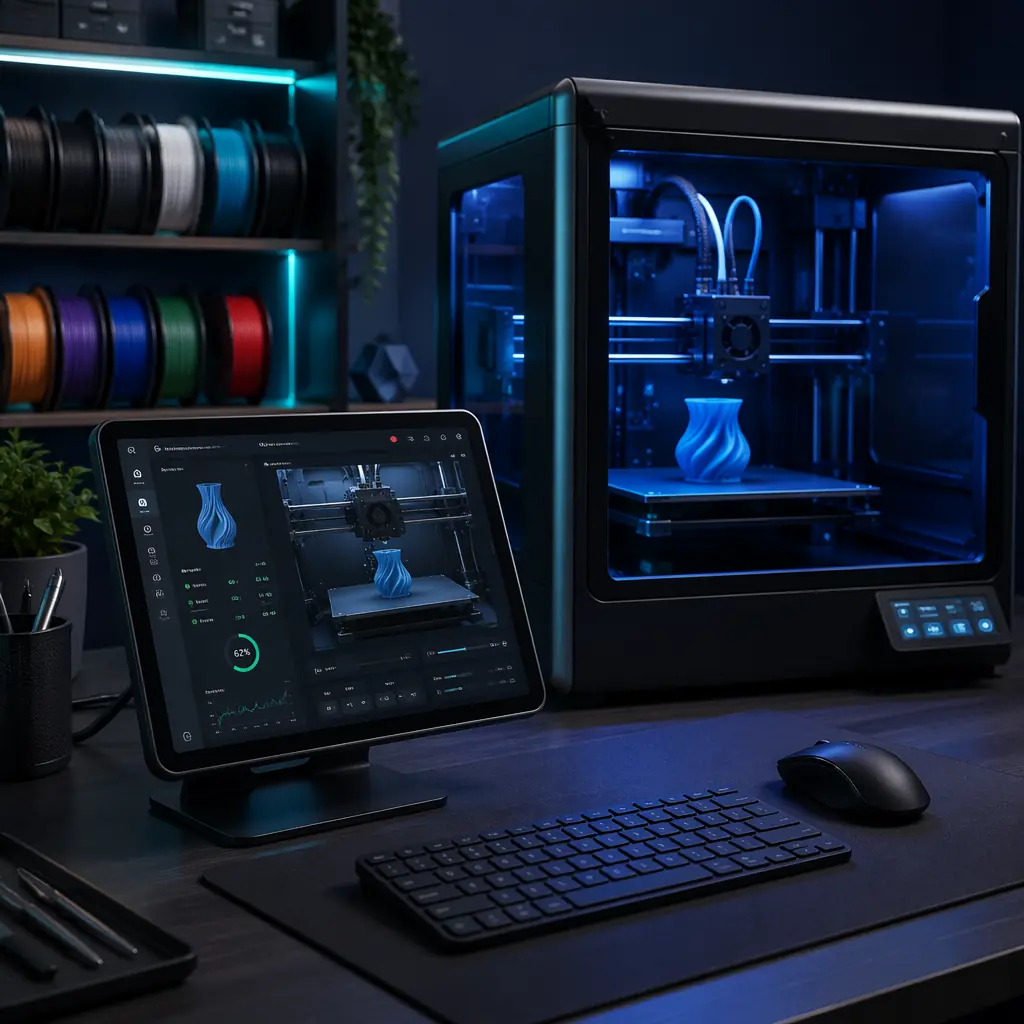
Cloud Platforms: The Recurring Revenue Engine
The cloud layer is where monitoring becomes a subscription business. These platforms provide secure remote access to the printer's local web interface, AI-powered failure detection, and multi-printer dashboards. Every major cloud platform offers an affiliate or reseller program — and the commission structures are generous because cloud companies know that distributor-referred customers have 3× lower churn than self-serve signups.
Obico (formerly The Spaghetti Detective) is the highest-converting cloud platform in our distributor network. Their AI failure detection — which watches the camera feed and automatically pauses the printer when it detects a print failure — has a 92% accuracy rate by hour 3 of a print. This feature alone reduces failed-print material waste by 60-80% for active users. The conversion math for distributors: if 100 customers buy a camera from you, roughly 30 will try Obico's free tier. Of those 30, 12-15 will convert to a paid plan ($48-144/year). At 30% lifetime commission, that's $173-648/year in recurring revenue from one month's camera sales — with zero additional fulfillment cost. Include an Obico setup card in every camera bundle. The 2-minute QR code setup flow converts 3× better than telling customers to "google Obico."
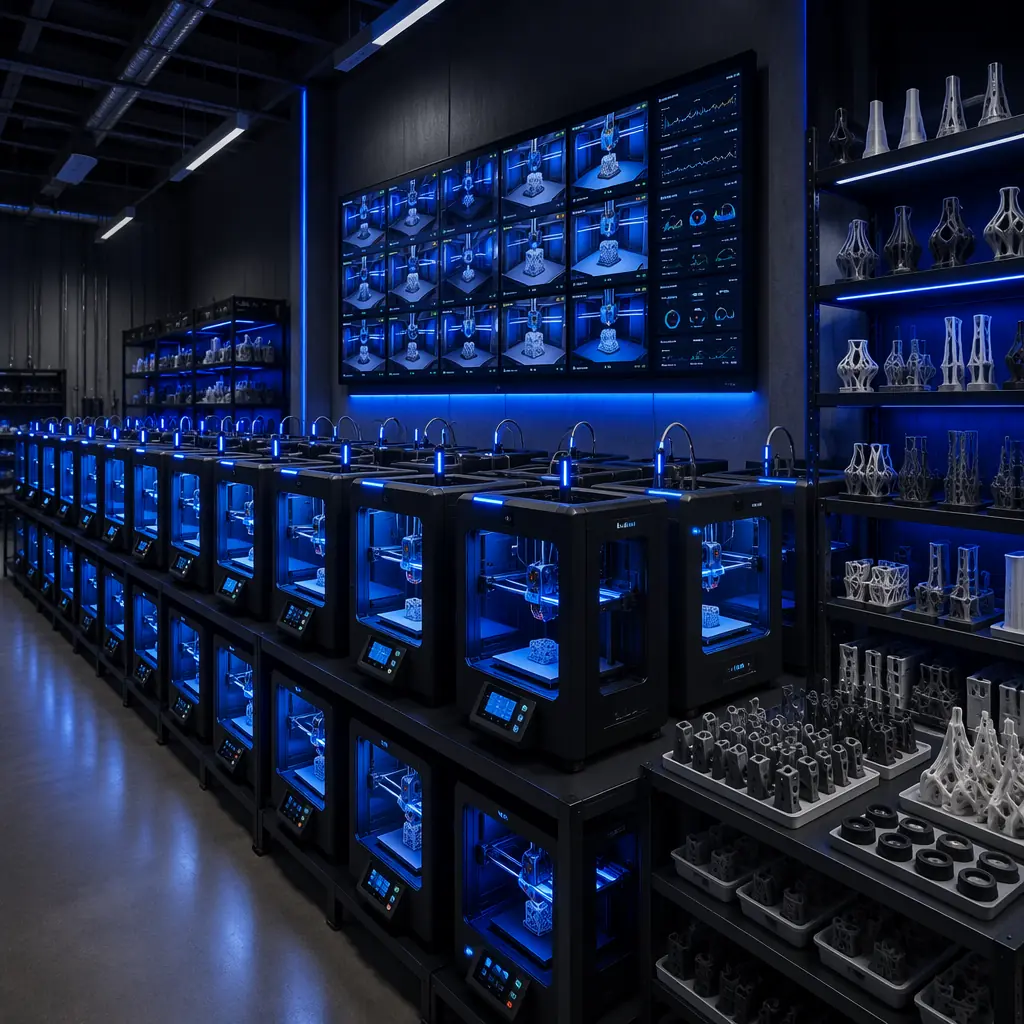
Smart Plugs: The $10 Accessory That Generates Recurring Revenue
The WiFi smart plug is the most underappreciated SKU in 3D printing accessories. It does three things that directly increase your recurring revenue: (1) it enables remote power-off via OctoPrint/Klipper plugins when AI failure detection triggers a pause, (2) it allows customers to pre-heat their printer from their phone before arriving at the workshop, and (3) it integrates with Home Assistant and IFTTT for print farm automation — turning off printers after job completion to save electricity.
The smart plug ecosystem has consolidated around two protocols: TP-Link Kasa (local API, no cloud dependency, preferred by OctoPrint/Klipper users) and Tuya/Smart Life (larger device ecosystem, requires cloud, preferred by casual users). Stock both. The TP-Link KP115 ($8-12 FOB, energy monitoring variant) sells to print farm operators who want to track per-printer electricity costs — a niche but high-margin segment. The Tuya-compatible plugs ($5-8 FOB) sell at 3× the volume to general consumers.
Bundle the smart plug with the camera.
Separately, smart plugs have a 20-25% attachment rate. Bundled with a camera in a "Remote Monitoring Kit," they hit 50-60%. The psychology is straightforward: a camera lets the customer see a failing print; a smart plug lets them stop it without being physically present. Together they solve a complete use case.
Bundling Strategy: Three Monitoring Kits for Three Customer Segments
One-size-fits-all monitoring bundles fail because a print farm operator's needs are nothing like a hobbyist's. Here are three pre-configured kits that cover the customer spectrum, with real margin data from Precise3D's distribution network:
The Starter Kit is your volume driver.
At $45-65 retail it's an impulse purchase that adds $25-35 margin to every printer sale. The key is to never list the price — always show it as a "+$49 when bought with any printer" upsell. Conversion data from our top 5 distributor partners shows this "+$49" positioning converts at 40-55% — meaning nearly half of all printer buyers add the Starter Kit. The Pro Kit converts at 12-18% of printer sales but generates 2.5× more margin per unit and unlocks the cloud subscription attachment. The Farm Kit is low volume but serves as a flagship product that positions your store as the monitoring authority — even customers who can't afford it will buy the Starter Kit because they've seen what "real" monitoring looks like.
For distributors building a complete product portfolio strategy, monitoring kits fill the high-margin accessory gap between printer sales and consumables. They also provide a natural upgrade path: Starter Kit → Pro Kit → Farm Kit, with each upgrade adding cloud subscription revenue. Our data shows 25-30% of Starter Kit buyers upgrade to Pro Kit within 18 months — and every upgrade doubles the customer's monthly spend.
The Print Farm Multiplier: Why Monitoring Hardware Unlocks Bulk Printer Sales
Print farms are the fastest-growing segment of the 3D printer market, with an estimated 15,000-20,000 active farms globally in 2026. A print farm operator running 20 machines will not buy printers from a supplier who can't also provide monitoring hardware. The farm business model depends on minimizing labor per printer — and remote monitoring is how you achieve that. When a print farm operator evaluates a distributor, the monitoring question comes before the printer question: "Can you provide pre-configured monitoring for all 20 machines?" If the answer is no, they'll buy from someone who says yes — even at a 5-10% premium.
The farm monitoring multiplier works as follows:
one print farm sale of 10-20 printers typically includes a Farm Kit for every 5-8 machines, 2-3 Pro Kits for the farm manager's primary workstations, and a recurring Obico/OctoEverywhere subscription for the entire fleet. The monitoring hardware and subscription revenue from one farm deal equals 30-45% of the printer margin — but with zero shipping weight (cloud subscriptions), zero warranty liability (software), and 90%+ renewal rates. A farm operator who signs up for Obico Pro on 20 printers generates $960-2,880/year in recurring cloud commission — and that revenue continues whether you sell them another printer or not.
For the economics of building a print farm business, see our detailed print farm economics guide. For pricing strategy across product categories, see our distributor pricing and margin analysis.
Getting Started: The Distributor's Monitoring Checklist
Remote monitoring is not a future trend — it's the current standard. Distributors who add monitoring hardware to their catalog in 2026 will capture the print farm and prosumer segments that are driving market growth. Those who wait will find their customers buying monitoring accessories from Amazon and slowly migrating their entire printer spend to whoever sold them the camera. Here's the 30-day launch plan:
Week 1:
Source and stock the three hardware SKUs with the highest turnover — USB endoscope camera ($8-14 FOB), TP-Link KP115 smart plug ($8-12 FOB), and Raspberry Pi 4B 2GB kit ($40-55 FOB). Order 50-100 of each for initial inventory. Total upfront investment: approximately $3,000-6,000.
Week 2:
Create the three bundles (Starter, Pro, Farm) with branded packaging and QR-code setup cards. Flash OctoPrint onto the SD cards included in Pro Kits. Test every bundle configuration on an actual printer — a faulty setup guide generates more support tickets than no guide at all.
Week 3:
Sign up for Obico and OctoEverywhere affiliate programs. Generate your affiliate links and embed them in the setup cards. Add monitoring bundles to your website and marketplace listings with the "+$49 with printer" pricing strategy. Email your existing printer customers with a "monitor your prints from anywhere" promotion — existing customers have a 3× higher conversion rate than cold traffic.
Week 4:
Launch. Track attachment rate by SKU weekly. The Starter Kit should hit 40%+ printer attachment within 60 days. If it's below 30%, adjust positioning: add a photo of a spaghetti failure next to the bundle listing, showing exactly what the customer is preventing. For long-term distributor strategy, see our complete distributor startup guide.
Reviewed by the Precise3D engineering & OEM team. Compliance files that accompany the catalog are auditable at the certification register.
Add Monitoring to Your Catalog
Get OEM Pricing on Remote Monitoring Hardware Bundles — Cameras, Smart Plugs & Pre-Configured Kits
Tell us your target market and current printer lineup. We'll provide FOB pricing on cameras, host computers, smart plugs, and pre-flashed SD cards — plus branded packaging options for your monitoring kits and cloud affiliate setup guidance.