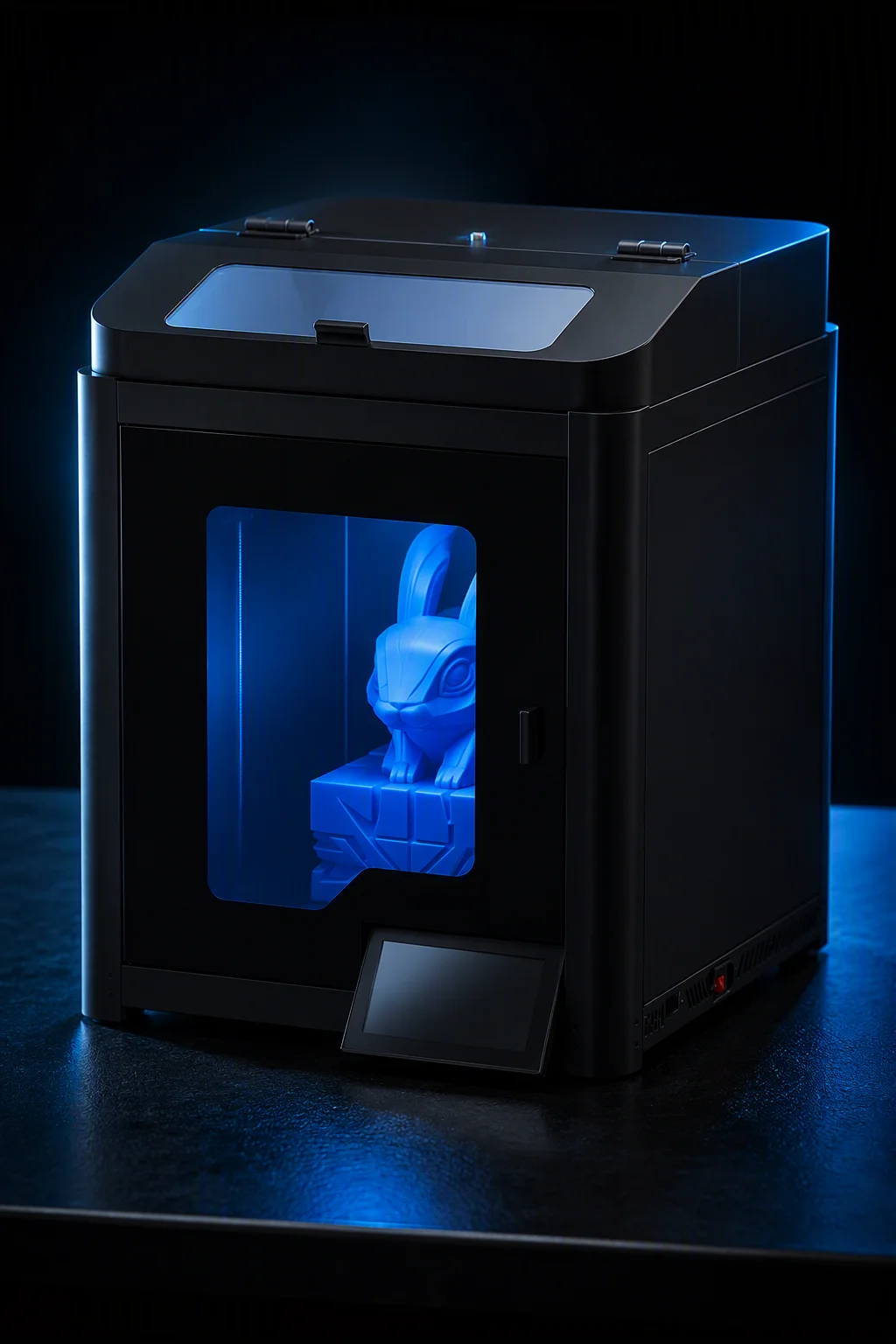
The Survey Is the Quote
Every installation that goes badly goes badly in a way that was visible on the day of the site visit and was not written down. The printer arrives, the crate is opened, and then the installer discovers that the only available socket is on a lighting circuit shared with an air compressor, that the floor is a mezzanine rated for storage rather than machinery, or that the room has no extraction and the customer's only window is a fire exit. Each of those is a two-week delay and a lost margin on the deal.
A site survey is thirty minutes with a checklist and a phone camera. It is also the cheapest way for a distributor to look professional, because the customer receives a document that says what the room must be before the machine arrives, and the distributor has a written record of the conditions they were given. The conditions that matter fall into five groups, and only one of them is on the manufacturer's typical installation sheet.
Electrical: What the Label Does Not Tell You
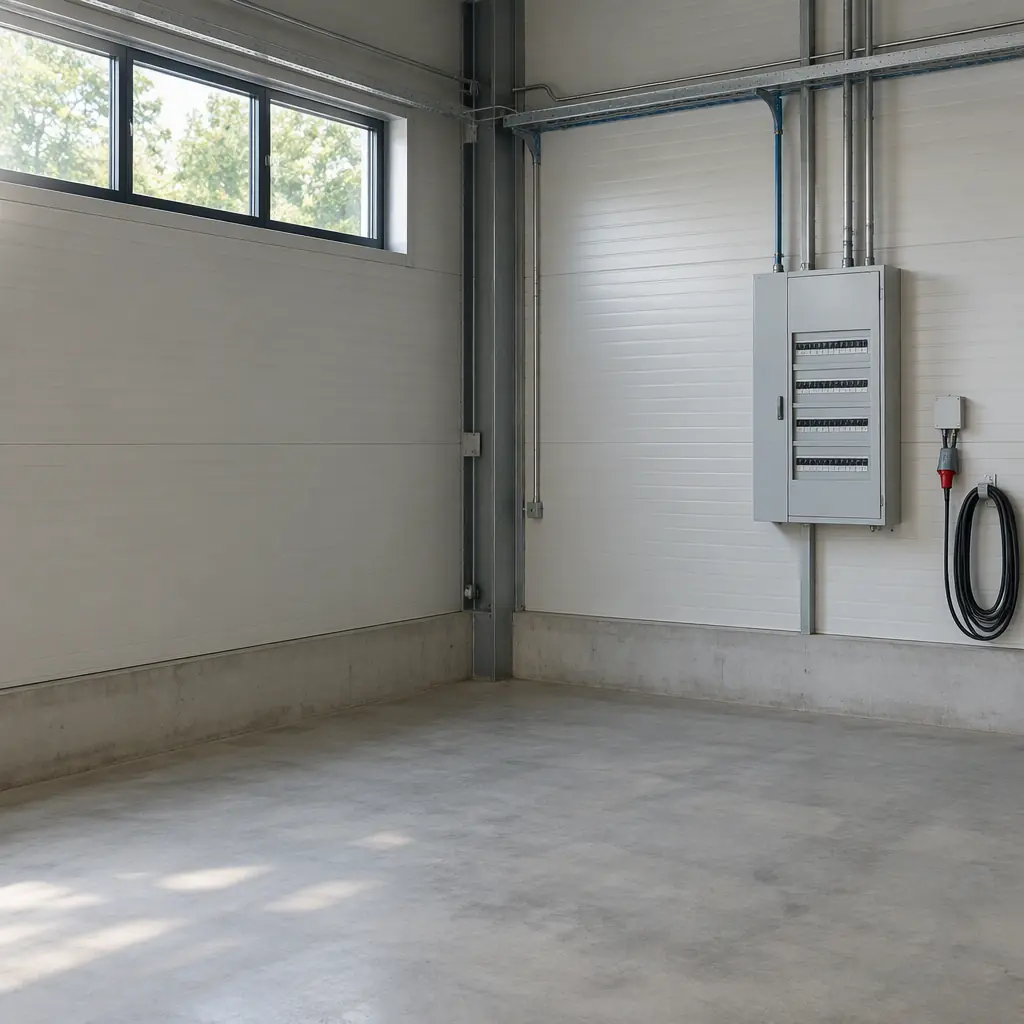
A desktop FDM printer's rating plate usually states a maximum input of 350 to 600 watts, and the same plate is often used across 100 to 240 volt variants. That number is not what the circuit has to deliver. A machine with a 300 watt heated bed, a 60 watt hotend and a 500 watt chamber heater draws in short bursts well above the average, and a fleet on one circuit multiplies the burst. The survey question is not "how many watts" but "how many printers on this circuit, and what else is on it".
Dedicated circuits. For a room with more than three printers, ask for one dedicated 16 amp circuit per four to six desktop machines, or per two large-format machines, and confirm that the circuit is not shared with compressors, welders, HVAC or lighting. A compressor starting on the same circuit produces a voltage sag that can reset a printer mid-build, and the failure shows up in the print log as an unexplained stop rather than as a power problem.
Neutral and earth. Older industrial buildings frequently have undersized neutrals on lighting circuits and no local earth bar at the machine position. Printed enclosures do not help here; the earth path is a safety requirement and the survey should record whether an earth bar exists within reach of the machine position.
Uninterruptible power. Do not size a UPS to carry a print job. A 500-watt printer needs a 1.5 to 2 kWh battery to finish a long build, which is more than the machine. Size the UPS to carry the controller and the display for five minutes so the job pauses cleanly on power loss and resumes at the last layer. That is a 150 to 300 VA unit and it changes an interrupted eighteen-hour build into a resumed one.
Circuit labelling. Ask the customer to label the dedicated breakers with the printer positions before installation day. It sounds trivial and it saves an hour of the installer's time and one avoidable argument.
Floor, Vibration and Machine Spacing
A print room is a precision-motion room with a thermal problem, and both facts set the floor requirements.
Loading. A desktop printer on a bench plus its bench plus its filament is 60 to 90 kilograms over an area of about half a square metre, and a dense fleet of twenty machines including benches, spools and storage lands at 75 to 120 kilograms per square metre of distributed load. That is ordinary for a ground-floor slab and not ordinary for a mezzanine, a raised access floor or an upper storey in a timber building. Ask for the design load of the floor and get it in writing.
Vibration. Printing is a source of vibration and, at the same time, sensitive to it. A printer on a bench next to a stamping press or a large compressor produces walls with visible ringing, and a delta or CoreXY machine on a flexible floor can show a resonant wobble that no amount of input shaping will remove. The survey question is what else is on the same structure and when it runs. Where vibration cannot be avoided, anti-vibration pads under the benches help, and a heavy, low bench helps more than any pad. Our guide to print farm operation at scale covers floor planning for a fleet.
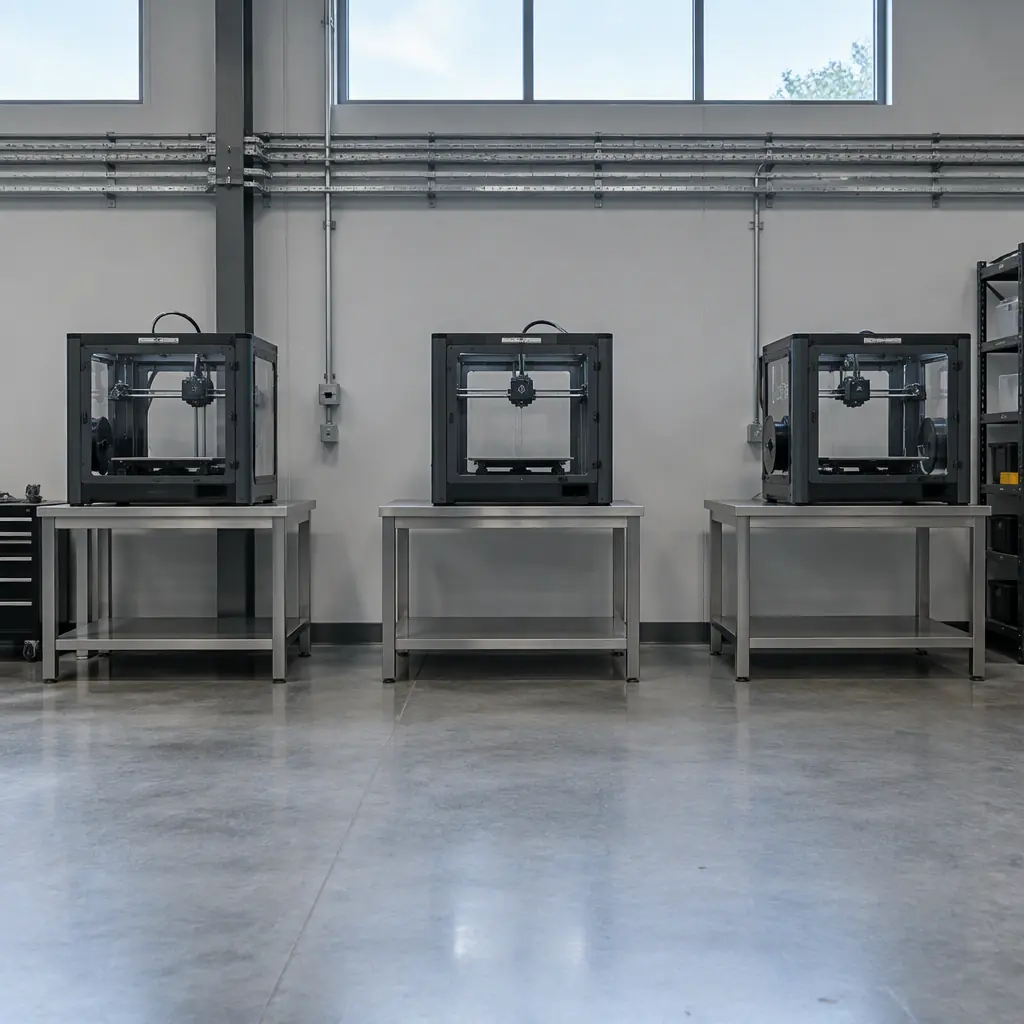
Spacing. Two constraints set machine spacing and they are not the same constraint. Service access needs 600 to 800 millimetres in front of the machine for the door and the plate, and 200 to 300 millimetres behind for cables and the spool. Airflow needs more: a machine that exhausts into the back of the next machine reclines its own hot air and runs hotter than its thermocouple reports. Leave 150 millimetres between housings and never block the exhaust grille.
Thermal environment. The single most common cause of "the printer worked at the demo but not here" is an ambient temperature outside 18 to 28 degrees Celsius, usually a room that is 14 degrees in winter and 33 in summer. A machine printing functional parts with a chamber at 50 degrees in a 14-degree room needs its heater to work continuously, and the resulting draft across the part causes warping that was never reproducible at the dealer's showroom. Record the measured ambient on the survey.
Air Quality and the Print Cell
Printing ABS, ASA, PC, PA and most resins releases both volatile organic compounds and ultrafine particles. For a single machine in a large room this is a nuisance. For a room with fifteen machines printing engineering materials it is a health and safety question that the customer's EHS function will eventually ask about, and the distributor who raises it first looks like an expert.
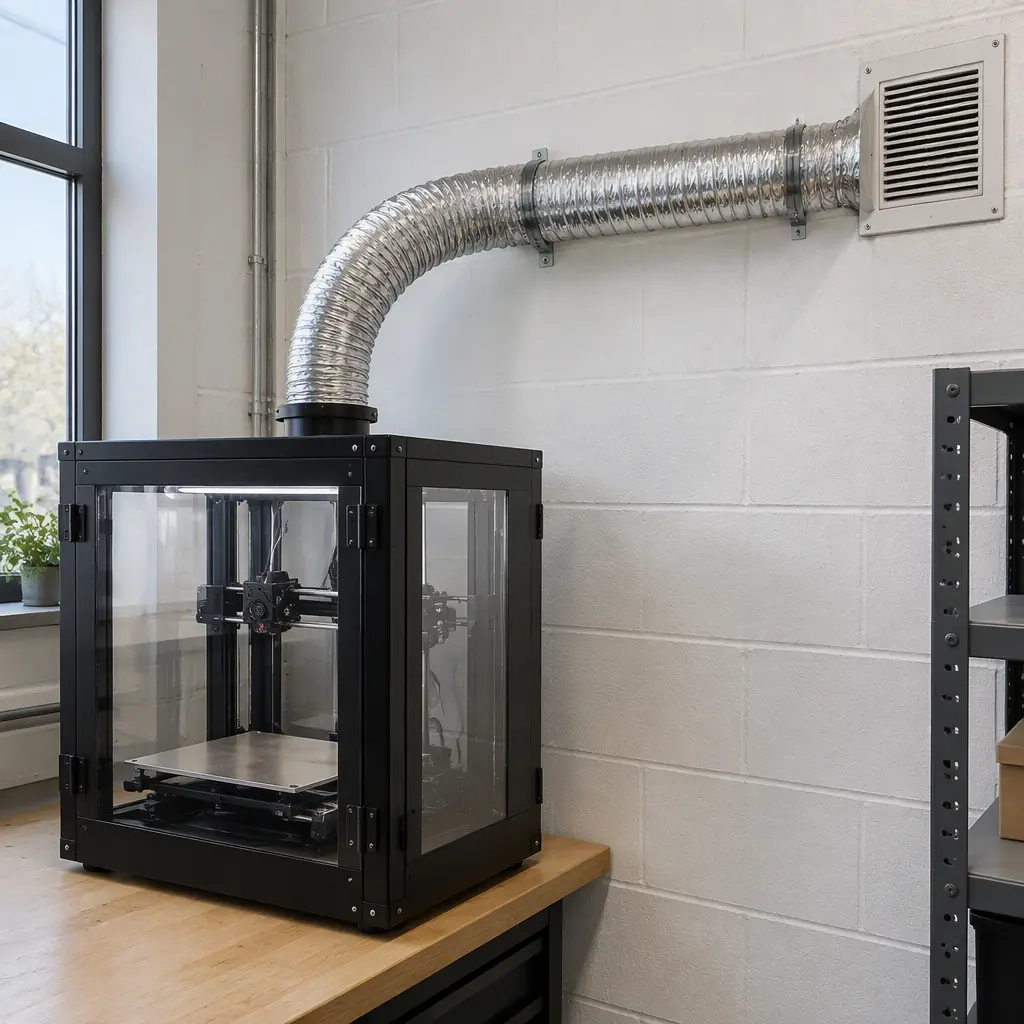
Source control before room treatment. The most effective measure is an enclosure with a filter, exhausting to a duct or recirculating through a carbon and HEPA stage. Filtering the room is a distant second. A ducted enclosure at 100 to 200 cubic metres per hour with a carbon stage and a HEPA stage is the practical specification for engineering filaments, and the filter change interval is the operating cost nobody quotes.
Negative pressure for a cell. Where a dedicated print room exists, hold it at slight negative pressure relative to the corridor so that emissions do not migrate into the rest of the building. That means make-up air is supplied and extract air is larger by about 10 percent, which is a building services change, and the survey should flag it before the room is fitted out.
Resin handling. Resin printers need a separate consideration: IPA for washing is flammable with a flash point of about 11 degrees Celsius, so the wash station needs a closed container and no ignition source, and the room needs to be evaluated as a hazardous-materials area. Our emissions audit and EHS guide covers measurement, and the enclosure and ventilation bundling guide covers how to sell the filtration as part of the installation.
Filament Storage Is a Site Condition
Humidity is a property of the building, not of the filament, and a spool that is dry in the warehouse becomes wet in a week in a room at 70 percent relative humidity with no air conditioning. Since the printer has no way to know, the symptoms appear as stringing, weak layer adhesion and popping at the nozzle, and the customer concludes the filament is bad.
Ask for the measured relative humidity in the room at the warmest part of the day. Below 40 percent, open storage on a shelf is fine for PLA and PETG, and marginal for PA. Between 40 and 60 percent, use sealed boxes with desiccant and a hygrometer per box. Above 60 percent, the room needs active drying: a heated dry box for the spool in use and a cabinet for the rest, with the desiccant regenerated on a schedule rather than on a feeling.
The installation report should record the measured humidity alongside the measured temperature, because it converts an argument about "bad filament" into a documented site condition. Our filament drying and storage guide has the drying curves by polymer and the desiccant quantities.
Commissioning: Forty-Eight Hours, One Form
The installation is not finished when the first print comes off the plate. It is finished when a document says what was measured, by whom, and what the customer accepted. A two-day commissioning window is enough for everything that matters and short enough that it is rarely refused.
Hour one. Unpack, inspect for shipping damage against the crate manifest, photograph every side before removing any packaging. Crate damage that is not photographed on arrival becomes the distributor's cost.
Hours two to four. Position, level, connect power and extraction, measure the supply voltage under load, record ambient temperature and humidity. Level in both axes and check that the frame does not rock.
Hours four to eight. First-layer calibration on the customer's own material, not the demonstrator's, and a dimensional check on a 20 mm test cube in X, Y and Z. Record the actual measurements rather than "within spec".
Day two. A representative part from the customer's workload, printed with their material and their settings, measured against their drawing. Then a training session on the slicer profile, the maintenance schedule and the fault log, and the signed acceptance form.
The form should list the measured values, the material and profile used, the parts printed, the defects observed and any conditions of acceptance. Our installation and site acceptance guide reproduces a full form. Where the installation is one of several at a customer site, keep the survey and the acceptance form per machine: the 3D printer fleet asset registry guide shows how to carry the records forward, and the customer training guide covers the handover after acceptance.
The commercial argument for all of this is simple: a survey takes half an hour and prevents the single most expensive category of post-sale cost, which is a return visit to a site that was never suitable. A distributor who surveys ten installs a month and documents them has a measurable reduction in warranty calls, and can quote a fixed installation fee with confidence instead of absorbing the surprises.
Installation Support
Survey, Install and Sign Off
Precise3D provides a site survey template, electrical and extraction specifications per machine class, and a 48-hour commissioning form with measured values rather than a verbal handover.