The Short Answer
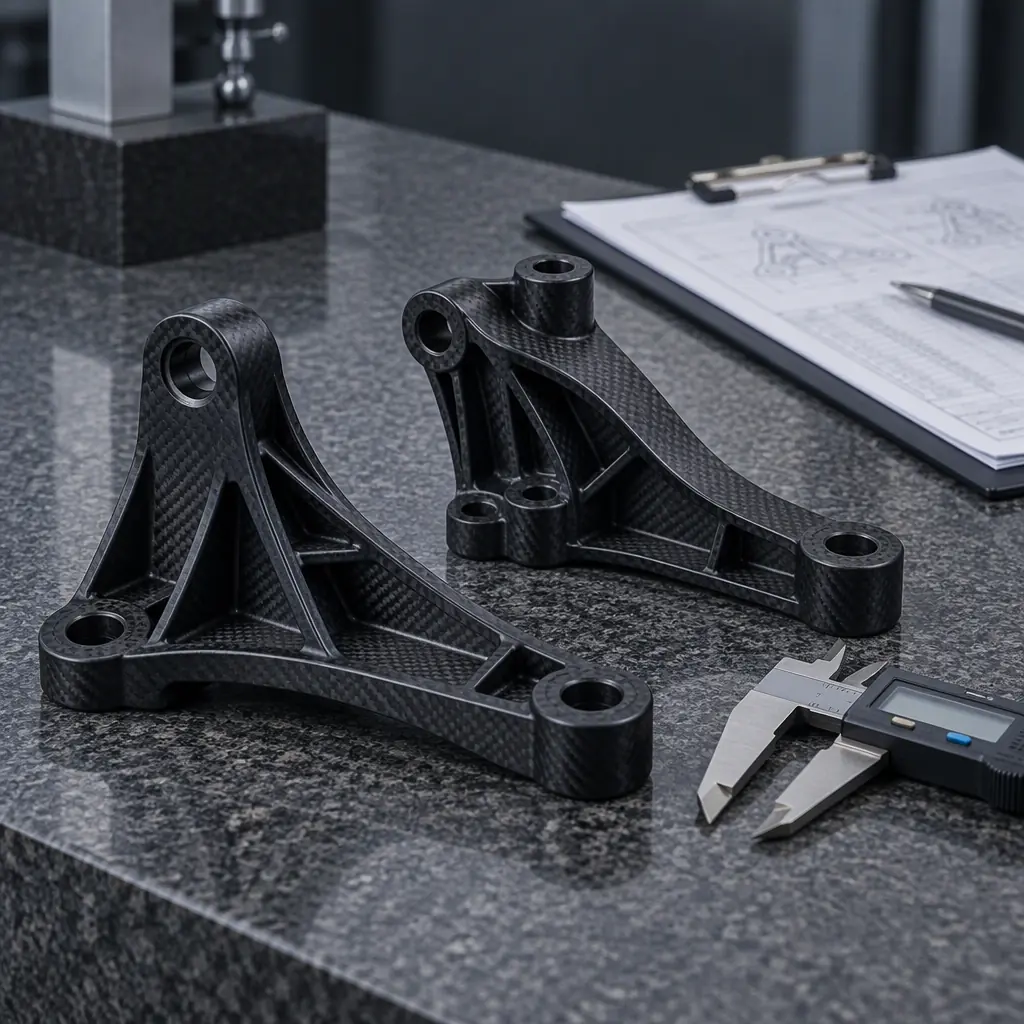
ISO 9001 is a general quality management standard that any supplier can hold, and it says almost nothing about how a specific part is made. IATF 16949 is the automotive sector standard built on top of ISO 9001, and it is required when the customer flows it down, which in practice means when the part enters a vehicle programme through a Tier 1 or Tier 2 supplier. A printed bracket for a factory jig is correctly served by ISO 9001. A printed part that ships inside a vehicle, or on a line that builds vehicles, is normally served by IATF 16949, and the difference is not paperwork: it is the requirement that the process be validated, the part be traceable to its build, and the risk be quantified before the first production lot.
The trap is the middle case, which is where most additive parts sit. A printed fixture used on an automotive assembly line is not a vehicle part, so IATF does not strictly apply, but the customer's own quality system may flow it down anyway because the fixture affects the vehicle. Ask which of the three cases the part falls into before negotiating certification, because the answer changes the cost by a wide margin.
What IATF Adds That ISO 9001 Does Not
IATF 16949 does not replace ISO 9001; it adds roughly forty additional requirements, and a handful of them are the ones that decide whether an additive supplier can serve an automotive programme at all. The mapping below is the practical version, written for someone reading a supplier questionnaire rather than a standard.
- APQP and PPAP as mandatory process. ISO 9001 asks for planning; IATF asks for the automotive planning sequence with defined deliverables at each phase, and a production part approval submission with a defined level before volume shipment.
- PFMEA with a control plan linked to it. The failure modes must be identified per process step and each mitigation must appear in the control plan with an owner and a frequency. In a print room, the process steps are not obvious and a supplier that treats the printer as a single step produces a control plan with no content.
- Special characteristics. Customer-designated and supplier-identified characteristics require capability evidence, not just conformance. A printed part with a bearing bore is a special-characteristic part, and the evidence required is Cpk over time.
- Measurement systems analysis. The gauges must be studied for repeatability and reproducibility, and IATF extends this to the measurement system as a whole. On an additive process this is where the standard collides with reality, and it is covered below.
- Traceability to the lot and the process record. Every shipped part must be traceable to its production record, which for printing means the build file, the machine, the material lot and the operator.
- Control of external providers. Subcontracted operations, including post-processing and heat treatment, must be under the same control as in-house work. A supplier that outsources dyeing or machining without supplier development is non-conforming.
- Total productive maintenance. Machine availability and maintenance must be planned and recorded, which matters more on a print farm than on a machining cell because the machine runs unattended.
- Contingency plans. A documented plan for interruption of supply, which for a single-machine print cell means a second machine or a qualified alternative process.
What ISO 9001 asks for, by contrast, is a documented quality system with defined processes, objectives, and improvement, applied to whatever the organisation does. A supplier with a clean ISO 9001 certificate and no PPAP history is not a partially-qualified automotive supplier; it is an unqualified one, and the gap is measured in months rather than in a certificate upgrade.
Which Clauses Actually Bite on an Additive Process
Reading the standard against a print room rather than a machining cell produces four points of friction that a supplier must have an answer for. They are the questions an auditor will ask, and the ones a buyer should ask first.
Traceability to material lot. A machined part can be traced to a billet or a heat number. A printed part must be traced to a spool or a resin batch, and spools are not naturally serialised. Fibre-reinforced polyamide absorbs moisture during storage, and the same nominal grade at two different moisture levels produces different interlayer strength. A supplier that cannot name the spool is a supplier that cannot defend a delamination claim.
Machine-to-machine variation. Two printers of the same model do not produce identical parts at the same settings, and IATF does not have a clause for that. The practical answer is machine-specific process validation with a documented equivalence study before any part is moved between machines, and a rule that a build is not transferred without re-qualification.
Build orientation as a special characteristic. Orientation is a process parameter that changes mechanical performance more than any other single variable, and it is invisible in the finished part. It belongs in the control plan as a controlled parameter with a verification step, not as a note on a drawing that nobody checks.
Post-processing as a special process. Annealing, dyeing, vapour smoothing, and machining are all special processes in the IATF sense, because conformance cannot be verified by inspection of the part afterwards. Each one needs its own validated parameters and its own record. Our guide to annealing and heat treatment covers the parameter window that has to be recorded.
PPAP, APQP and PFMEA in a Printed-Part Context
Production part approval is where an additive supplier most often discovers that the process cannot produce the evidence the customer wants, and it is better to discover that at quotation than at submission.
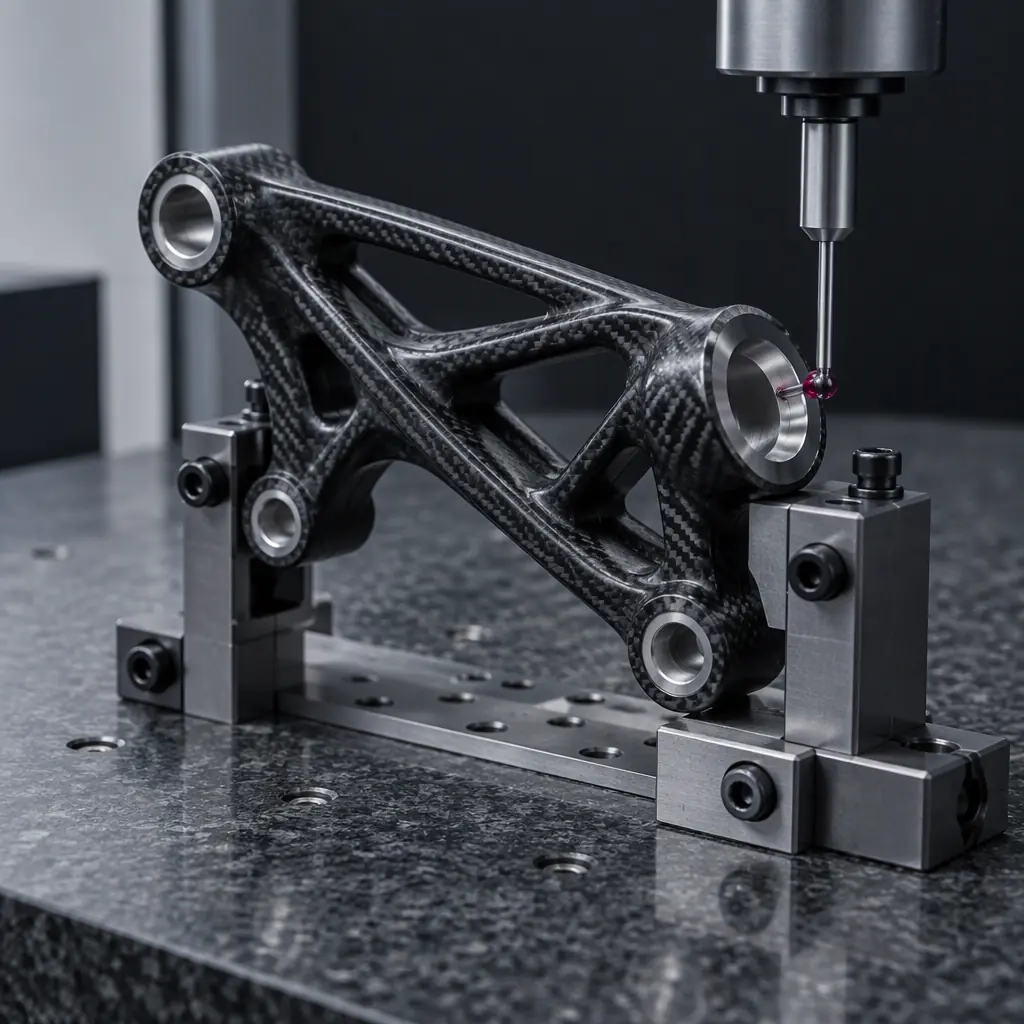
APQP runs as five phases: plan and define, product design and development, process design and development, product and process validation, and feedback with corrective action. For a printed part the third phase is where the work concentrates, because the process design includes orientation, nesting, support strategy, machine assignment and post-processing routing, and each of those is a variable that a machining process would not have.
PFMEA on a print cell produces a failure mode list that looks nothing like a machining one. The high-severity entries are typically:
- Material moisture above specification, producing interlayer voids and a delamination risk that only appears in service.
- Orientation deviation from the approved build, producing an anisotropic strength loss with no dimensional symptom.
- Machine drift in extrusion or laser power over a long unattended build, producing a part that passes dimensional inspection and fails mechanical test.
- Post-processing omission, particularly annealing, which is a silent step because an unannealed part looks identical.
- Sintering or curing deviation for metal and resin processes, which is a special process with the same invisibility problem.
PPAP then packages the evidence: dimensional results against every characteristic on the drawing, material and performance test results, process flow, PFMEA, control plan, measurement system studies, and the sample parts themselves. Our PPAP guide for printed parts covers the element-by-element expectation, and the FMEA and control plan guide covers the linking logic that auditors check first: every high-severity failure mode must have a control plan line, and every control plan line must point back to a failure mode.
The submission level matters commercially. Level 3, the default for a new supplier, requires the full package and a sample from a production run. Level 1, a warrant only, is available for a mature supplier with a demonstrated history, and asking for level 3 when level 1 would do is a good way to add six weeks to a launch.
The Printer Is a Process, Not a Machine
The single most consequential idea in applying IATF to additive manufacturing is that the printer is not a machine tool whose output is determined by its own calibration. It is a process whose output is determined by the interaction of material, orientation, thermal history and machine state, and the machine is only one input.
This changes what a measurement systems analysis means. In a machining cell, MSA studies the gauge and the operator, and the process repeatability is assumed. In a print cell, the process repeatability is the dominant variation source, and a gauge study that ignores it produces a reassuring number about a caliper while the process wanders. The defensible approach is to run the capability study across parts from different builds and different plate positions, so the reported Cpk includes the process variation the customer will actually receive. Our guide to SPC, Cpk and gauge R&R covers how to set that up, and the pilot lot Cpk validation guide covers the sampling plan that gets to a meaningful number quickly.
The same idea explains why a machine calibration certificate is not process validation. A certificate says the machine moved where it was told to move on the day of the calibration. It says nothing about whether the material was dry, whether the part was oriented as approved, or whether the chamber temperature held through a nine-hour build. Those are the variables that produce the parts, and they are the ones the control plan has to capture.
What you are looking for: A record that names the machine, the spool or resin lot, the build file version, the operator and the post-processing parameters. If the answer is a screenshot of a slicer project with no lot traceability, the traceability clause is not implemented, whatever the certificate on the wall says.
What an Audit Looks for in a Print Room
A certification body auditor encountering a print room for the first time will follow the material, because that is the path with the least standard practice and the most risk. The physical evidence they look for is concrete.
- Material quarantine. Incoming spools or resin in a segregated area, with a released label before use and a defined moisture specification with a measurement method.
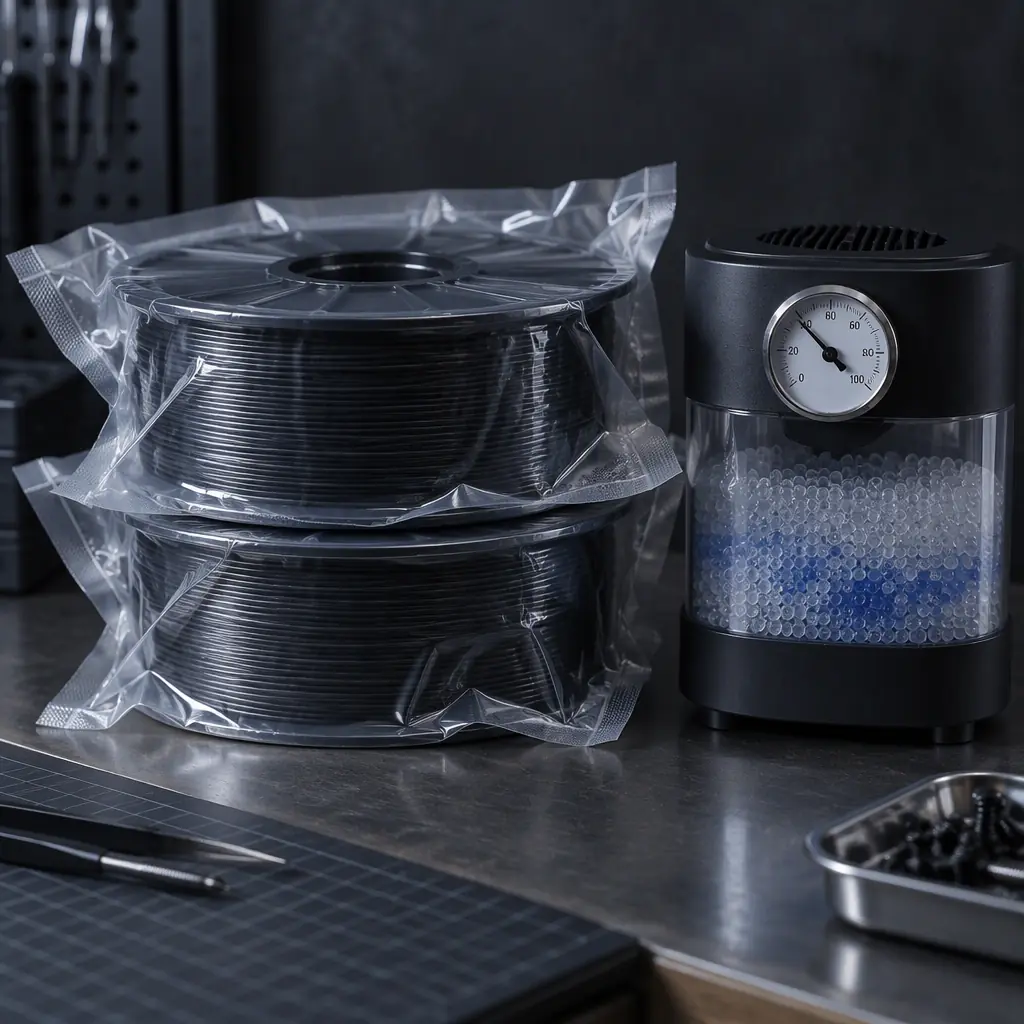
- Dry storage with records. A dryer or dry cabinet with logged humidity or dew point, and a rule for how long a spool may sit out before it needs re-drying.
- Build records retained. One record per build, retained for the customer's specified period, containing machine, file version, material lot, parameters and operator.
- Post-processing parameters recorded. Annealing oven profiles, dye bath records, and machining programmes tied to the build they belong to.
- Maintenance and calibration evidence. Nozzle and hotend replacement intervals with a trigger, belt tension checks, and the calibration status of any measurement device used for acceptance.
- Segregation of nonconforming parts. A physical and labelled area, with disposition records, because a printed part that fails cannot be reworked into conformance in most cases.
- A control plan that matches what is actually happening on the floor. The most common nonconformity in any plant is a control plan that describes a process that no longer exists.
- Contingency evidence. A documented plan for machine loss, including a qualified second machine or an approved alternate process.
None of this is expensive in itself. What costs money is retrofitting it after a customer has asked, because the records that should have been created during the last six months cannot be created afterwards. A supplier entering automotive work should put the build record in place before the first automotive order, not after the first audit finding. Our factory audit checklist covers the same ground from the buyer's side.
Cost and Timeline Reality
IATF 16949 certification is not a document purchase. The realistic path for a supplier already holding ISO 9001 runs twelve to eighteen months, and the cost splits into three parts.
- Consulting and system build: typically USD 8,000 to 25,000 depending on the existing system, with the bulk of the effort in PFMEA, control plans and traceability rather than in writing procedures.
- Certification audit: typically USD 6,000 to 15,000 for a small site over the initial audit and the first surveillance cycle, plus auditor travel.
- Internal cost: the largest line and the one that is never quoted, because the engineering time to build a real control plan for a print process is measured in months of a quality engineer's attention.
The timing constraint is not the audit; it is the performance history. A certification body wants to see the system running with records before it certifies, and IATF expects a minimum period of performance data. A supplier who starts the system build at the same time as the first automotive enquiry will miss the launch date, and the honest answer to whether they can serve the programme is no, not yet, unless the customer is willing to accept ISO 9001 with PPAP capability for the first phase.
For a buyer, the practical implication is to separate two questions that are usually merged. Does this supplier hold IATF? is a gate, and Can this supplier produce the PPAP package for my part? is the question that predicts a successful launch. A supplier with IATF and no additive-specific control plan will pass the gate and fail the launch.
Ten Questions to Ask a Printed-Part Supplier
The questionnaire that separates a real automotive-capable additive supplier from one with a good brochure has ten questions, and most of them are answerable in a single site visit.
- Which standard are you certified to, by whom, with which scope, and what is the certificate number and expiry?
- Who is your IATF-qualified internal auditor, and when was the last internal audit of the print process?
- How do you trace a shipped part back to a material lot and a build record, and can you show me one?
- What is your moisture specification for the material, how is it measured, and what happens to a spool that fails it?
- How do you control build orientation as a process parameter, and where does it appear in the control plan?
- Which failure modes in your PFMEA carry a severity of 9 or 10, and what control closes each one?
- How do you prove machine equivalence before moving a part to a second printer?
- Which post-processing steps are special processes, and what record does each one produce?
- What is your contingency plan if the primary machine is down for two weeks?
- Who did your last customer audit, what did they find, and can I see the closure evidence?
A supplier who answers eight of these from memory and produces documents for the other two is a supplier worth auditing. A supplier who answers all ten with the word "yes" and no documents is a supplier whose certificate is doing the talking, and the certificate is not the part. The same discipline applies to the printed automotive parts themselves, where our automotive jigs and fixtures guide covers the tooling side of the same quality system.
Automotive Quality
Ask for the Build Record, Not the Certificate
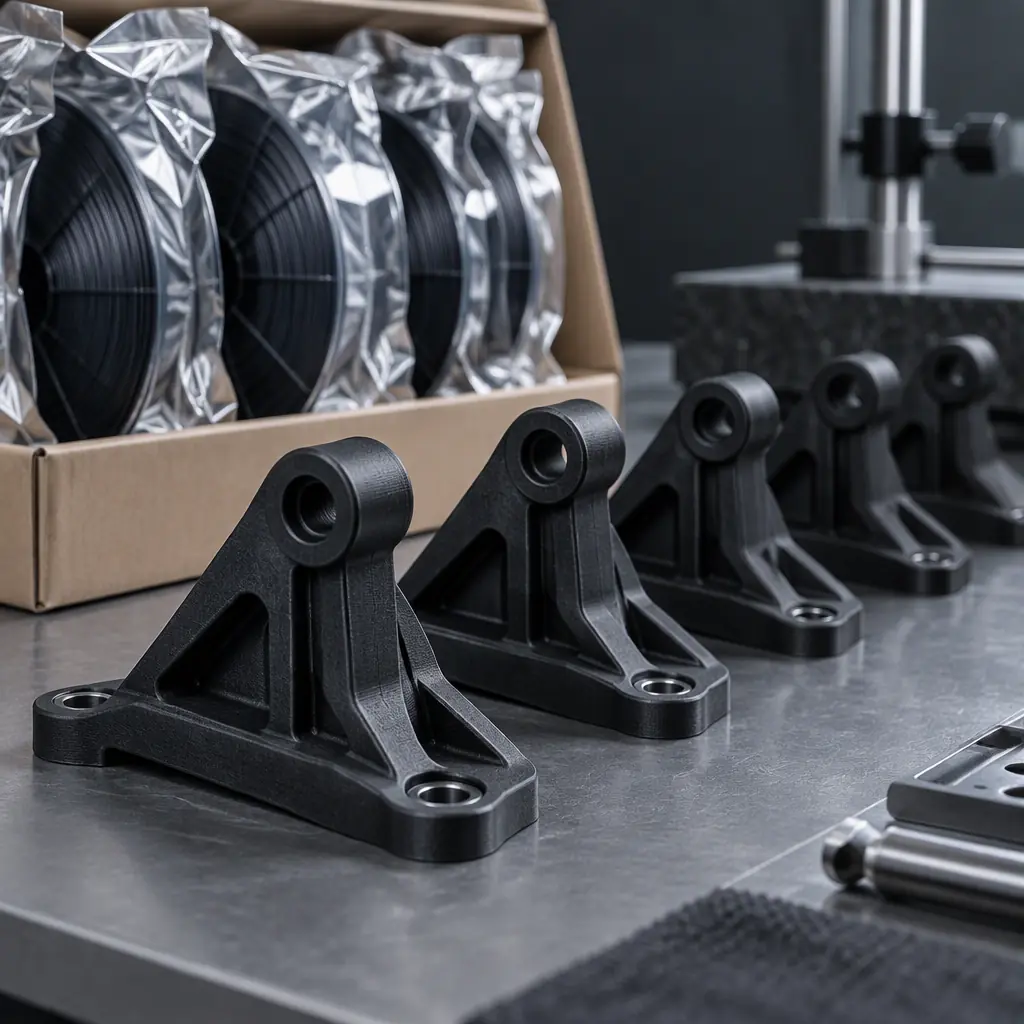
Precise3D ships automotive printed parts with lot traceability, retained build records, moisture-controlled material and PPAP documentation at the level your programme requires.