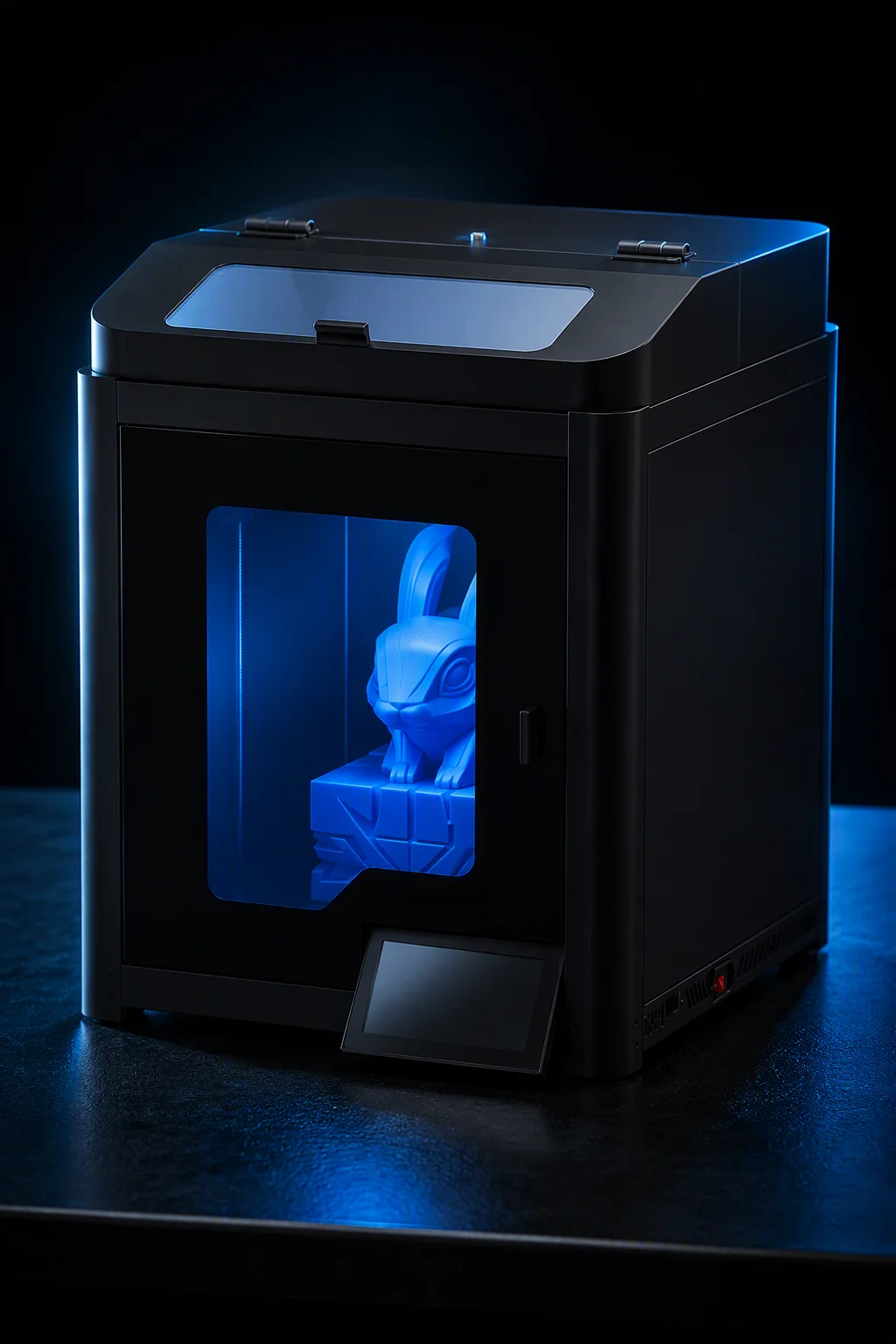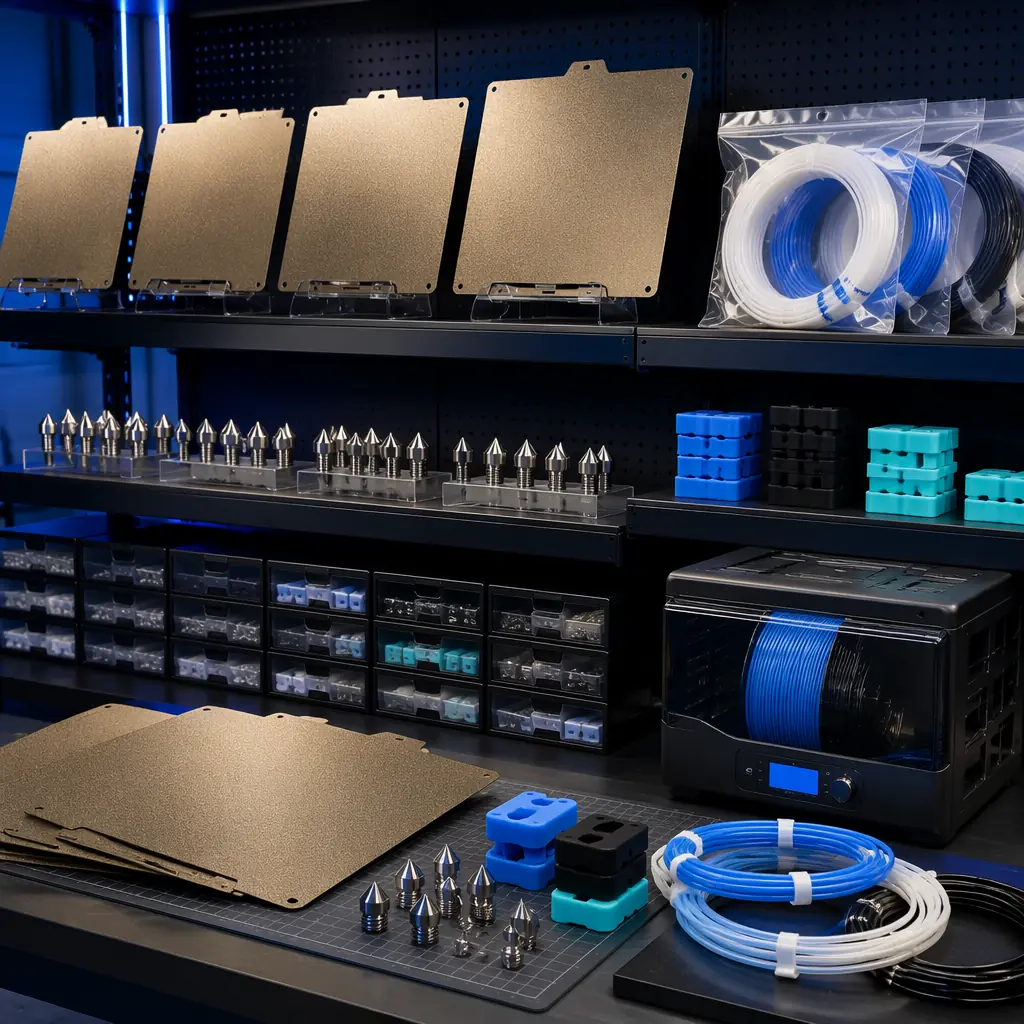
A distributor we work with in Germany shared their numbers from Q1 2026: they sold 340 printers at an average price of €580, generating €197,200 in hardware revenue. But their accessories division, build plates, nozzles, enclosures, cameras, filament dryers, upgrade kits, generated €138,000 in the same quarter. That's 41% of total revenue from products that carry 45-65% gross margins (compared to 18-25% on printers). The difference between a €200K distributor and a €335K distributor is accessories. Here's how to build the product line, price it, and attach it to every sale.
Why Accessories Are a Better Business Than Printers
The math is brutal for pure printer distribution. A $600 printer at 22% margin earns you $132. After freight, warehousing, warranty reserve, and customer acquisition cost, your net margin on that sale is 6-10%. Meanwhile, a $35 PEI build plate at 55% margin earns you $19.25, with near-zero support cost, no warranty claims, and customers who reorder every 3-6 months as plates wear out. An $18 hardened steel nozzle at 60% margin earns $10.80, and serious print farm operators buy them in packs of 10.
The unit economics favor accessories across every metric:
Accessories deliver 4-5x the lifetime value of the printer itself. And they do it with lower overhead, fewer returns, and customers who come back on their own. For the full financial picture of distributor operations, see our distributor KPI benchmarking guide.
The Core Accessories SKU Stack: What Every Distributor Should Stock
Not all accessories are created equal. The best accessories share three characteristics: high turnover (customers need them regularly), high margin (50%+), and low support burden (they just work). Here's the tiered SKU stack that generates the most revenue per square foot of warehouse space:
Tier 1 alone generates $1,550-3,300/month in recurring accessories revenue for a distributor with 200-300 active printer customers. The capital requirement to stock all five Tier 1 SKU categories is approximately $3,000-5,000, meaning you recover your inventory investment in 2-3 months. For guidance on building your overall product portfolio, see our portfolio strategy framework.
Tier 2 accessories are attachment-rate products. They sell when you proactively recommend them based on what the customer is printing. A customer buying ABS filament needs an enclosure. A customer buying TPU needs a direct drive extruder. The key is training your sales team to ask "what are you printing?" and having the accessory ready to recommend. For the complete upgrade and aftermarket strategy, see our aftermarket revenue guide.
The Attachment Rate Playbook: How to Sell Accessories With Every Printer
The average 3D printer distributor has an accessories attachment rate of 12-18%, meaning only 1 in 6 printer buyers also purchases accessories at the point of sale. Top-performing distributors achieve 55-70% attachment rates using a structured approach that doesn't feel like upselling:
Strategy 1: The Starter Kit Bundle. For distributors evaluating this area, our aftermarket upgrades guide covers it in depth. Package a "Printer Starter Kit" with 3-4 essential accessories (PEI plate, nozzle variety pack, silicone socks, PTFE tubing) at a 15-20% discount vs buying separately. Price it at $49-79 and position it as "everything you need for the first 3 months." Our data shows starter kit bundles achieve 65-75% attachment rates when offered at checkout. Because the perceived value is high and the decision is a single yes/no rather than 4 separate purchasing decisions. A $69 kit at 50% blended margin adds $34.50 profit per printer sale.
Strategy 2: The Filament + Accessories Subscription.
Offer customers a quarterly consumables box: 2 spools of their preferred filament + replacement nozzles + a new build plate every 6 months. Price at $59-89/quarter with auto-renewal. A distributor with 100 subscribers generates $23,600-35,600/year in recurring revenue at 40-55% margin, revenue that hits the bank account regardless of how many printers you sold that month. For the consumables strategy that pairs with this, see our consumables bundling guide.
Strategy 3: The Post-Purchase Follow-Up Sequence. For distributors evaluating this area, our consumables bundling guide covers it in depth. Most accessories sales happen after the printer arrives, not at checkout. Implement a 3-email sequence: Day 3 after delivery, "How's the first print? Here are the 3 accessories that make it better" with a 10% discount code. Day 14, "Printing abrasive filaments? You'll want a hardened steel nozzle" with educational content about nozzle wear. Day 30, "Your build plate has about 200 prints left, here's when to replace it" with a reorder link. Distributors who implement this sequence see 25-35% of customers purchase accessories within 60 days of printer delivery, compared to 8-12% without follow-up.
Pricing Accessories for Maximum Profit Without Scaring Customers
Accessories pricing is a psychology game. Unlike printers, where customers comparison-shop across 10 websites and demand price matching, accessories benefit from low price transparency. Nobody comparison-shops a $15 silicone sock. The pricing sweet spot is 2.5-3.5x landed cost for Tier 1 consumables and 2.0-2.5x for Tier 2 upgrade items.
The key insight: price accessories relative to the printer they complement, not relative to competitor pricing. A $15 nozzle seems expensive when compared to a $3 generic nozzle on AliExpress. But framed as "for your $600 printer, a $15 hardened steel nozzle that lasts 10x longer than brass", the value proposition becomes obvious. This is why selling accessories to owners of premium printers ($800+) generates 2.3x higher attachment rates than selling to owners of budget printers ($200-400).
For distributors who want to move beyond accessories and into larger revenue streams, the printer upgrade path is the natural extension, replacing hotends, extruders, and motion systems. See our guide on building an upgrade installation service that turns $50 parts into $150 labor-included upgrades.
The same attach-rate logic extends beyond the printer itself. Distributors pairing machines with 3D scanner bundles and multi-material accessory kits report higher basket sizes, because the accessories solve the immediate next problem the customer hits after unboxing.
Reviewed by the Precise3D engineering & OEM team. Compliance files that accompany the catalog are auditable at the certification register.
Build Your Accessories Line
Ready to Add High-Margin Accessories to Your Portfolio?
Get wholesale pricing on build plates, nozzles, enclosures, cameras, and upgrade kits. We'll help you build the accessories SKU stack that doubles your revenue per customer.