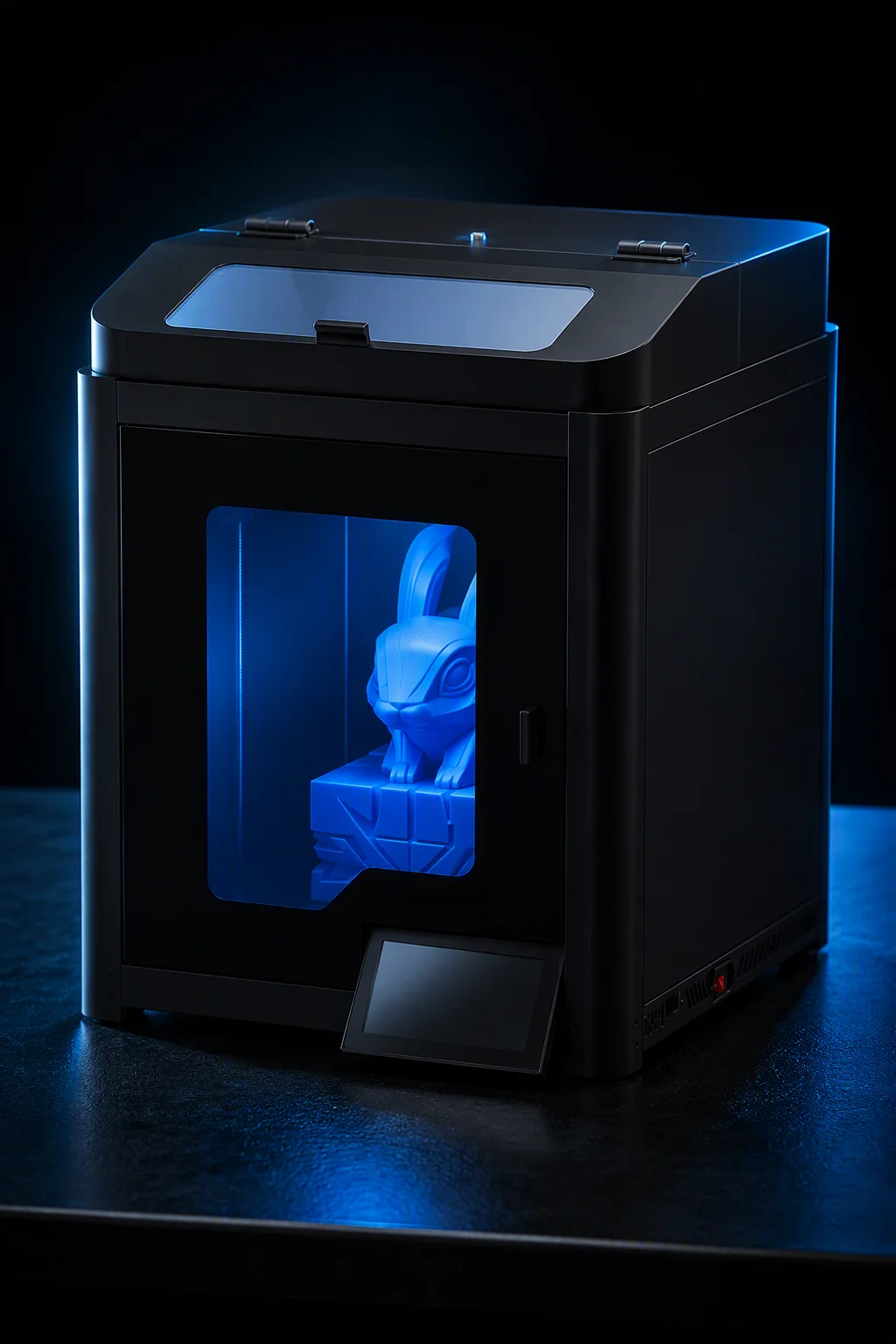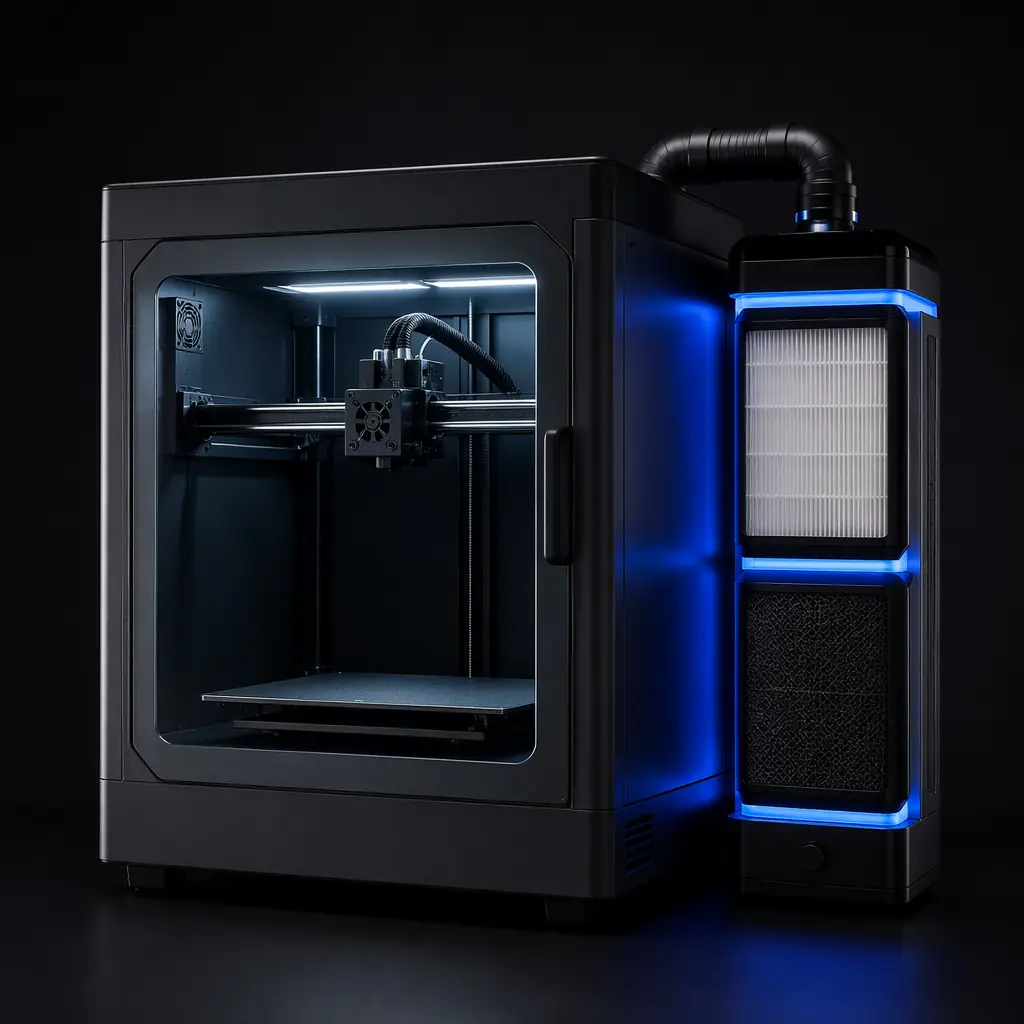
In 2021, a study published in the Journal of Occupational and Environmental Hygiene measured ultrafine particle (UFP) emissions from a desktop FDM 3D printer printing ABS in an unventilated room. The results: UFP concentrations exceeded 200,000 particles per cubic centimeter within 30 minutes — comparable to the particle load from cooking on a gas stove without a range hood, but sustained for hours rather than minutes. The particles were predominantly in the 10–100 nanometer range, small enough to penetrate deep into the alveolar region of the lungs. The volatile organic compounds measured — styrene, ethylbenzene, and acrylonitrile — are classified by the IARC as possible or probable human carcinogens at chronic exposure levels. This is not alarmism. This is published, peer-reviewed measurement data. And it is slowly but inexorably driving regulation that will affect every 3D printer distributor selling into institutional, educational, and workplace markets. For distributors already navigating CE, FCC, and RoHS compliance, emissions standards are the next regulatory frontier.
What Comes Out of a 3D Printer: VOCs and UFPs Explained
Every FDM 3D printer emits two categories of airborne contaminants: volatile organic compounds (VOCs) and ultrafine particles (UFPs). They come from different sources and require different filtration strategies. Understanding the distinction is the foundation of an effective filtration recommendation.
VOCs (volatile organic compounds) are gaseous molecules released when the polymer is heated above its thermal decomposition threshold. Different filaments emit different VOCs at different temperatures. PLA — often marketed as "safe" and "non-toxic" — primarily emits lactide, a cyclic ester of lactic acid, which is relatively benign at low concentrations. It smells sweet, like waffles or corn syrup. ABS emits styrene, acrylonitrile, and 1,3-butadiene — the styrene being responsible for the characteristic "burning plastic" odor that anyone who has printed ABS in an unventilated room recognizes immediately. ASA is chemically similar to ABS but substitutes acrylate for butadiene, reducing but not eliminating the VOC profile. Nylon emits caprolactam, a lactam compound that can cause eye and respiratory irritation at concentrations above 5 mg/m³. Polycarbonate emits bisphenol-A (BPA) at temperatures above 280°C — well within the printing range for PC filament (260–300°C).
UFPs (ultrafine particles) are solid particles between 10 and 100 nanometers in diameter. They are produced by the nucleation of vaporized polymer fractions as the molten filament exits the nozzle and cools. Unlike VOCs, which are gas-phase molecules, UFPs are solid aerosol particles that can be physically captured by mechanical filtration. The particle emission rate varies enormously by material and temperature: ABS generates roughly 10–100 times more UFPs than PLA at the same print temperature, because ABS's higher styrene content provides more nucleation sites for particle formation. Higher print temperatures increase UFP emissions across all materials because more low-molecular-weight polymer fractions vaporize. For more on how temperature control affects print outcomes, see our heated chamber guide.
HEPA + Activated Carbon: The Two-Stage Filtration Standard
The industry standard for 3D printer fume extraction is a two-stage filtration system: a HEPA filter for UFPs followed by an activated carbon bed for VOCs. The order matters: air must pass through the HEPA filter first to capture particles, then through the activated carbon to adsorb gases. Reversing the order — carbon first, then HEPA — clogs the carbon pores with particles, reducing VOC adsorption capacity by 90% or more within weeks.
HEPA (High-Efficiency Particulate Air) filters are classified by their efficiency at capturing 0.3-micron particles — the most penetrating particle size. A true HEPA filter (H13 or H14 grade per EN 1822) captures ≥99.95% of particles at 0.3 microns. But UFPs from 3D printing are 10–100 nanometers, not 300 nanometers — and HEPA filters are actually more efficient at capturing sub-100-nanometer particles than 300-nanometer particles, due to Brownian diffusion: the smaller the particle, the more it zigzags, and the more likely it is to collide with a filter fiber. A genuine H13 HEPA filter captures >99.97% of 10–100 nm UFPs from 3D printing. The caveat: many filters marketed as "HEPA-type" or "HEPA-like" are not tested to EN 1822 and do not achieve this efficiency. Distributors sourcing filtration accessories should require the EN 1822 test certificate — if the manufacturer cannot produce it, the filter is not HEPA.
Activated carbon adsorbs VOCs through a physical process: gas molecules stick to the enormous internal surface area of the carbon — typically 500–1,500 square meters per gram of activated carbon. The carbon does not chemically neutralize the VOCs; it holds them. This means activated carbon filters have a finite adsorption capacity and must be replaced periodically. The replacement interval depends on the mass of VOCs the carbon has captured. A rough guideline: a 200-gram activated carbon filter in a printer printing ABS 20 hours per week should be replaced every 3–4 months. After saturation, the carbon stops capturing VOCs — and in some conditions, can release previously captured VOCs back into the air (a phenomenon called desorption, typically triggered by temperature or humidity changes). For print farm operators, carbon filter replacement is a recurring operating expense of approximately $15–40 per printer per year — and a recurring consumable revenue stream for the distributor who stocks the filters. Our consumables bundling guide covers how to structure filter subscription programs.
The Enclosure Premium: Why Open-Frame Printers Are Losing Ground
An open-frame 3D printer cannot effectively filter its emissions because the print volume is not sealed. UFPs and VOCs escape into the room before any filtration can occur. Adding a HEPA filter to an open-frame printer — either as a standalone air purifier placed nearby or as a bolt-on ducted system — captures some emissions but typically achieves 50–70% reduction at best, compared to >95% reduction from a sealed enclosed printer with integrated recirculating filtration. The physics is straightforward: a filter can only capture what passes through it, and an unenclosed printer disperses emissions into the room volume long before a nearby air purifier can pull them through its filter media. For a detailed comparison of enclosed versus open-frame architectures, see our enclosure comparison guide.
The market is already responding. The three fastest-growing 3D printer segments — education, engineering/prototyping, and print farms — all show strong preference for enclosed printers. The education market demands enclosures for safety compliance: school districts in the EU and increasingly in North America require enclosed, filtered 3D printers for classroom use. Engineering labs printing ABS and nylon need enclosures for print quality (warping prevention through stable chamber temperature) as well as ventilation. Print farms running dozens of printers in a single room face occupational exposure limits for their employees — and enclosed filtered printers are the engineering control that satisfies OSHA and EU-OSHA requirements without requiring a full-room HVAC upgrade. A distributor who positions open-frame printers as the default and enclosures as the upgrade is fighting the market trend. The smarter positioning: enclosed + filtered is the standard; open-frame is the budget option for PLA-only hobbyists printing in well-ventilated spaces.
The enclosure premium on consumer printers is typically $100–200 — which includes not just the physical enclosure panels but also the filtration system, chamber temperature sensor, and sometimes a chamber heater. This premium is one of the highest-margin upsells in the 3D printer product line because the bill of materials for an enclosure (acrylic or sheet metal panels, gaskets, a HEPA/carbon filter unit) costs the manufacturer $30–60, yielding a 60–70% gross margin on the upgrade. For the distributor, the enclosure premium translates to higher average order value and a filter replacement consumable stream. For more on pricing strategy, see our pricing strategy guide.
Regulatory Landscape: What's Coming and When
Regulation of 3D printer emissions is moving faster in the EU than in North America, but both markets are trending in the same direction. The key regulatory frameworks that distributors need to track:
EU — EN 16798 (Indoor Environmental Quality):
This existing standard governs indoor air quality in non-residential buildings, including schools and offices. It sets maximum concentrations for various VOCs, including styrene (250 µg/m³ for 30-minute average) and formaldehyde (100 µg/m³ for 30-minute average). A single desktop 3D printer printing ABS in a 30 m³ room without ventilation can exceed the styrene limit within 2 hours. Compliance requires either ventilation (mechanical fresh air supply, typically 5–10 L/s per person) or source control (enclosed filtered printer). For schools installing 3D printers — a market that distributors in the EU are actively targeting — EN 16798 compliance is not optional; it is a building code requirement enforced by local authorities.
EU — REACH and the upcoming printing emissions directive:
The European Chemicals Agency (ECHA) has flagged 3D printer emissions as an emerging risk in its 2023–2025 work program. A formal restriction on desktop 3D printer VOC/UFP emissions under REACH is not yet in force but is widely expected within 2–4 years, based on the precedent of laser printer emissions (which were regulated under the Blue Angel ecolabel in Germany starting in 2012). When the restriction arrives, it will almost certainly mandate enclosed filtered operation for 3D printers sold in the EU — transforming filtration from a market differentiator into a legal requirement overnight.
North America — UL 2904 and voluntary standards:
UL 2904, published in 2019, is a voluntary standard for emissions from 3D printers used in schools and offices. It sets maximum emission rates for TVOC (total VOCs), formaldehyde, and UFPs, and it is the standard that school procurement officers in the United States cite when specifying 3D printer purchases. UL 2904 compliance requires an enclosed filtered printer with documented test results from an accredited laboratory. While UL 2904 is voluntary, its adoption by large school districts (Los Angeles Unified, New York City DOE) has made it a de facto requirement for education sales in the US market. Distributors targeting the US education segment should ensure their enclosed printer models carry UL 2904 certification — and be prepared to provide the test report to procurement officers who request it. Our education market guide covers institutional purchasing requirements in more detail.
Filter Maintenance and the Recurring Revenue Opportunity
Every enclosed filtered printer sold creates a filter replacement consumable stream of $25–80 per year. The HEPA filter needs replacement every 6–12 months (depending on print hours and materials). The activated carbon filter needs replacement every 3–6 months for engineering materials, or every 6–12 months for PLA-only printing. A distributor who proactively manages filter replacement — sending reminders, offering subscription pricing, bundling filters with filament orders — can capture 50–70% of this recurring revenue instead of losing it to Amazon and generic filter suppliers.
The filter replacement conversation also creates a customer touchpoint that strengthens the distributor relationship. A customer who receives a filter replacement reminder every four months is four times more likely to think of you when they need a new printer, new filament, or new accessories. The filter is the consumable that keeps the distributor top-of-mind — and unlike filament, which customers can buy anywhere, proprietary filter cartridges create genuine vendor lock-in that benefits both the manufacturer and the distributor. For the full consumables strategy, see our consumables bundling guide and our filament storage guide.
What you're looking for: PLA in a well-ventilated home office = basic enclosure recommended for print quality, filtration optional. ABS/ASA/nylon in a classroom or office with limited ventilation = enclosed filtered printer is not optional — it is the minimum standard for occupational health compliance. Print farm with 10+ printers in a single room = centralized ducted extraction or individual enclosed filtered units, plus room-level air quality monitoring. The follow-up question: "Does the customer have existing air quality monitoring in their facility?" — if yes, they are already aware of the issue and the conversation is about solutions; if no, the educational moment is an opportunity to position filtration as a value-add rather than an objection-handling exercise.
Reviewed by the Precise3D engineering & OEM team. Compliance files that accompany the catalog are auditable at the certification register.
Enclosed Filtered Printers
Stock Enclosed 3D Printers with Integrated Filtration
Our enclosed printer line includes HEPA + activated carbon filtration as standard, with UL 2904 certification available. Get distributor pricing, filter subscription programs, and institutional sales support.