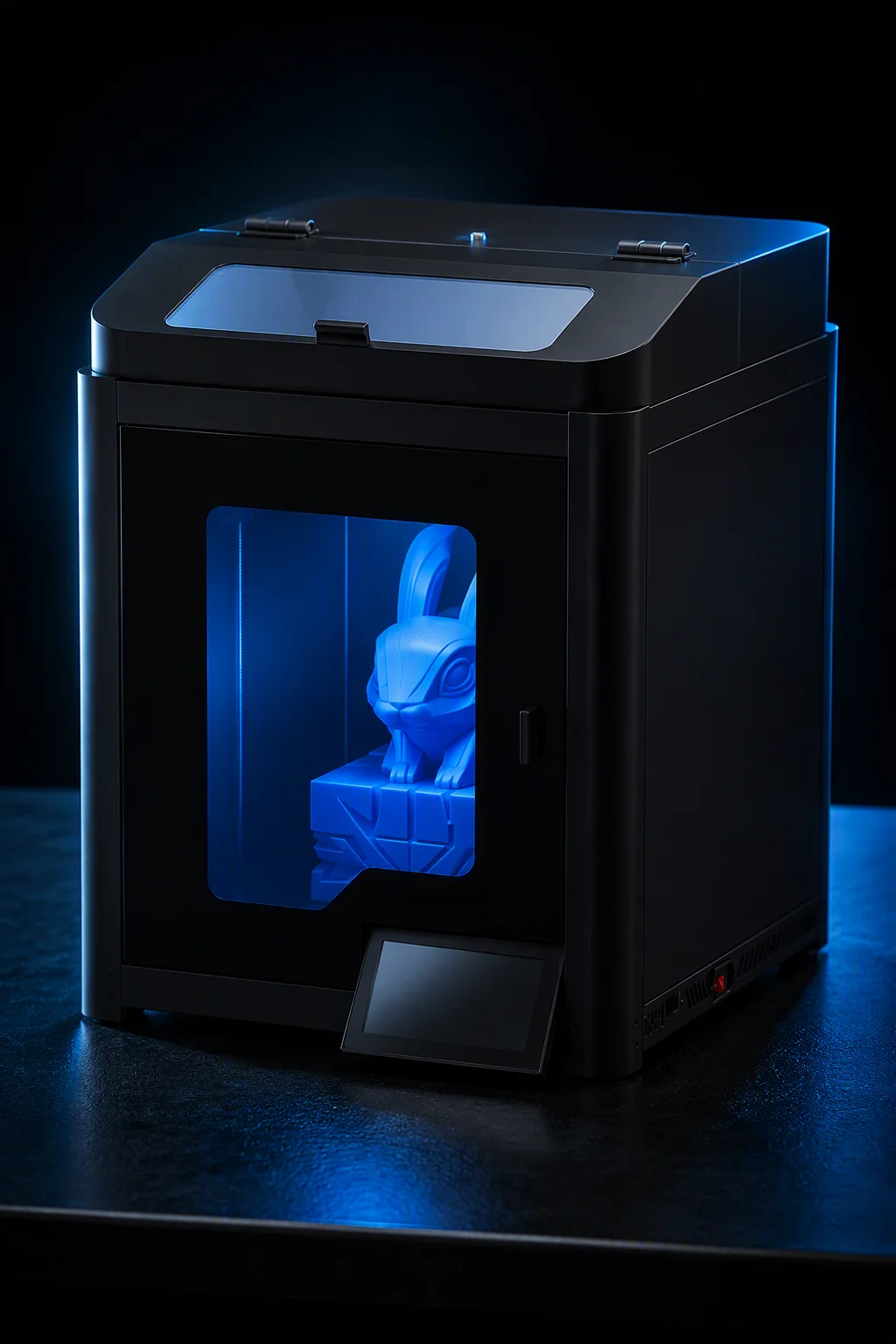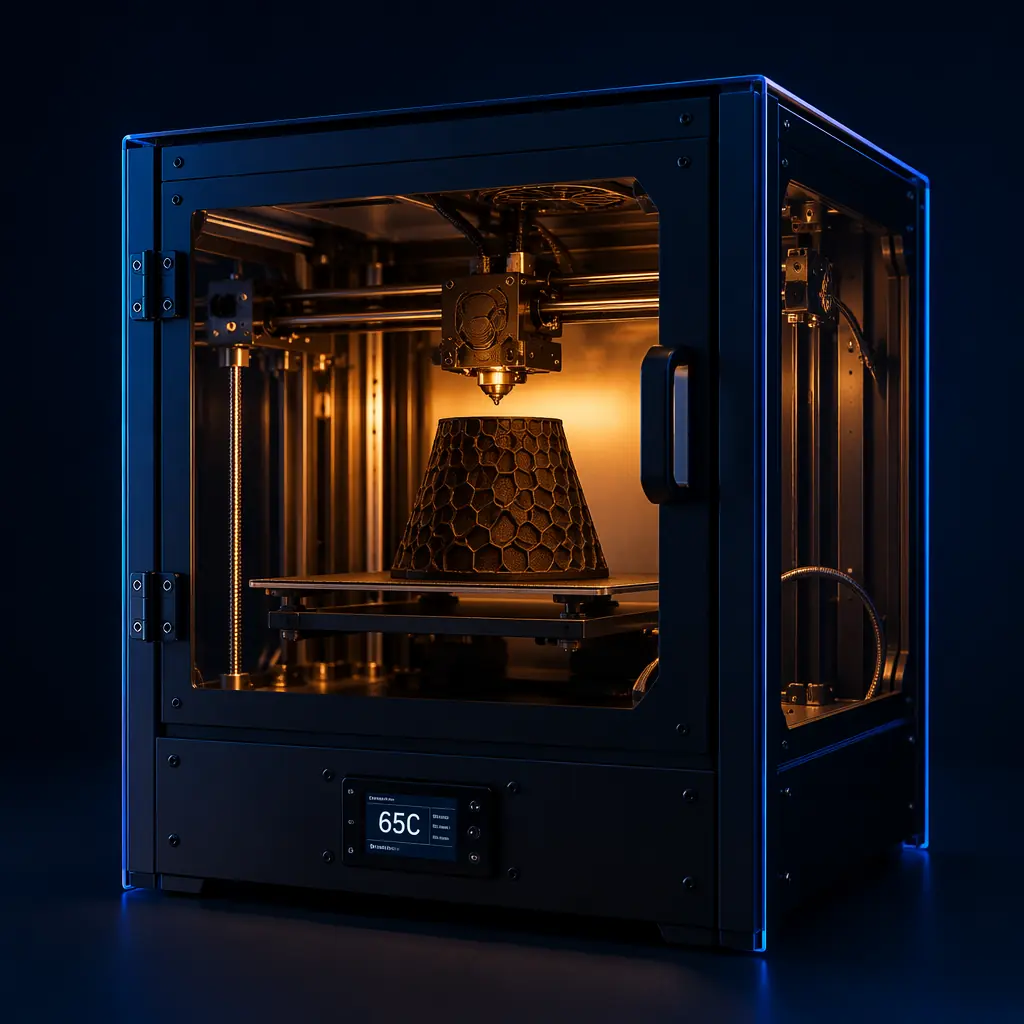
Walk through any 3D printer distributor's warehouse and you'll spot the problem immediately: rows of open-frame bedslingers and a handful of enclosed printers gathering dust. The distributor bought enclosed machines thinking they'd sell to engineering customers — but didn't understand the difference between passive enclosures and active chamber heating. The printers sit because they can't actually hold chamber temperature. The customers who need ABS and polycarbonate went elsewhere.
Heated chambers are not a checkbox feature. They exist on a spectrum — from draft shields that add 5°C to actively regulated systems that maintain 70°C with PID control. Knowing where each printer falls on that spectrum determines which customers will buy it, at what price point, and whether they'll come back for a second machine. This guide maps the chamber heating landscape so you can stock printers that actually meet customer expectations.
Why Chamber Temperature Matters: The Filament Physics Every Distributor Should Know
When a 3D printer extrudes molten plastic at 220-260°C onto a build plate, the material cools from liquid to solid in seconds. If the surrounding air is 20°C and the plastic is cooling from 220°C, that's a 200°C temperature drop across a few millimeters — enough to cause warping, layer delamination, and dimensional inaccuracy in any material with a high thermal expansion coefficient.
The problem compounds with engineering materials:
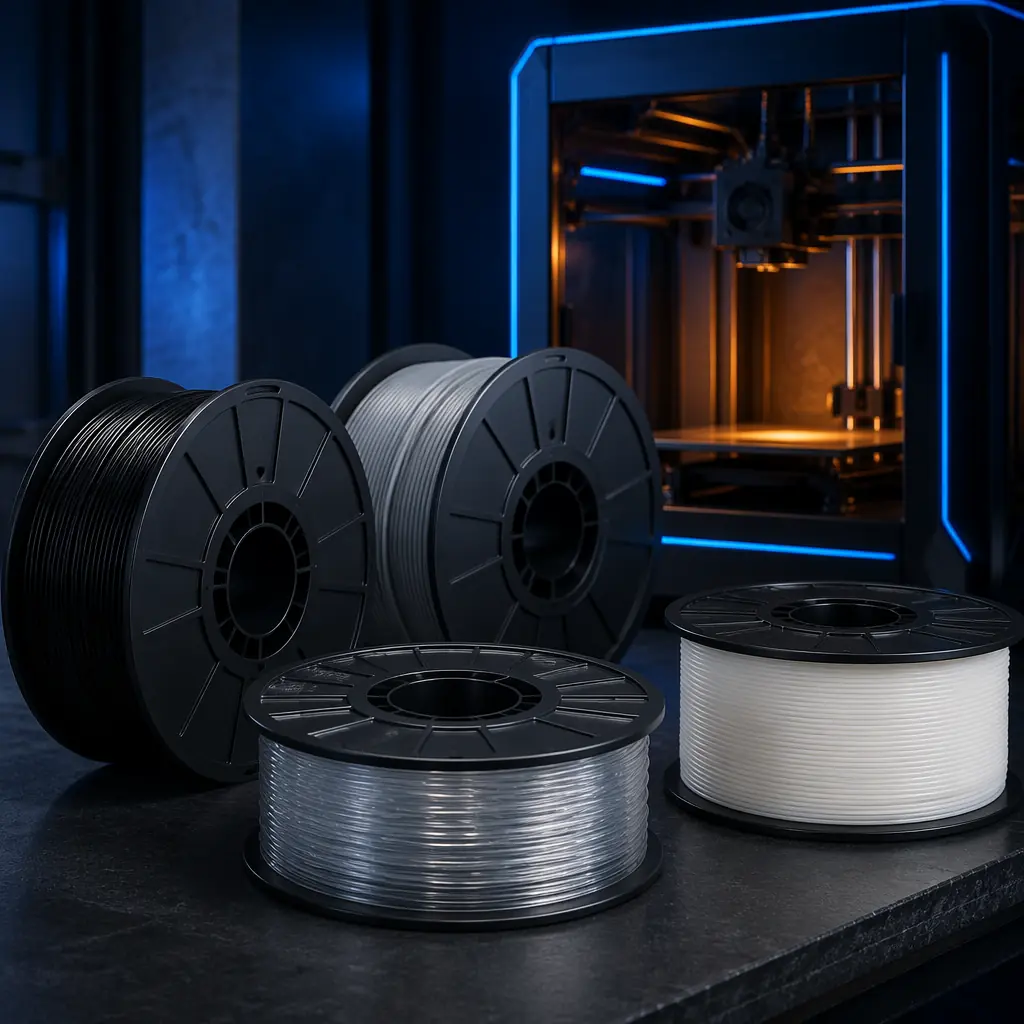
The threshold is clear: PLA and PETG print fine without any chamber heating. ABS and ASA need at least a passive enclosure with bed heat soak to reach 40-50°C. PC, Nylon, and anything beyond require active chamber heating — a dedicated heater element with thermistor feedback control. Every degree below the minimum chamber temperature multiplies the warping risk exponentially, not linearly.
The Three Tiers of Chamber Heating: What "Enclosed" Actually Means
The biggest source of confusion in the market — and the #1 reason distributors stock the wrong printers — is that manufacturers use "enclosed" to describe three fundamentally different things. Here's how to read between the lines of a spec sheet:
Tier 1 — Passive Enclosure:
This is the most common "enclosed" printer at the $120-200 FOB price point. The enclosure is an acrylic or metal box — often the same frame panels that make the printer look premium. There is no active heating element. The chamber warms up only because the heated bed radiates heat into the enclosed space. After 20-30 minutes of printing with the bed at 100°C, chamber temperature might reach 35-40°C — enough to reduce drafts and improve PETG layer adhesion, but nowhere near the 60°C needed for ABS. These printers are perfectly good machines; they're just not engineering filament printers. Stock them as "enclosed PLA/PETG printers" and be honest with customers about the limitation. The margin here is 35-45% — decent volume, low support burden.
Tier 2 — Semi-Active:
These printers add a circulation fan that distributes bed heat through the chamber more evenly. Combined with insulation panels (rather than thin acrylic), they can sustain 50-55°C — entering the lower end of ABS territory. ABS parts under 100mm print reliably; larger parts or ASA still risk warping. This tier is the sweet spot for distributors in price-sensitive markets (Southeast Asia, Latin America) where customers want "ABS-capable" but won't pay for active heating. Distributor margin: 40-50%. The key spec to check: chamber temperature after 30 minutes of bed heating. If the manufacturer can't provide this number, assume Tier 1.
Tier 3 — Active Heated Chamber:
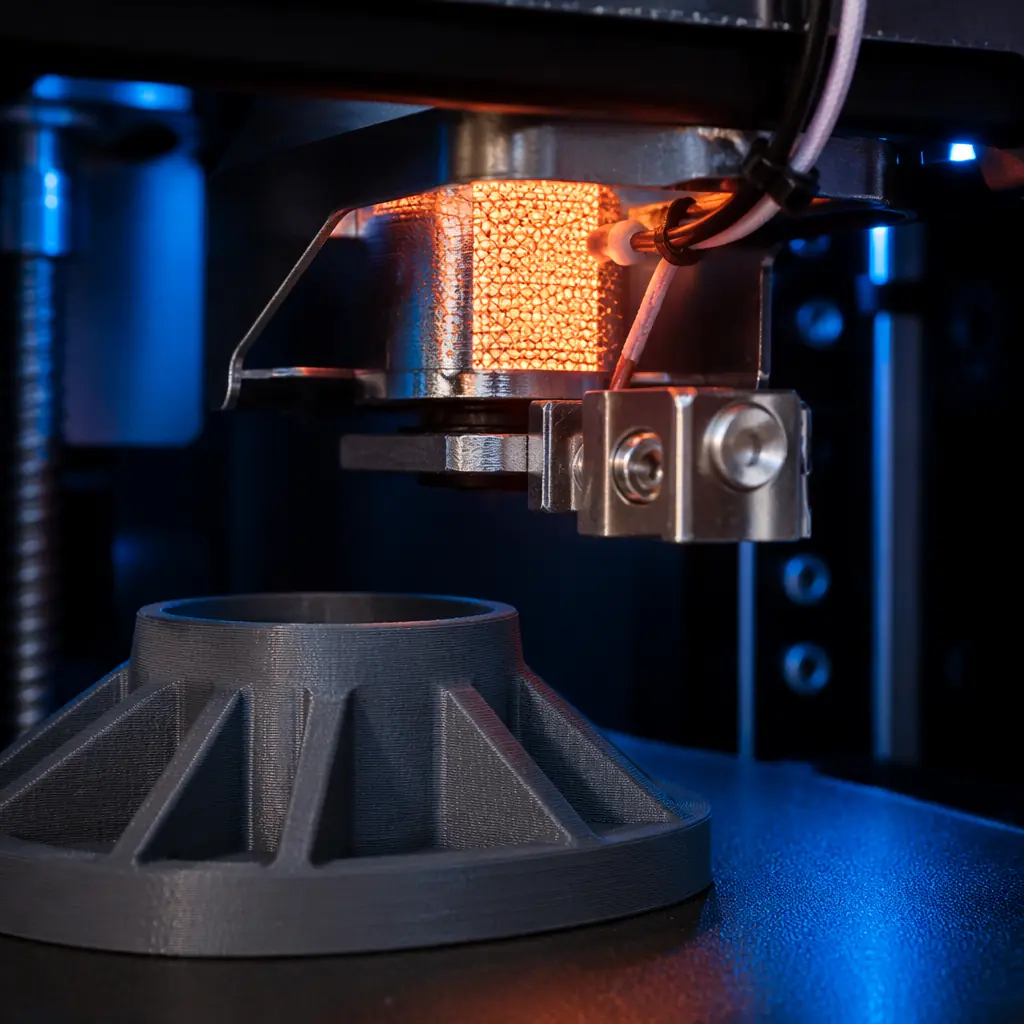
These printers have a dedicated PTC (Positive Temperature Coefficient) ceramic heater mounted inside the chamber with its own thermistor and PID control loop, completely independent of the bed heater. Chamber temperature is a settable parameter in the firmware — you dial in 70°C and the printer holds it ±2°C throughout the print. This is the only tier that can reliably print PC, Nylon, and high-temperature engineering materials. Build volume is typically 250-350mm, price is $350-800 FOB. Distributor margin is highest here: 45-60% per unit — but volume is low (5-15 units/month for a typical regional distributor) and support requirements are higher because these buyers are professionals who notice when chamber temp drifts. The margin opportunity isn't in unit volume; it's in consumables attachment — a customer who buys an active-chamber printer for PC will order $40-80/month in engineering filament from the same supplier.
Who Buys Which Tier: Customer Segment Mapping
Stocking decisions should start with customer segments, not spec sheets. Here's how the three tiers map to real buyer profiles:
The hobbyist segment dominates unit volume — roughly 60% of enclosed printer sales in consumer channels. These buyers search for "enclosed 3D printer" on Amazon and compare prices. A Tier 2 semi-active printer at $200-250 FOB with honest "prints ABS parts up to 10cm" positioning will outsell a Tier 3 at $450 FOB by 5:1 in this segment. But the hobbyist also has the highest return rate if expectations aren't managed — 12-18% of enclosed printer returns come from buyers who expected ABS performance from a Tier 1 passive enclosure.
The engineering and automotive segments are small in volume but dominant in lifetime value. An automotive shop that buys one Tier 3 active-chamber printer typically reorders $600-1,200/year in ASA and PC filament. The customer acquisition cost is higher (these buyers research for weeks and ask detailed technical questions), but churn is near zero once they've validated the printer works with their materials. Our distributor data shows after-sales support quality is the #1 predictor of whether an engineering customer reorders filament from you or switches suppliers.
How to Evaluate Chamber Heating Specs: 5 Questions for Your OEM
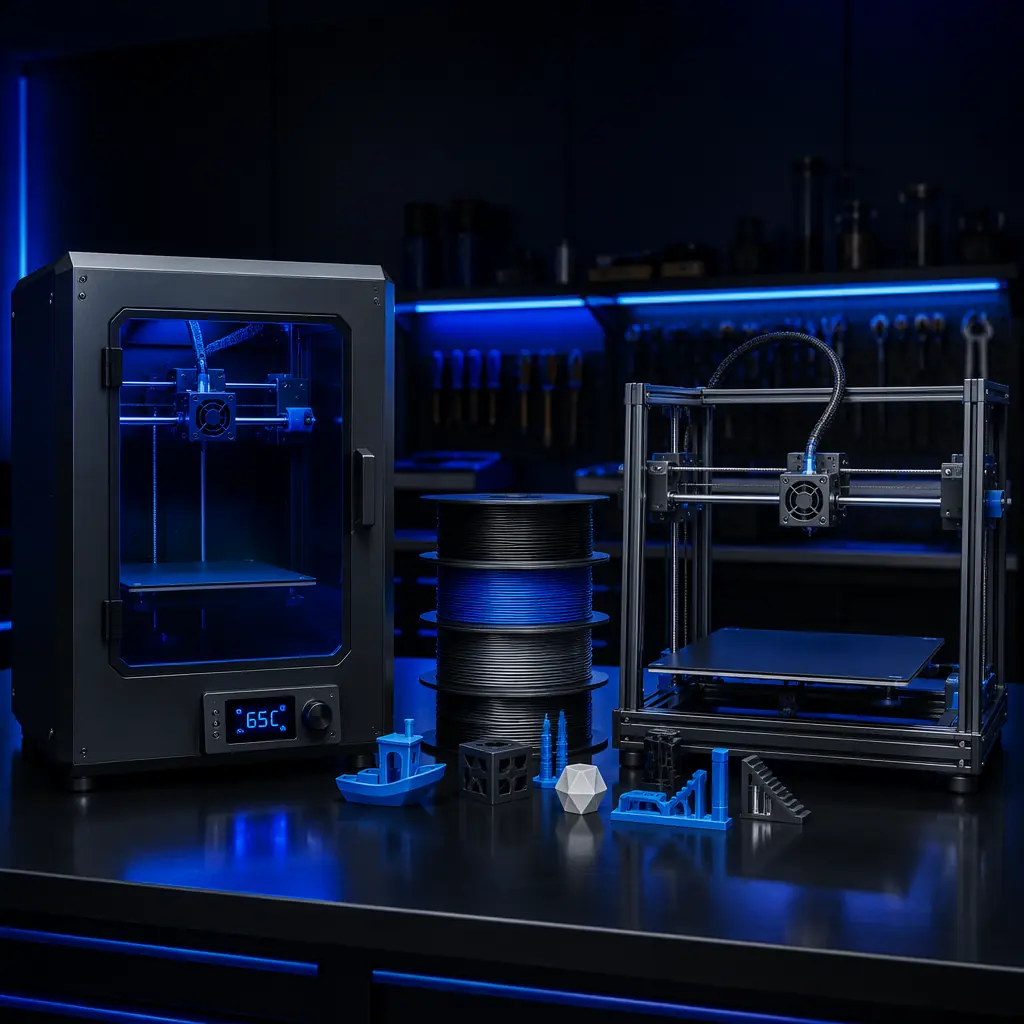
When evaluating printers from an OEM partner, don't rely on marketing language. Ask these five questions — and verify the answers with a test print:
1. "What is the stabilized chamber temperature after 30 minutes with the bed at 100°C?" — This separates Tier 1 from Tier 2. A Tier 1 passive enclosure will report 35-42°C. A Tier 2 with circulation will report 48-55°C. If the OEM can't provide this number, they haven't tested it — proceed with caution.
2. "Is there a dedicated chamber heater with independent temperature control in firmware?" — This separates Tier 2 from Tier 3. Look for a separate heater element (usually a PTC ceramic block, 100-300W) visible inside the chamber, and a chamber temperature setting in the printer's menu/UI. If the only heat source is the bed, it's Tier 1 or 2 regardless of what the marketing says.
3. "What is the chamber temperature uniformity? (±X°C from setpoint)" — A well-designed Tier 3 chamber with circulation fan holds ±2°C. Poor designs with a single heater on one side can have 8-12°C gradients across the build volume — meaning parts on the left side print fine while parts on the right warp. This spec matters more than maximum temperature for print reliability.
4. "What chamber insulation material and thickness?" — Thin acrylic panels (2-3mm) lose heat rapidly; the heater works harder and temperature fluctuates more. EPE foam or double-wall insulated panels (8-15mm) hold temperature with 40-60% less power. Insulation quality directly affects energy consumption and noise — both selling points for education and office buyers.
5. "Does the chamber have an air filtration system?" — ABS and ASA emit styrene fumes; PC and Nylon release caprolactam and BPA. A carbon filter (Hepa + activated carbon, ≥200g carbon media) is non-negotiable for indoor use. Printers without filtration limit your customer base to workshops with external ventilation — a much smaller market. This is also a key differentiator for CE and UL safety certifications in European and North American markets.
Inventory Strategy: How Many Heated Chamber Printers to Stock
Heated chamber printers are higher-ticket items with slower turnover than open-frame machines. The inventory math is different:
Generalist distributors should treat enclosed printers as a portfolio complement, not the main event. A 25% enclosed allocation — heavily weighted toward affordable Tier 1/2 machines — gives you an answer when customers ask "do you have enclosed printers?" without tying up excessive working capital. The key is to bundle filament with every enclosed printer sale: a Tier 2 printer sold with 3 spools of ABS generates roughly the same total margin as the printer alone, and the filament reorder becomes recurring revenue.
Engineering specialists build their business around Tier 2 and 3 machines. This strategy has the highest per-unit margin but the slowest inventory turns — expect 35-50 day sell-through for Tier 3 machines. The business model works because engineering filament margins (38-52% for PC, Nylon, ASA) more than compensate for the slower hardware turns. A specialist with 100 active engineering customers generating $50/month in filament orders produces $60,000/year in recurring consumables revenue — that's the real business, not the printer sales.
Education partners need Tier 1 passive enclosures with safety features. Schools and universities value the enclosed frame for finger protection and noise reduction, not for ABS printing. A 20% Tier 1 allocation with proper certification documentation (CE, RoHS, UL) is sufficient. Education buyers almost never need Tier 3 — if a university lab needs PC capability, they buy one Tier 3 machine as a separate line item, not as part of a classroom fleet order.
The Margin Math: Why Heated Chamber Printers Are Worth the Slower Turns
At first glance, open-frame printers look like the better business: they turn 3-5× per month with 25-35% margins. Enclosed printers turn 1.2-2.2× per month but deliver 35-60% margins. The per-unit math favors open-frame — until you factor in three multipliers that only apply to enclosed printer customers:
1. Filament attachment rate. An open-frame PLA buyer might buy 1-2 extra spools at purchase and never reorder. An enclosed printer buyer purchasing for ABS/ASA/PC capability consumes 3-7× more filament per month — and engineering filaments carry 10-15% higher margin than PLA. Over 12 months, a Tier 2 customer generates $120-180 in filament margin vs. $30-50 for an open-frame customer.
2. Upgrade path capture. The customer who buys a Tier 2 semi-active printer today is a near-certain Tier 3 buyer within 18-24 months if they're satisfied. The upgrade path from open-frame to enclosed is 15-20%; from Tier 2 to Tier 3 is 55-65%. Capturing the second sale is where the customer acquisition cost pays off.
3. Lower price competition. The open-frame 220mm market has 50+ competing SKUs on Amazon at any given time, compressing margins to 20-25%. The active-chamber Tier 3 market has perhaps 8-12 serious competitors — fewer comparison points mean price elasticity works in your favor. Our partner data shows Tier 3 printers maintain their listed price for 14-18 months vs. 4-7 months for open-frame models before discounting pressure sets in.
For a full breakdown of pricing strategy across product categories, see our distributor pricing and margin guide.
Reviewed by the Precise3D engineering & OEM team. Compliance files that accompany the catalog are auditable at the certification register.
Stock Heated Chamber Printers
Get OEM Pricing on Enclosed 3D Printers With Verified Chamber Specs
Tell us your target market and filament requirements. We'll provide FOB pricing on enclosed printers with documented chamber temperature data, PID control specs, and filtration details — no marketing fluff, just engineering numbers.