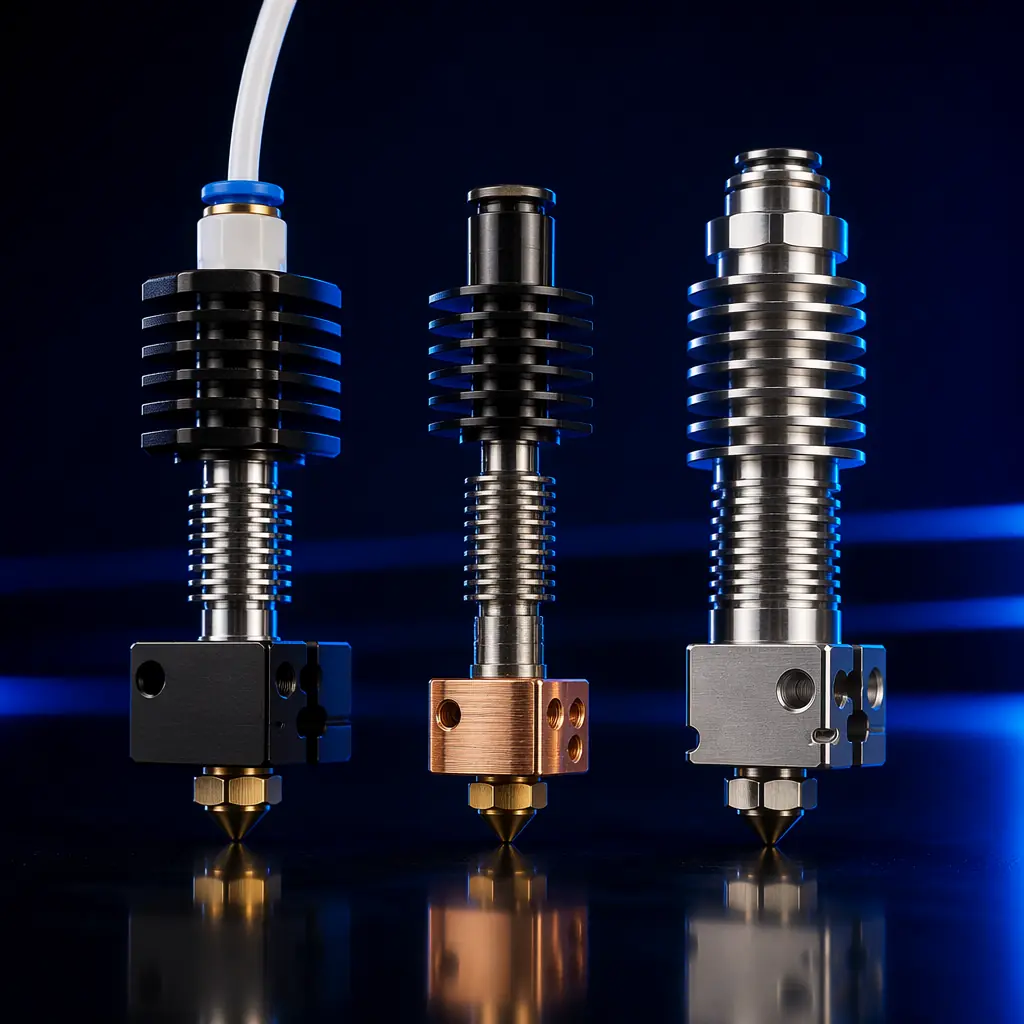
A customer buys a $400 3D printer. Six months later, they try printing PETG at 250°C and the PTFE tube inside the hotend degrades, releasing fumes and causing underextrusion. They blame the printer, return it, and your distributor reputation takes a hit. The fix wasn't a better printer. It was a hotend rated for the temperatures the customer actually needed. But nobody told them. And that's the opportunity: the distributor who educates customers about hotend technology doesn't just prevent returns, they upsell the right hotend at point of sale and build a replacement parts revenue stream that outlasts the printer purchase.
How a 3D Printer Hotend Actually Works
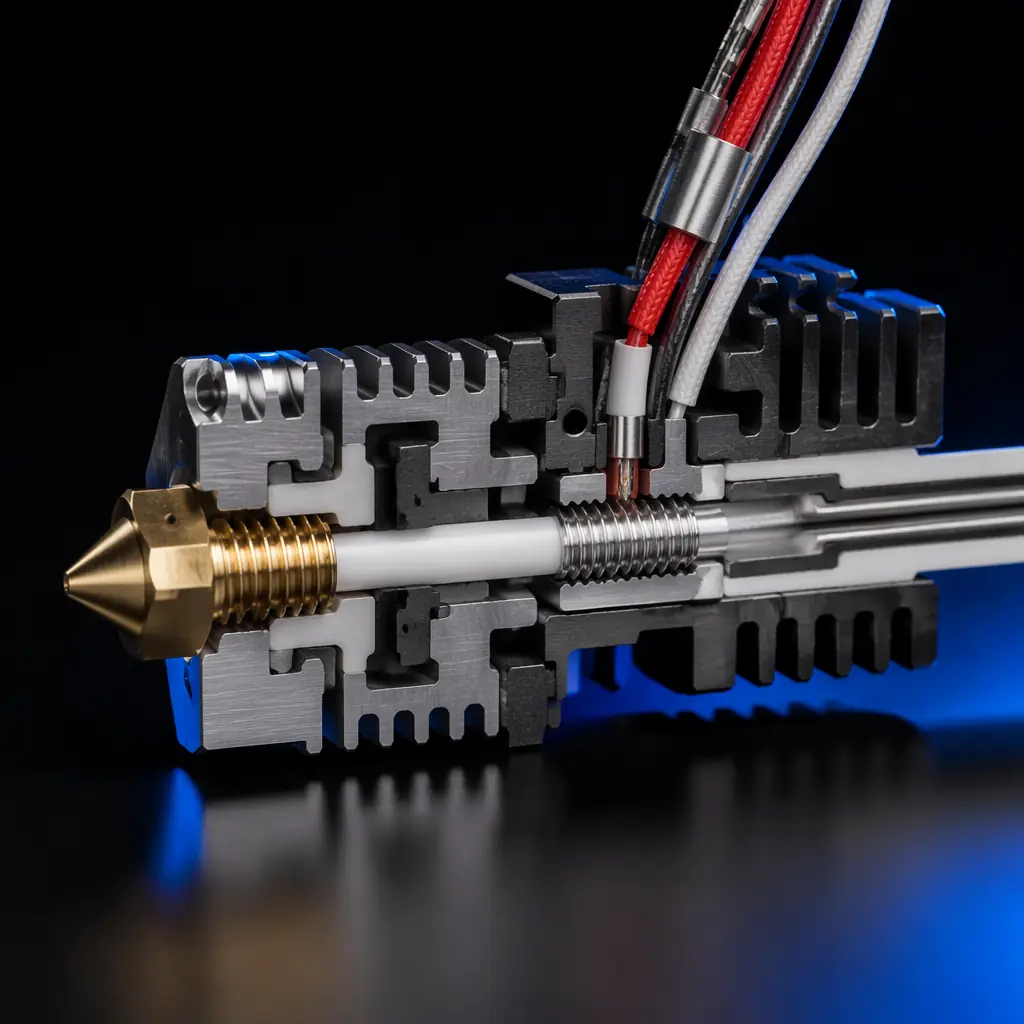
A hotend has four functional zones, and the material choices in each zone determine what filaments it can print, at what temperatures, and for how long before something fails:
The heat break is where the biggest differentiation lives. In a PTFE-lined hotend, a PTFE tube extends all the way through the heat break to the nozzle, giving excellent non-stick performance for PLA but degrading above 240-250°C. In an all-metal hotend, the heat break is a thin-walled metal tube (typically stainless steel or titanium) with no PTFE liner, capable of 300°C+ but requiring more precise thermal management to prevent heat creep. Understanding this one component lets you match the right hotend to every customer. For nozzle details, see our dedicated nozzle and hotend consumables guide.
The Four Hotend Types: A Distributor's Comparison Matrix
Here is how the four hotend categories compare across the dimensions that matter for selling, temperature ceiling, material compatibility, price point, and replacement cycle:
PTFE-lined hotends are the industry default for good reason: they're reliable with PLA, PETG, and TPU, the three filaments that represent 85%+ of consumer printing volume. The PTFE liner provides a naturally non-stick surface that prevents filament jams and makes printing forgiving for beginners. The limitation is temperature: PTFE begins thermally degrading at 240°C and releases toxic fumes above 260°C. For a distributor, the play is to offer PTFE-lined as the standard configuration and present all-metal as an upgrade for customers who mention ABS, ASA, nylon, or polycarbonate. For filament stocking strategy, see our PLA/PETG/ABS/TPU stocking guide.
All-metal hotends replace the PTFE liner with a thin-walled metal heat break: typically stainless steel (lower cost, adequate) or titanium (premium, better thermal isolation). The advantage is temperature headroom: 300°C comfortably, 350°C with a copper heater block and high-temperature thermistor. This unlocks ABS, ASA, nylon (PA6/PA12), polycarbonate, and filled materials like carbon fiber PLA that benefit from higher printing temperatures. The trade-off: all-metal hotends are less forgiving with PLA if the heatsink fan isn't adequate, because heat creep up the metal heat break can cause jams. For distributors, all-metal is the highest-margin upsell, customers who need it genuinely need it, and they'll pay for it.
High-Flow Hotends: The Speed Revolution Changes Everything
The rise of high-speed 3D printing (Klipper firmware, input shaping, 200-600mm/s print speeds) has created a new bottleneck: standard hotends can't melt filament fast enough to keep up. A standard hotend has a volumetric flow rate of 10-15 mm³/s. At 300mm/s with a 0.4mm nozzle and 0.2mm layer height, you need 24 mm³/s. The math doesn't work. And the result is underextrusion, poor layer adhesion, and failed prints that customers blame on the printer rather than the hotend limitation.
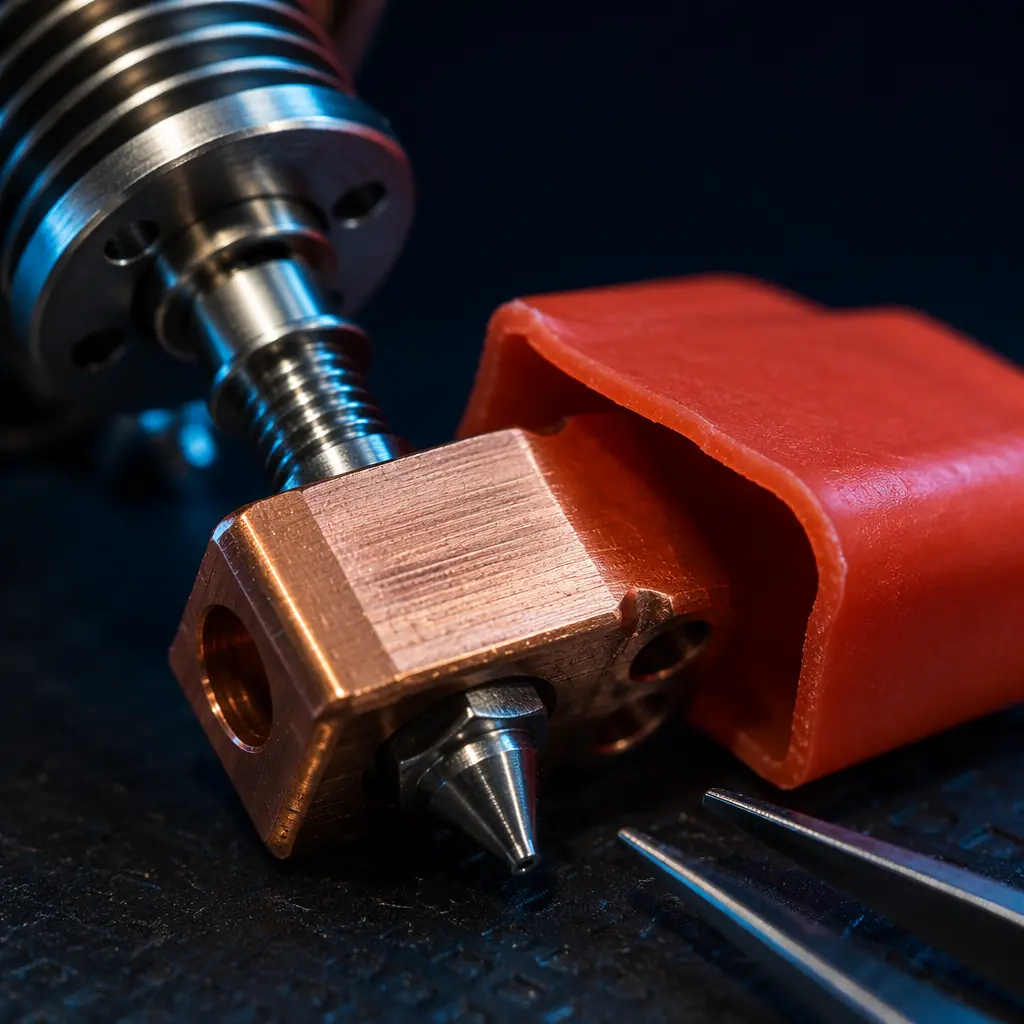
High-flow hotends solve this by increasing the melt zone length, the distance over which filament contacts the heated metal wall. Designs like the CHT (Copper Heat Transfer) nozzle split the filament into three strands inside the nozzle to increase surface area contact. The result: volumetric flow rates of 25-40 mm³/s, enough for 300-500mm/s printing with standard nozzles. The distributor opportunity is significant: every customer buying a high-speed-capable printer should be offered a high-flow hotend as a day-one upgrade. At $35-60 wholesale and $60-90 retail, that's $25-35 margin per upsell on a printer that might only have $80-120 total margin. For the full speed printing context, see our high-speed printing technology guide.
Nozzle Materials: The Second Dimension of Hotend Selection
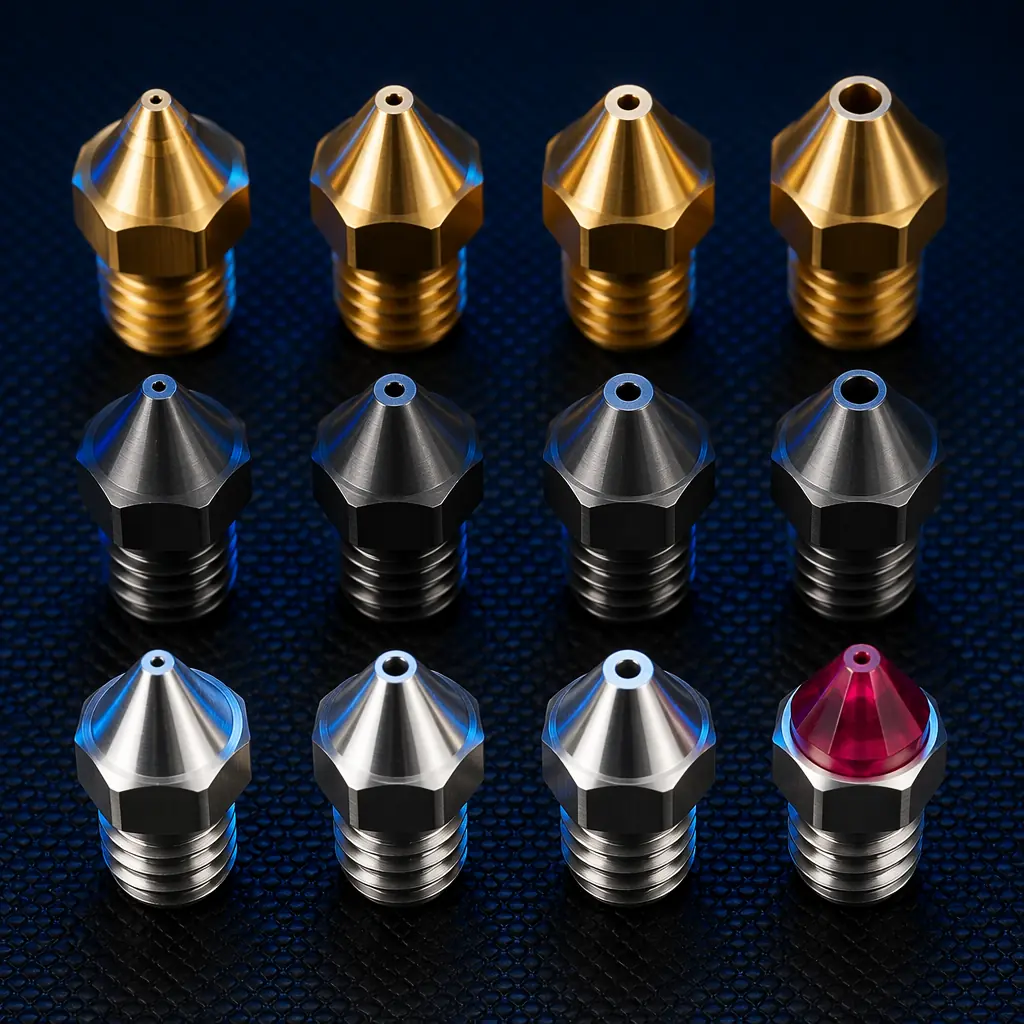
The hotend body determines temperature ceiling and flow rate. But the nozzle determines what materials you can print without wearing out the orifice. For distributors, nozzle upsells are the highest-frequency consumable because nozzles wear with every hour of printing, not just with abrasive filaments:
The brass-to-hardened-steel upsell is the easiest sale in 3D printing: "If you ever plan to print carbon fiber, glow-in-the-dark, or wood-filled filament, even once, you need a hardened steel nozzle. A brass nozzle will wear from 0.4mm to 0.6mm in under 100 hours with carbon fiber filament, ruining print quality." At $2-5 wholesale and $8-15 retail, it's a $6-10 margin add-on that prevents a customer support headache when the customer inevitably tries an abrasive filament. Our exotic filaments guide covers the full abrasive material landscape.
The Replacement Cycle: Building Recurring Hotend Revenue
Hotends are consumables, not just nozzles, but entire hotend assemblies. The replacement cycle depends on usage intensity and materials, but here are the real-world numbers from distributor service data:
For a distributor selling 200 printers/year with an average 14-month hotend replacement cycle, that's approximately 170 replacement hotend sales per year from the installed base alone, at $15-60 wholesale each, generating $2,500-10,000/year in recurring revenue without acquiring a single new customer. This is the math that turns a one-time printer sale into a multi-year revenue relationship. For the full consumables bundling strategy, see our consumables bundling guide.
Reviewed by the Precise3D engineering & OEM team. Compliance files that accompany the catalog are auditable at the certification register.
Upgrade Your Product Line
Configure the Right Hotend for Every Customer
Our printers ship with your choice of PTFE-lined, all-metal, or high-flow hotends, plus hardened steel nozzle options. Talk to us about building a hotend configuration matrix that matches your market segments.