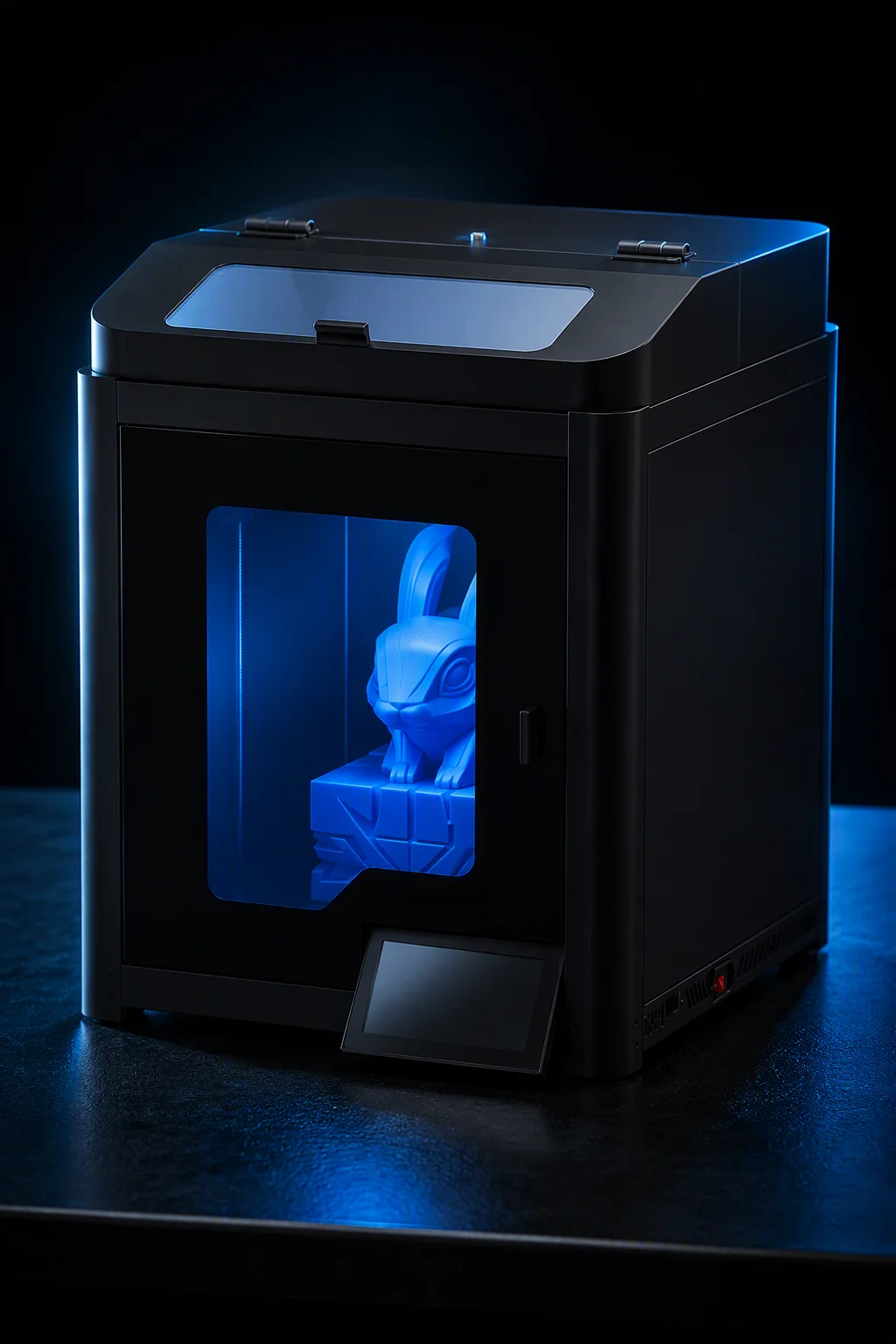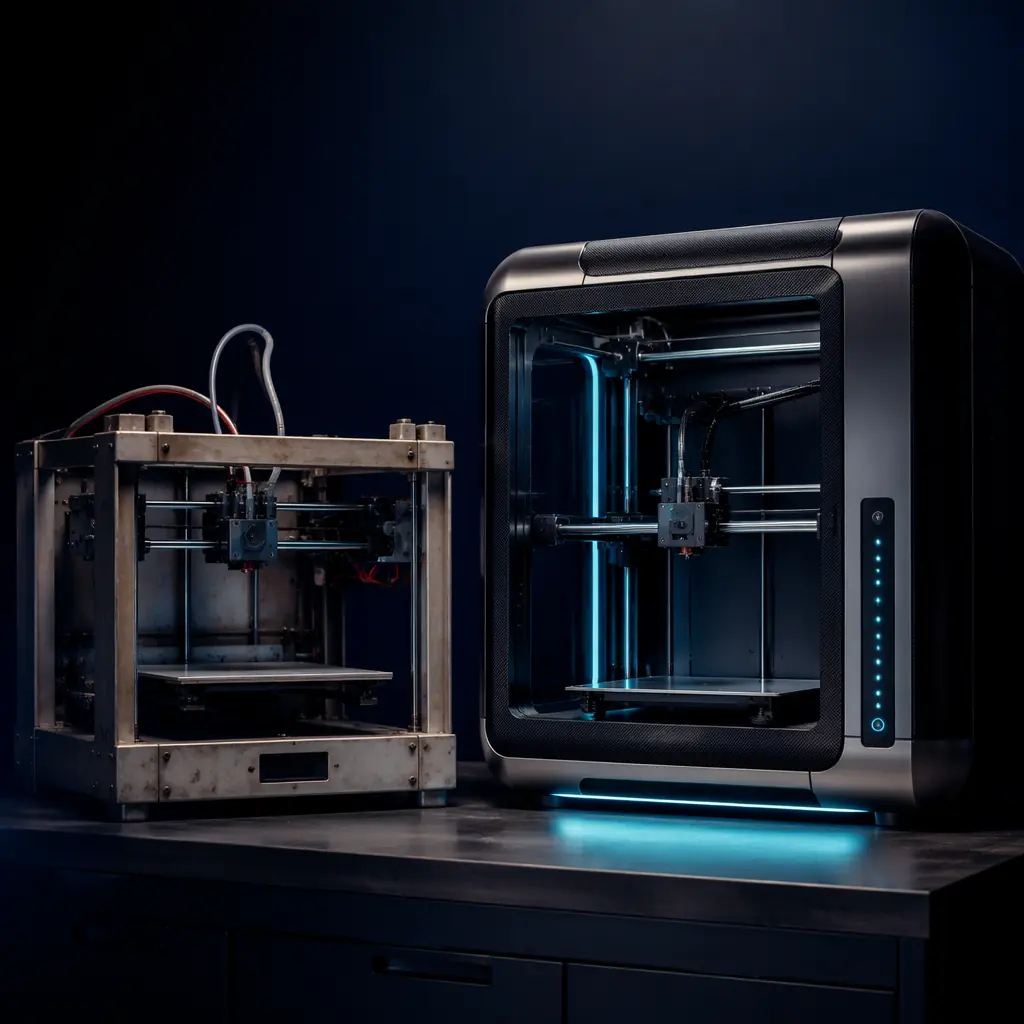
A distributor who sold 500 printers over the last three years has one of two things: a dormant asset or an active revenue engine. The difference is whether those 500 customers have a reason to transact again. Most don't. They bought a printer, it prints, and the distributor never hears from them except for the occasional support ticket or filament reorder. That's a dormant asset, 500 customer relationships generating near-zero incremental revenue.
A trade-in and upgrade program changes the equation. It gives every past customer a structured reason to return, trade their aging machine for credit toward a newer model, and start a second transaction cycle. Distributors who've implemented trade-in programs report that 18–25% of their installed base upgrades within 12 months of program launch, generating $300–600 in gross margin per upgrade transaction, plus a reset of the consumables cycle that follows every new printer purchase.
1. Why Trade-In Programs Outperform Discounts and Promotions
Most distributors respond to slowing sales with discounts: 10% off, Black Friday deals, bundle promotions. These work, briefly, but they have three structural problems. First, they train customers to wait for the next sale rather than buying at full margin. Second, they attract price-sensitive buyers who churn faster and generate fewer consumables reorders. Third, they do nothing to engage the installed base. The 500, 1,000, or 5,000 customers who already trust you and are the cheapest source of your next transaction.
Trade-in programs solve all three simultaneously:
The refurbished printer market is projected to reach $1.2 billion globally by 2027, growing at 18% CAGR. Distributors who build trade-in infrastructure now are positioning themselves to capture a share of that secondary market, not just the primary hardware sale. Our guide on the second-hand and refurbished 3D printer market covers the broader opportunity in detail.
2. The Trade-In Valuation Framework: What to Offer for Which Machine
The single biggest mistake in trade-in program design is overpaying for used machines. A distributor offering $250 credit for a three-year-old printer that originally sold for $399 will lose money on every trade, the refurbishment cost ($60–120 in parts and labor) plus the credit exceeds the refurbished resale value ($180–250). Here's a valuation framework that keeps trade-in economics profitable:
Two critical rules emerge from this data. First, machines older than 3 years should only be accepted as "recycling credits" ($20–40 flat), the refurbishment cost exceeds the resale value, and the distributor loses money on every unit if they attempt full refurb. Second, the profit in trade-in programs doesn't come from refurbished unit resale (which nets $10–70 per unit). It comes from the new hardware sale that the trade-in credit unlocks. A $200–400 margin on the new printer dwarfs the refurbishment P&L. The trade-in credit is a customer acquisition cost, and at $60–280 per acquired repeat buyer, it's 3–5× cheaper than the $400–800 CAC of most digital marketing channels.
Pricing the upgrade correctly requires understanding your full cost structure. Our distributor pricing strategy guide provides the margin planning framework that makes trade-in programs financially sustainable.
3. Program Structure: Three Models by Customer Segment
Not every customer upgrades for the same reason. A hobbyist upgrades because the new machine has multi-color and their current one doesn't. A print farm upgrades because the new machine is 3× faster and cuts per-part cost by 40%. An education buyer upgrades because their grant cycle just renewed and they have budget to spend. Each segment needs a different trade-in offer:
The print farm segment is the most profitable for trade-in programs. Not because individual unit margins are highest, but because print farm operators buy consumables at 5–10× the rate of hobbyists. A 10-printer farm that upgrades all units through a trade-in program will generate $8,000–15,000 in filament revenue over the following 24 months, compared to $500–1,500 for a hobbyist. Target print farms with ROI-based upgrade pitches: "Your current machines print at 80mm/s. The new model prints at 300mm/s with the same quality. At your volume, that's $2,800/month in additional throughput capacity."
For print farm customers specifically, understanding their operations helps you position upgrades effectively. Our print farm operations guide covers the throughput metrics and failure rate data that make the ROI case.
4. Refurbishment Unit Economics: Building the Workshop
Refurbishing a used 3D printer is not the same as repairing one. Repair fixes a specific fault. Refurbishment returns the machine to "like-new" condition, cleaned, calibrated, upgraded where cost-effective, and packaged with new accessories. Here's what a refurbishment workshop needs to look like to make the numbers work:
At a fully loaded cost of $46–75 per refurbished unit and a resale value of $120–400 (depending on age), the refurbishment operation itself is modestly profitable, $45–325 margin per unit. But the real value is the channel expansion: refurbished units open an entirely new price tier. A customer who can't afford a $499 new printer can afford a $199 refurbished one. That customer buys filament for 2–3 years, becomes a trade-in candidate themselves, and eventually upgrades to a new machine. The refurb operation is a customer acquisition funnel, not a profit center.
Building a repair and refurbishment operation requires specific workshop infrastructure. Our repair and service center guide covers equipment, staffing, and process setup in detail.
5. Launching Your Program: The 90-Day Rollout Plan
A trade-in program launched with a single email blast will get 2–4% response. A program launched with a structured, multi-touch campaign gets 18–25%. The difference is entirely in execution:
Week 1–2: Data preparation.
Export your CRM. Segment customers by: original purchase date, printer model, total consumables spend (high-spenders upgrade faster), support ticket history (frequent ticket-openers are frustrated and receptive to an upgrade). Build three lists: "High Upgrade Propensity" (purchased 18–36 months ago, high consumables spend, <5 support tickets), "Medium" (12–18 months or 36+ months, moderate spend), "Low" (<12 months, low spend).
Week 3–4: Pre-announcement.
Send personalized emails to your top 50 customers, the ones who've spent $500+ on consumables. Offer them an exclusive 48-hour early-access window with an additional 15% trade-in bonus. These customers are your reference cases. When they upgrade and post about it, the social proof cascades to the broader list.
Week 5–8: Broad launch.
Send segmented email campaigns to all three lists. The High list gets a 7-day limited-time bonus. The Medium list gets standard terms. The Low list gets a "plan ahead" message with no urgency, they're not ready to upgrade but you're planting the seed. Supplement with social media: before/after print quality comparisons, unboxing videos of the new model, customer testimonials from the early-access group.
Week 9–12: Iterate and optimize.
Track conversion by segment, credit tier, and refurbishment cost. Adjust credit amounts if uptake is below 15% on the High list. If refurbishment costs are running above $75/unit, review your intake criteria, you may be accepting machines that aren't cost-effective to refurbish.
The consumables revenue that follows every trade-in upgrade makes this program self-funding within 6–9 months. See our consumables subscription program guide to layer recurring revenue on top of the upgrade cycle.
Every Installed Printer Is a Future Upgrade
A distributor with 500 printers in the field and no trade-in program has 500 dormant relationships. The same distributor with a trade-in program has 500 future transactions. 90–125 of which will convert within 12 months at $300–600 margin each, for $27,000–75,000 in incremental profit. Add the consumables reset that follows each upgrade (another $100–200 in filament margin per customer per year), and the lifetime value of a trade-in participant is 2.5–4× that of a one-time buyer.
The consumer electronics industry figured this out a decade ago. Apple's trade-in program generates $8 billion annually in upgrade revenue. Phone carriers built their entire business model around the 2-year upgrade cycle. 3D printer distribution is following the same trajectory. And the distributors who build trade-in infrastructure now will own the upgrade cycle when the market matures. The ones who wait will find their installed base migrating to competitors who made it easy to switch.
Reviewed by the Precise3D engineering & OEM team. Compliance files that accompany the catalog are auditable at the certification register.
Launch Your Upgrade Program
Ready to Turn Your Installed Base into Recurring Revenue?
Join our network of global distributor network. We'll help you design your trade-in pricing, provide refurbishment training materials, and supply co-branded upgrade campaign assets. Factory-direct pricing on new models keeps your upgrade margins healthy.