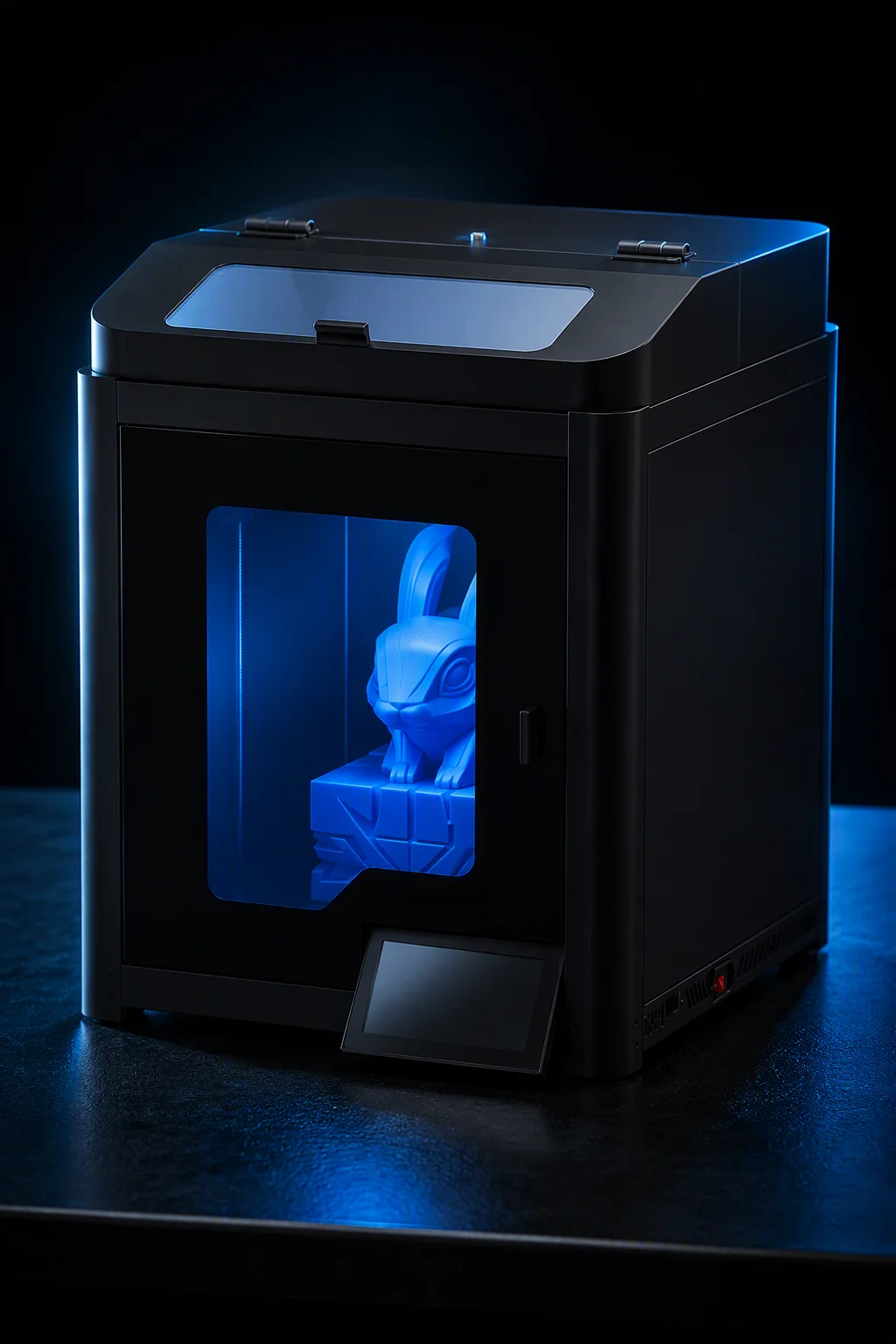
Trade shows are the most expensive marketing channel most 3D printer distributors use — and the most misunderstood. A 3x3 meter booth at Formnext costs €4,500–7,500. A 10x10 at a major North American maker fair runs $8,000–15,000. Add travel, shipping, booth construction, and staff time, and a single show easily crosses $25,000. For that money, a distributor could run Google Ads for six months, sponsor 40 YouTube creators, or hire a full-time inside sales rep for half a year. The reason trade shows persist as a channel is not tradition — it is conversion math. Live 3D printers printing actual parts generate a conversion rate that no digital channel can match: 5–8% of booth visitors become qualified leads, and 15–25% of those leads convert to orders within 90 days. At an average order value of $8,000–25,000 for a B2B printer sale, a single show can generate $120,000–250,000 in attributable revenue. This guide shows how the top-performing distributors achieve those numbers.
Show Selection: Not Every Exhibition Deserves Your Budget
The cardinal error in trade show strategy is spreading budget too thin across too many shows. A distributor who exhibits at five shows with a 10x10 booth at each will underperform a competitor who exhibits at two shows with a 20x20 booth and a dedicated demo area. Concentration beats dispersion in trade show ROI. The selection framework uses three criteria scored 1–5, multiplied to produce a Show Opportunity Score:
Attendee Fit rates how many attendees are actual buyers versus tire-kickers. A dental equipment show scores 5 for a distributor selling resin printers to labs; a general consumer electronics show scores 2. Competitor Gap is inverted — a show where you are the only 3D printer distributor scores 5; a show where Prusa, Bambu Lab, and Creality each have 40x40 booths scores 1. Cost per lead For distributors evaluating this area, our B2B proposal playbook guide covers it in depth. is total show cost divided by estimated qualified leads; under $100 per qualified lead scores 5, over $500 scores 1. Multiply the three scores: above 50 is a strong candidate; 30–49 is marginal; below 30 is a pass.
Booth Design That Converts: The 3-Second Rule and the Live Print
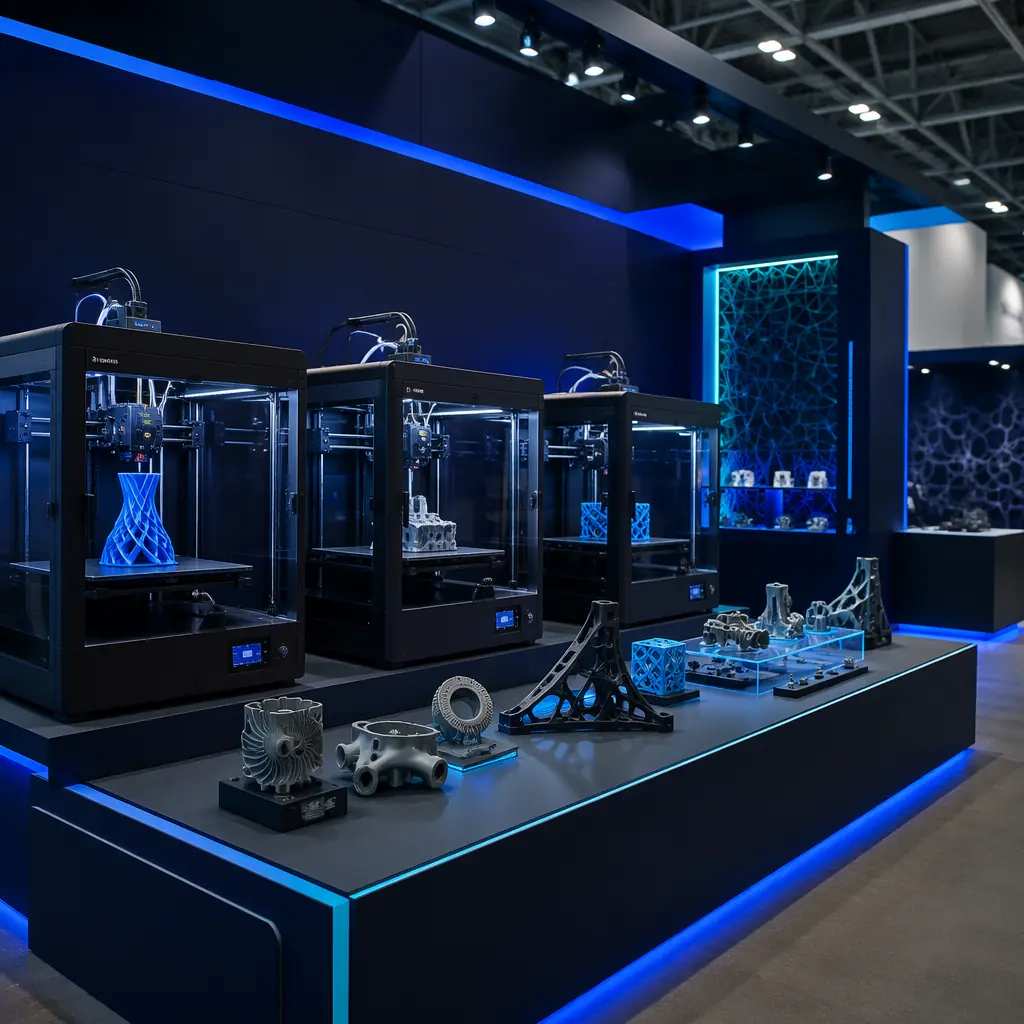
A trade show attendee walking the aisle decides whether to stop at your booth in approximately three seconds. In that window, two things must be instantly visible: (1) what you are selling, and (2) why it is worth stopping. A 3D printer distributor's booth has a structural advantage over most exhibitors: the product is visually compelling. Two printers running live prints — one producing a functional mechanical part in engineering filament, one producing a detailed multi-color model — draw more foot traffic than any banner or handout ever could. The live print is the anchor of the booth; everything else supports it.
Booth design checklist for a 10x10 or 20x20 space: For distributors evaluating this area, our demo lab setup guide covers it in depth. Position two printers at the front edge of the booth, not the back. Attendees should be able to see the print in progress from the aisle — this is the hook. Use enclosure-style printers with transparent panels for maximum visual impact. Print parts that showcase your printers' strengths: a 50-micron layer height architectural model for resin, a complex geometric lattice in PETG for FDM, a flexible TPU phone case as a conversation starter. Have completed sample parts on a display table at waist height for attendees to handle — tactility converts curiosity into engagement. Keep branding minimal: a single backdrop banner with your company name, logo, and a five-word value proposition. No paragraph text on walls — no one reads walls at trade shows.
Pre-show checklist: Arrive with pre-sliced G-code files on SD cards for each printer. Test every print at the hotel the night before. Bring spare filament, nozzles, and build plates. Nothing kills booth credibility faster than a failed print.
Lead Qualification on the Floor: The 30-Second Filter
The unspoken tragedy of trade shows is that 60–80% of scanned badges and collected business cards never receive a meaningful follow-up. The bottleneck is not the follow-up process — it is the quality of the leads collected. When booth staff collect every badge that wanders within arm's reach, the follow-up list becomes a phone book, and the sales team stops reading it. The fix is a qualification filter applied on the floor, in real time, using a simple three-question framework that takes 30 seconds:
Tier 1 (Hot Lead):
The visitor has a defined budget and timeline ("We're buying 10 printers for our lab by end of quarter"). They receive a dedicated follow-up call within 48 hours, a personalized quote within 72 hours, and a sample part shipped to their office within 5 business days. Tier 2 (Warm Lead): The visitor has clear interest and buying authority but no immediate timeline ("We're expanding our makerspace next year, evaluating options"). They go into a 6-month nurture sequence with monthly emails, case studies, and an invitation to a private webinar. Tier 3 (Cold): For distributors evaluating this area, our digital marketing guide covers it in depth. The visitor is a hobbyist, student, or curious passerby with no buying authority. They receive a single thank-you email with a link to your blog — and nothing else. Do not waste sales capacity on Tier 3 leads.
The booth staff structure should reflect this: one person handles live demos and crowd engagement, while a second person circulates with a tablet running your CRM, entering qualified leads in real time. A third person — ideally your most experienced closer — handles Tier 1 conversations. This three-role model prevents the common failure mode where the entire booth team clusters around a single interested buyer while twenty other attendees walk past unengaged.
The Post-Show Timeline That Converts 15–25%
The 72 hours after a trade show close are the most valuable sales window in any distributor's calendar. Leads decay exponentially — a qualified lead contacted on day 7 converts at roughly one-third the rate of the same lead contacted on day 1. The post-show follow-up system must be scripted, templated, and executed without the sales team needing to think about what to send next.
The cumulative conversion rate across all tiers averages 15–25% for well-executed campaigns, with Tier 1 leads converting at 40–60% and Tier 2 at 8–15%. The key to maintaining this cadence is pre-written templates: draft every email before you leave for the show, with placeholders for the prospect's name, company, and the specific printer model they expressed interest in. The sales team's job during show week is to collect the right information; their job the following week is to personalize and send. Nothing should be composed from scratch.
For broader context on building a complete distributor business, see our guides on B2B sales demos and digital marketing strategy. For printer selection that performs well in live-demo environments, our portfolio strategy guide and pricing strategy guide cover which models deliver the best in-person impression.
Budgeting for ROI: A Realistic Trade Show P&L
Let's model a mid-tier distributor attending two shows per year with a 20x20 booth. The assumptions: average order value of $12,000 (mid-range FDM + resin printer bundle for a small business or education buyer), 200 qualified leads per show, 15% lead-to-order conversion rate within 90 days, and a 35% gross margin on hardware.
At 5.3x gross margin ROI, trade shows handily outperform Google Ads (typical 2–3x for B2B industrial products) and content marketing (1–2x in year one). The breakeven point — where revenue from converted leads equals total show cost — is approximately 5–6 orders per show. A distributor who sells even one $25,000 industrial printer or two $8,000 education bundles at a single show recovers their entire investment. Everything above that is profit. This is why distributors who do trade shows seriously tend to keep doing them, while those who dabble once with a 10x10 booth and no follow-up system declare them a waste of money. The difference is not the channel — it is the execution.
Reviewed by the Precise3D engineering & OEM team. Compliance files that accompany the catalog are auditable at the certification register.
Grow Your Business
Let Us Help You Win Your Next Trade Show
We provide co-branded booth materials, sample print files optimized for your target buyers, and a show-ready printer kit that ships to your venue. Partner with Precise3D and show up prepared.