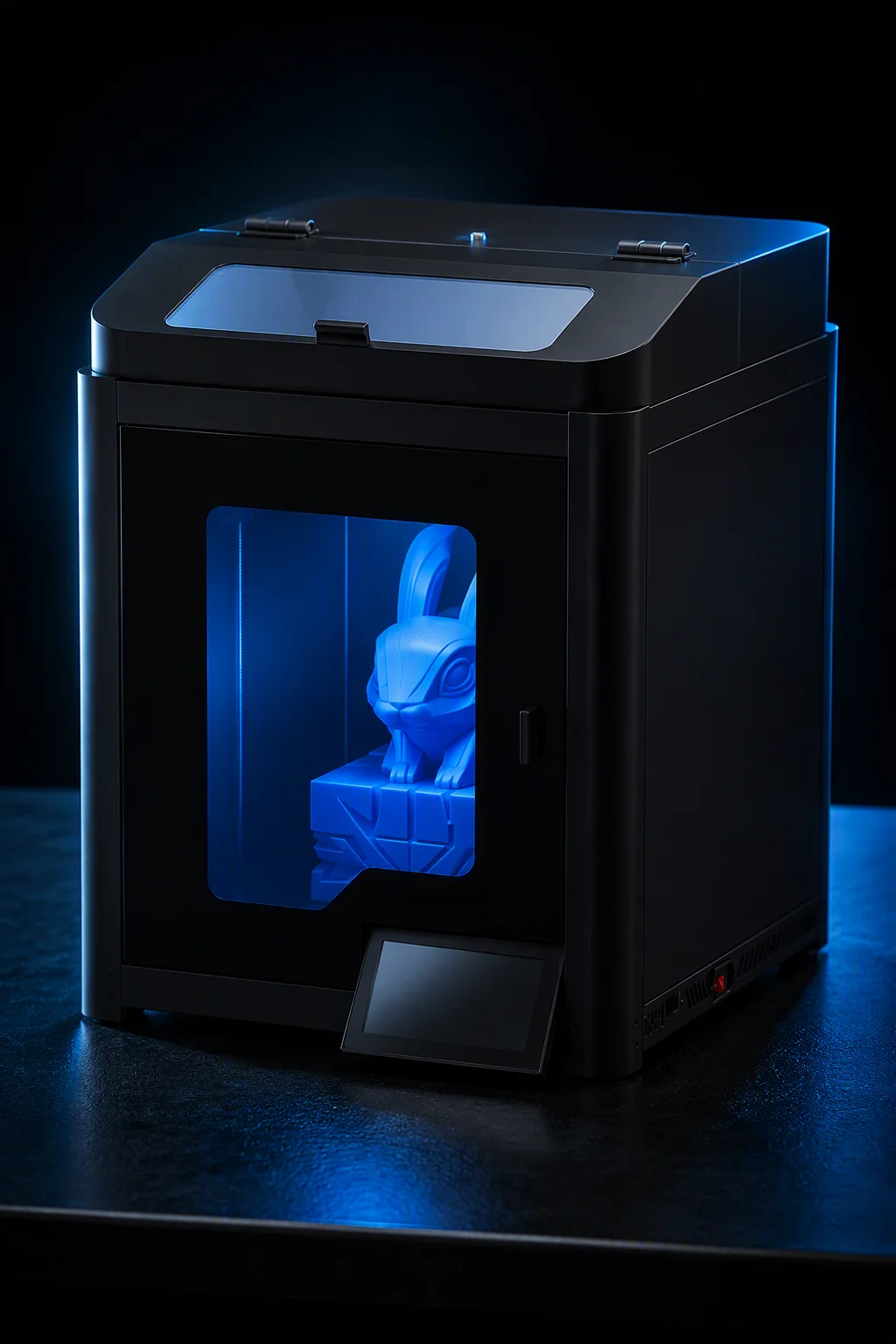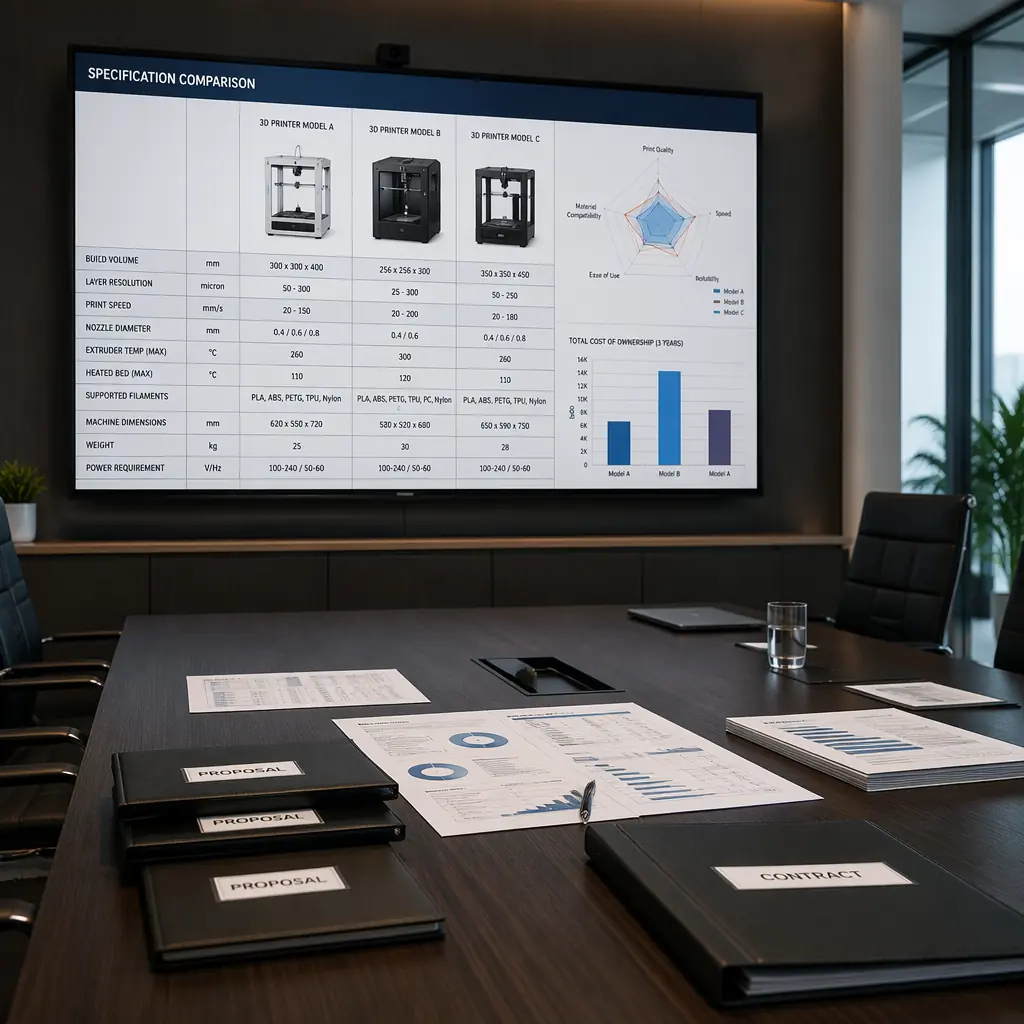
A university issues an RFQ for 60 enclosed 3D printers with a 3-year service contract and training for 12 faculty members. Six distributors respond. Five quote similar printers at similar prices. One wins — not because they were cheapest, but because their proposal looked like it was written by someone who had answered this exact RFQ before. They included a sample curriculum outline, a photo of their training setup, a 5-year TCO comparison table, and reference letters from three other universities. The other five sent a price sheet and a spec table. This guide is about becoming the one who wins.
The insights in this article come from interviews with 12 Precise3D distribution partners who have collectively won over 200 B2B RFQs in education, manufacturing, healthcare, and government sectors. The win rates they report range from 22% (new entrants) to 58% (established distributors with reference portfolios). The gap between 22% and 58% is not luck — it is process.
How Procurement Evaluates Your Proposal (The Hidden Scorecard)
Most RFQ respondents write their proposal as if the buyer reads every word. In reality, the first pass is a 90-second triage by a procurement officer who is checking for disqualification, not evaluating quality. If your proposal fails the triage, nobody reads the rest. The triage checklist in most organizations looks like this:
The pass/fail nature of triage means your proposal's job is first to survive elimination, then to compete. The most common elimination trigger is incomplete documentation — not price. Our partner data shows that 31% of losing proposals were disqualified for missing a required attachment (insurance certificate, financial statement, reference letter) before anyone evaluated the printer specifications.
Checklist tool: Print the RFQ's submission requirements page. Physically tick each item. Digital checklists are too easy to scroll past.
Proposal Structure: The 8 Sections That Procurement Expects
Every winning B2B 3D printer proposal follows the same structure. The sections are not negotiable — procurement departments use them to compare proposals side by side, and if your proposal is missing a section, it is the one they will ask about first (if it has not already been disqualified).
1. Executive Summary (1 page). State your understanding of the buyer's need in their own language. If the RFQ says "we need printers for an undergraduate engineering lab with 300 students per semester," your executive summary should begin with "This proposal addresses the requirement for 3D printers serving 300 undergraduate engineering students per semester." Mirroring their language signals that you read the document carefully — and procurement officers notice this more than any other single factor.
2. Technical Response (3–5 pages). Do not paste your product brochure. Create a requirements-compliance matrix: each RFQ requirement on the left, your printer's specification on the right, with a "Meets/Exceeds" column. For any specification where your printer exceeds the requirement by more than 10%, add a brief "Why This Matters" note. Example: "Build volume 300×300×300mm (Exceeds required 250×250×250mm by 73% by volume). Why this matters: Students can print larger functional prototypes, reducing the need for multi-part assemblies." Our build volume guide has specification comparison frameworks for different procurement scenarios.
3. Pricing Schedule (1–2 pages). Must include: unit price, quantity discount tiers (5+, 20+, 50+, 100+), consumables pricing (filament/resin at bulk rates), shipping cost or incoterms, installation and setup fee, training fee (per session or per person), warranty extension pricing (years 2, 3, 4), and a 3-year or 5-year total cost of ownership (TCO) summary. The TCO table is the single most persuasive element in a B2B proposal — it shifts the conversation from "your printer is $50 more per unit" to "your 5-year cost is $12,000 lower." See our pricing strategy guide for margin frameworks across deal sizes.
4. Implementation and Training Plan (2–3 pages). Include a week-by-week timeline from purchase order to first student print. Specify who delivers training, their qualifications, the training curriculum outline (not just "we provide training" — show the syllabus), and post-training support (office hours, Slack channel, ticketing system). For education RFQs, include a sample lesson plan. This single element converts more education deals than any price discount. The customer training and onboarding guide has full curriculum templates.
5. Warranty and Service Level Agreement (2 pages). Specify: warranty duration (minimum 12 months, competitive bids offer 24–36), response time guarantee (4-hour phone/email acknowledgment, 48-hour on-site if local, 72-hour replacement part shipment), spare parts inventory commitment (list which parts you stock locally), and the escalation path for unresolved issues (name the person — do not say "management team"). Our warranty and returns guide covers SLA construction in depth.
6. Company Profile and References (1–2 pages). Include: years in business, number of printers sold (cumulative), number of B2B clients, three reference cases with contact information (ideally in the same sector — a university wants to see another university reference, not a manufacturing plant), and any relevant certifications (ISO 9001 reseller, authorized distributor letters from manufacturers). If you do not have three references in the RFQ's sector, include the best references you have and acknowledge the gap honestly: "While our education references are in development, we have supplied 200+ printers to the consumer market and have invested [amount] in an education-specific support team."
7. Terms and Conditions (1 page). Payment terms (30% deposit, 70% on delivery is standard; offer net-30 or net-60 for large institutional buyers), cancellation policy, force majeure clause, governing law jurisdiction, and dispute resolution mechanism. Consult a local commercial lawyer for this section — do not copy terms from your website.
8. Appendices. Product datasheets, certification documents (CE/FCC/RoHS), insurance certificates, financial statements (if requested), sample print photos (actual prints from your printers, not manufacturer marketing images), and a sample service report from a past maintenance visit. The appendices are not afterthoughts — they are the evidence that backs up every claim in the proposal. A photo of your technician on-site at a customer's facility calibrating a printer is worth 1,000 words of warranty promises. For visual references in your proposal, see our B2B sales demo playbook.
Pricing Strategy: Why the Lowest Bid Usually Loses
In 30+ analyzed B2B 3D printer RFQs across education, manufacturing, and healthcare, the lowest-priced bidder won only 14% of the time. The bidder with the highest technical compliance score won 52% of the time. The bidder with the most complete proposal (no missing sections, all attachments, clear TCO) won 67% of the time.
The pricing strategy that maximizes win rate is not the lowest price — it is targeted value-add pricing. Quote your standard unit price, then add a line-item discount for "educational institution / volume commitment / multi-year service agreement" that brings your price to the middle of the competitive range. The discount line item demonstrates that you are offering special treatment — even if your final price is the same as a competitor who simply quoted a lower base price with no discount shown.
The discount structure matters more than the discount amount. A 5% "educational institution discount" on a $50,000 order saves the buyer $2,500 — barely noticeable in an institutional budget. But framed as "we value our education partners and offer dedicated pricing," it signals relationship investment. The framing drives the win, not the dollar amount. For discount structures across different deal sizes, see our TCO and ROI calculator and selling to small manufacturers guide.
Post-Submission: The Follow-Up That Separates Winners From Runners-Up
Do not submit your proposal and wait. Procurement departments typically evaluate proposals over 2–6 weeks, and during that window, the evaluators will have questions. The distributors who win are the ones who make themselves available to answer them — proactively.
- Day 1 after submission: Send a brief email confirming receipt of all documents. Attach a one-page "Quick Reference" sheet summarizing your proposal's key numbers: total price, delivery timeline, warranty duration, training hours included. Evaluators use this sheet to fill in their comparison matrix — make it easy for them.
- Day 7–10: Send a short follow-up: "Checking in to see if the evaluation committee has any technical questions. We have an applications engineer available to join a 30-minute call to walk through any specification details." Do not ask "have you made a decision" — offer value.
- Day 21: If no response, send one final check-in. If still no response, move on. Procurement processes are slow, but ghosting after three weeks means you were either not shortlisted or the project was paused. Chasing further damages your professional reputation.
Winning B2B RFQs is not about being the best printer manufacturer — it is about being the best proposal writer. The printer inside the box matters, but the document describing the printer matters first. Every hour invested in proposal quality returns 5–10x in win rate improvement. The margin on a single 60-unit education deal ($12,000–18,000 gross profit) justifies 40+ hours of proposal preparation. Most distributors spend 4 hours and wonder why they lose. For the complete sales process beyond RFQs, see our B2B sales demo playbook and digital marketing guide.
Reviewed by the Precise3D engineering & OEM team. Compliance files that accompany the catalog are auditable at the certification register.
Win More Bids
Precise3D Distributor Support — Proposal Templates, Pricing Data & Reference Cases
Every Precise3D distribution partner receives RFQ-ready proposal templates, compliance matrices, training curricula, and access to our reference case library. We also provide distributor-exclusive pricing that gives you room to discount while maintaining healthy margins. Contact us to discuss partnership terms.