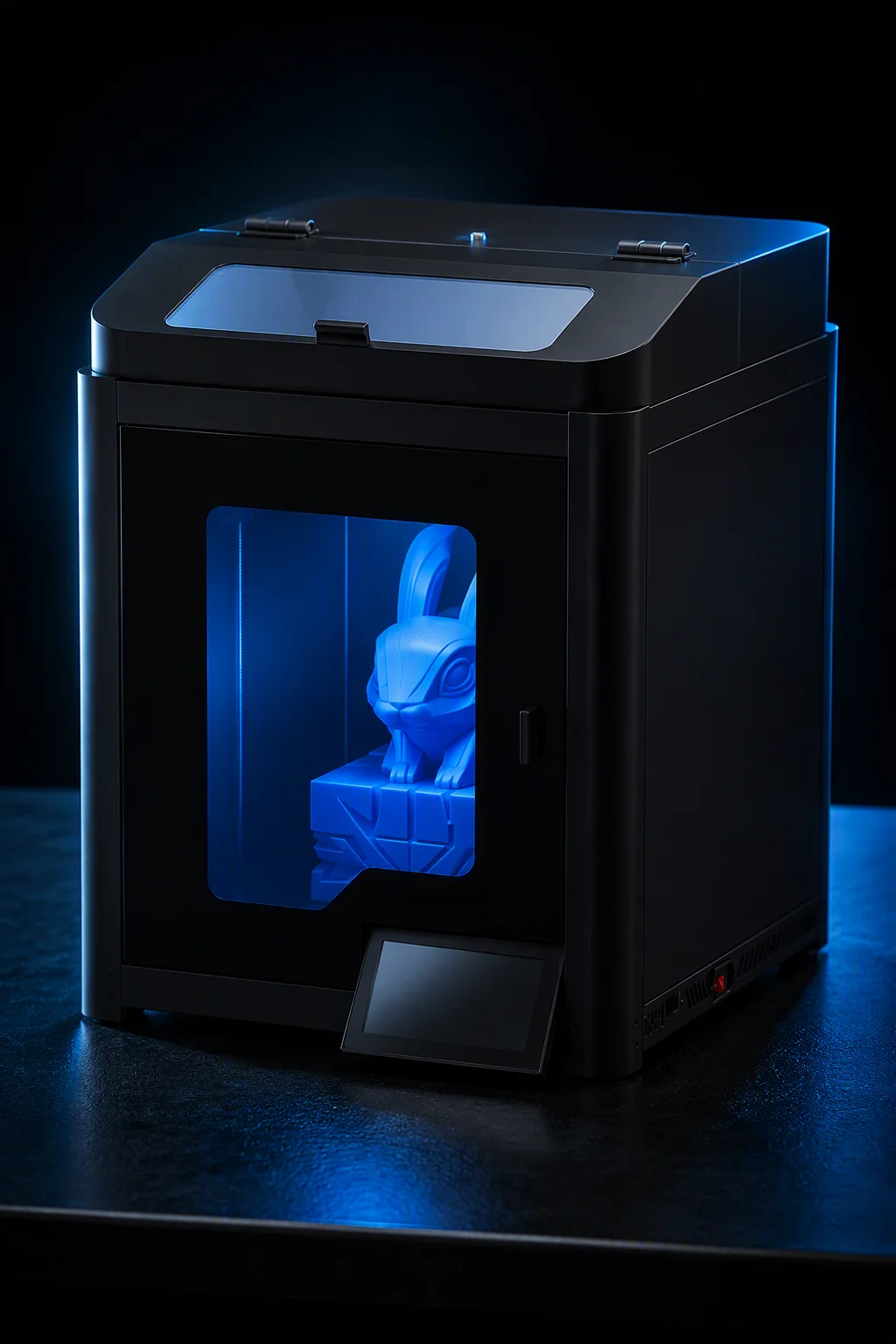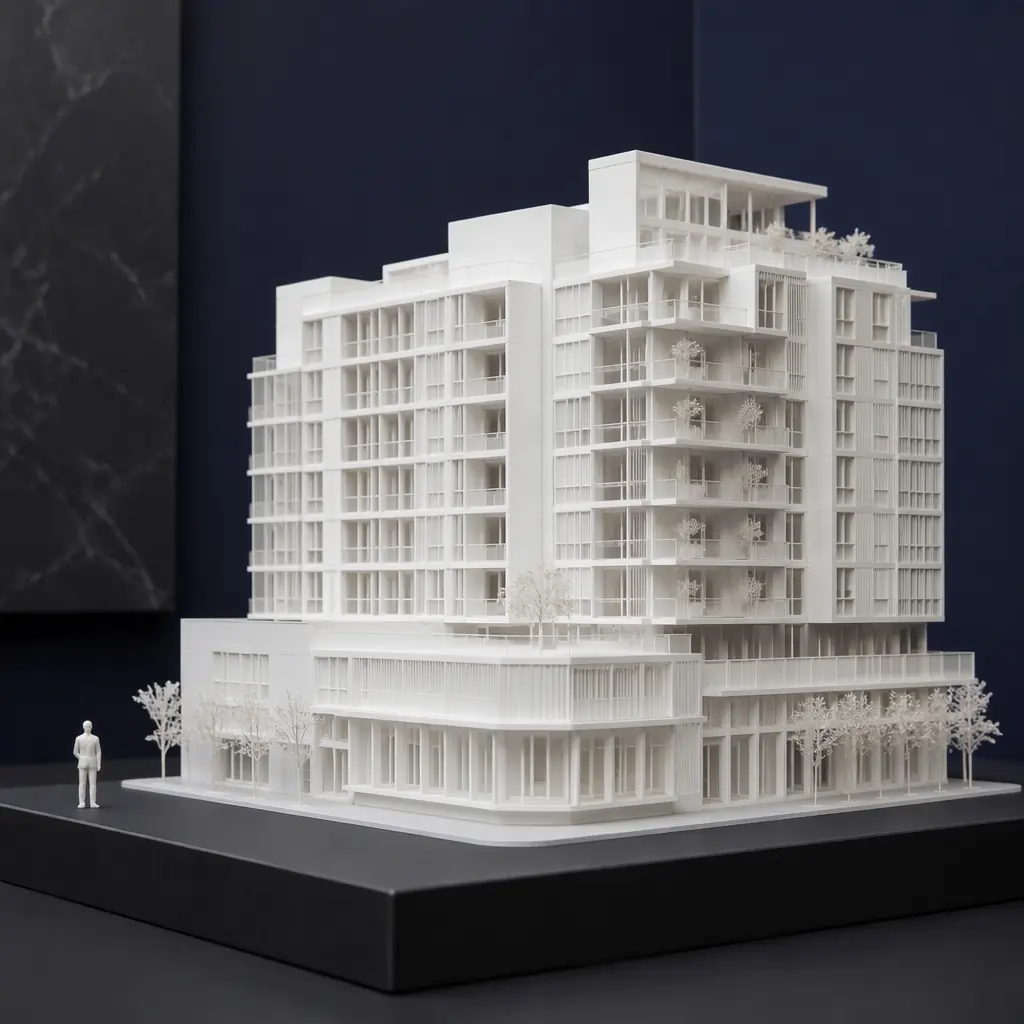
Walk into any mid-sized architecture firm and you will find a dedicated model-making room — usually with a laser cutter, foam board, Exacto knives, and a stack of half-finished presentation models. The dominant tool is still a 30-year-old laser cutter. The dominant material is still foam core. And the dominant complaint from senior architects is still the same: model-making takes too long and costs too much. A single presentation-quality scale model of a mid-rise building, outsourced to a professional model shop, runs $8,000–$25,000 and takes 3–6 weeks to complete. The same model printed in-house on a $500 FDM printer over a weekend costs $120 in filament and takes 40–60 hours of unattended print time.
This article maps the architecture and construction vertical for 3D printer distributors: what firms actually buy, how to structure the printer and filament portfolio, what the sales cycle looks like, and why this vertical produces higher customer lifetime value than education or hobbyist channels. For the portfolio strategy that spans multiple market segments, our portfolio strategy guide covers market segmentation across all verticals.
Why Architecture Firms Buy 3D Printers — And Why Most Distributors Miss Them
Most 3D printer distributors target makers, educators, and engineers. Architecture firms do not fit neatly into any of those categories — they are neither hobbyists nor industrial manufacturers — so they get overlooked. This is a mistake. The global architecture services market is valued at $360 billion. An estimated 35,000 architecture firms operate in the US and EU alone. Fewer than 5% of these firms currently own a 3D printer for in-house model production. The remaining 95% are either outsourcing models at high cost or building them by hand with foam board and glue.
The architecture buyer is different from other verticals in three critical ways:
The sales pitch to an architecture firm is not about print speed or build volume. It is about project turnaround time and client win rate. A firm that can produce a physical scale model in 48 hours wins more pitches than a firm that shows renderings on a screen. The printer is not a printer — it is a business development tool. Frame it that way, and the price becomes irrelevant.
What Architects Actually Print: The Five Applications
Architecture firms use 3D printers for five distinct applications. Each application demands different printer capabilities, different materials, and a different sales conversation:
The typical architecture firm's first printer purchase is for massing models and presentation models — applications 1 and 2. Within 6–12 months of their first printer, firms that have integrated 3D printing into their workflow typically expand into applications 3–5. The distributor's revenue path: sell one printer for $500–$800, sell 2–3 more within the first year, and establish a recurring filament and parts revenue stream of $600–$1,200 annually per machine. For guidance on the consumables revenue model, see our consumables bundling strategy.
The Printer Portfolio for Architecture: What to Stock and Recommend
Not every printer in your catalog is right for an architecture firm. The ideal architecture printer portfolio covers three tiers that match the firm's growth path:
The most common first sale is the entry tier — but the highest-value relationship is the firm that upgrades through all three. A single architecture firm that buys one entry printer, then two mid-tier printers, then a large-format pro machine generates $4,000–$6,000 in hardware revenue and $2,000–$3,000 in annual consumables revenue over a 3-year relationship. Compare this to a hobbyist customer who buys one $300 printer every 3 years and $100/year in filament. The architecture vertical delivers roughly 10× the customer lifetime value — and the firms actively refer each other. For the product lineup that serves multiple tiers, see our build volume selection guide.
Sales Strategy: How to Reach Architecture Firms
Architecture firms do not browse Amazon for 3D printers. They do not attend maker fairs. They do not read 3D printing forums. The traditional consumer 3D printer marketing channels completely miss this buyer. To reach them, you need to go where they already are:
Architecture industry events.
The American Institute of Architects (AIA) Conference on Architecture draws 15,000+ attendees annually. Regional AIA chapter events happen monthly in every major US city. A distributor who exhibits at one AIA chapter event with a printer running live architectural models will generate more qualified architecture leads in one day than six months of online advertising. The printer running a detailed building model is the booth — everything else is conversation.
Revit-to-print workflow demonstration.
Architecture firms live in Revit, Rhino, and SketchUp. Their single biggest hesitation about 3D printing is: "Will this work with our existing software?" The answer is yes — all three export STL files natively — but showing is better than telling. Create a 5-minute screen recording of a Revit model being exported, sliced in Cura with architecture-optimized settings (0.12mm layer height, 15% gyroid infill, tree supports), and printed. Send this video to every architecture firm you pitch. It answers the technical objection before it is raised. For slicer guidance that distributors can pass to customers, our slicer software guide covers the full toolset.
Sample kit delivery.
Mail a small printed architectural detail — a 150mm×150mm facade section with window mullions, printed in matte white PLA — to the office manager or design director of 20 architecture firms in your region. Include a note: "This facade detail was printed on a $499 machine in 6 hours. Your next client presentation model could be ready in 48 hours." The physical object does what no email or brochure can do — it lets the architect hold the quality in their hands. The cost: roughly $2 per sample in materials + $5 shipping. Twenty samples = $140 in marketing spend. If two firms convert to entry-tier printer purchases, that is $1,000 in revenue against $140 in marketing — a 7:1 return.
Filament Portfolio for Architecture: White Is Not Just White
Architecture firms are particular about color — far more than any other customer segment. A massing model printed in bright white PLA looks like a toy. The same model printed in matte warm white or marble-filled PLA looks like a professional presentation piece. The filament selection for architecture is narrow but specific:
A 5-printer architecture office consumes approximately 8–12 kg of specialty filament per month — roughly $200–$350 in recurring filament revenue at typical distributor margins. The filament lock-in is strong: architecture firms are risk-averse about material changes. Once they calibrate their printers for your matte white PLA and get consistent presentation-quality results, they will not experiment with a different brand. The switching cost is not the filament price — it is the 2–3 hours of re-calibration and test prints. For the full filament product strategy, see our filament stocking guide.
The Competition: What You Are Really Selling Against
The competitor for a 3D printer sale to an architecture firm is not another printer brand — it is the outsourced model shop and the status quo of foam board models. The outsourced model shop charges $8,000–$25,000 per model with a 3–6 week lead time. The in-house foam board model costs $200 in materials but takes 40–80 hours of skilled labor — an architect billing at $150/hour is effectively burning $6,000–$12,000 in billable time to build a model by hand.
Against both of these, the 3D printer wins on economics. But it loses on one thing: the architect does not yet know how to get from Revit to a printed model. That knowledge gap — not the printer price — is the real barrier to sale. The distributor who bridges it with a 5-minute video, a printed sample, and a promise of 30 minutes of phone support during the first print wins the account. The distributor who ships a box and an instruction manual loses to the outsourced model shop by default.
The construction formwork opportunity is even larger and even less contested. Concrete construction is a $600 billion global industry. Custom formwork — the molds used to cast concrete into architectural shapes — is traditionally made from timber and plywood by skilled carpenters. 3D printed formwork can produce complex geometries that are impossible in timber, at 30–50% lower cost, in 24–48 hours instead of 2–3 weeks. A single construction project might require $15,000–$50,000 in custom formwork. Capturing even 1% of that spend with 3D printed molds represents a substantial revenue stream for the distributor who can position themselves as a formwork supplier, not just a printer supplier.
Reviewed by the Precise3D engineering & OEM team. Compliance files that accompany the catalog are auditable at the certification register.
Enter the Architecture Vertical
Get the Architecture Vertical Sales Kit
Precise3D distributors receive our complete architecture vertical package: sample STL files for demonstration prints, the Revit-to-print workflow video, recommended printer and filament bundles, and a list of AIA chapter events in your region. Start selling to the firms that need what you already stock.