Why Documentation Beats Logistics as the Common Failure Point
Most distributors assume the hard part of an import is the shipping itself — the container, the routing, the schedule. In practice the schedule is the easiest variable to manage. The point where a cargo sits is the point where the documents do not match, because customs systems are rule-based and they check documents, not intent. A single mismatch is enough to flag a consignment for review, and review means delay and often a fee.
The good news is that the document set for a 3D printer shipment is small and standard. Get it right the first time and the cargo clears normally. The rest of this article walks through each document, what it proves, and the errors that most often get a container pulled. For the freight and container side that the paperwork supports, our shipping 3D printers from China guide and our Incoterms 2020 guide are the companion reads.
The Core Export Document Set
Here is the full set, in the order a customs broker will ask for it. Not every shipment needs every document, but a cross-border 3D printer order usually touches most of them.
Each document answers a specific question customs has, and the questions stack. The invoice says what was sold; the packing list says what is actually in the cartons; the bill of lading says who owns the cargo; the certificate of origin says where it was made; the HS code says how it is taxed and whether it needs a license. If any two of these disagree, the system treats the discrepancy as a red flag. For the payable side of the order, our MOQ & payment terms guide is the reference.
The Commercial Invoice: Where Most Mismatches Start
The commercial invoice is the anchor document, and nearly every customs discrepancy traces back to it. It must match the packing list on item count, weight and value; it must state the Incoterm; and the declared value must be defensible. A common trap with 3D printers is a value that includes or excludes accessories differently than the packing list counts them — nozzles, filament, spare parts and tool kits that are bundled in but not itemized separately.
Another regularity to respect: the invoice value should be the real transaction value. Under-declaring to reduce duty is routinely flagged and carries penalties disproportionate to the saving. For the trade-term and cost-allocation side that the invoice states, our Incoterms guide explains how FOB, CIF and DDP change what appears on the invoice page.

Packing List and Marks: The Physical Match
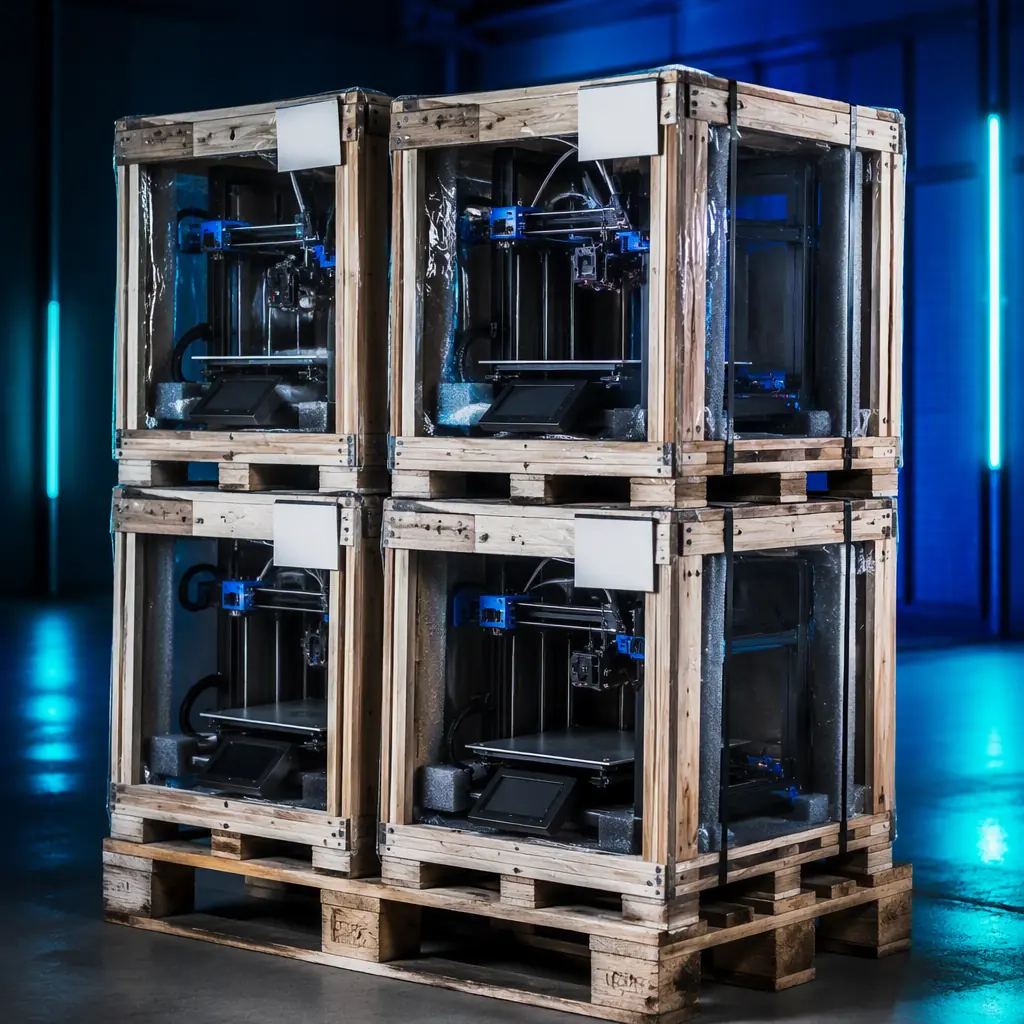
The packing list is the physical counterpart to the invoice. It enumerates every carton, its dimensions, gross and net weight, the quantity inside, and the shipping marks on the outside. The marks matter more than distributors expect: customs and the freight forwarder match the marks on the crates to the marks on the packing list. If a carton is stamped differently or a box is missing its mark, the whole consignment can be held while it is reconciled.
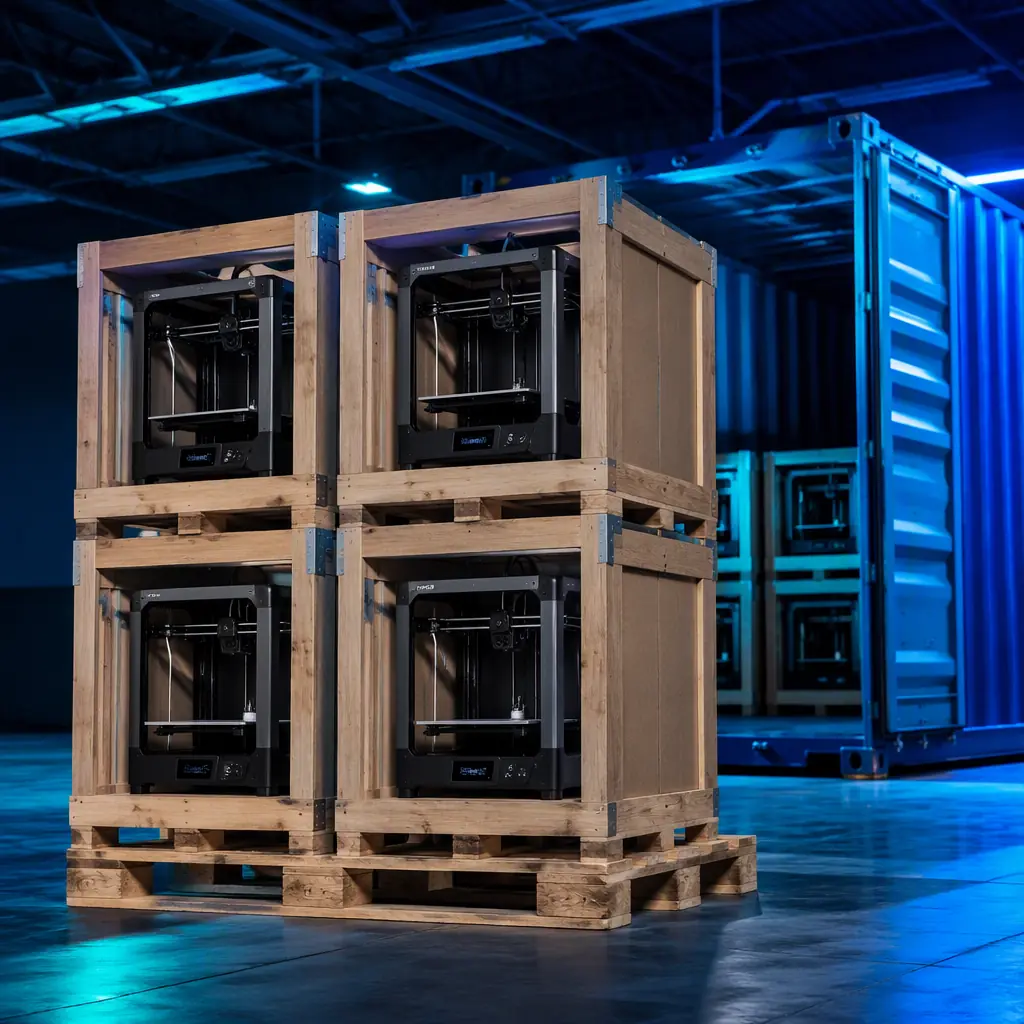
For a heavy machine like a 3D printer, the packing list is also where you confirm each unit is individually crated and how the quantities break out. For the crate specification and load-stability details that protect a machine at sea, our crating & packaging guide is the reference.
Bill of Lading vs Air Waybill
The bill of lading (for sea freight) or air waybill (for air freight) is the document of title for the cargo and the contract of carriage. It names the shipper, the consignee, the ports, the vessel or flight, and the number of packages. Because it is a title document, the way the consignee and notify party are filled in determines who can take delivery — and getting it wrong means the cargo goes to the wrong company or sits at the port.
A distributor should confirm the bill of lading details before the vessel sails, not after. Corrections after it is issued cost money and time, and a release against a bl’ is exactly the kind of detail that derails an otherwise clean shipment. For the supply-chain and risk side, our supply chain resilience guide and our insurance & liability guide position the shipment in the wider picture.

Certificate of Origin and Preferential Tariffs
The certificate of origin (CO) states where the goods were manufactured, and it is often the difference between a high duty rate and a preferential one. Under many trade agreements, a qualifying certificate of origin unlocks a reduced or zero tariff. Under the certificate’s absence, the same cargo may pay the full standard rate. For a distributor sourcing from China, this is frequently the single largest controllable cost lever in the whole shipment.
There are different forms — a standard CO issued by a chamber of commerce, or a preferential form under a specific trade agreement — and using the wrong one means the preference is not applied. This is a case where a little verification pays for itself many times over. For the tariff and duty classification that the CO interacts with, our HS codes, tariffs & customs guide is the reference.
HS Code: The Classification That Drives Everything
Every cross-border shipment is classified under an HS code, and the code drives the duty rate, the trade-agreement eligibility and, in some markets, whether the goods need licensing at all. A 3D printer can be classified in more than one way depending on its features — a general-purpose machine versus a specifically-designed industrial machine versus something that carries a printing function — and the classification you choose changes the whole cost model.
Misclassification is both common and expensive. It can overstate duty, understate it (risking a penalty), or route a shipment through the wrong licensing channel. Validate the HS code against the product specification and, ideally, against a binding ruling in the destination market. For the export-control dimension that exists on top of tariffs for certain end uses, our ITAR & EAR export compliance guide is essential reading.
Export License and Compliance Declarations
Not every shipment needs an export license — most consumer-grade 3D printers move under a general license or as low-risk dual-use goods. But the moment the cargo is destined for a controlled end use or a sanctioned buyer, a license or a formal export declaration can switch on, and the exporter, not the factory, carries the liability. This is precisely where a distributor should screen the buyer and the end use before quoting, not after the goods are on the water.
The documentation here is not an invoice line; it is a legal obligation, and getting it wrong can be far costlier than the shipment itself. For the screening and record-keeping that protect you, our export compliance guide walks through the distinction and the steps. For the partner and sourcing decision, our B2B marketplace sourcing guide and our RFQ & proposal playbook cover the vendor side.
Common Documentation Mistakes That Hold a Con
These are the errors that most often stop a shipment, and they are all preventable with one review pass before the cargo leaves the dock.
- Invoice and packing list disagree on count, weight or value — the #1 source of holds.
- Missing or wrong shipping marks on the crates, so the forwarder cannot reconcile the load.
- Wrong HS code, which either overstates duty or flags the shipment for review.
- No certificate of origin when a preferential tariff was expected, or the wrong form.
- Bill of lading consignee or notify party filled in incorrectly.
- Incoterm not stated, or the stated term doesn’t match who is clearing customs.
- Value under-declared to save duty — always the riskiest move, with penalties that dwarf the saving.
The discipline is a single pre-flight checklist signed off before booking freight. Do that and the border becomes a formality rather than a gate. For the regional requirements that vary the document set by market, our regional market entry guide is the reference.
What you're looking for: If any two of those documents disagree, or the HS code or CO has not been verified, the container is at risk of a customs hold and accruing demurrage. Fix these before the vessel sails, not after the cargo arrives at the border.

How Precise3D Ships With a Clean Document Trail
We export 3D printers from our production network in Shenzhen, where a 3,500 sqm facility runs four assembly cell groups and a dedicated burn-in line. Every printer is powered and print-tested before packing, and our shipping page sets out the exact documents that travel with an order — the commercial invoice, packing list and certificate of origin, along with CE (LVD) and RoHS compliance reports you can verify online by report number on the third-party laboratory’s public database.
Because we quote on clear Incoterms and pre-build the document set, our partners clear cargo with fewer surprises. Custom branding — logo silkscreen, firmware interface, packaging and spec adjustments — starts at 100 units, and sample orders of one to five units ship at wholesale pricing for you to test in your own market first. If you are evaluating the document side of a new partnership, the fastest honest route is a sample order; see our supply chain guide and our shipping logistics guide for the full picture.
Reviewed by the Precise3D engineering & OEM team. Document requirements vary by destination country and by the goods’ classification; confirm the exact set and HS code against the importing market’s customs authority before shipping. Auditable compliance backing is held in the certification register.
Ship Without Surprises
Ready to Import 3D Printers on a Clean Document Trail?
Join our network of global distributors. Clear Incoterms, a pre-built export document set, print-tested machines and third-party CE & RoHS reports on file — so your cargo clears customs on the first pass, not the third.