
Why Incoterms Is the First Line on a Distributor Quote
Incoterms (International Commercial Terms) is the published set of rules the International Chamber of Commerce maintains to answer one question: at which point in a shipment does the risk and the cost of moving goods pass from seller to buyer? There are eleven terms in the 2020 edition, grouped into four families (E, F, C, D), and each one assigns a different balance of freight, insurance, customs and risk. For a distributor, the choice is not academic. It is the difference between a landed-cost you can defend and a surprise charge that lands on your account because you never said who was liable.
The practical trap is that most buyers assume a price is "delivered" unless you say otherwise. A distributor who quotes an EXW (Ex Works) price and says nothing may find a buyer who expected global freight, marine insurance and import clearance included. The fix is to state the Incoterm and the named place on every quote in writing. For the freight and container math behind the numbers, our shipping 3D printers from China guide and our HS codes, tariffs & customs guide are the companion reads.
The Four Incoterm 2020 Families, Summarized
You do not need to memorize all eleven rules to quote well. You need to understand the four families, because the term you choose for a given order will almost always be one from each family depending on whether freight, carriage and insurance are on you or on the buyer.
There is a real asymmetry worth internalizing: in the F and C families, risk transfers at the port of origin (or the named carrier), even though the seller pays the main carriage under C. That means under CIF the seller buys the ocean freight and the marine insurance, but the buyer assumes the risk of the cargo the moment it is aboard the vessel. Insurance is not the same as risk transfer — a fact that surprises more importing buyers than it should.
FOB vs CIF: The Two Palettes Most Buyers Ask For
FOB (Free On Board) and CIF (Cost, Insurance & Freight) are the two terms that dominate printers and other heavy, ocean-shipped goods, and they differ in exactly one respect: insurance. Under FOB the buyer organizes the ocean carriage and arranges its own insurance; under CIF the seller pays for the freight and the marine insurance to the destination port. For a 3D printer, which is heavy, boxed and easily worth a five-figure consignment, the insurance difference alone can run hundreds of dollars per container.
Both terms stop at the destination port — neither includes import customs clearance or inland delivery. If the buyer wants the printers delivered to a warehouse with duties and VAT handled, that is a D-term (usually DAP or DDP), not FOB or CIF. For the packing and crate specification that protects a heavy machine in a shared container, our crating & packaging guide covers the physical side.
EXW: The Cheapest Fault Line in World Trade
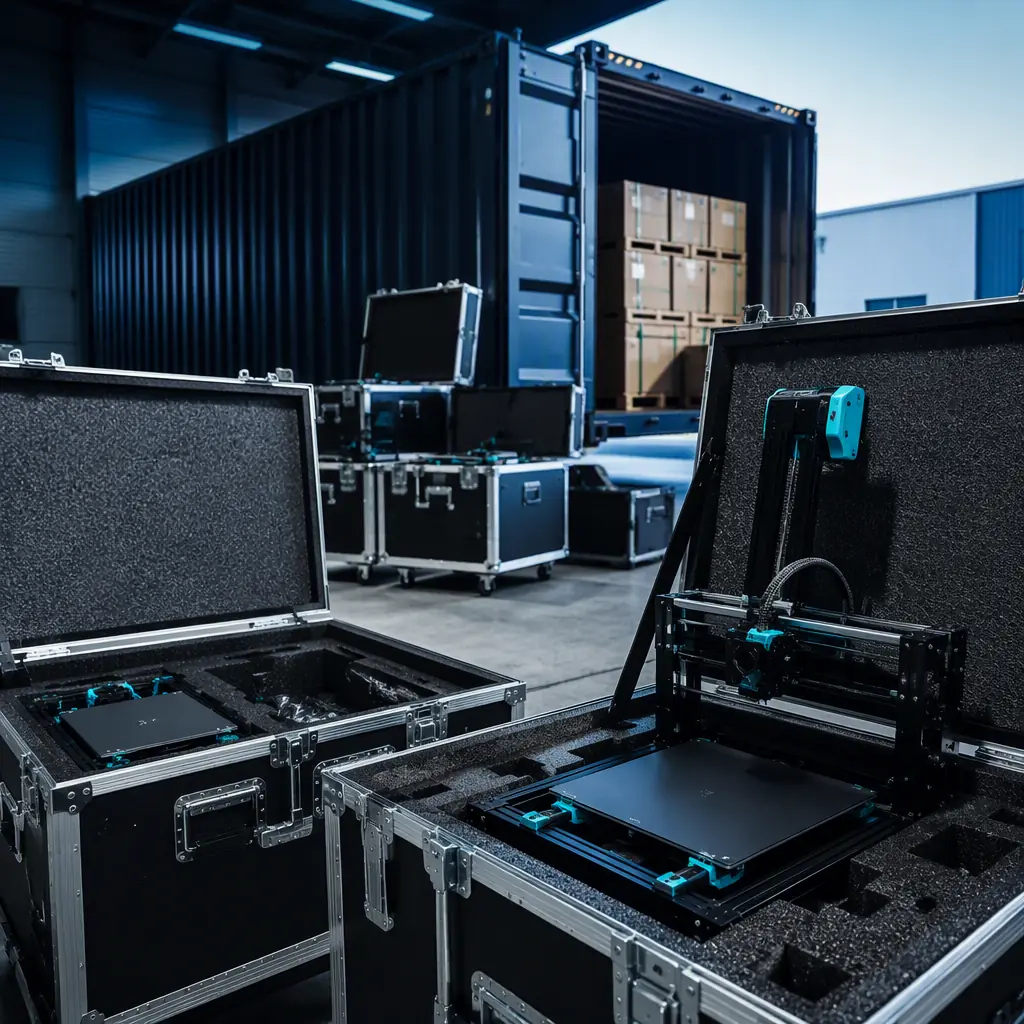
EXW (Ex Works) looks like the simplest option — the buyer picks up the goods at the seller's door and pays for literally everything after that — and it is the term where the largest share of importer mistakes happen. On paper it gives the buyer total control of freight. In practice it transfers the risk of the entire journey, the export clearance, and every step of the logistics onto a buyer who may not have a freight forwarder on the ground in China.
For a distributor buying from an overseas OEM, EXW is only rational when you already have a forwarder collecting from the factory and you want to squeeze the margin out of the freight. If you do not, FCA or FOB with the factory fronting the export clearance is far safer. For the broader channel and pricing decisions that surround an import, our MOQ & payment terms guide and our RFQ & proposal playbook are the references.
DAP and DDP: When the Seller Does Everything
DAP (Delivered At Place) means the seller delivers to the buyer's named destination, ready for unloading, but the buyer handles import clearance and pays duty and VAT. DDP (Delivered Duty Paid) goes one step further: the seller is on the hook for import clearance, duty, VAT and the risk all the way to the door. On paper DDP is the most buyer-friendly term in the book.
In practice DDP is also the term that most often blows up a quote. Import VAT and duty vary by country, and the seller must register for VAT in the destination country to clear the goods. A DDP quote is therefore only as good as the seller's knowledge of the destination market's duty and tax regime. For a distributor, the safer negotiation is usually DAP for a big consignment and a crystal-clear written split of who pays which line item. For the partner and market-entry side, our regional market entry guide and our supply chain resilience guide map the territory.
The Cost-Allocation Table That Settles a Quote
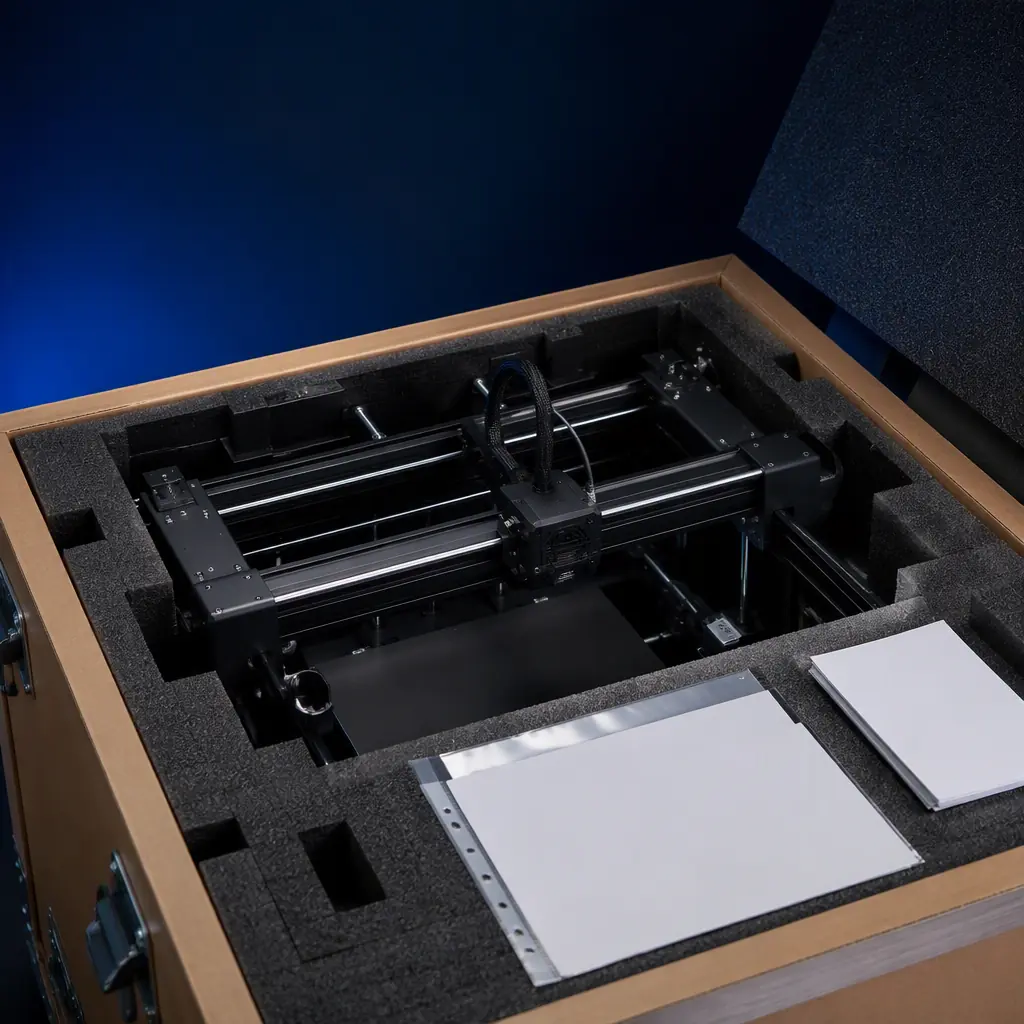
Here is the single table that resolves most Incoterm arguments. It shows, for the five terms you will actually use, who pays and who carries the risk at each stage. Reading it once is more useful than a month of threaded email.
Under FOB the seller is responsible for export clearance and loading at origin, then responsibility hands to the buyer for the ocean leg. Compare that to DDP, where the seller carries every line down to import duty and VAT. The margin between FOB and DDP on a container of printers is often the single largest cost spread in the order — which is exactly why the term belongs in writing on the first quote, not the third email.
Insurance, Customs and VAT: The Three Line Items That Break Quotes
Freight and insurance are the visible parts of a landed cost; clearance and tax are where margin quietly disappears. Import duty depends on the HS code your machine is classified under, and VAT is normally due at the port even before the goods clear. Because these amounts are market-specific, a distributor should model them per destination rather than applying one flat markup.
Two things protect a distributor here. First, get the HS classification right up front — the code drives both the duty rate and, in some markets, licensing. Second, decide who clears customs before you ship, not after. For the classification and tax side, our HS codes & customs guide is the reference, and for the export-control dimension that can gate an end use, our ITAR & EAR export compliance guide is essential reading.
A Decision Framework: Which Term Should a Distributor Quote?
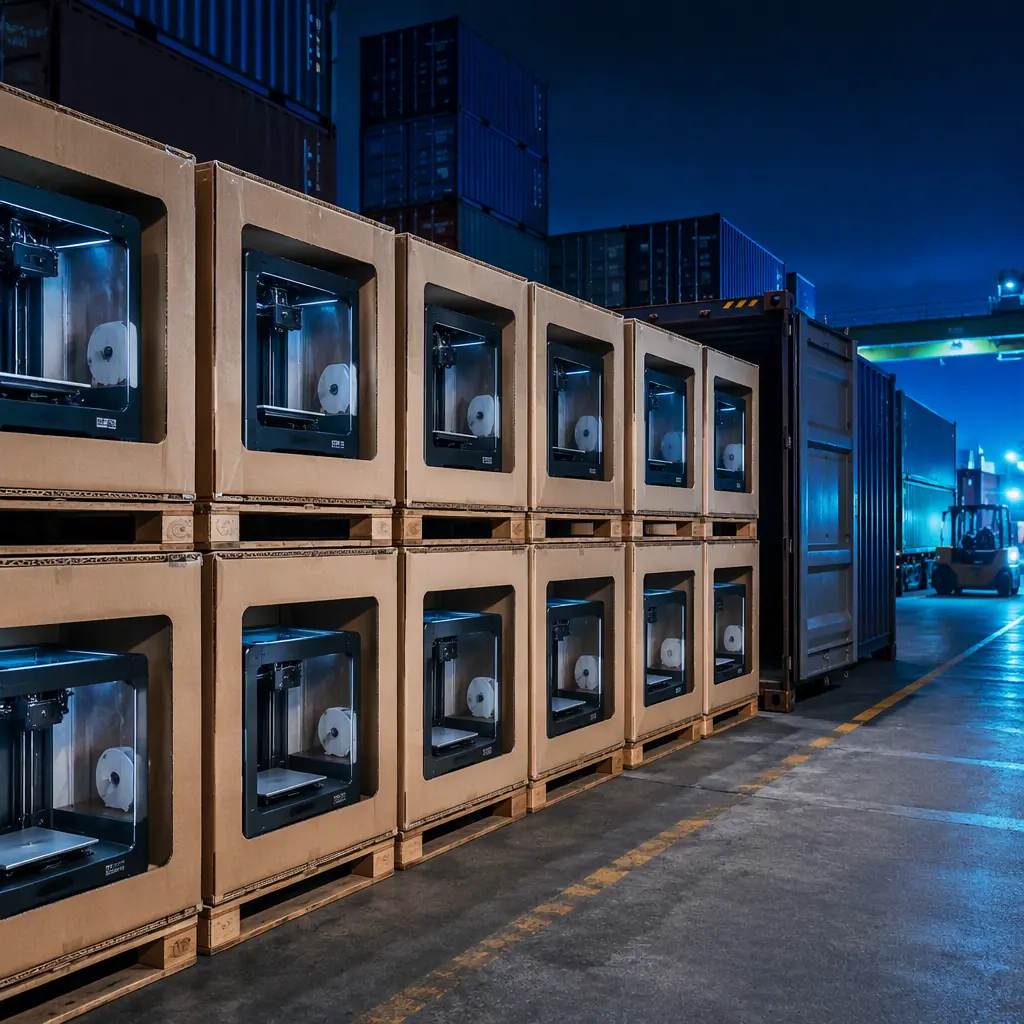
There is no single correct Incoterm; there is a correct Incoterm for a given relationship and a given destination. The framework below is how a distributor makes the call in under a minute.
- You have your own forwarder at origin → FCA or FOB. You control the freight and keep the margin.
- You want the seller to own the transit risk → CIF or CPT. But remember CIF still transfers risk at the vessel — insurance is not a risk transfer.
- The buyer is new or you are unsure of the destination market → DAP, with a written split of duty, VAT and clearance.
- You are quoting a full landed cost to a retail or education buyer → DDP, but only if you can clear VAT in-country. Otherwise quote DAP and be explicit.
- You are competing on price → FOB or EXW, and make the buyer's total obligation unmistakable in writing.
A distributor who can hold this conversation fluently is quoting on margin, not on guesswork. That is the difference between landing an order and losing it on a freight shock. For the payment and financing side that sits next to the Incoterm decision, our payment terms guide and our insurance & liability guide close out the commercial picture.
What you're looking for: If the answer is not a named place with a named party on paper, the quote is ambiguous and you will absorb a surprise line item. If risk transfers at the port but your buyer assumed delivery to the door, you have mis-set expectations → restate the term in writing before you book freight.

How Precise3D Handles Trade Terms
At Precise3D we work with B2B distributors across Europe, North America, South America and Asia. Our production network in Shenzhen builds in a 3,500 sqm facility with four assembly cell groups and a dedicated burn-in line, and every printer is print-tested before packing. Because we understand that trade terms decide who owns the risk, our shipping page spells out exactly which Incoterms we quote, how we pack, and what documents travel with an order — so the term and the freight are decided before you spend a dollar on a quote, not after.
If you are evaluating us as an OEM or white-label partner, the fastest honest path is a sample order: one to five units at wholesale pricing, tested in your own market before you commit. Custom branding — logo silkscreen, firmware interface, packaging and spec adjustments — starts at 100 units. Our compliance file ships with each machine: CE Low Voltage Directive (LVD 2014/35/EU, EN 62368-1:2014+A11:2017) and RoHS (EU 2015/863), both third-party verifiable online by report number. For the paper trail behind an order, see our export compliance guide and our shipping logistics guide.
Reviewed by the Precise3D engineering & OEM team. Incoterm 2020 rules are as published by the ICC; cost and risk allocation reflect the standard 2020 text and should be confirmed against the destination country's import regulations. Auditable quality and compliance backing is held in the certification register.
Quote With Confidence
Ready to Source Printers on Clear Trade Terms?
Join our network of global distributors. Transparent Incoterms, full export documentation, print-tested machines and third-party CE & RoHS reports on file — everything you need to quote a landed cost you can defend.