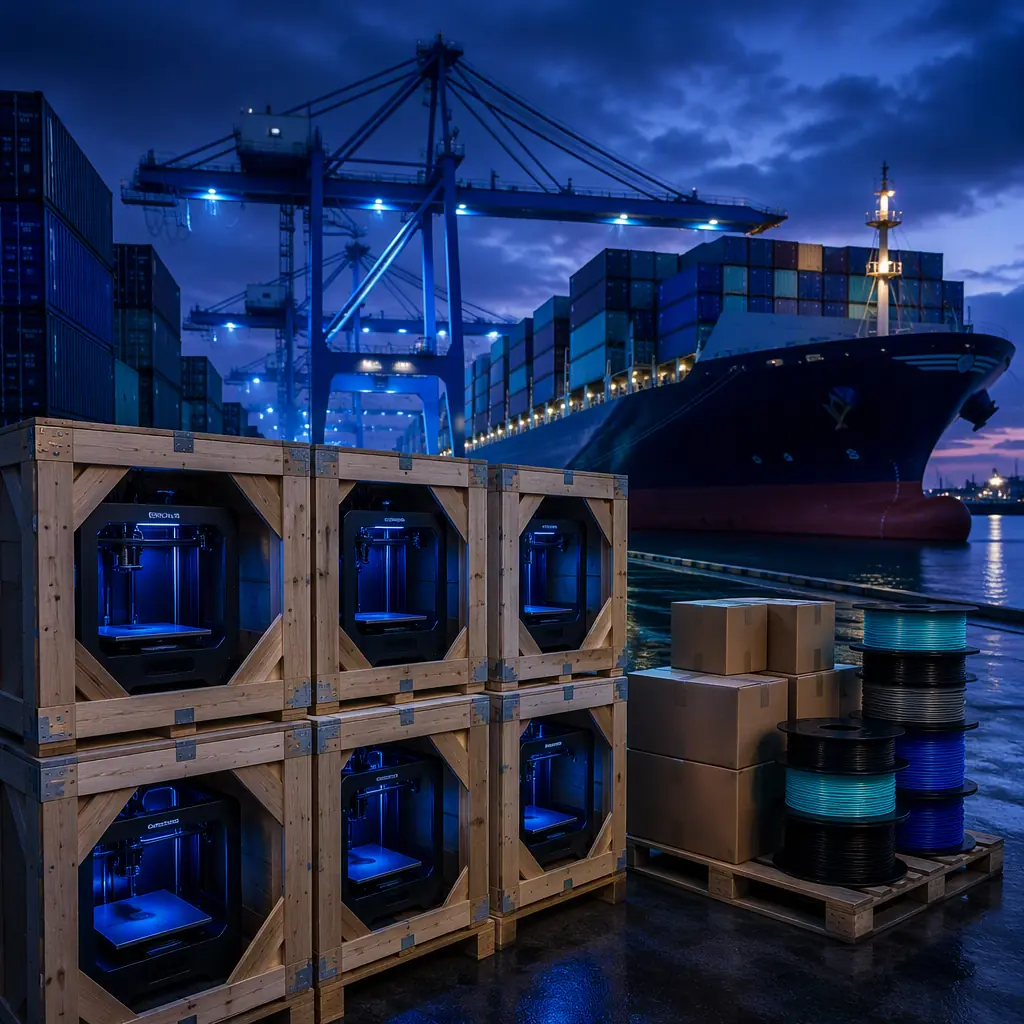
Why Temperature and Humidity Matter in Transit
Most of what degrades in a shipment does not fail loud. Filament that absorbed moisture prints with stringing and bubbles; resin that saw a cold leg prints brittle and thixotropic; an electronics board that condensed weeks after packing can short out on the customer's first power-up. None of these show up at the packing station — they incubate over weeks in a sealed, cycling environment. The risk is not a single extreme; it is the repeated heating and cooling that drives condensation and moisture migration.
Three channels carry most of the damage: thermal, humidity and mechanical. If a distributor designs the packing and the routing against all three, the product arrives like it left the factory. For the broader logistics picture behind an international order — container, customs and duties — our shipping 3D printers from China guide is the anchor reference.
The Three Things That Degrade in a Container
Not every product takes the same hit, and the first step is to classify what you are actually shipping.
The resin and the filament are the two that fail most often, because their tolerances are narrow and their value is concentrated. A resin that crystallizes in transit is not recoverable by warming — it is a write-off. For the storage-side cousin of this problem, our filament drying & storage guide covers how to manage material once it has arrived.
Resin: Shelf Life, Viscosity and Freeze-Thaw
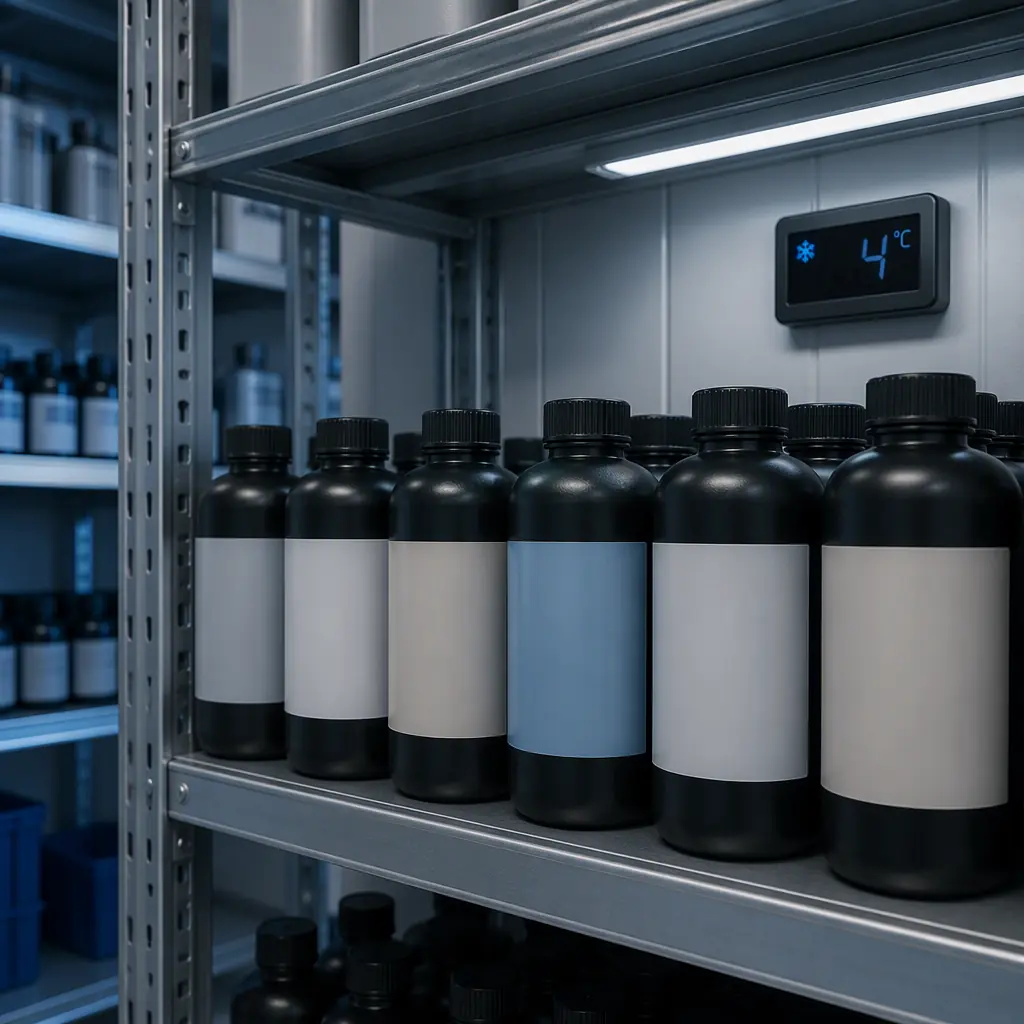
Photopolymer resin has a limited shelf life — commonly 12-24 months from manufacture — and its viscosity is temperature-sensitive. Below roughly 15 °C it can thicken, and if it crosses a freezing point the oligomers and photoinitiators can separate and crystallize. A resin bottle that has been frozen and thawed often will not print to the same quality, and in some formulations the damage is permanent. The commercial implication is blunt: a distributor who buys resin on an ocean leg into a winter port is buying a product that may be partially degraded before it is unloaded.
The answer is to specify the transport window up front and to store resin away from cold walls and floors, ideally upright and in a stable 20-25 °C area. For the resin-printing ecosystem and how it ties into a distributor's portfolio, our resin 3D printer distribution guide is the reference.
What you're looking for: If the box sat through a cold leg without a eutectic pack or insulated liner, assume the viscosity has shifted. Test a small print or check the viscosity before you sell the full batch → at the first sign of crystal or thickening, quarantine it rather than ship a marginal product to a customer.
Filament: Moisture Uptake and Warping in Transit
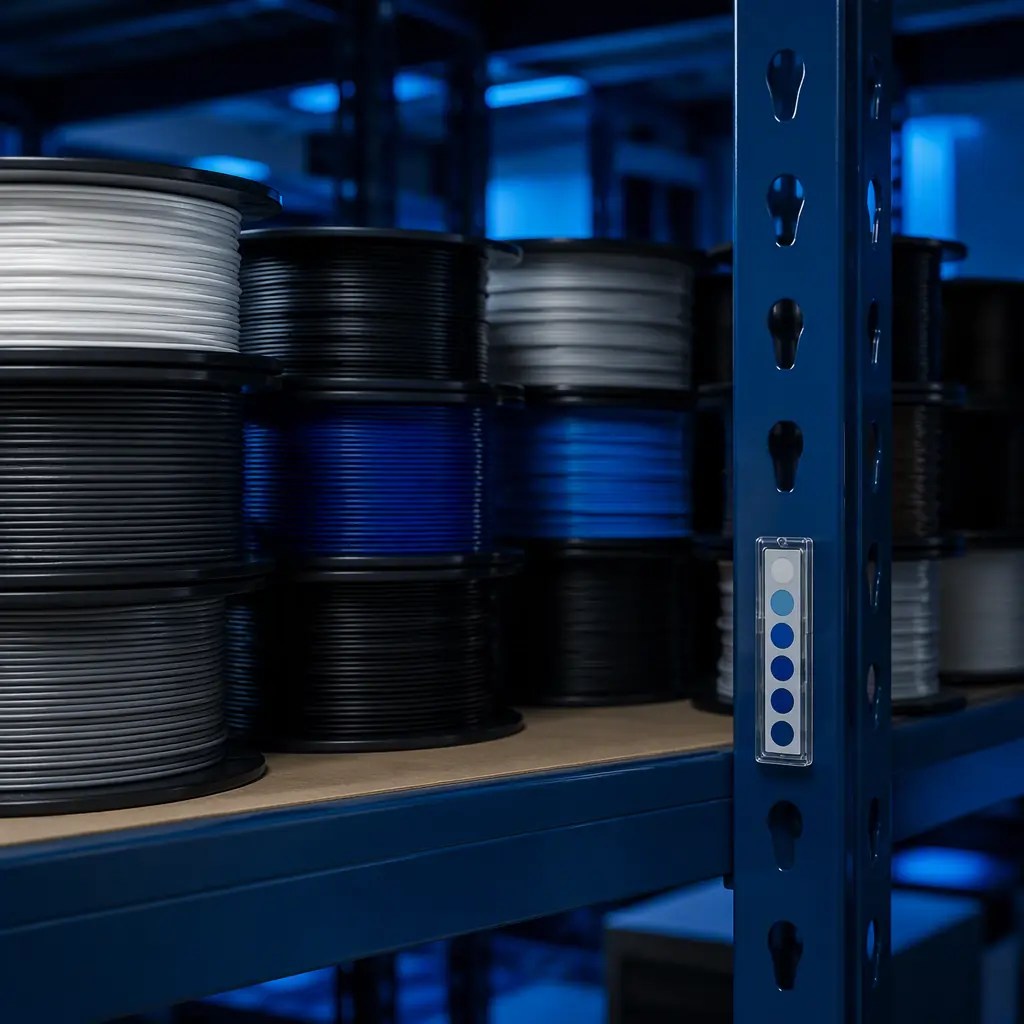
Engineering filament above all is hygroscopic. Nylon, PETG, PC and most filled compounds pull moisture from the air, and even a well-wound spool left in a high-humidity container for a month can pick up enough moisture to print with bubbles, stringing and degraded interlayer adhesion. A common mistake is to assume a vacuum-sealed bag protects the filament — but if the bag arrives punctured, or if the desiccant is exhausted, the protection is gone and the filament is quietly absorbing moisture on the shelf.
Notice that drying the filament on receipt is not an admission of a bad shipment — it is a standard operating step. A distributor that bakes filament before it goes on the shelf is protecting quality on the back end. For the specialty and premium filament side of the catalog, our exotic & specialty filaments guide is worth a look.
Printers: Condensation, Shock and Electrostatics
A 3D printer is a big box of motors, printed circuit boards, rails and a heated bed. The circuitry is the vulnerable part. When a cold container reaches a warm, humid port, moisture can condense on the electronics, and if the printer is powered before that moisture has evaporated, the result is a short that a buyer will attribute to a factory defect. Metal rails and leadscrews are also at risk of surface corrosion from a humid leg. Electrostatic discharge is a quieter threat: static can build up in a dry, cold leg and zapping a firmware memory during unpacking.
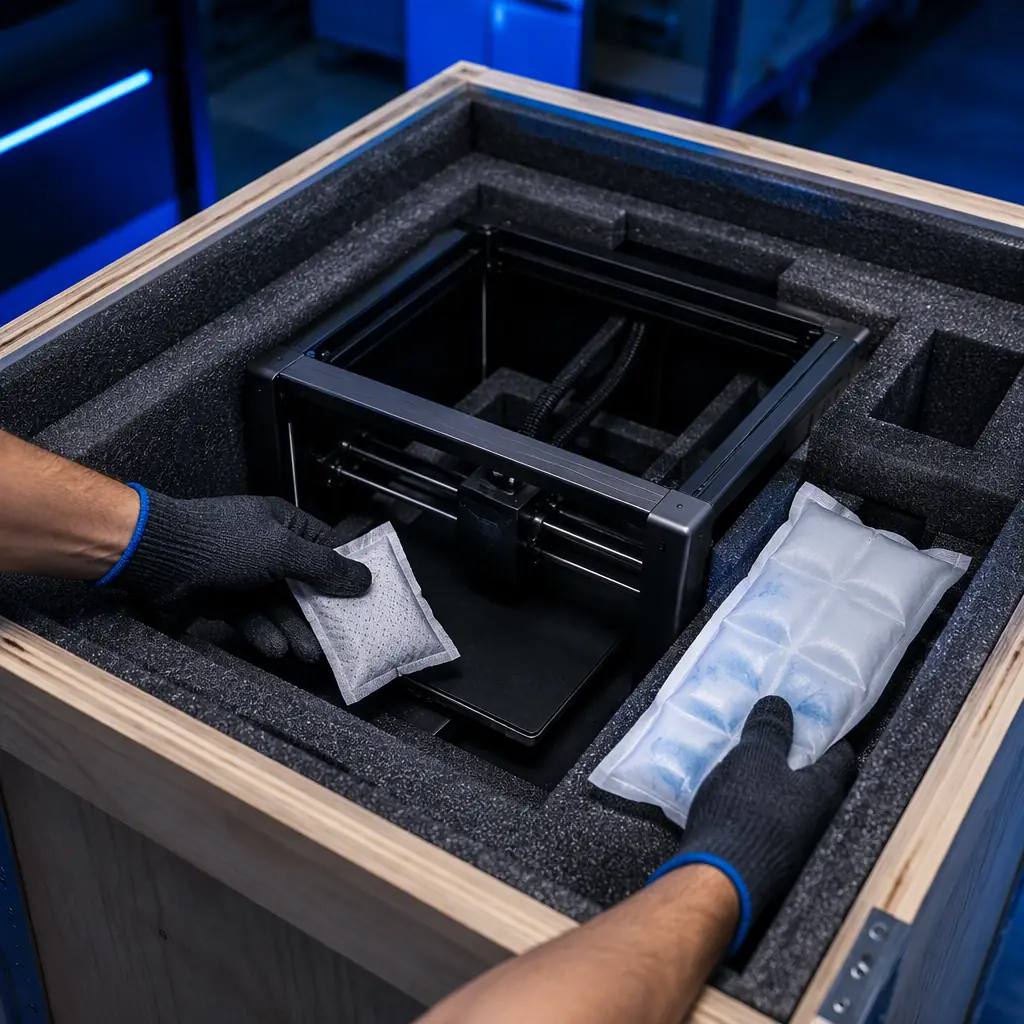
The mitigation is packaging and a user-visible instruction. Desiccate the crate, seal the electronics against vapour, and include an explicit "acclimatize before powering" note in the box. For the crating and shock-absorption specification that protects a heavy machine in a shared container, our crating & packaging guide is the detailed reference.
Sea Freight vs Air: The Trade-off Is Exposure
The route you choose is not only a cost-and-time decision; it is an exposure decision. Ocean freight is cheap but slow — six weeks or more on a trans-Pacific or Asia-Europe leg — which means more days inside a cycling container. Air freight is faster and tighter-temperature by comparison, but it is expensive and runs through a different set of handling steps. For a high-value consignment of resin, or for a seasonal launch where the stock must be fresh, air can be the cheaper choice once you price in the write-off risk of a degraded sea shipment.
Weight that freight math every order, not on a standard rule. On the Incoterms and the party responsibilities that sit outside this choice, our Incoterms trade terms guide closes the commercial loop.

Packaging Countermeasures You Can Control
Even when you cannot control the container's climate, you can control the microclimate inside the carton. The four levers are the simplest and most underused.
- Desiccant sachets — silica gel or molecular sieve, sized to the box volume, and replaced if the indicator shows saturation.
- Barrier lay-up — foil-lined bags and vacuum sealing for filament and resin that bridge the humidity leg.
- Eutectic/phase-change packs — a stabilizer that absorbs heat or cold around a target temperature for resin and heat-sensitive goods.
- Insulated liners — a foam or thermal-block liner that slows the swing rate inside the box to protect electronics from condensation.
The amount of desiccant is not a guess: roughly 10-20 grams per cubic foot of sealed volume is the common range, and it should be scaled to the material. A box that relies on a single tiny sachet for a month-long leg is not protected at all. For the customs and HS-code context that governs what travels in that box, our HS codes & customs guide is the reference.
Last-Mile: The Forgotten Leg
The container is only part of the journey. The last mile — from port or warehouse to the customer's door — is where a surprising amount of damage happens, because it is the leg that is least documented. An unair-conditioned truck in summer, a stack of cartons left on a loading dock, or a box stored against a cold warehouse wall overnight can undo the care taken up the chain. A distributor should specify the last-mile handling as deliberately as the first leg.
The practical rule is simple: put the same climate requirement in the delivery notes that you put in the shipping contract, and use a temperature logger where the value justifies it. A cold-chain data logger costs a fraction of a single damaged resin bottle, and it removes the argument about blame if a shipment arrives wrong.
A Decision Framework: How to Ship Temperature-Sensitive Goods
Before you book a lane, run this short loop.
- What is in the box? → Resin and filament need barrier and moisture protection; printers need insulation and anti-condensation handling.
- What route and season is it? → A winter leg to a cold port needs freeze protection; a summer leg to a hot port needs ventilation and shade.
- What is the value at risk? → If your write-off cost exceeds the premium for air freight or a climate-controlled lane, pay for the faster, stricter route.
A distributor who can talk about transit exposure is protecting the product and the margin at the same time. That is the difference between a shipment that opens well and a batch that quietly became a warranty claim.
How Precise3D Handles Climate-Safe Packaging
At Precise3D we build in a 3,500 sqm Shenzhen production network and test every machine before packing. Our export crating uses foam-lined, desiccant-sealed lay-ups designed to protect a heavy machine through a sea leg, and our shipping page spells out the packing standard, the trade terms we quote and the documents that travel with an order. Because we understand the sensitivity of resin and engineered filament, we advise our distributors on the transport window and the receiving-side drying step that keeps quality intact after the container is opened.
If you are evaluating us as an OEM or white-label partner, the honest first step is a 1-5 unit sample order at wholesale pricing, tested in your own market. Custom branding begins at 100 units. Our shipping logistics guide and filament drying & storage guide round out the picture.
Reviewed by the Precise3D engineering & logistics team. Temperature, humidity and drying figures reflect standard material manufacturer guidance and common freight practice and should be validated against the specific grade and lane. Auditable quality and compliance backing is held in the certification register.
Ship With Confidence
Ready to Source Printers That Arrive Like They Left the Factory?
Join our network of global distributors. Climate-safe crating, print-tested machines, transparent trade terms and full export documentation — everything you need to ship into any market without a surprise on opening.