A UFLPA withhold release order does not arrive as a legal notice a compliance team can schedule. It arrives as a container sitting at Long Beach that CBP will not release, and a demurrage clock that starts at roughly $150 to $300 per container per day. By the time the importer understands what happened, the freight cost of the shipment has often doubled, and the detention is not a delay that a phone call resolves.
This guide covers what the Uyghur Forced Labor Prevention Act actually asks of a 3D printer importer, which bill-of-materials lines inside a printer are genuinely exposed, what evidence CBP will accept, and what a Shenzhen-based production network can and cannot document. It is written from the supply side of that question, which is the useful side for a buyer.
What UFLPA Actually Prohibits, in Operational Terms
The Act creates a rebuttable presumption: any goods mined, produced or manufactured wholly or in part in the Xinjiang Uyghur Autonomous Region, or produced by entities on the UFLPA Entity List, are barred from US entry. The operative word is presumption, because it places the burden on the importer rather than on CBP. CBP does not have to prove forced labour was used. The importer has to prove, with documents, that it was not.
Four sectors are named as high priority for enforcement: polysilicon, cotton, tomatoes, and a fourth category CBP describes as aluminium and PVC. The first three are irrelevant to a 3D printer. The fourth is not.
Enforcement shows up in two distinct mechanisms and importers conflate them constantly. An Entity List designation restricts goods from a named company. A withhold release order targets a commodity, a manufacturer or a specific vessel and stops goods at the port pending documentation. A printer factory that has never appeared on any list can still receive a shipment-level scrutiny hold if CBP has flagged a supplier upstream of it, because the framing is origin of inputs, not origin of assembly.
What it means in practice: the goods do not clear on a promise. They clear on a paper trail that names every upstream supplier by name and location.
Mapping the Exposure Inside a 3D Printer
Most compliance material on this topic is written at the level of a whole industry, which is useless to a distributor trying to work out whether its own SKU is at risk. The useful version is a bill-of-materials exposure map, and for a 3D printer the map is narrower than the panic suggests.
| BOM line | Material | UFLPA relevance | Documentation that closes it |
|---|---|---|---|
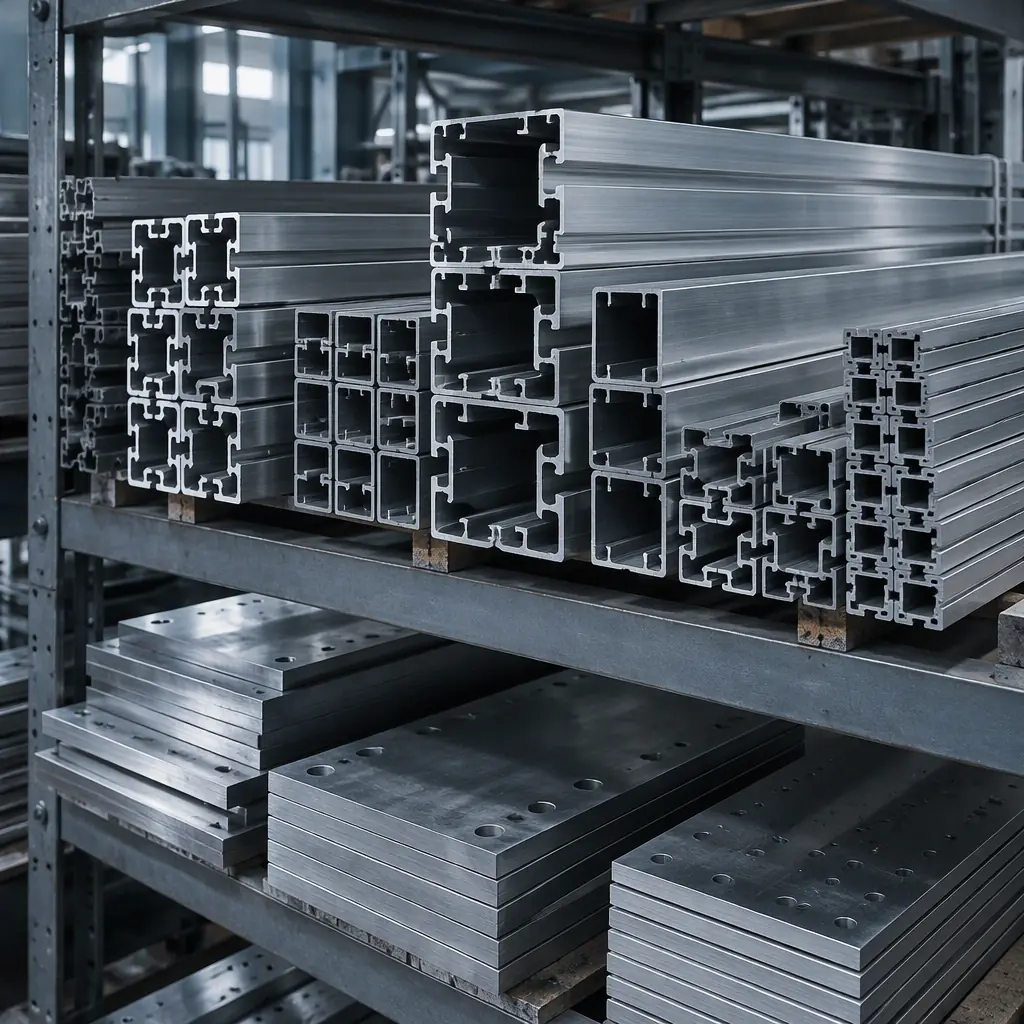
| Frame and gantry extrusion | 6063 or 6061 aluminium profile | High, aluminium is a CBP priority sector | Mill certificate naming smelter and country of cast |
| Build plate and bed carriage | Cast or machined aluminium | High, same reasoning as frame | Mill cert plus finishing vendor declaration |
| Enclosure panels | Sheet steel, acrylic or polycarbonate | Medium, steel not a named priority sector | Coil certificate, coil origin |
| Retail carton and inner packaging | Corrugated board, printed wrap | Medium, PVC film and some board stocks are exposed | Paper mill declaration, packaging supplier attestation |
| Wiring harness and PCBAs | Copper, fibreglass laminate, components | Low but not zero, copper origin is increasingly queried | FPC and PCBA supplier attestation |
| Filament if bundled with the machine | PLA, PETG, PA | Low, no cotton content in polymer filament | Polymer grade declaration, compounder name |
Two conclusions come out of that table and both run against the instinct of a cautious buyer. The first is that the dominant risk sits in the metal, not in the consumables. Aluminium extrusion and cast plate are the heaviest exposure per kilogram, because aluminium is explicitly a priority sector and because Chinese aluminium smelting capacity has documented Xinjiang linkages that stretch back years.
The second conclusion is that the risk is a supplier-of-supplier problem. A printer assembly factory in Shenzhen buys profile from an extruder, who buys billet from a smelter, who may buy alumina from several sources. The assembly factory cannot manufacture a mill certificate for metal it did not smelt. What it can do is require, contractually and by audit, that its extruder supplies a mill certificate naming the smelter, and refuse material whose certificate names an unknown or a listed party.
The Five Documents CBP Will Ask For
When a shipment is detained, the request for information is specific and time bounded. Importers who have the following five documents ready typically resolve a detention in days. Importers who do not typically lose the shipment to exclusion and re-export, which for a 25 kg machine is worse than losing the sale.
1. A complete supply chain map. Not the direct supplier. The map from finished machine back to raw material, naming each tier: assembly, module sub-assembly, component, material processor, raw material source. CBP asks for this in list form and expects company names and locations, not descriptions of process.
2. Bills of materials at the component level. A printer BOM with 800 to 2,000 lines is normal. The BOM submitted should be the production BOM, not the marketing configuration table, because the discrepancy between the two is itself a finding.
3. Material origin certificates. For aluminium, a mill certificate with heat number, alloy designation, and the smelter name and country. This is the single most load-bearing document in the file and the one most often missing, because extruders quote profile price without offering smelter traceability unless asked.
4. Supplier attestations. A signed statement from each tier that no input originates in Xinjiang and that the supplier is not on the Entity List. These are weak evidence on their own and CBP treats them accordingly, but their absence is read as non-cooperation rather than as a gap to be filled later.
5. Labour and recruitment records for the assembly tier. For the final assembly factory: wage payment records, recruitment agency contracts, and confirmation that recruitment did not pass through labour transfer programmes. This is where a factory that has never been audited for social compliance struggles, because payroll records for a 200-person floor exist but agency contracts often do not.
The Cost Arithmetic That Justifies the Paperwork
Compliance work competes for attention with everything else, and the honest way to prioritise it is to price the failure. The numbers below are typical order-of-magnitude figures for a US importer bringing a 40HQ container of printers, not a quotation.
That last line is the argument. Asking an extruder to attach a mill certificate to every profile shipment costs a phone call and a contract clause. The reason it does not happen by default is that nobody on the buying side asked, because the risk sits 8,000 km away from the person writing the purchase order until the container stops moving.
There is a second-order cost that does not appear in any freight invoice: the re-qualification cost when you switch an aluminium source after a detention. New extrusions mean a new die, fresh dimensional verification on every frame interface, and a build of first-article units before shipping resumes. For a machine with a tolerance-critical gantry, that sequence runs 6 to 10 weeks. Sourcing metal from a smelter with clean documentation at the design stage is materially cheaper than re-sourcing it under pressure.
What a Shenzhen Factory Can Realistically Document
Sourcing teams ask for a UFLPA compliance statement and often accept the resulting PDF as sufficient. It is not, and the distinction between what is achievable and what is aspirational is worth stating plainly, because it determines how much of a supplier's answer to trust.
Achievable and standard: a named assembly location; the mill certificates for aluminium profile and plate from the extruder; the compounder and grade for any filament or resin; packaging supplier declarations; the corporate ownership structure. These are records a well-run factory has or can obtain within one purchasing cycle.
Achievable with effort: sub-tier supplier names for PCBAs, wiring harnesses and injection-moulded parts, provided the factory holds the relationship directly. This typically requires a supplier code of conduct and a contractual right to audit, both of which are worth writing into the frame agreement anyway for unrelated quality reasons.
Not realistically achievable: a smelter-level guarantee from a component supplier three tiers down, when the factory buys a finished module whose own sub-suppliers are invisible to it. A factory that claims full tier-four traceability across 2,000 BOM lines on a machine sold at distribution pricing is describing a programme it does not have. The honest position is a named boundary: these tiers are mapped and certified, those tiers are attested only.
What the answer tells you: a supplier who produces a real mill certificate and names the boundary of its traceability has both the records and the judgement to be useful in a detention. A supplier who produces a one-page statement that everything is compliant has done neither, and that statement will not survive first contact with a CBP request for information.
Where This Sits Among the Other Import Documents
UFLPA traceability is one thread in a larger import file, and it interacts with the rest. The HS code, tariff and customs guide covers classification and duty calculation, which determines whether a shipment is even worth routing through a particular entry point. The certification and compliance overview places CE, RoHS, FCC and WEEE obligations alongside the trade-compliance layer, since a distributor in the US and a distributor in the EU are managing different document sets from the same factory. For the supplier-side controls that produce these records, the supplier scorecard guide shows how to weight documentation capability, and the factory audit checklist covers what to verify on site rather than on paper. Where metal sourcing and material declarations overlap, the REACH SVHC and Proposition 65 declaration guide covers the European analogue of the same question, and the China shipping logistics guide covers routing and documentation for the physical move.
Import Compliance
Need the Metal Traceability File Before the Shipment Books?
Send the target market and the SKU list. You will get the mill certificate chain for the frame and plate, the BOM tiers we can certify versus attest, and the document pack in the format a customs broker can use.
One further point belongs in the file rather than in a footnote. UFLPA is a US regime, but the mechanism is being copied. The EU is legislating a forced labour product ban with a similar presumption structure, and the practical due-diligence toolset is the same: supply chain mapping, material origin certificates, and supplier attestations with a stated boundary. A distributor that builds the file for the US market has, at modest additional cost, built the file for the EU one. The reverse is not true, because European requirements around social auditing under supply chain due diligence law are stricter in what they demand of the audit itself.
The reason to start now rather than at the first detention is arithmetic, not principle. Traceability is cheap when it is a purchasing requirement and expensive when it is an emergency. The mill certificate you ask for at the design stage costs a clause in a frame agreement. The same certificate requested while a container sits at a terminal costs the detention, the re-export, and in most cases the customer relationship.