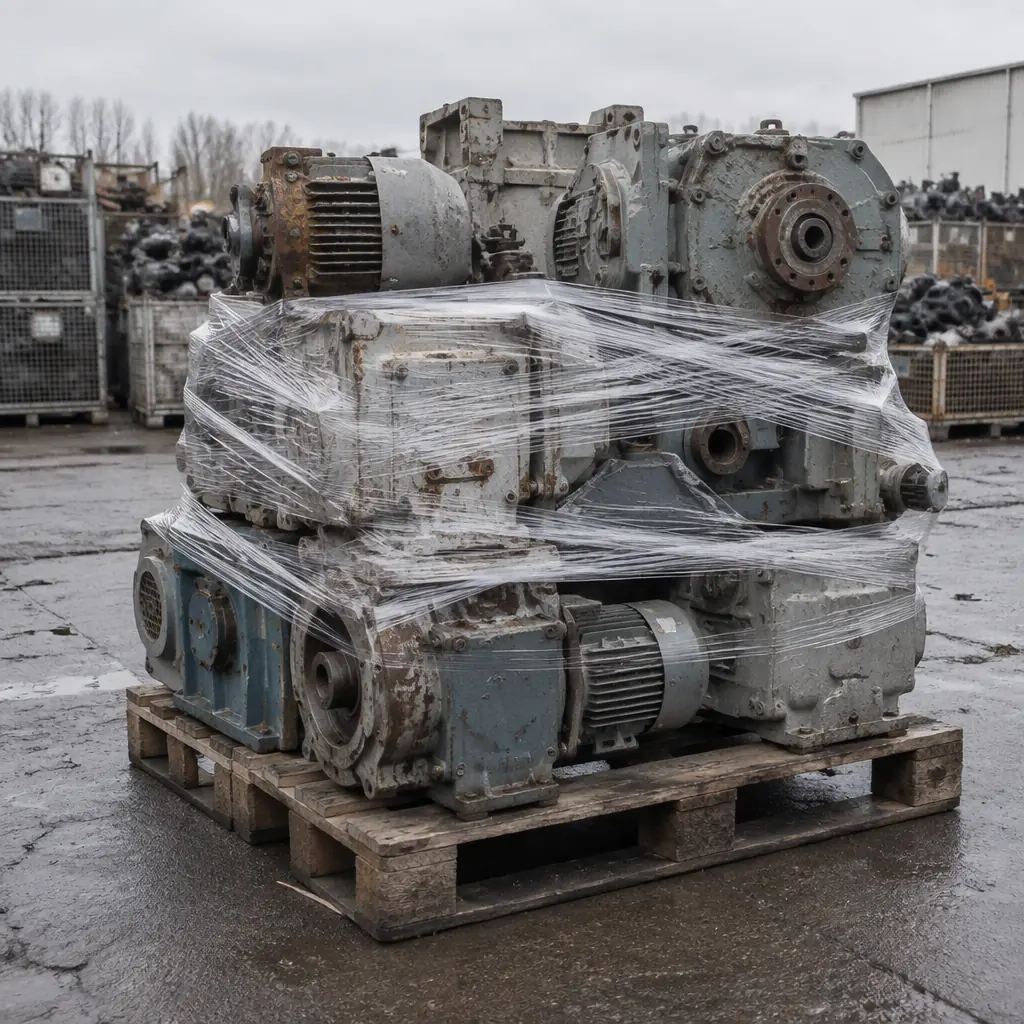
The arithmetic is uncomfortable and it decides the whole policy: a 25 kg 3D printer is worth between nothing and about EUR 15 as mixed electronic scrap, and it costs between EUR 40 and EUR 90 per unit to collect from a customer's site, wrap, transport and process. Every returned machine is a loss of roughly EUR 25 to EUR 75 before any refurbishment labour. A distributor that discovers this at the first returned unit provisions nothing, absorbs the loss as an operating cost, and usually responds by making returns difficult, which is precisely the behaviour WEEE law exists to prevent.
This guide covers the take-back obligations that attach to a printer distributor in Europe, the three separate waste regimes that a printer drags behind it, and the reason the fee has to be provisioned at the point of sale rather than at the point of disposal.
Three Regimes, One Machine
A 3D printer is not one waste stream. It is three, governed by three different directives, collected by three different parties, and it is routine for a distributor to be registered for one and in breach on the other two.
| Waste stream | Governing regime | Who collects | What it covers on a printer |
|---|---|---|---|
| The machine | WEEE, per member state transposition | Producer take-back scheme or municipal collection point | Frame, motors, mainboard, PSU, steppers, display, wiring |
| The battery | Battery directive, per member state | Battery collection scheme, separate registration | RTC coin cell on the mainboard, UPS pack on some models |
| Resin and filament waste | Waste framework and hazardous waste rules | Licensed industrial waste contractor | Uncured resin, contaminated wash solvent, failed prints |
The battery line is the one that catches distributors repeatedly, because the battery is small enough to be invisible in the bill of materials. A CR2032 coin cell on the mainboard that maintains the real-time clock is a battery placed on the market inside equipment, and most member states require the producer to register for battery take-back separately from WEEE. The registration is inexpensive on its own, but failure to register is a standalone offence, and an audit that finds an unregistered battery stream generally looks harder at everything else.
A model sold with a UPS or an internal Li-ion pack carries a materially larger obligation than one with a coin cell, and the difference should be a product decision rather than a datasheet detail. If the pack is user-removable, several member states treat it as a separately collected battery. If it is soldered to the board, the equipment producer carries it. Neither route is free, but one of them is simpler.
The resin line falls outside WEEE entirely and is the stream distributors most often ignore until a customer asks. Uncured photopolymer resin is classified as hazardous waste in most member states, wash solvent contaminated with resin more so, and neither can go into a WEEE container or a municipal skip. A distributor that supplies resin printers to industrial customers inherits an implicit expectation of disposal advice, and increasingly a contractual expectation. The answer is a licensed industrial waste contractor, not the WEEE scheme.
What the answer tells you: the factory holds none of them for goods it did not place on the EU market. A distributor registered for WEEE but not for batteries is compliant on the visible stream and in breach on the hidden one, which is the most common configuration found in an audit.
What WEEE Actually Requires of a B2B Distributor
The reputation of WEEE as a consumer electronics regime leads B2B distributors to assume it does not apply. It applies. The distinction between business and household equipment affects the collection mechanism and the financing rules, not the existence of the obligation.
Registration. The producer registers in each member state where it first places equipment on the market, and in several countries the registration requires a named authorised representative resident in that country. A distributor importing into six countries holds six registrations, and the register entries must be updated when product categories change.
Marking. The crossed-out wheeled bin symbol, applied visibly, with the producer identification mark. For a printer this belongs on the machine and on the packaging, and in practice it is applied by the factory using artwork the distributor supplies. A factory that prints a generic mark with no producer identification produces non-compliant units regardless of what the distributor registered.
Take-back. The distributor accepts returned equipment. For B2B equipment the practical route is usually a producer take-back scheme rather than municipal collection, and the financing rules for historic versus new waste differ. In practice the distributor is the collection point of first resort, whether or not the law names it, because the customer calls the company that sold the machine.
Reporting. Annual declarations of quantities placed on market and quantities collected, in the format each national scheme requires. This is the obligation that fails most often through neglect rather than intent, because it is a recurring administrative task with no visible customer.
The Cost Model, and Why It Belongs in the Sale Price
Take-back economics for industrial equipment look nothing like consumer electronics, where the scrap value of a phone with recoverable metals partly offsets collection. A printer is steel, aluminium, copper and a modest amount of electronics in a large low-value housing, and the logistics dominate the scrap value by a wide margin.
Two numbers in that table deserve attention beside each other. The net cost of an actual return is EUR 25 to 75. The visible WEEE compliance fee, the one the scheme invoices, is EUR 1.50 to 6.00 per unit. The gap between them is what distributors underestimate, and it explains a behaviour that looks irrational until the arithmetic is laid out: many treat the scheme fee as the whole cost, budget for it, and then find the real cost arrives through a different door.
Returns do not arrive evenly. A distributor that has sold 400 machines over four years will see returns cluster when a product line ages out or when a customer replaces a fleet, and a cluster of 30 units at EUR 50 net is EUR 1,500 of unexpected cost in a month. Provisioning EUR 8 to 15 per unit sold into a returns reserve converts a lumpy operating surprise into a smooth cost embedded in the margin, and it is a defensible line in a pricing model.
The Refurbishment Decision That Changes the Arithmetic
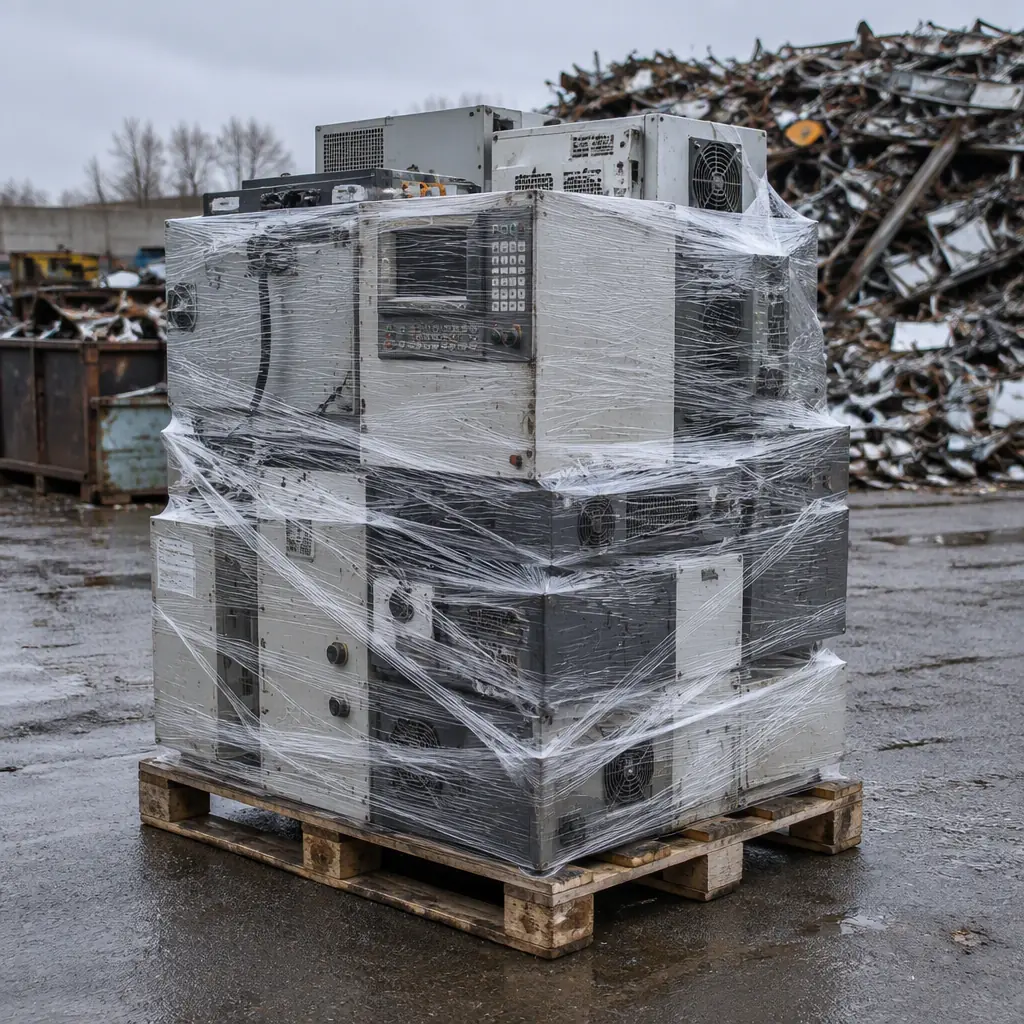
There is a version of this where the economics invert. A returned printer that is refurbished and resold recovers most of its value, and the take-back cost becomes a sourcing cost rather than a loss. The decision hinges on whether the machine has a viable second market and whether refurbishment can be done to a standard that supports a warranty.
What determines viability is not the condition of the frame, which is usually sound, but the condition of the consumable and calibration-critical parts. A machine returned after three years has worn nozzles, a possibly degraded hotend, a build plate with adhesion loss, and firmware that may no longer be current. Replacing that set typically costs EUR 80 to 180 in parts plus 3 to 6 hours of technician time, which puts total refurbishment at EUR 200 to 400 before the machine is sellable.
Against a used market price of perhaps 45 to 60 percent of new, that works for machines under about three years old and stops working beyond it. Beyond that point the machine is a parts donor, and the value comes from harvesting steppers, mainboards and PSUs into the spares pool rather than from resale. The depot repair and swap pool guide covers the logistics of running that flow, and the spare parts aftermarket guide covers the revenue side of harvested components. What matters here is that the take-back stream and the spares stream are the same stream viewed from two directions, and a distributor running them separately loses money twice.
End of Life Is a Design Input, Not a Disposal Problem
The most effective lever on take-back cost is exercised years earlier, at specification. Three design decisions determine whether a returned machine can be processed economically or has to be scrapped whole.
| Design decision | Effect on end-of-life cost | Specification to request |
|---|---|---|
| Fastener standardisation | Disassembly time drives treatment labour | Single fastener family across the frame and covers |
| Battery accessibility | Separate collection requirement | Socketed coin cell, documented removal point |
| Material marking of plastics | Determines whether housings can be recycled by stream | Resin identification marking moulded into parts above 50 g |
| Housing material choice | Steel and aluminium have scrap value, ABS housings have disposal cost | Sheet steel or aluminium where weight permits |
| Service documentation | Refurbishment feasibility | Disassembly sequence and torque values in the service manual |
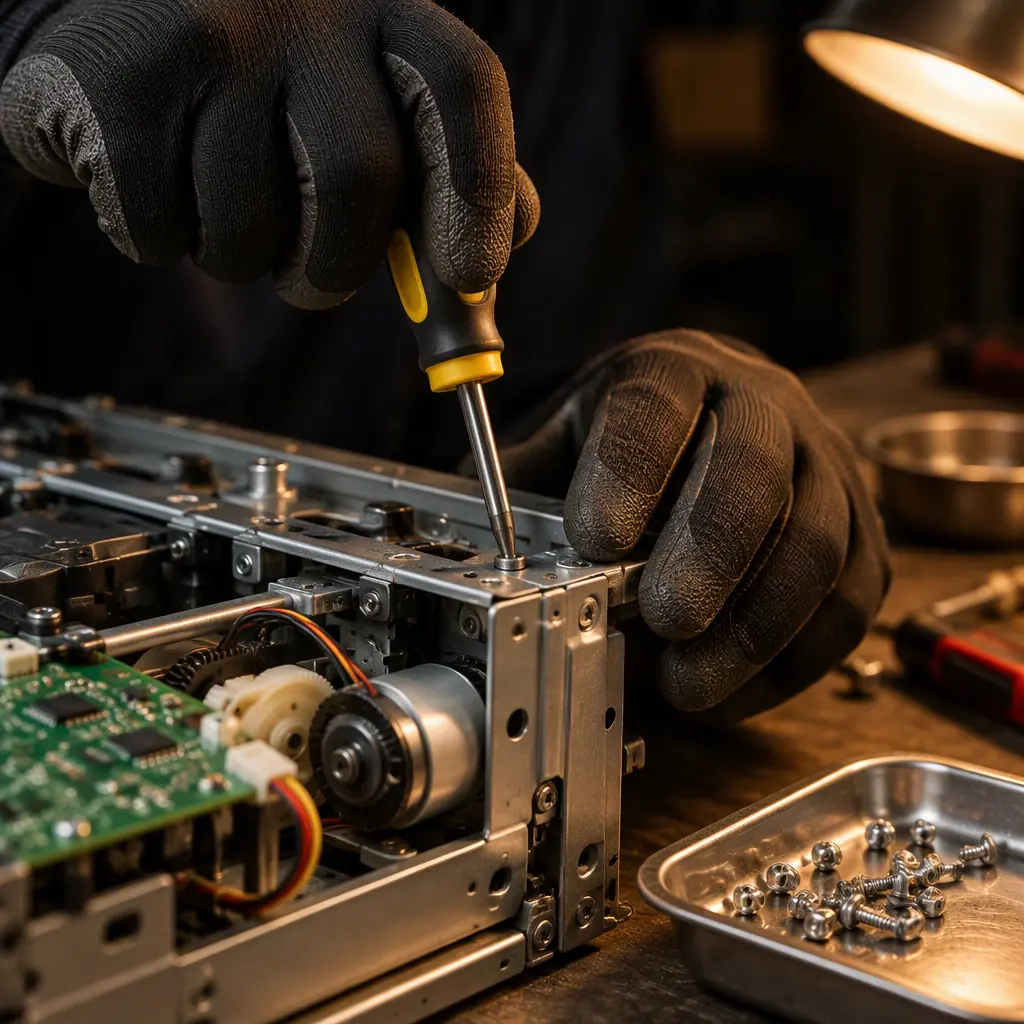
These are cheap requests at the specification stage and expensive retrofits afterwards. A single fastener family across the frame and covers can halve disassembly time, which at EUR 40 to 60 per hour of treatment labour is a direct cost reduction. Moulded resin identification marking costs nothing if it is designed into the tool, and cannot be added to an existing tool without a tool modification. The service documentation requirement is the one most often skipped, and it is the one that determines whether a returned machine can be refurbished at all: a technician without a disassembly sequence and torque values will take twice as long and produce a machine that cannot be warrantied.
What the answer tells you: a factory that has measured disassembly time has designed for end of life. A factory that has not has never had a customer ask, which means the first returned unit will be your discovery process. Asking this question at the sample stage costs nothing and sets the expectation for the life of the product line.
Where Take-Back Sits in the Compliance File
WEEE, battery and packaging obligations are three producer responsibilities attaching to one shipment, and they are usually registered by three different schemes with three different annual cycles. The certification and compliance overview covers the CE, RoHS and WEEE map together, and the packaging EPR guide covers the third regime in the same set. For the parts flow that a take-back programme feeds, the obsolescence and end-of-life service parts guide covers long-term parts availability, and the filament waste recycling guide covers the consumable stream that sits outside WEEE. Where a returned machine is stripped for spares, the inventory accuracy guide covers the receiving and stocking controls that keep harvested parts traceable.
End-of-Life Compliance
Need the Take-Back Cost Model and the Registration Map?
Send the SKU list and the destination markets. You will get the WEEE, battery and packaging registration map per country, the per-unit take-back cost model, and the disassembly specification to put into the next factory order.
A final point on timing. Take-back obligations are easy to defer because the first returned unit may be two years away and the registration deadline is not enforced by a customer. That deferral is the expensive choice, for a reason that has nothing to do with penalties. The registration itself is a form and a fee. The cost model is what tells you how to price the machine, and without it the first fleet replacement lands as an unbudgeted operating loss in a month when you are also discounting to win the replacement order. Provisioning EUR 8 to 15 per unit from the first shipment is the cheapest version of this decision available.
The sequence that works: establish which registrations are already held and which are assumed held by the factory, register the battery stream separately since it is the most commonly missed, model collection cost per returned unit rather than relying on the scheme fee, and write disassembly time and battery accessibility into the next factory order so the machines coming off the line in eighteen months are cheaper to take back than the ones being returned today.