Most 3D printer distributors we work with are exceptional at logistics, technical support, and customer relationships. But when it comes to marketing, the playbook is often empty — a Facebook page that hasn't been updated since 2024, a website that ranks on page 4 for "3D printer distributor," and a trade show booth that generates 15 business cards and zero follow-up. Meanwhile, competitors who figured out digital marketing are capturing the customers you should be selling to. Here's how to build a marketing engine that fills your pipeline, using real channel data from the Precise3D distributor network.
Why Most 3D Printer Distributor Marketing Fails (and What to Do Instead)
The standard distributor marketing mix — a basic website, occasional LinkedIn posts, one trade show per year — generates roughly 8-12 qualified leads per month for the average distributor. That's enough to survive, not grow. The distributors in our network who scaled past $500K/year in revenue operate a fundamentally different model: they treat marketing as a measurable acquisition channel with dedicated budget, tracking, and optimization cycles. They spend 5-8% of revenue on marketing and know their cost per qualified lead within $5.
The difference isn't budget — it's structure. A $500/month Facebook ads campaign with no landing page, no lead magnet, and no retargeting wastes every dollar. The same $500/month spent on a targeted Google Ads campaign pointing to a comparison landing page with a downloadable buyer's guide can generate 20-30 qualified leads. The marketing channels don't fail — the execution does. For the products that drive this pipeline, see our portfolio strategy guide.
Channel 1: SEO — Own the Search Results for Your Market
When a procurement manager at a university types "bulk 3D printers for classroom," your website should be the first thing they see. SEO for 3D printer distributors isn't about ranking for "3D printer" — that's a battle you'll lose to Amazon, Bambu Lab, and Creality. It's about owning the long-tail commercial queries that signal buying intent.
The highest-converting SEO keywords for distributors fall into four buckets: (1) bulk/wholesale queries ("buy 3D printers wholesale," "3D printer distributor pricing"), (2) application-specific queries ("3D printers for dental labs," "3D printers for engineering education"), (3) comparison queries ("Prusa vs Bambu Lab for print farm," "best 3D printer for school classroom 2026"), and (4) geographic queries ("3D printer distributor Germany," "3D printer supplier UAE"). Each of these has 30-300 monthly searches and 3-8% conversion rates to inquiry — 10x better than generic traffic.
Product comparisons are the fastest path to qualified traffic. A well-researched comparison page — say, "Precise3D Pro X1 vs Bambu Lab X1C for Print Farms" — targets a buyer who is already in evaluation mode. They're comparing specs, reading reviews, and close to a decision. Your job is to be the authoritative source that helps them decide. One distributor in our network built five comparison pages in their first six months; those pages now generate 40% of their inbound leads at a $0 cost per lead. For the product specs to populate those comparisons, review our pricing and margin strategy and individual product pages.
Channel 2: Paid Search — When to Spend and How to Measure
SEO builds a long-term asset. Paid search (Google Ads) buys you immediate visibility while your SEO pages mature. The key is targeting the right intent: bidding on "buy 3D printer" gets you clicks from consumers who want one unit shipped tomorrow — not your customer. Bidding on "3D printer wholesale supplier" or "3D printer distributor pricing" filters for bulk buyers.
Based on Precise3D distributor ad accounts, here are the benchmarks that separate profitable campaigns from money pits:
The $25-60 cost per qualified lead is the number that matters. If your average customer generates $780-3,200 in annual value (from our portfolio strategy model), a $50 lead acquisition cost delivers 15-64x ROAS over the customer lifetime. The math works — but only if you're tracking conversions properly. Install conversion tracking on your inquiry form, set up Google Ads conversion goals, and review your search terms report weekly to add negative keywords. The distributors who skip this step burn $300-500/month on irrelevant clicks from hobbyists searching "free 3D printer STL files."
Channel 3: Trade Shows — The Highest-Converting Channel, If You Execute
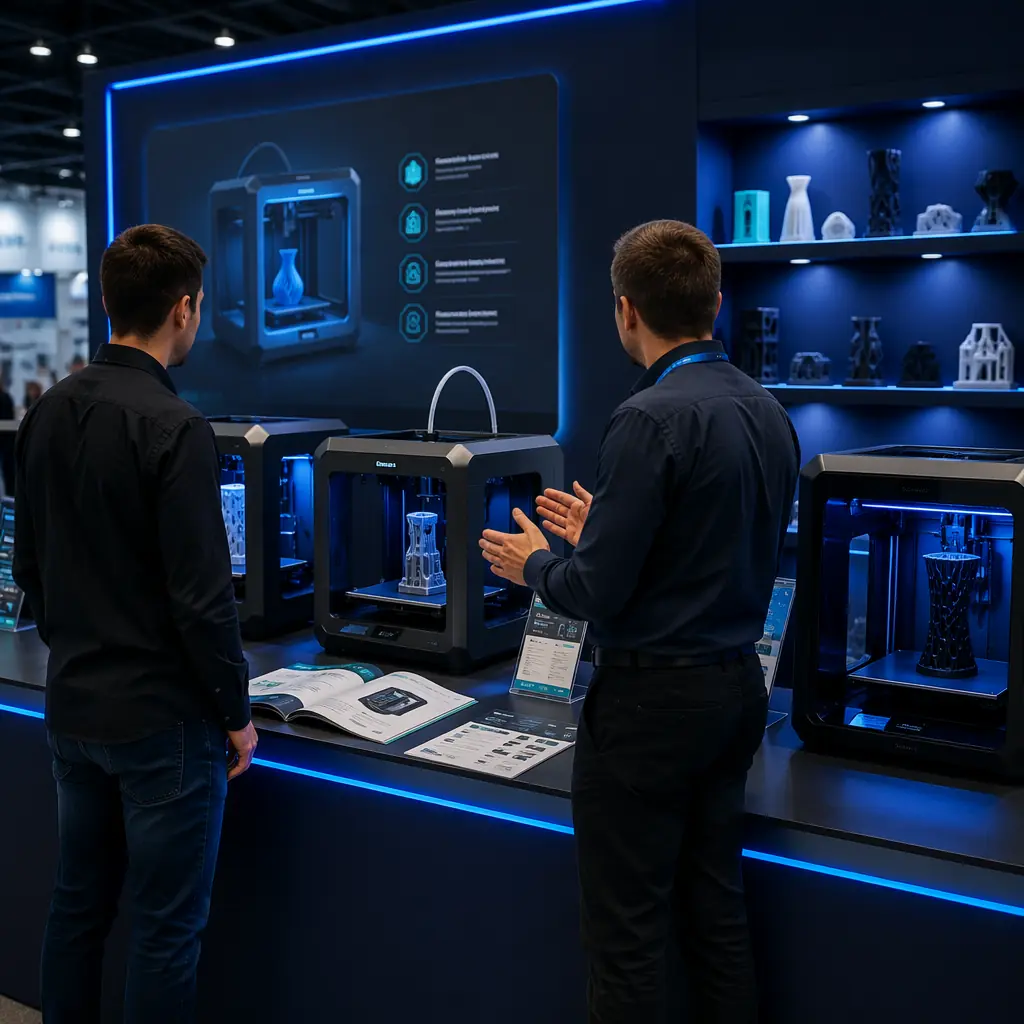
Trade shows are the highest-cost marketing channel but also the highest-converting when done right. A 10x10 booth at Formnext or TCT Asia costs $8,000-25,000 including travel, freight, and staffing. But one education buyer who signs a 20-unit order at the show recovers the entire investment. The problem isn't the spend — it's the follow-up. Data from our distributor network shows that 78% of trade show leads are never contacted after the event. The 22% that are followed up convert at 15-25% to a sale within 90 days.
The trade show playbook that works: (1) Pre-show: email your existing list 3 weeks out with your booth number and a reason to visit (live demo of the Pro X1 printing engineering materials, sample print giveaways). (2) During the show: staff the booth with one technical person who can answer spec questions and one salesperson who can discuss pricing and lead times. Use a tablet-based lead capture form — business cards get lost. (3) Post-show: email every lead within 48 hours with a personalized follow-up referencing your conversation. Send a sample print or spec sheet by mail within 5 days. Call within 7 days. This three-touch sequence produces 3x the conversion rate of a single email follow-up.
For the logistics of shipping demo printers to shows, see our shipping and logistics guide. For sample print strategies that close deals, our post-processing guide covers the finishing quality that impresses buyers.
Channel 4: Content Marketing — Blogging That Actually Sells
Content marketing for distributors isn't about becoming a publisher. It's about answering the questions your buyers are typing into Google. Every blog post should map to one of the four SEO keyword buckets and end with a clear call to action: request a quote, download a spec sheet, or book a call. The content produces two returns: organic traffic over 6-12 months (the SEO play) and sales collateral your team can send during the evaluation phase (the enablement play).
The most effective content formats for 3D printer distributors, ranked by lead generation: (1) product comparison pages (2.3 leads/month average), (2) application-specific buyer's guides (1.8 leads/month), (3) total cost of ownership calculators (1.5 leads/month), (4) case studies with named customers (1.2 leads/month), (5) how-to technical guides (0.8 leads/month). Notice that the most technical content — how-to guides — generates the fewest leads. That's because how-to readers are existing users solving a problem, not buyers evaluating a purchase. Invest your content budget proportionally: 60% on buying-intent content, 30% on evaluation content, 10% on educational content. For ideas on total cost of ownership content, see our consumables bundling strategy.
Channel 5: Email Marketing — The Channel That Compounds
Email is the only marketing channel where you own the audience. Google can change its algorithm, social platforms can throttle organic reach, and trade shows get canceled. Your email list is yours. The distributors who build email lists of 500-2,000 qualified contacts (existing customers, trade show leads, website inquiries) see 20-35% open rates and 3-5% click-through rates — far above e-commerce averages — because their audience is professional buyers, not consumers.
A simple email cadence that works: one monthly newsletter with industry news and new product announcements, one quarterly case study or application spotlight, and automated post-purchase sequences (welcome email day 1, setup tips day 3, filament reorder reminder day 45). The post-purchase sequence alone generates 15-20% of consumables reorders for distributors who implement it. For more on the consumables reorder economics, see our guide to nozzle and hotend consumables and our filament storage guide.
Social Media: The Support Channel, Not the Sales Channel
Social media for B2B 3D printer distribution works differently than consumer social. Your goal isn't likes — it's credibility. When a procurement manager Googles your company after receiving your quote, they should find an active LinkedIn presence, YouTube product demos, and Instagram posts showing real customer prints. This presence validates that you're a legitimate operation, not a drop-shipper.
The social content mix that builds credibility: LinkedIn (2-3 posts/week: industry news, customer spotlights, team behind-the-scenes), YouTube (1 video/month: printer unboxing, print quality comparison, setup guide), Instagram (3-4 posts/week: timelapse prints, customer finished products, trade show recaps). Total time investment: 4-6 hours/week for a dedicated team member, or $500-1,000/month outsourcing to a freelancer. The ROI isn't directly attributable to leads — it's the trust signal that increases conversion rates on all your other channels.
Building the Lead Pipeline: From Click to Customer
Marketing channels generate traffic. What happens after the click determines whether that traffic becomes revenue. Most distributors lose 60-80% of potential customers between the first website visit and the first conversation because they don't have a structured pipeline.
The minimum viable lead pipeline for a 3D printer distributor: (1) Landing page with a clear value proposition and inquiry form (not a generic "Contact Us" page — a dedicated "Become a Distributor" or "Request Wholesale Pricing" page). (2) Lead magnet: a downloadable PDF (buyer's guide, spec comparison sheet, TCO calculator) that captures email in exchange. (3) CRM: even a spreadsheet with status columns (New → Contacted → Quoted → Negotiating → Won/Lost) is better than remembering leads in your head. (4) Follow-up sequence: automated email #1 within 1 hour, personalized email #2 within 24 hours, phone call within 48 hours. (5) Retargeting: a $100/month Facebook/Google retargeting pixel shows your brand to visitors who left without inquiring.
For the onboarding process that turns won deals into long-term accounts, see our customer training and onboarding guide. For the after-sales support that retains customers, review our after-sales support strategy.
Reviewed by the Precise3D engineering & OEM team. Compliance files that accompany the catalog are auditable at the certification register.
Grow Your Distribution Business
Ready to Build Your Marketing Engine?
Get wholesale pricing, marketing collateral, and dedicated account support. We'll help you fill your pipeline with qualified buyers — not just website visitors.