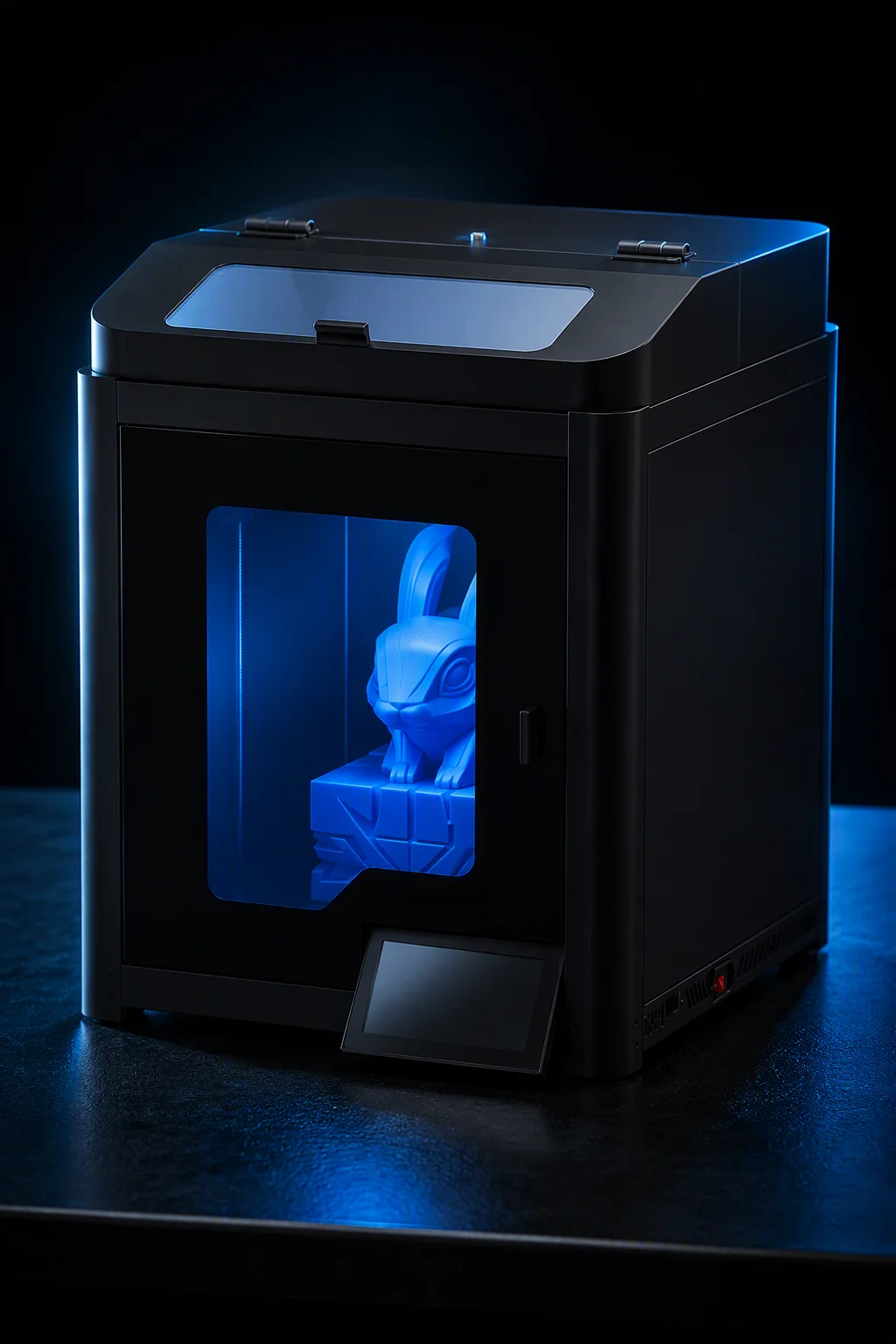
A university procurement office wants 20 printers for their new fabrication lab. The equipment budget is approved — but it's a capital expenditure line, and the full $18,000 hits this fiscal year. The procurement manager hesitates. Another distributor offers a 36-month lease at $575/month with a $1 buyout at the end. The university signs. Your quote for a cash purchase sits unanswered in their inbox. This scenario plays out every day across education, enterprise, and government markets. If you don't offer financing, your competitor will — and they'll close the deal you spent months nurturing. Here's how to build a leasing and financing program that removes the price objection and turns one-time sales into multi-year revenue streams.
Why Financing Is the Single Biggest Revenue Unlock for 3D Printer Distributors
The customers with the largest order volumes — universities, school districts, print farms, manufacturing firms — have one thing in common: they don't pay cash. They operate on annual budgets, capital expenditure approval cycles, and procurement policies that favor operational expenditure (monthly payments) over capital expenditure (lump-sum purchases). When you only accept cash purchases, you're disqualifying yourself from the highest-value deals in your market.
Data from Precise3D's distributor network tells the story: distributors who offer financing close 34% more deals above $10,000 than those who don't. Their average order value is 2.3x higher because financing removes the psychological barrier of a large one-time payment. And the customer lifetime value is 3-5x higher because lease customers renew, upgrade, and buy consumables from the same supplier — they're locked into a relationship, not a transaction. For the portfolio tiers that benefit most from financing, see our portfolio strategy guide.
The Three Financing Models Every Distributor Should Offer
Not all financing is the same. The right model depends on the customer type, deal size, and your working capital capacity. Here are the three models that cover 95% of distributor financing scenarios:
Model 1: Third-Party Financing — No Capital Risk, Full Payment Upfront
Third-party financing is the easiest model to start with because it requires zero capital from you. A financing company (like DLL, Ascentium, or local equipment finance firms) approves the customer's credit, pays you the full invoice amount upfront, and collects monthly payments from the customer. You get paid immediately, the customer gets monthly payments, and the financing company earns interest — everyone wins.
The economics for a sample deal — 10 Creator C1 printers at $499 MSRP each, with a distributor landed cost of $315/unit:
The critical insight: your printer margin is identical whether the customer pays cash or leases through a finance partner. But the lease customer is structurally more likely to buy consumables from you for all 36 months — they're making a monthly payment to a finance company, not shopping around for the cheapest filament on Amazon. For consumables bundling strategies that maximize this captive revenue, see our consumables and accessories guide.
To set up third-party financing: contact 2-3 equipment finance companies in your region, negotiate a referral agreement (they typically pay you nothing — the benefit is you close more deals), integrate their credit application into your sales process, and train your sales team to present the monthly payment, not the total price. "This printer is $180/month" closes differently than "This printer is $899."
Model 2: In-House Lease-to-Own — Higher Margin, Requires Capital
In-house leasing means you finance the equipment yourself — the customer pays you monthly, and you carry the receivable. This model earns 15-25% more total revenue than a cash sale because you charge a financing premium, but it requires working capital and credit risk management. It's best suited for established distributors with $50K+ in operating capital who know their customer base well.
A sample in-house lease structure for a Pro X1 print farm deal (5 units):
Compare this to a cash sale: 5 x ($899 MSRP - $590 loaded cost) = $1,545 margin. The in-house lease nearly doubles your margin while making the purchase dramatically more accessible to the customer — $221/month vs $4,495 upfront. The trade-off is that your $2,675 in working capital is tied up for 24 months and you carry default risk. Mitigate this by requiring 2-3 months of payments upfront as a security deposit and running credit checks on all lease customers. For guidance on the QC and reliability requirements that minimize lease returns, see our factory audit checklist.
Model 3: Short-Term Rental — Capture Seasonal and Trial Revenue
Short-term rentals serve two purposes: revenue from event-based demand (trade shows, maker fairs, corporate events, pop-up workshops) and risk-free trials that convert to purchase. A university that rents 5 printers for a 4-week summer STEM camp pays $50-75/week per printer — $1,000-1,500 total for machines that cost you $158 each landed. After three rentals, the printers have paid for themselves and every subsequent rental is pure margin.
The rental fleet economics work best with entry-level and prosumer machines (Start S1 and Creator C1) because they're lightweight to ship, have low support requirements, and rent at accessible price points. A fleet of 10 Start S1s rented at $40/week with 60% utilization generates $960/month in rental revenue against a fleet cost of $1,580 — the fleet pays for itself in under two months, and the printers can then be sold as "demo units" at 20% off MSRP, recovering an additional $1,832. For the shipping logistics of moving rental fleets, see our shipping and import guide.
How to Present Financing Without Sounding Like a Bank
The biggest mistake distributors make with financing is leading with interest rates and contract terms. Buyers don't want a loan — they want the equipment. Your sales conversation should present the monthly payment as the natural way to acquire the equipment, not as an alternative to a "real" purchase.
The script that works: "Most of our education customers put these on a 36-month operating lease at $180/month — it keeps the cost within their annual consumables budget instead of hitting the capital expenditure line. Would that structure work for your procurement process?" This frames financing as the standard option, not the fallback. It also demonstrates that you understand how their procurement works — a signal that builds trust with professional buyers.
For the full customer acquisition and relationship management strategy that complements financing, read our distributor startup guide and our customer training playbook.
Risk Management: Protecting Yourself When You're the Bank
Whether you use third-party financing or in-house leasing, four risk management practices protect your business: (1) Always run a credit check — business credit reports cost $50-150 and prevent $5,000+ defaults. (2) Require a security deposit equal to 2-3 months of payments for in-house leases. (3) Include a "return in working condition" clause — the customer is responsible for maintenance and repairs, and you inspect returned equipment before refunding deposits. (4) For education and government customers, require a purchase order or contract signed by an authorized procurement officer — verbal commitments from faculty members are not legally binding.
For the maintenance programs that keep leased equipment in working condition — and the consumables revenue that accompanies them — see our maintenance guide for distributors and our troubleshooting guide.
The Financing ROI Calculator: Your Most Powerful Sales Tool
Every distributor offering financing should have a simple ROI calculator — a one-page spreadsheet or web tool that shows the customer exactly what they save by leasing instead of buying. The calculation is straightforward: compare the customer's total cost of ownership under cash purchase vs lease, factoring in consumables, maintenance, and the time value of money. When a print farm operator sees that leasing 10 Pro X1s at $440/month costs $15,840/year vs a $8,990 upfront purchase, the lease looks more expensive — until you add the $9,000-18,000/year in consumables margin they'll earn. The calculator reframes the conversation from "what does this cost" to "what does this earn."
For the print farm economics that power your ROI calculations, see our deep dive on print farm economics. For pricing structures that maximize margin across payment methods, review our pricing strategy guide.
Reviewed by the Precise3D engineering & OEM team. Compliance files that accompany the catalog are auditable at the certification register.
Scale Your Distribution Business
Offer Financing and Close Bigger Deals
Get wholesale pricing, financing partner introductions, and dedicated account support. We'll help you build the leasing program that turns price objections into signed contracts.