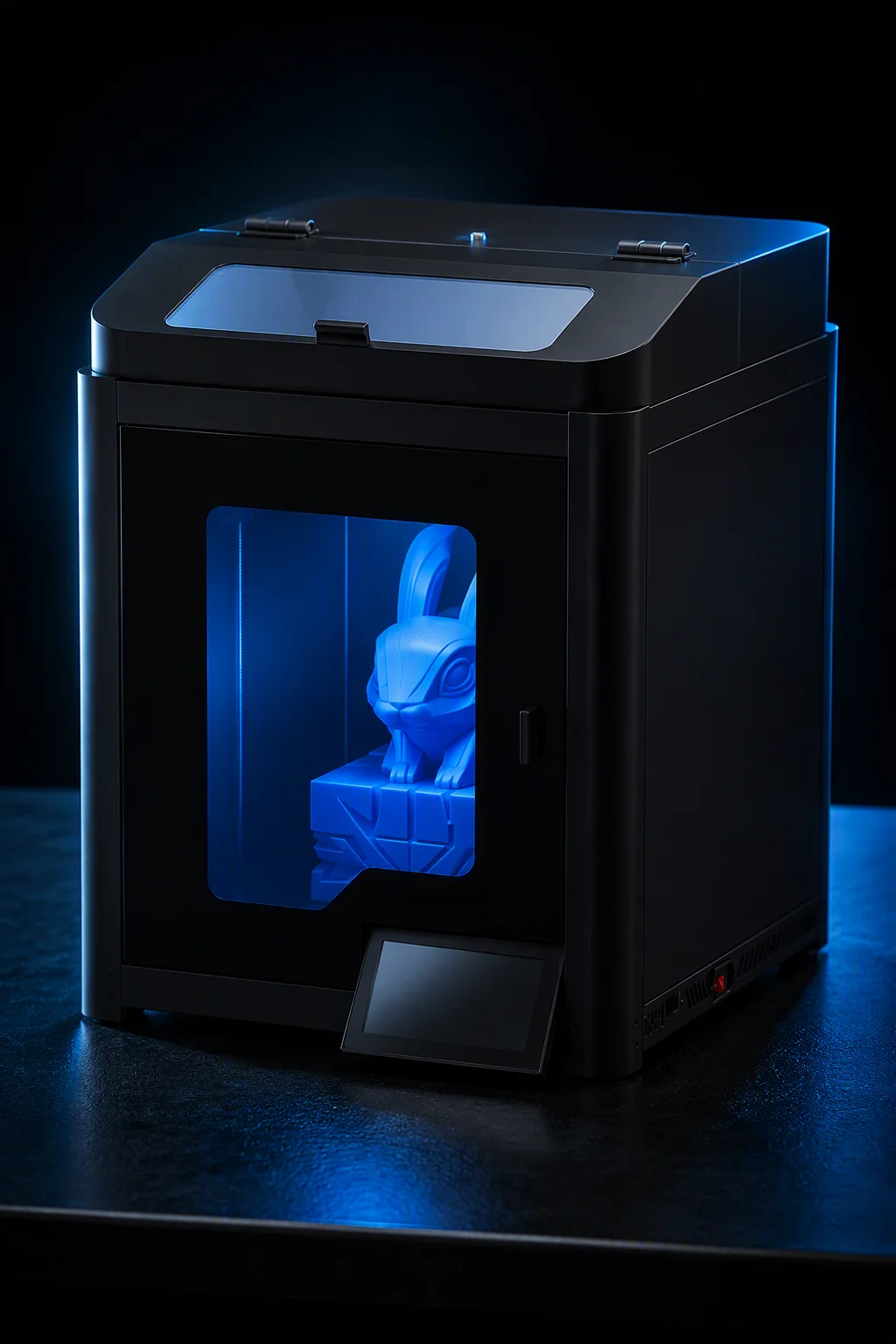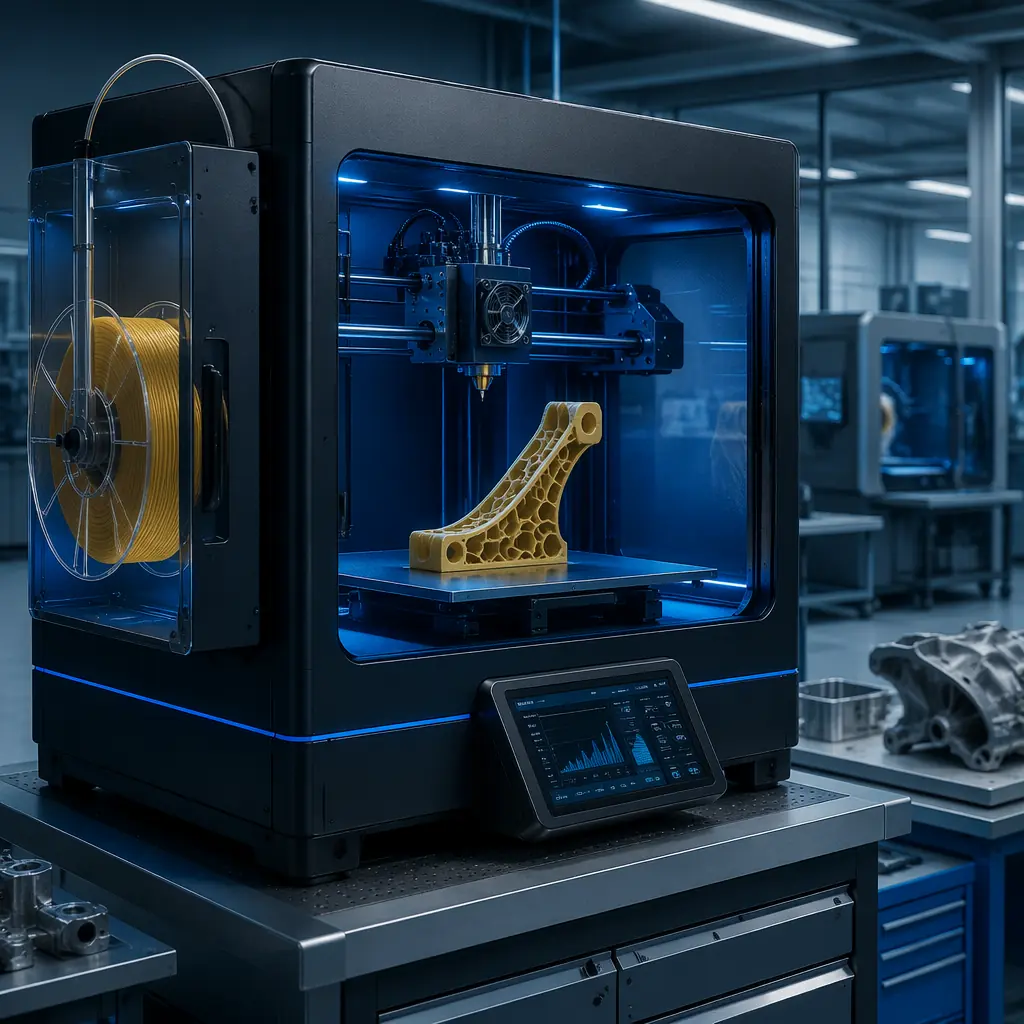
Aerospace additive manufacturing is dominated by metal powder-bed fusion — but polymer FDM and SLS constitute a $1.1 billion subsegment growing at 23% annually. Polymer 3D printers produce ducting, brackets, covers, housings, jigs, drill guides, composite layup tools, and interior cabin components. These applications do not require the seven-figure capital investment of a metal powder-bed system — they run on $3,000–$30,000 FDM printers that a distributor can stock, demonstrate, and support with existing engineering resources. This is the entry point. For the full industrial materials picture, see our guide to industrial-grade materials.
Why Aerospace Is Different: The Certification Barrier That Becomes Your Moat
In consumer 3D printing, the barrier to entry for a distributor is capital — can you buy inventory and warehouse it? In aerospace, the barrier is certification. Every part that flies must be traceable to a specific material batch from a qualified supplier, printed on a qualified machine with a validated process, and inspected to a documented standard. This sounds intimidating — and it is, which is exactly why it is an opportunity. Distributors that invest in understanding the certification ecosystem gain access to a market where competitors cannot undercut on price alone, because price is not the decision criterion. The five certification frameworks every aerospace distributor must understand:
Distributors entering aerospace do not need to hold AS9100 themselves — their OEM partner does. What the distributor needs is the ability to present the certification package to the buyer: material traceability documents (mill certs), machine qualification records, process parameter logs, and inspection reports. The distributor's value-add is curating and presenting this documentation in a format that procurement managers recognize. For the factory audit and quality control checklist that supports this, see our factory audit guide.
Materials: What Actually Flies
Aerospace polymer FDM revolves around three material families. Everything else — PLA, PETG, ABS, even standard Nylon — is irrelevant for flight-certified parts. The market is concentrated around high-temperature thermoplastics with documented flammability, chemical resistance, and mechanical performance data:
The key insight for distributors: the printer capable of running these materials costs $8,000–$30,000, but the annual filament spend per aerospace customer is typically $15,000–$60,000. Aerospace customers consume high-temperature filament at rates that make consumer-grade consumable revenue look like a rounding error. A single Tier-1 aerospace supplier running five ULTEM-capable printers will burn through $75,000–$150,000 in filament annually — and because material traceability locks them into a qualified supplier, they do not switch filaments on price. This is the recurring revenue moat. For filament stocking strategy fundamentals, see our filament stocking guide.
Application Categories: Where Polymer FDM Wins in Aerospace
Aerospace buyers do not buy "3D printers" — they buy solutions to specific manufacturing problems. The distributor who can map their printer's capabilities to the buyer's application categories closes deals faster than the distributor who leads with machine specs. The five highest-volume polymer FDM application categories in aerospace:
1. Composite Layup Tooling
Carbon fiber composite parts — which make up 50%+ of modern aircraft structures by weight — require precision molds and mandrels for layup and curing. Traditionally, these tools are machined from aluminum or Invar at a cost of $20,000–$100,000 and a lead time of 8–16 weeks. ULTEM 1010 and PEKK FDM tools can be printed in 2–5 days at a cost of $2,000–$8,000, withstanding multiple autoclave cycles at 180°C+. This is the single highest-ROI application in aerospace AM — and the one that requires the distributor to understand the customer's tooling workflow, not just their printer needs.
2. Interior Cabin Components
Aircraft interiors contain thousands of non-structural plastic parts: air ducting, cable management clips, seat trim, tray table components, lavatory fittings. These parts are produced in low volumes (50–500 units/year) with high variety — exactly the conditions where 3D printing outperforms injection molding. ULTEM 9085 meets FAR 25.853 flammability requirements and is the default material for this category. A single aircraft program (e.g., A320 family) has approximately 2,700 unique cabin plastic part numbers — each a potential AM conversion candidate.
3. Maintenance, Repair & Overhaul (MRO) Tooling
Every aircraft maintenance depot uses thousands of specialized tools: drill guides, alignment jigs, inspection gauges, component handling fixtures. These tools are aircraft-model-specific, produced in quantities of 1–10, and traditionally machined from aluminum billet. The combination of a high-speed FDM printer with engineering-grade filament (PA-CF, PET-CF) replaces a $3,000 machined aluminum drill guide with a $120 printed equivalent delivered the same day. MRO tooling is the easiest entry point for distributors new to aerospace because it rarely requires flight certification — the parts are ground support equipment, not flying components.
The Distributor's Path into Aerospace: Four Stages
Entering aerospace distribution does not require selling flight-critical parts on day one. The path follows a progression from low-certification to high-certification applications:
Stage 1 — MRO Tooling (0–6 months):
Sell printers and engineering filament to MRO facilities for jigs, drill guides, and inspection fixtures. No flight certification required. The value proposition is speed and cost: "$3,000 machined aluminum tool vs. $120 printed equivalent, same day." This builds your aerospace customer base and revenue history at zero certification cost. Our R&D prototyping guide covers the sales approach for engineering buyers.
Stage 2 — Non-Critical Interiors (6–12 months):
Move into cabin components that require FAR 25.853 flammability compliance but not structural certification. Cable management clips, ducting, seat trim — all printable in ULTEM 9085 on a $15,000–$25,000 printer. At this stage, the distributor needs documented material traceability from their filament supplier and a validated print process — both of which the OEM partner should provide.
Stage 3 — Composite Tooling (12–24 months):
Sell into the composite manufacturing supply chain. Autoclave-capable tooling printed in ULTEM 1010 or PEKK sells for $5,000–$12,000 per tool with material costs of $800–$2,000. Margin is 70%+. The buyer is the tooling department at an aerospace manufacturer or their Tier-1 composite supplier. The certification requirement is process repeatability documentation — not flight-worthiness of the printed part itself.
Stage 4 — Flight-Qualified Production Parts (24+ months):
Full AS9100 supply chain integration. At this stage, the distributor is selling printers embedded in a Nadcap-accredited production cell, with material batch traceability, machine health monitoring, and statistical process control. This is where the remote monitoring and cloud connectivity stack becomes a compliance requirement, not just a convenience feature.
Pricing Strategy: What Aerospace Buyers Actually Pay
Aerospace margins are fundamentally different from consumer and prosumer. A consumer desktop printer at $500 retails at a 25–35% distributor margin ($125–$175 per unit). An aerospace-capable high-temperature FDM printer at $25,000 retails at a 30–50% margin ($7,500–$12,500 per unit) — and requires the same number of sales conversations as the $500 printer. The difference is the buyer's price sensitivity curve: a procurement manager evaluating a $25,000 capital purchase that replaces $75,000/year in outsourced tooling costs does not negotiate on the printer price — they negotiate on uptime guarantees, material qualification support, and application engineering availability. For broader pricing strategy, see our distributor pricing guide.
Getting Started: The Aerospace Distributor Starter Bundle
The minimum viable aerospace distribution offering — what a distributor needs to stock and support to credibly enter this market:
- One high-temperature printer platform capable of ULTEM 9085/1010 (heated chamber ≥180°C, nozzle ≥380°C, actively heated enclosure). Retail price $12,000–$25,000.
- Three filament SKUs: ULTEM 9085 (general aerospace interior), ULTEM 1010 (high-temp tooling), and PA-CF (MRO tooling and non-certified structural). Initial inventory: 20 spools per SKU.
- Certification documentation pack: Material mill certificates, machine qualification records, sample process parameter sheets for each material. Provided by the OEM — the distributor's job is to present these professionally.
- One application engineer (or access to the OEM's application engineering team) who can run first-article print demonstrations for buyers. This is the single highest-ROI investment in aerospace sales.
- One reference customer in the MRO tooling space. Give away the first printer at cost to a local MRO facility in exchange for a case study and reference calls. The $12,000 cost of one printer is recovered in the second aerospace sale.
The total initial investment to enter aerospace distribution is approximately $40,000–$55,000 including inventory, demo printer, and application engineering setup. Average time to first aerospace sale: 3–5 months. Average aerospace customer lifetime value: $120,000–$300,000 over 5 years. For the broader portfolio strategy, see our market segment portfolio guide.
Reviewed by the Precise3D engineering & OEM team. Compliance files that accompany the catalog are auditable at the certification register.
Aerospace Distribution
Enter the Highest-Margin 3D Printer Vertical
Precise3D's high-temperature industrial printer platform is engineered for ULTEM, PEEK, and PEKK — with full material traceability documentation and application engineering support. Request a distributor information pack with aerospace certification data.