The Medical Prototyping Account Runs on Compliance, Not Print Speed
Most 3D printing sales are decided on lead time and price. Medical prototyping flips that. The buyer is a regulatory-minded engineer or a quality manager who has to answer to a notified body, and the thing they fear is not a slow part but an untraceable one. A printed prototype for a medical device carries a chain of custody: which material lot, what resin, what machine, what build parameters, what post-processing, what sterilization. Lose any link and the part is scrap. That is the entire reason the account is worth so much. It is a workflow sale, not a bandwidth sale. For the engineering backbone that keeps tolerances honest across a prototyping project, our dimensional accuracy guide is the essential read.
The opportunity is real and it is growing. Orthopaedic, surgical, diagnostic and drug-delivery companies all iterate on printed parts before committing to injection molding or machining, and the number of devices cleared through the FDA 510(k) and De Novo pathways continues to climb year over year. A distributor with a clean, documented medical workcell is no longer competing with a service bureau on price. They are competing on the trust that lets a small device firm sign off and move forward.
Biocompatible Material Selection: What ISO 10993 Actually Requires
The material decision is the first compliance gate. ISO 10993 is not a single pass/fail; it is a family of biological-evaluation tests whose scope depends on the device's contact type and contact duration. A material can be non-toxic for a short-term skin-contact device and entirely wrong for a 30-day blood-contact component. So the distributor's job is to match the printed material to the documented contact profile, not to hand the customer a catalogue.
For FDM, the workhorse biocompatible options are medical-grade ABS and polycarbonate, plus a handful of USP Class VI formulations. For resin printing, the field is dominated by biocompatible photopolymers cleared for Class I and II contact, with several of them evaluated to a quoted ISO 10993-5 (cytotoxicity) and ISO 10993-10 (irritation) standard. The trade-off is sharp: resin prints finer detail and smoother surfaces, while FDM gives tougher, more dimensionally stable parts that survive more aggressive sterilization. For the material-selection logic that underpins this, our engineering filaments guide and our resin type selection guide are the two reads to have open.
Sterilization Compatibility Should Drive the Material Choice
Sterilization is where a poorly chosen material falls apart. The three dominant methods, ethylene oxide (EtO), gamma irradiation and moist-heat autoclave: each impose a different stress and a different temperature ceiling. A thin FDM part built from a low-heat polymer will soften and warp under autoclave; a resin part with too little post-cure can yellow and embrittle under gamma. So the material must be chosen with the intended terminal sterilization method already known.
The practical pattern: EtO and gamma are the low-heat routes and are compatible with most polymer prototypes; autoclave (121–134 °C) is the hardest on printed polymers and typically steers the design toward metal-AM, glass-filled or tough, semicrystalline thermoplastics. For the post-processing steps that harden a part against these stresses, our post-processing & finishing guide covers the surface and additive steps available.
Design Controls & Documentation Under ISO 13485
ISO 13485 is the quality-management standard a device maker must hold, and it reaches directly into the prototyping supplier because design input, design output, verification and validation all have to be documented. For a distributor, this means a clean workcell with defined, repeatable build profiles and a record of what was printed, in what orientation, with what layer height and what material lot. The buyer is looking for evidence that your process is in control, not for a heroic, one-off part.
The good news for a distributor is that modern high-accuracy printers with closed-loop kinematics actually make this easier. Fixed, saved build profiles give you a defensible repeatability story and a much easier route to a file that can be signed off. For the equipment and quality-management foundation, our certification & compliance guide and our R&D / rapid prototyping guide are the two references that frame the equipment story. For the adjacent surgical-guide and prosthetic work that this account feeds into, our surgical guides & prosthetics guide is the natural next read.
Tolerance & Geometry Realities for Surgical-Site Parts
Medical prototypes are often dimension-critical in ways that hobby parts are not: a surgical guide has to seat on bone, a drill jig has to hold a 2.0 mm pin, a fit check has to be within a fraction of a millimetre. The key is to state the achievable tolerance honestly and to build in the right post-processing. As a rule of thumb, an accurately calibrated FDM machine holds roughly ±0.1–0.2 mm on ordinary geometries; resin printing hits tighter, often ±0.05–0.1 mm, with much smoother surface finishes. Which is why surgical models and guides skew toward resin. For the full tolerance logic, our dimensional accuracy guide is the reference to hand the customer.
What you're looking for: A part that has to seat or align → push resin, tighter tolerances and a printed accuracy report; a part that is a surgical-planning visualisation or a fit-and-form check → FDM with a fast turnaround is enough, and the customer should not pay for accuracy they will not use.
Distributor Economics: The Long-Cycle, Wide-Margin Account
Medical prototyping is slow to close and lucrative when it does. The cycle is stretched by biocompatibility documentation, sterilization qualification and confidentiality agreements. But the payoff is a recurring design-and-iterate relationship, not a one-off print. A single device program can run 50–200 printed iterations across a project, plus annual volume as designs are refined and pre-clinical batches are built. The consumables are premium, too: biocompatible resin and medical-grade filament command a multiple of commodity material, and the equipment must be kept scrupulously clean. For the recurring-revenue mechanics, our consumables & accessories bundling and our portfolio & market-segment strategy are the relevant reads.
The entry plan:
(1) Put a sealed-printer, clean-surface workcell behind it, and keep a dedicated set of biocompatible resin and medical-grade filament in stock. (2) Build the documentation pack, a saved build profile per material, a material lot record, a printed-accuracy report per job. (3) Approach device firms, surgical-tool makers and university hospital labs, and lead with the compliance story, not the price. (4) Convert each program into a repeat account by offering the pre-clinical batch and rapid-iterate workflow. For scaling the print side, our print-farm automation guide explains running a controlled workcell continuously.
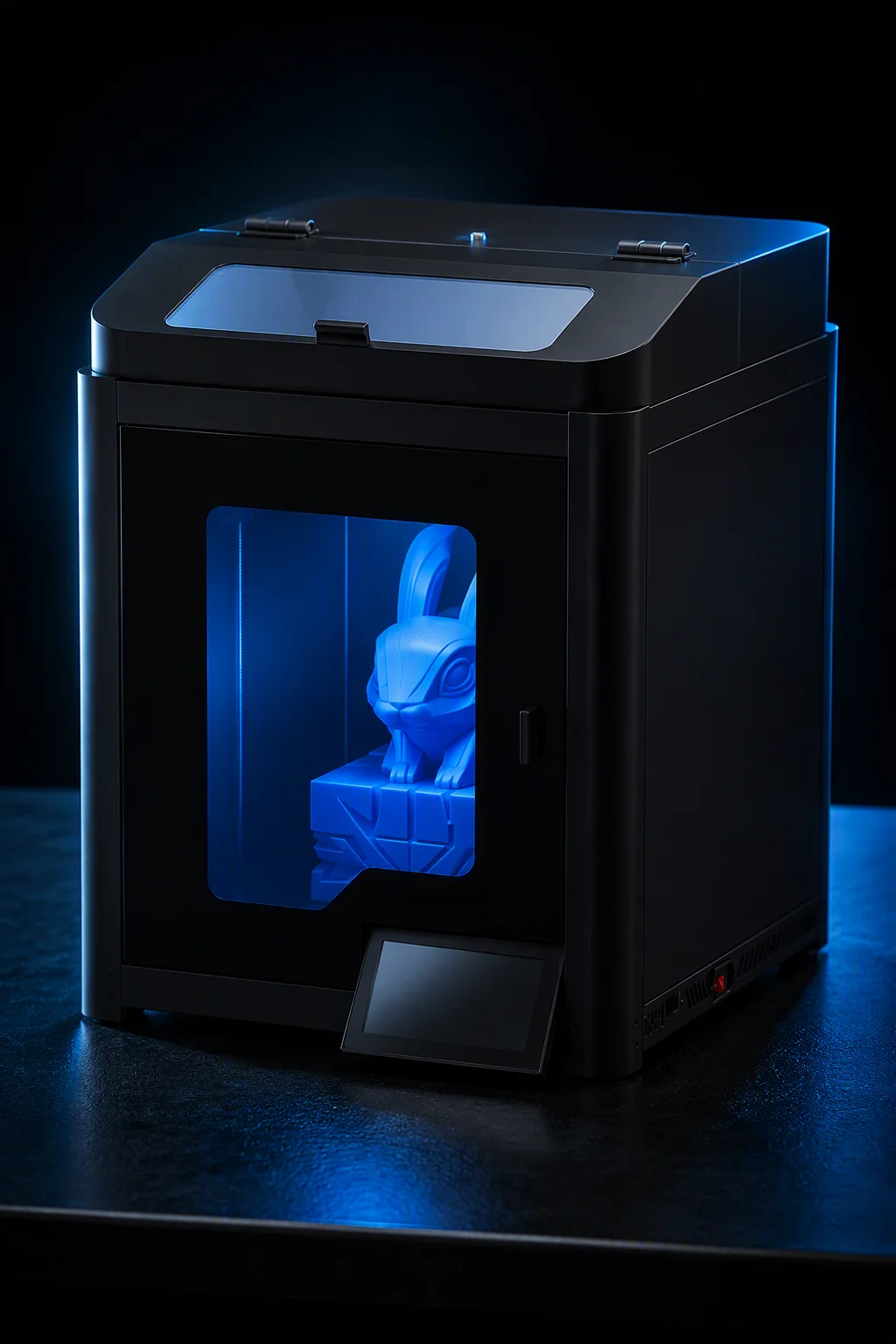
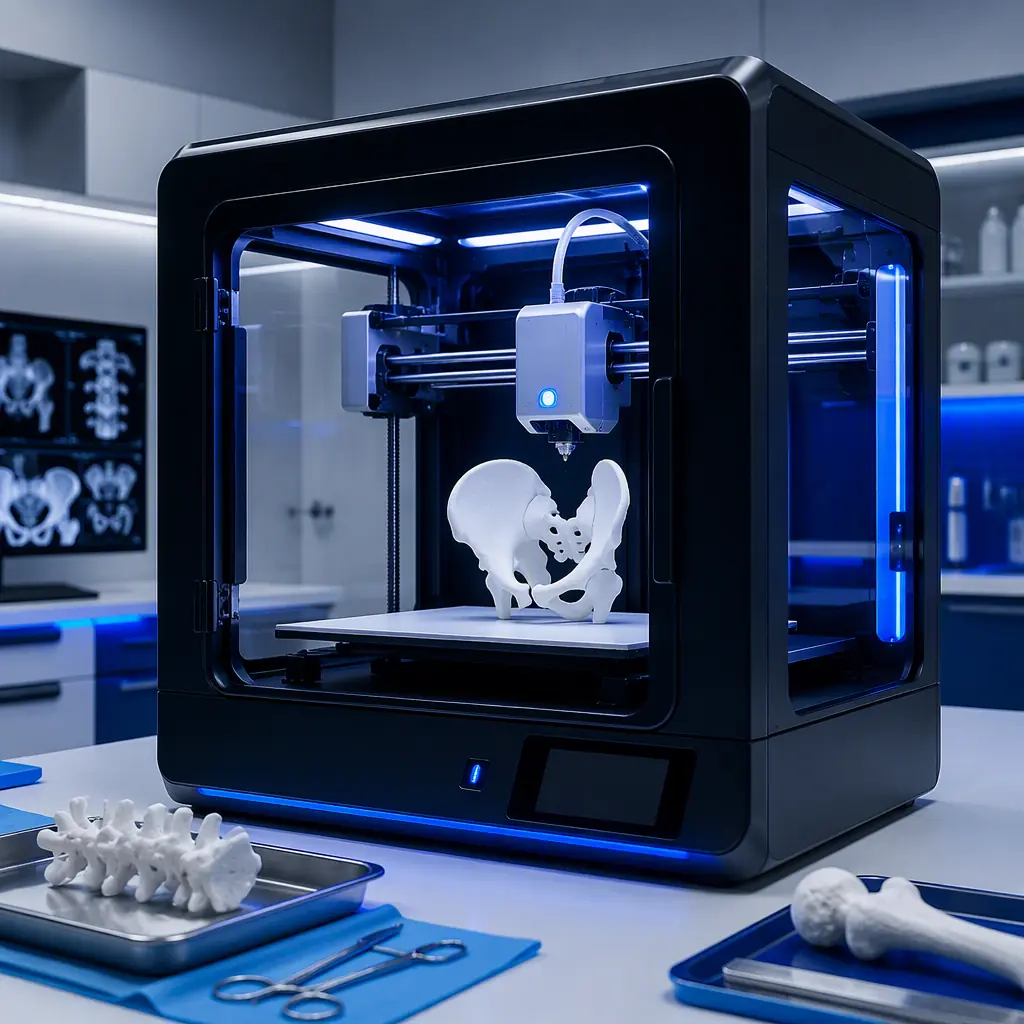
The compliance stack is the moat. At Precise3D, our closed-loop, high-accuracy printer platform with a clean, controlled print chamber and a stocked line of biocompatible resin and medical-grade filament is set up for patient-specific anatomical models, surgical guides, drill jigs and sterile-adjacent prototype work, documented, repeatable and delivered at a fraction of machined prototype lead time.
Reviewed by the Precise3D engineering & OEM team. Compliance files that accompany the catalog are auditable at the certification register.
Enter This Vertical
Ready to Supply Documented Medical Prototyping to Your Region?
Join our network of global distributor network. Closed-loop, high-accuracy printers with a clean print chamber, a stocked line of biocompatible resin and medical-grade filament, plus a documentation kit that lets you walk into a device firm with confidence, everything you need to land the long-cycle medical account.