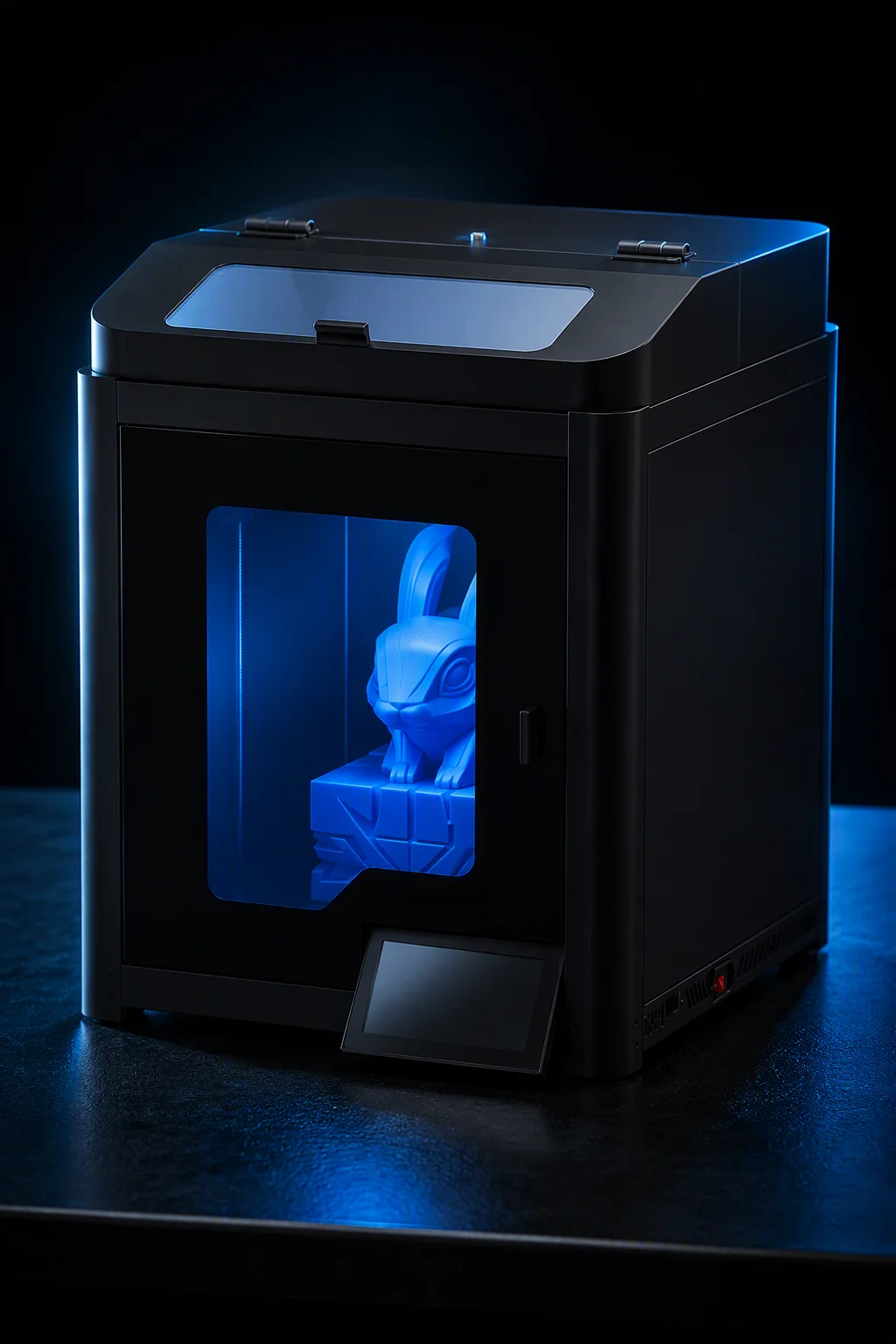
Resin 3D printing generates some of the highest recurring consumable revenue in the entire additive manufacturing ecosystem. A single dental lab running an SLA printer goes through 4–8 liters of resin per month. A jewelry casting house consumes 2–5 liters of castable resin weekly. These aren't one-time printer sales — they're subscription-like consumable streams that compound with every new resin printer deployed in a customer's facility.
But all of that recurring revenue depends on stocking the right resin types for the right customers. Standard rapid resin won't serve a dental lab. Engineering resin is wasted on a hobbyist printing miniatures. And castable resin has zero value to someone printing functional prototypes. This guide breaks down the five major resin categories — their chemistry, mechanical properties, target customers, margins, and safety requirements — so you can build a resin portfolio that actually matches your market.
The Five Resin Categories — And Why They're Not Interchangeable
All photopolymer resins cure under UV light, but the similarity ends there. The difference between a $25/liter standard resin and a $300/liter dental resin is in the photoinitiator chemistry, oligomer backbone, and filler package. These differences determine everything: mechanical properties, biocompatibility, ash content (critical for casting), and whether the printed part will survive a day or a decade.
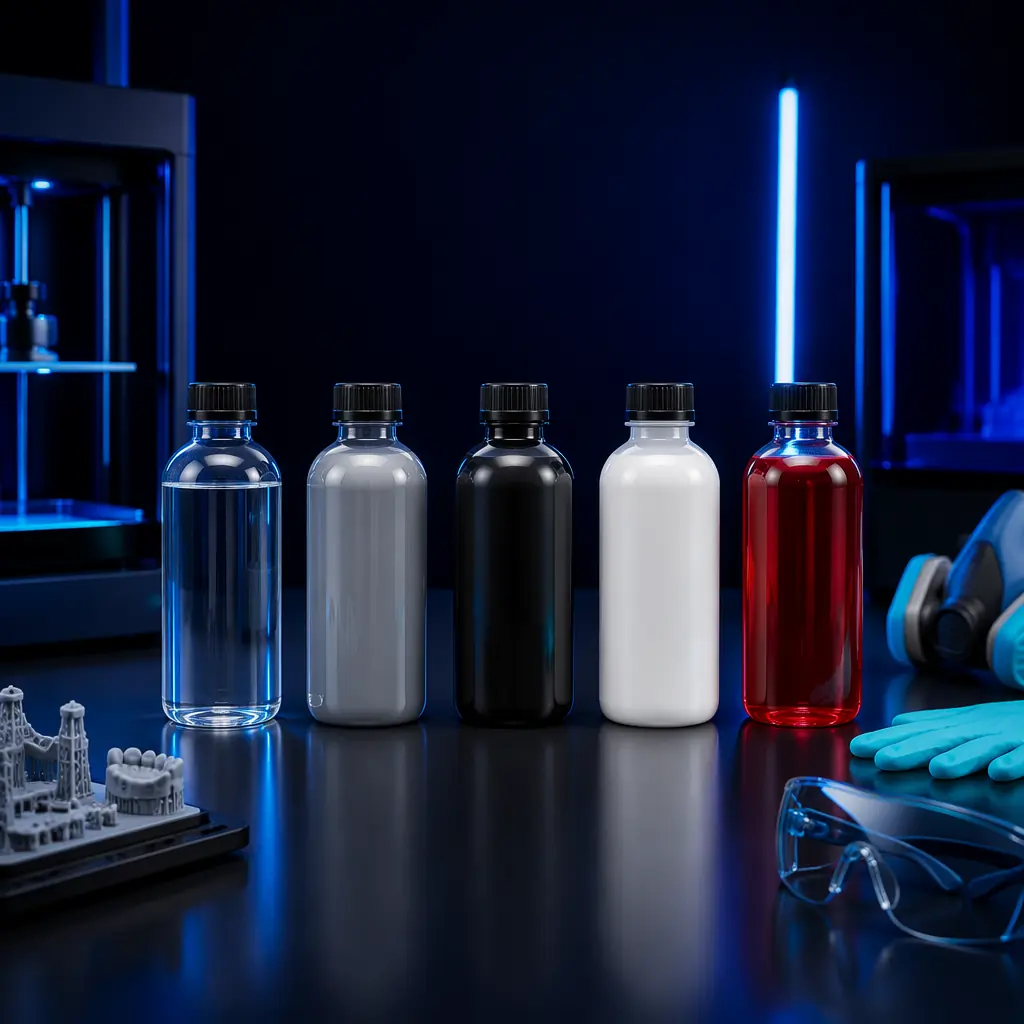
1. Standard Rapid Resin — General-purpose photopolymer for visual models and display pieces. High detail reproduction, fast curing (2–4 seconds per layer on monochrome LCD). Brittle — drops from desk height will shatter thin parts. The volume leader: accounts for roughly 50% of all resin sold by volume. Customers: hobbyists, miniature painters, educators, concept modelers. Stock 2–3 colors (gray, white, clear) from one reliable brand. This is your PLA-equivalent in the resin world — bread-and-butter volume, not where you make your margin.
2. ABS-Like / Tough Resin — Formulated with urethane acrylate oligomers that add flexibility and impact resistance while maintaining detail resolution. Parts can be dropped, snapped, and flexed without shattering. The sweet spot for functional prototypes that need to survive handling. Customers: product designers, engineering teams, anyone printing parts that will be test-fitted and handled repeatedly. Stock gray and black — these customers don't care about color, they care about mechanical performance.
3. Engineering Resins — High-temperature, high-strength, or specialty-property formulations. Includes ceramic-filled resins (for stiffness), high-temp resins (HDT >150°C for mold tooling), flexible/elastomeric resins (Shore 50A–80A), and clear/optical resins. These are niche products — stock only when you have confirmed demand. Each SKU addresses a narrow use case, and the customers who need them will tell you exactly which grade they want. See our engineering materials guide for the FDM equivalent.
4. Dental & Medical Resins — Biocompatible, Class IIa-certified photopolymers for surgical guides, dental models, temporary crowns, and splints. These are regulated products — you cannot sell them without verifying the manufacturer's biocompatibility certification (ISO 10993 or equivalent). The customers (dental labs, orthodontic clinics) buy by the case and are extremely brand-loyal once validated. Margins are exceptional (50–65%) but the sales cycle is long — 3–6 months of testing and validation before a dental lab switches suppliers. Read our dental 3D printing guide for the full market entry strategy.
5. Castable / Investment Casting Resins — Designed to burn out cleanly with near-zero ash residue (<0.01%) during the investment casting process. Used by jewelry manufacturers, dental labs (for metal frameworks), and industrial casting houses. The critical spec is ash content — anything above 0.05% leaves surface defects on the cast metal. These customers buy by the liter and will reject an entire batch on one failed burnout test. Stock from a manufacturer with published ash-content data sheets, not marketing claims.
The Resin Consumable Ecosystem — What Customers Also Need to Buy
Selling resin is not like selling filament. Resin printing generates a consumable ecosystem that extends well beyond the bottle. Every liter of resin sold should trigger 4–5 accessory purchases. Distributors who bundle these capture 2–3x the transaction value:
- Isopropyl Alcohol (IPA) — 99% concentration — Every resin print requires a wash step in IPA (or a dedicated washing solution). A customer printing 2 liters/month of resin goes through 4–8 liters of IPA. IPA is a hazardous material in many jurisdictions — check your local shipping regulations before stocking. Alternatively, stock water-washable resin formulations to reduce the IPA dependency.
- Nitrile Gloves — Resin is a skin irritant and sensitizer. Gloves are non-negotiable. Boxes of 100 nitrile gloves ($8–15 wholesale) should sit next to every resin SKU on your product page. Customers will add them to cart automatically — it's the easiest upsell in 3D printing.
- UV Curing Stations — Post-curing under 405 nm UV light is required for full mechanical properties. Entry-level curing turntables ($50–100) to professional curing chambers with heating ($200–500). The curing station is the post-processing anchor product — sell one with every resin printer, and the customer will reorder resin from you to maintain compatibility.
- FEP/PFA Release Film — The transparent film at the bottom of the resin vat wears out every 3–6 months of regular use. A $12 sheet replaced quarterly per printer. Stock in common sizes (5.9", 6.6", 8.9", 10.1" diagonal) for the printer models you sell.
- Replacement LCD Screens — Monochrome LCD screens are consumables with a 2,000–3,000 hour lifespan. A print farm running 5 resin printers 16 hours/day will replace screens every 4–5 months. $40–120 each, high margin, recurring. Stock screens for the exact printer models you sell.
Safety & Ventilation — The Conversation Every Distributor Must Have
Photopolymer resins contain acrylate monomers and photoinitiators that are respiratory irritants and skin sensitizers. The safety conversation is not optional — it's a regulatory requirement in most jurisdictions and a reputational necessity everywhere. A customer who develops resin sensitivity because you didn't communicate safety requirements will never order from you again.
Every resin SKU listing should include a prominent safety callout covering:
- Ventilation — Resin printing must be done in a well-ventilated space with active air extraction. Carbon-filtered enclosures are the minimum; ducted fume extraction to outdoors is ideal. See our fume extraction guide for equipment recommendations.
- PPE — Nitrile gloves (not latex — acrylates penetrate latex), safety glasses, and an organic vapor respirator for extended exposure. Bundle gloves and respirators with first-time resin orders.
- Disposal — Liquid resin is hazardous waste. Never pour down drains. Cure residual resin under UV light before disposal. Include a one-page disposal guide in every resin shipment.
- Skin Contact Protocol — Wash immediately with soap and water (not alcohol — alcohol drives acrylates deeper into skin). Seek medical attention for persistent irritation.
Stocking Strategy: Start With Three Types, Expand Later
You don't need all five categories on day one. The efficient starter portfolio covers 80% of resin inquiries with three product lines:
Tier 1 (launch immediately):
Standard rapid resin (gray) + ABS-like resin (gray). These two SKUs cover hobbyists, educators, product designers, and general prototyping. Combined they address roughly 70% of resin purchase volume. Add white and clear variants of standard resin for the miniatures/diorama market.
Tier 2 (add after 3 months, once resin sales hit $2,000/month):
One castable resin (for jewelry customers) + one engineering resin (high-temp or ceramic-filled, depending on your engineering customer base). These are higher-margin SKUs that differentiate your catalog from commodity resin sellers.
Tier 3 (add with confirmed demand):
Dental resins — only if you have 2+ dental lab customers asking for them. The regulatory overhead and brand-approval cycles are significant. Water-washable resin formulations — growing segment, eliminates IPA dependency, appeals to home users concerned about chemical storage.
For a broader view of how resin fits into your overall 3D printer distribution strategy, see our resin printer distribution guide which covers printer selection, pricing, and market positioning for the SLA/DLP product line.
Reviewed by the Precise3D engineering & OEM team. Compliance files that accompany the catalog are auditable at the certification register.
Consumable Partnership
Stock Premium Photopolymer Resins With Factory-Direct Pricing
We supply standard, ABS-like, engineering, and castable resins in 500ml, 1L, and 5L formats with full MSDS documentation. Bundled accessory kits (gloves, IPA, FEP film) available for your first order. MOQ: 20 bottles per SKU from Shenzhen.