
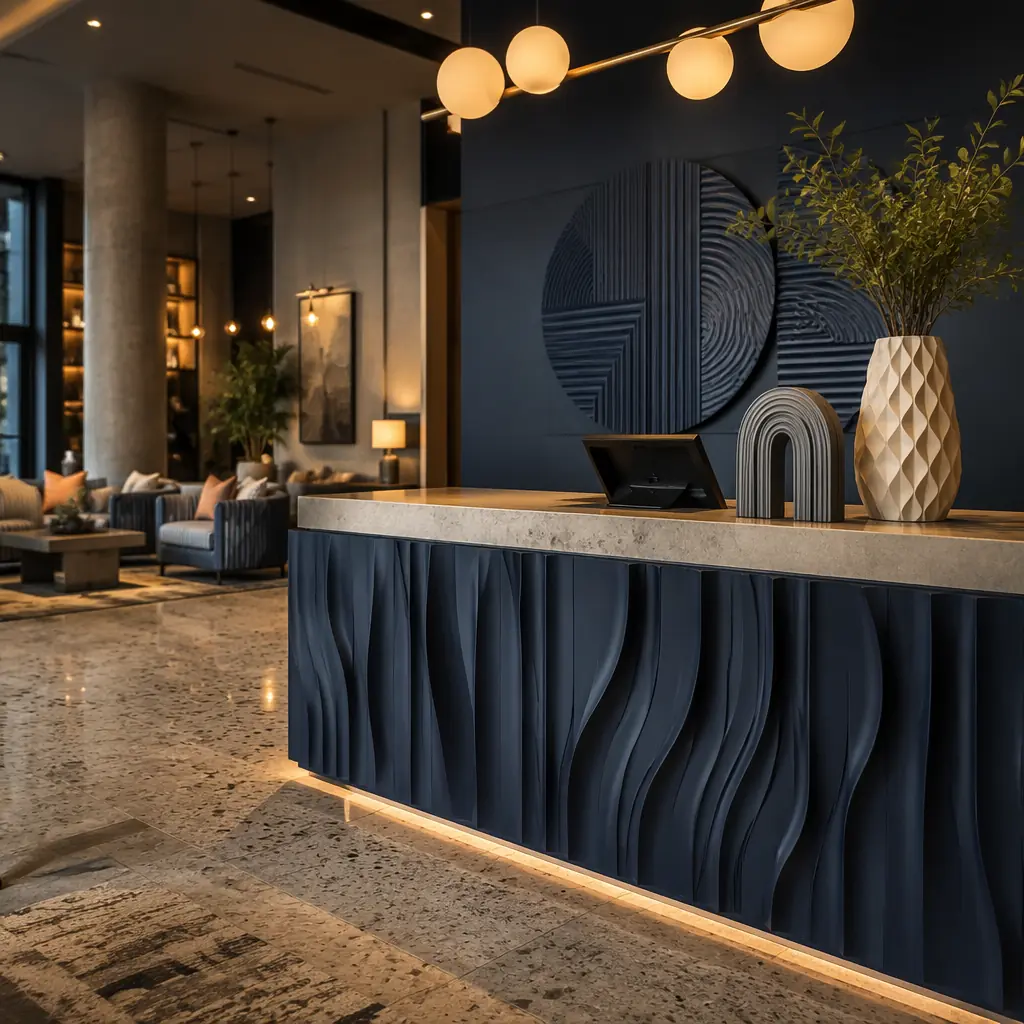
The GM of a 200-room hotel chain needs 400 replacement light switch covers — a specific curved profile that the original manufacturer discontinued in 2018. A traditional injection molding quote requires a $4,500 mold and 8-week lead time for a part that costs $0.85 to produce. The hotel's maintenance director discovers that the part can be 3D printed in ASA for $1.20 per unit, in batches of 20, on a $699 enclosed printer sitting in the maintenance office. Total cost: $480 in filament and one printer. Total time: 2 weeks of overnight printing. The hotel saves $4,020 and 6 weeks — and the printer is now a permanent fixture in their maintenance department, consuming 15–20 spools of ASA and PETG per year. This is not a hypothetical. It's the hospitality vertical in 2026, and it's the single largest untapped market for consumer-grade 3D printer distribution.
Most 3D printer distributors focus on verticals that already know they need 3D printing: education, engineering, manufacturing, dental. These are established markets with known buying patterns, known competitors, and known margin compression. The hospitality and retail vertical — hotels, restaurants, retail chains, commercial property management, and event venues — represents a fundamentally different opportunity: a market with high-volume, repeatable, low-complexity printing needs that has almost no dedicated equipment channel. The businesses in this vertical don't think of themselves as "3D printing users." They think of themselves as businesses that need custom parts, and they're discovering — usually through a contractor, an architect, or a trade show — that 3D printing solves their problems at 1/10th the cost and 1/5th the lead time of traditional manufacturing. A distributor who enters this vertical now is building relationships before the market consolidates around established suppliers. For context on how vertical market expansion fits into a distributor's overall growth strategy, see our portfolio strategy guide.
Why Hospitality and Retail Are Different from Every Other 3D Printing Vertical
Traditional 3D printer verticals — education, engineering, manufacturing — share a common characteristic: the end user cares about the printer. They research specs, compare models, and make an informed purchasing decision based on technical capabilities. Hospitality and retail buyers don't care about the printer. They care about the parts it produces. The printer is an appliance, like a commercial dishwasher or an ice machine — it needs to work reliably, produce consistent output, and require minimal operator intervention. This changes everything about how a distributor sells into this vertical.
The buyer is different: In education, the buyer is a teacher or IT administrator who has researched 3D printing. In hospitality, the buyer is a facilities manager, a restaurant operations director, or a retail visual merchandising manager — none of whom have ever used a 3D printer. The sales conversation doesn't start with "this printer has input shaping and a 300°C hotend." It starts with "you're spending $X on custom signage from a vendor with 6-week lead times — here's how you bring that in-house for $Y." The distributor who can translate printing specifications into business outcomes (cost per part, lead time reduction, inventory elimination) wins the account. The distributor who leads with technical specs loses to the one who leads with business cases.
The volume model is inverted: A traditional printer distributor sells one printer to an engineering firm and maybe 12 spools of filament per year. A hospitality distributor might sell one printer to a hotel that consumes 15–20 spools annually just in maintenance parts — and that hotel chain has 50 properties. The consumables-to-printer ratio in hospitality is 3–5x higher than in engineering or education because these businesses run high-utilization, low-complexity prints: replacement parts, standardized fixtures, and custom-branded items that require minimal post-processing but consume consistent material volumes. A single hotel chain contract can represent $15,000–30,000 in annual consumables revenue across 10–20 properties — from filament, build plates, nozzles, and replacement PTFE tubes. Our consumables bundling guide covers how to structure SKU bundles for high-volume accounts.
Sub-Segment 1: Hotels — Replacement Parts and Branded Fixtures
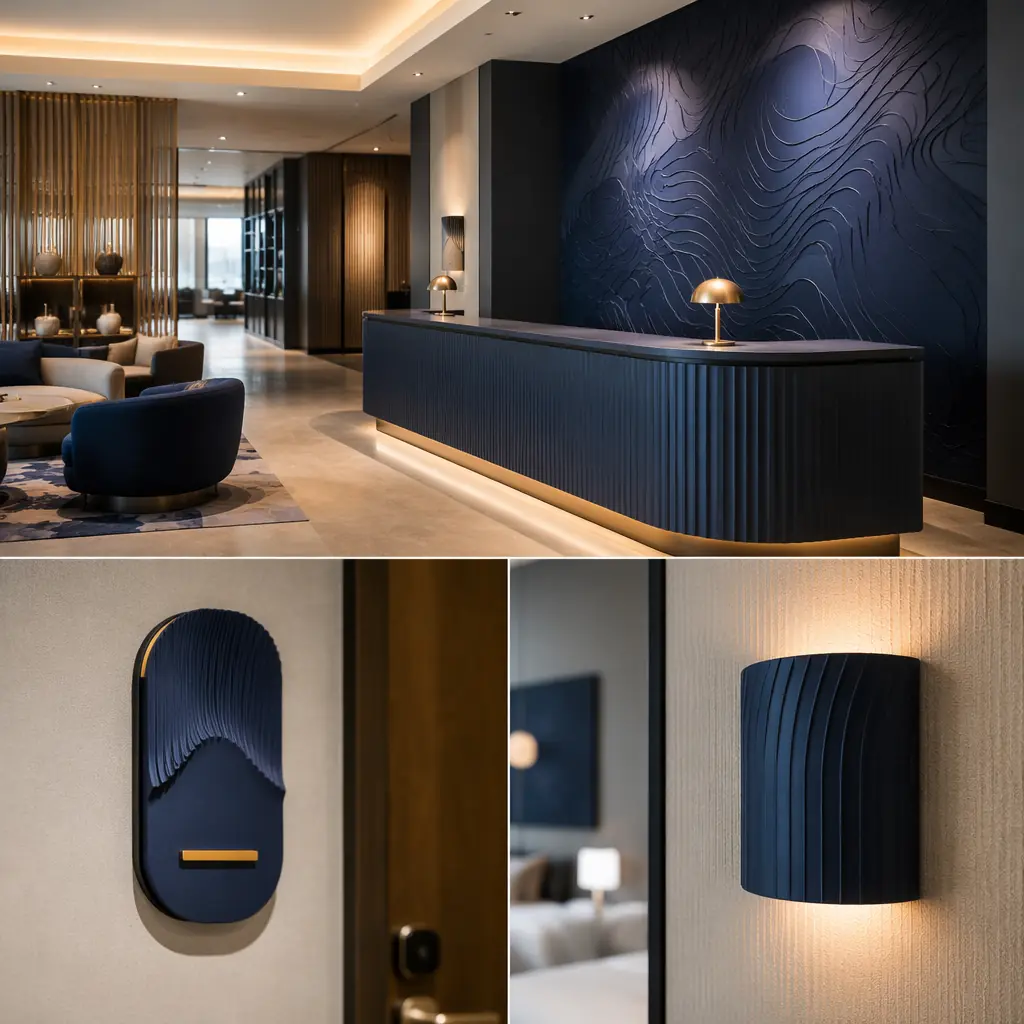
Hotels have the most diverse and highest-volume 3D printing use case of any hospitality sub-segment. A mid-range hotel property (150–250 rooms) contains approximately 5,000–8,000 individual physical components that can break, wear out, or go out of production: light switch covers, door handles, curtain rod brackets, electrical outlet faceplates, HVAC vent grilles, furniture feet, bathroom fixture components, key card holder brackets, and decorative trim pieces. When one of these components fails, the hotel has three options: (1) replace the entire assembly at the manufacturer's price (typically $50–200 for a complete fixture when the broken part is a $2 bracket), (2) source a replacement part from a third-party supplier with unknown lead times, or (3) 3D print the part in-house from a digital inventory of STL files.
The economics of option 3 are compelling. A hotel chain with 20 properties, each equipped with one $699 enclosed printer and a stock of 4 filament types (PLA for decorative parts, PETG for functional fixtures, ASA for outdoor components, TPU for flexible gaskets and feet), can eliminate approximately 60–80% of its third-party replacement part spend within 18 months. The printer itself pays for itself in 3–4 months of avoided replacement part purchases. The ongoing consumables cost — roughly $1,200–1,800 per property per year — replaces a third-party parts budget of $8,000–15,000 per property per year. Across 20 properties, that's $136,000–264,000 in annual savings from a $14,000 printer investment and $36,000 in consumables.
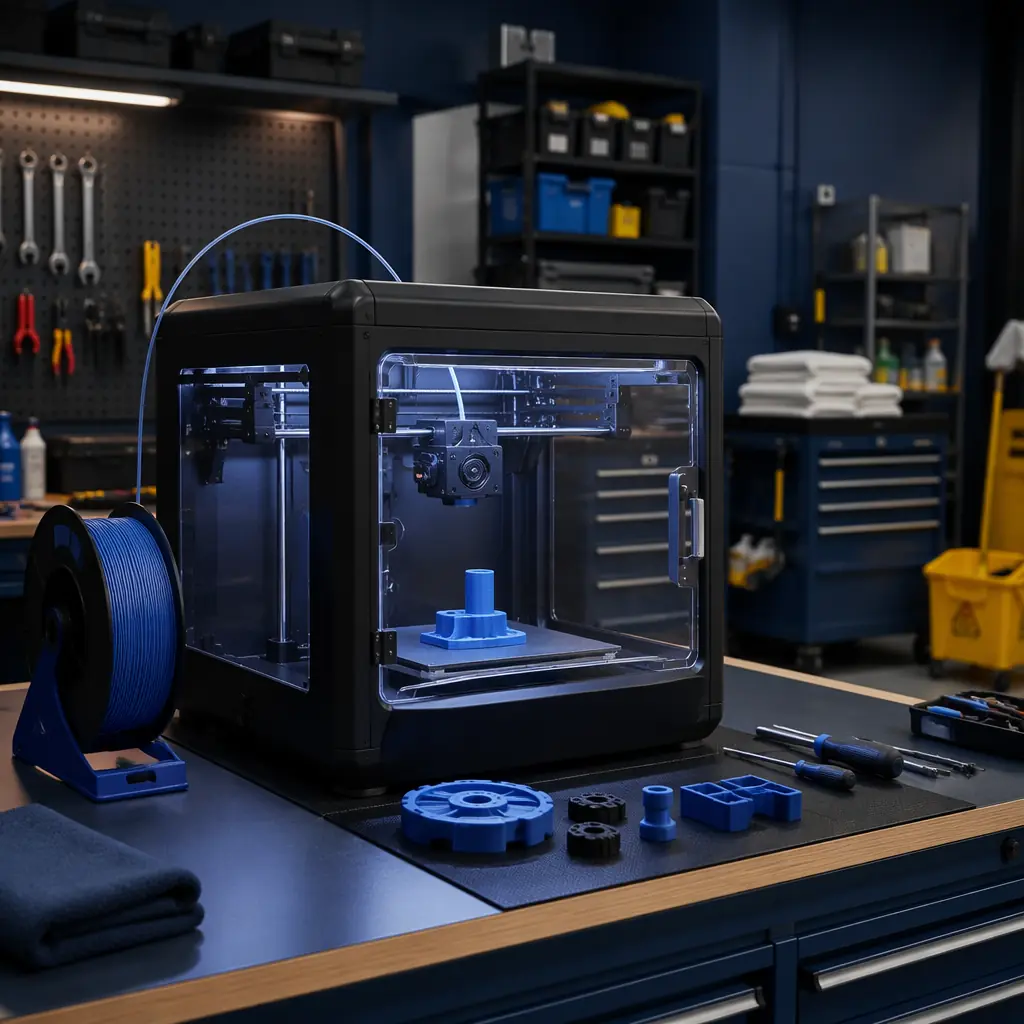
The equipment recommendation for hotels: One enclosed CoreXY printer per property (Bambu P1S or equivalent, $699–849), plus one large-format printer per regional hub (K2 Plus-class, $849–1,199 for parts too large for the standard printer). The enclosed chamber is mandatory — hotels cannot have open-frame printers in maintenance areas due to fire code and insurance requirements. The printer should be configured for LAN-only operation (no cloud dependency — hotel IT departments will reject any device that requires an internet connection to a manufacturer's cloud service for basic operation). Our enclosure guide covers the compliance requirements for institutional deployments.
Sub-Segment 2: Restaurants — Custom Servingware, Kitchen Fixtures, and Brand Consistency
Restaurant chains face a unique manufacturing problem: brand consistency across locations. A fast-casual chain with 200 locations needs identical serving trays, identical menu stands, identical condiment holders, and identical decorative elements at every single location. Traditional manufacturing requires large minimum order quantities (MOQs) — typically 5,000–10,000 units per SKU — and 8–12 week lead times for custom items. When a new menu item requires a new serving vessel, the chain faces a 3-month gap between concept approval and physical deployment. 3D printing eliminates both the MOQ and the lead time: a single location can prototype the new serving vessel in 6 hours, the corporate office can approve the design the next day, and all 200 locations can begin printing the item on their existing printers within 48 hours.
Beyond servingware, restaurants have a secondary use case that's even higher-volume: kitchen equipment repair parts. Commercial kitchen equipment — ovens, dishwashers, refrigeration units, ventilation systems — is manufactured by a small number of specialty suppliers who charge $50–200 for replacement plastic components (knobs, handles, gaskets, drip trays, fan blades) that cost $0.50–3.00 to 3D print in PETG or ASA. A restaurant with an in-house printer and a library of STL files for common replacement parts can reduce kitchen equipment maintenance costs by 40–60% — and eliminate the 3–5 day downtime that occurs while waiting for a replacement part to ship. For a restaurant generating $5,000–10,000 in daily revenue, a single day of downtime from a broken oven knob that could have been printed in 45 minutes represents a $5,000–10,000 operational loss. That math makes a $699 printer a 1-day payback investment.
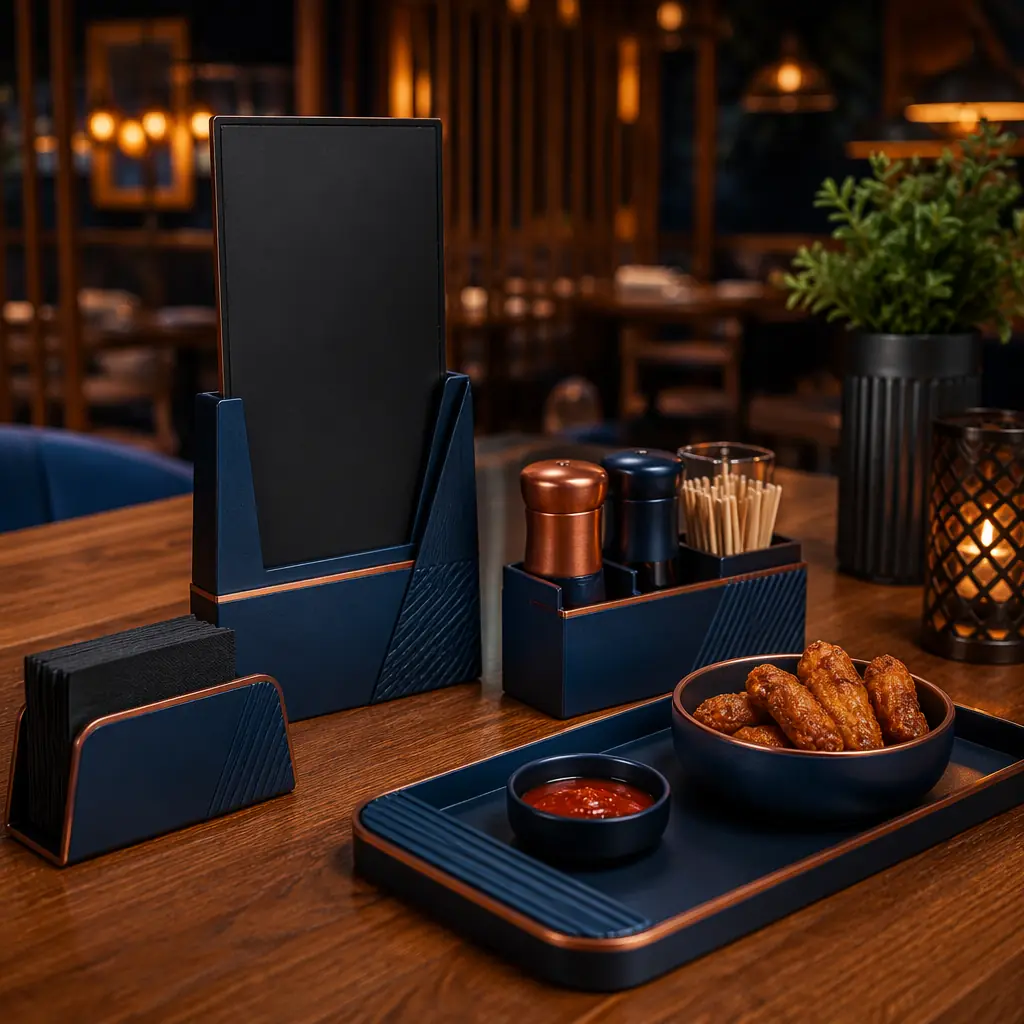
Food safety considerations: 3D printed parts that contact food require specific material choices and post-processing. PLA and standard PETG are not food-safe for repeated contact due to the porosity of FDM-printed surfaces (bacteria can colonize the layer lines). Food-safe options include: (1) printing in a food-safe filament (FDA-compliant PETG with food-safe certification, typically $35–45/kg), (2) coating the printed part in a food-safe epoxy resin that fills the layer lines and creates a smooth, non-porous surface, or (3) using the 3D printed part as a positive master for silicone mold-making, then casting the final part in food-safe silicone — a workflow that preserves the custom geometry while ensuring food safety compliance. Our food-safe 3D printing guide covers the full regulatory landscape in detail.
Sub-Segment 3: Retail — POP Displays, Visual Merchandising, and the 6-Week Refresh Cycle
Retail visual merchandising operates on a relentless refresh cycle. A department store updates its window displays every 4–6 weeks. A cosmetics brand refreshes its point-of-purchase (POP) displays seasonally. A sneaker retailer launches new in-store installations for every product drop. All of these require custom-manufactured physical components — brackets, stands, risers, signage holders, product pedestals — that are produced in small quantities (5–50 units per store), with short lead times (2–3 weeks from design to installation), and with zero tolerance for late delivery (a seasonal display that arrives after the season ends is worthless).
Traditional POP display manufacturing uses a mix of injection molding (for standardized components), CNC routing (for flat-pack display structures), and vacuum forming (for curved surfaces). All three have MOQs of 500–5,000 units and lead times of 6–10 weeks. A retailer who needs 30 custom sneaker display risers for 12 stores — 360 units total — is below the MOQ for injection molding (the mold alone costs $8,000–15,000) and will be quoted $25–40 per unit from a CNC shop at 6-week lead time. The same part 3D printed on a $699 printer costs $3–6 in filament per unit, prints in 4–6 hours each, and can be produced across 12 printers at 12 store locations for a total turnaround of 3 days. The cost savings are dramatic, but the speed advantage is the real value proposition: a retailer who can refresh displays in 3 days instead of 6 weeks can respond to trends, competitor actions, and social media moments in a way that traditional manufacturing can't match.
The Equipment Mix: What to Sell into Hospitality and Retail
The hospitality and retail vertical requires a different equipment mix than any other 3D printing vertical. The core requirements are reliability (these printers run 12–24 hours daily in environments with no technical staff), enclosure (fire code compliance for commercial spaces), and material versatility (PLA for decorative, PETG for functional, ASA for outdoor, TPU for flexible parts). Here's the recommended mix by sub-segment.
Hotel maintenance package (per property): One enclosed CoreXY printer ($699–849) + 4 filament starter pack (PLA, PETG, ASA, TPU, $120) + spare parts kit (2 nozzles, 1 build plate, 2 PTFE tubes, $65) + 1 filament dryer ($50). Total initial sale: $934–1,084. Monthly consumables: $100–150. Annual account value per property: $2,100–2,650. Multiplied by 20 properties in a chain: $42,000–53,000 annual account value from one hotel chain contract.
Restaurant chain package (per location): One enclosed CoreXY printer ($699–849) + food-safe filament starter pack (FDA-compliant PETG, $150) + standard filament pack (PLA, ASA, $60) + coating kit (food-safe epoxy, brushes, PPE, $45). Total initial sale: $954–1,104. Monthly consumables: $80–120 (standard printing) + $40–60 (food-safe specialty). Annual account value per location: $1,500–2,100. For a 50-location chain: $75,000–105,000.
Retail visual merchandising package (per store): One enclosed CoreXY printer ($699–849) + 1 large-format printer for oversized displays ($849–1,199, one per 3–5 stores) + filament variety pack (PLA in 6 colors including matte black and white, $180) + post-processing kit (sanding, priming, spray painting, $40). Total initial sale per store: $919–1,069 (standard printer) + shared large-format cost. Monthly consumables: $120–200 (color variety drives higher consumption). Annual account value per store: $2,100–3,100. For a 30-store retail chain with 6 large-format printers: $72,000–102,000. For guidance on how to structure the consumables subscription and reorder flow for multi-location accounts, see our consumables subscription guide.
The Sales Playbook: How to Pitch Hospitality and Retail Buyers
Hospitality and retail buyers are not technical. They will never read a spec sheet, compare nozzle temperatures, or watch a YouTube review. The sales approach must lead with business outcomes and prove the economics before mentioning the technology.
Step 1: Audit their current replacement part spend. Ask the facilities manager or operations director for their last 12 months of maintenance supply orders. Identify the 10 highest-volume replacement parts — these are almost always plastic components (brackets, covers, knobs, trim pieces). Calculate what those 10 parts cost from their current supplier. Then calculate what they would cost to 3D print. The difference is the annual savings — and it's typically $8,000–15,000 per property.
Step 2: Print a sample. Get the CAD file or physical sample of one of their top replacement parts. Print it on an enclosed CoreXY printer in the appropriate material. Bring the printed part to the next meeting — along with the cost comparison. A facilities manager holding a $1.20 3D-printed replacement for a $47 OEM part is 90% of the way to a purchase decision before you discuss a single printer specification.
Step 3: Propose a pilot, not a rollout. Don't pitch 50 printers for 50 locations. Pitch one printer for one location, with a 90-day pilot. Provide the printer, the filament starter pack, the spare parts kit, and — critically — a library of pre-sliced STL files for their top 10 replacement parts. The pilot's success metric is simple: did the printer produce at least $2,000 in parts that would otherwise have been purchased from third-party suppliers? If the answer is yes (and it almost always is), the pilot converts to a chain-wide rollout without further sales effort — the facilities manager champions the expansion internally because it's a proven cost-saver.
Step 4: Lock in the consumables contract. The printer sale is the entry point. The consumables contract is the business. Structure the chain-wide rollout as a printer purchase (one-time) plus a monthly consumables subscription (recurring) that includes filament, spare parts, and access to an expanding library of pre-sliced replacement part files. The subscription model aligns the distributor's incentives with the customer's success: the distributor earns recurring revenue, and the customer gets a predictable consumables cost that replaces their unpredictable third-party parts budget. Our consumables subscription program guide covers subscription pricing models in detail.
The Competitive Landscape: Why There's No Incumbent
The hospitality and retail 3D printing vertical has no dominant equipment channel because no major manufacturer has built a sales motion for it. Bambu Lab sells direct-to-consumer. Creality sells through broad e-commerce distribution. Prusa sells to enthusiasts and educators. None of them have a hospitality-specific sales team, a hotel-specific SKU bundle, or a restaurant-specific training program. The vertical is wide open for regional and specialty distributors who can provide the hands-on support, the pre-sliced part libraries, and the 48-hour replacement printer guarantee that hospitality buyers require.
The window for establishing a defensible position in this vertical is 12–18 months. As hotel chains and restaurant groups publish case studies about their in-house 3D printing programs, the equipment manufacturers will notice and build vertical-specific sales motions. The distributors who establish accounts now — who become the trusted equipment partner for a hotel chain's maintenance program or a retailer's visual merchandising department — will have a switching-cost moat that's difficult for a direct-sales manufacturer to overcome. Hospitality buyers don't switch equipment suppliers lightly; once a printer model is approved by their corporate engineering and risk management teams, changing to a different model requires re-approval, re-training, and re-certification — a 6–12 month internal process that most operations directors will avoid unless the current supplier fails catastrophically. For broader strategic context on vertical market expansion, see our market trends guide.
Enter the Hospitality Vertical
Build a Hospitality & Retail 3D Printing Program
Precise3D provides complete hospitality and retail printer packages — enclosed CoreXY printers, consumables subscriptions, pre-sliced replacement part libraries, and on-site training programs. Enter a $2B vertical before your competitors do.