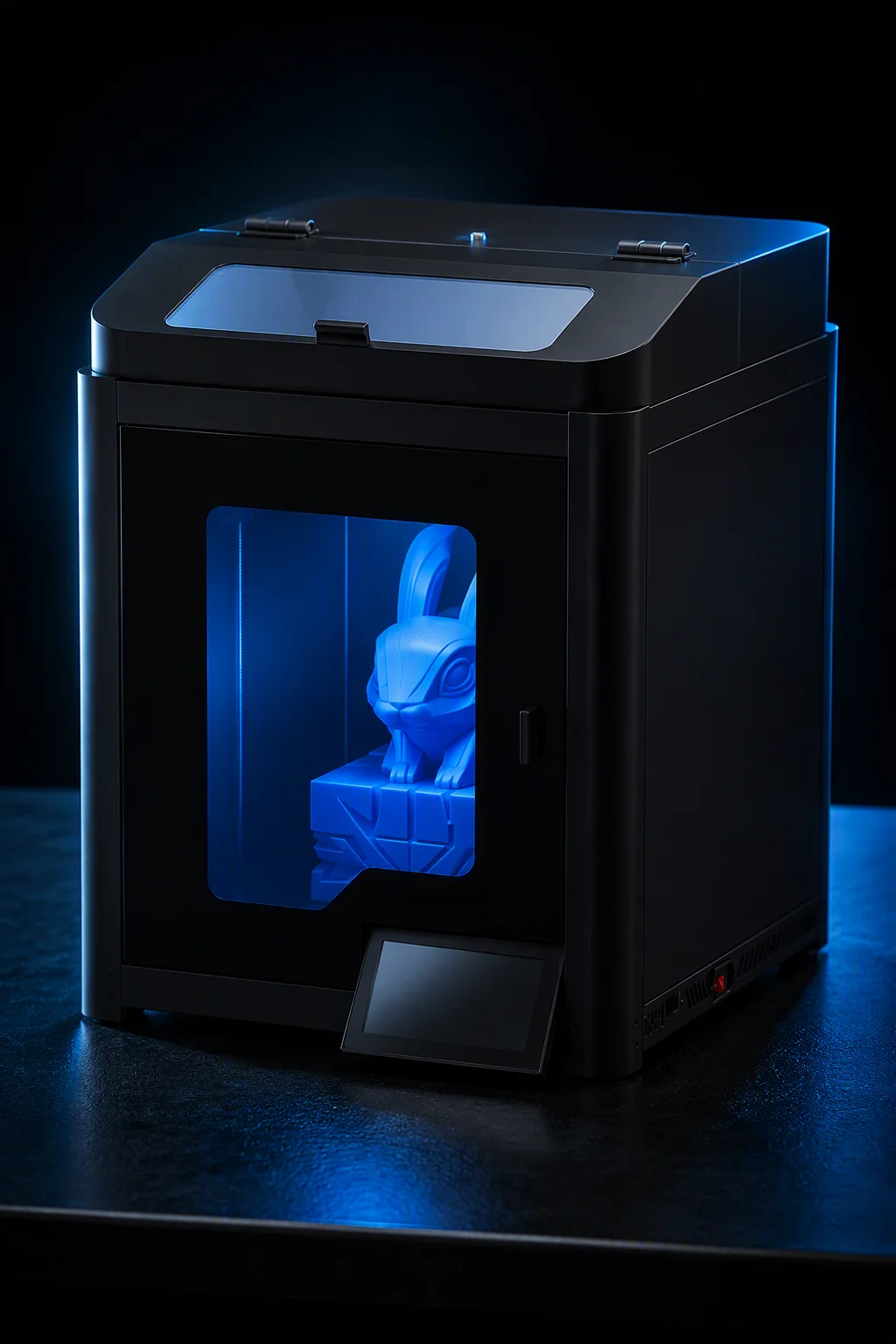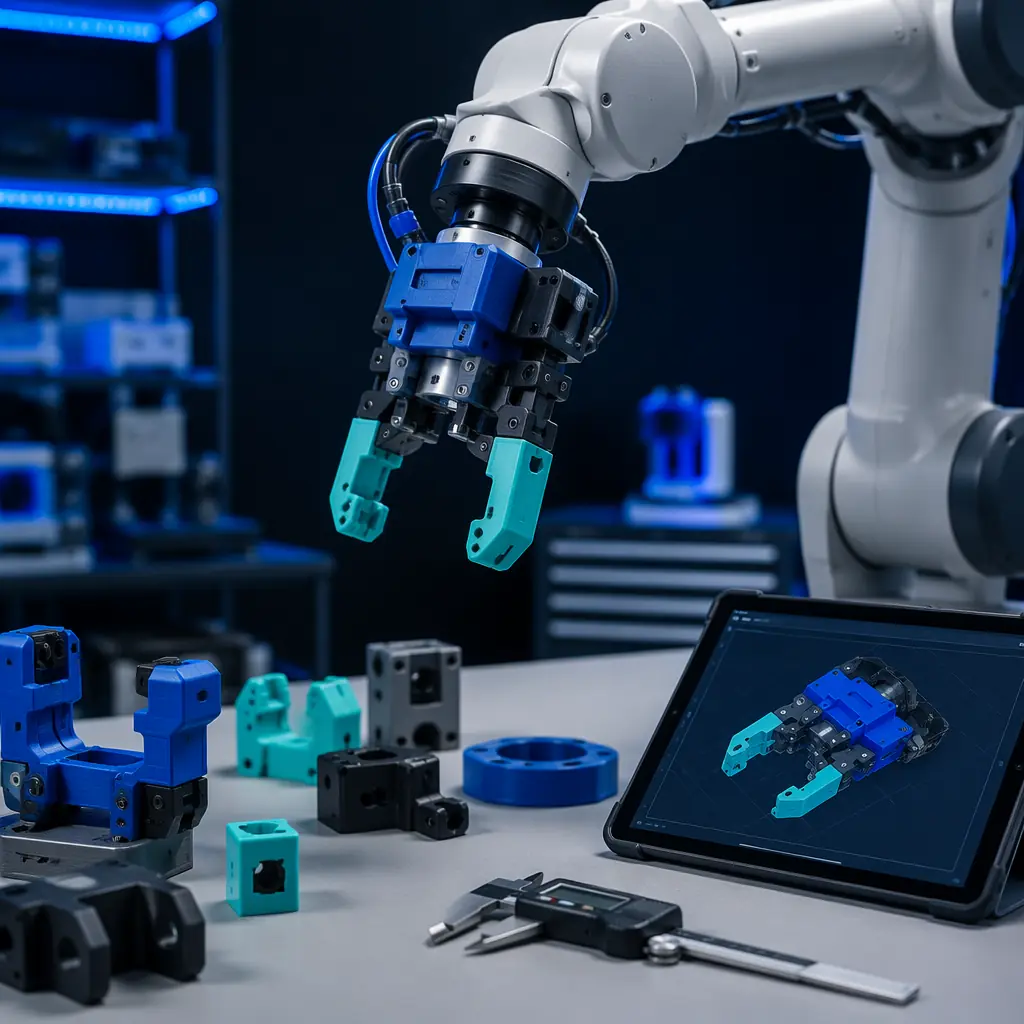
Walk into any robotics startup or factory automation lab, and you'll hear the same sound: a 3D printer running. Robotics engineers are arguably the heaviest per-capita users of 3D printing in any industry. They don't print one-off decorative models — they print functional components that go directly onto $50,000 industrial robot arms, into autonomous mobile robots navigating warehouse floors, and onto the end effectors that handle everything from semiconductor wafers to pallets of concrete blocks.
The global robotics market is projected to reach $45 billion by 2028, growing at a 15% CAGR. Every single robotics company — from two-person drone startups to established industrial automation integrators — needs 3D printing capability. For distributors, this vertical represents one of the highest-value, highest-frequency customer segments. Here's how to approach it systematically: which printer specs actually matter to robotics engineers, which materials they consume at volume, and how to build recurring revenue beyond the initial printer sale.
Why Robotics Engineers Print More Than Anyone Else
The core workflow of robotics development is iterative mechanical design. A gripper design goes through 5–15 revisions before it works reliably on the target object. Metal machining each iteration would take days and cost hundreds of dollars per version. With a 3D printer on the desk, that same iteration cycle drops to hours and single-digit dollars. The economics create a natural addiction: once a robotics engineer has in-house 3D printing, they'll never go back to outsourcing prototypes.
But the usage doesn't stop at prototyping. A growing percentage of robotics companies deploy 3D printed end-use parts in production — cable management brackets, sensor enclosures, custom mounting plates, and even end-of-arm tooling for low-force applications. The materials have caught up to the requirements. Engineering-grade filaments like PA-CF, PC, and even PEEK now deliver mechanical properties that rival machined aluminum for non-structural components.
What this means for distributors: Robotics companies don't buy one printer — they buy one per engineering pod, then expand to print farms as they move into production. The lifetime value per account is 3–5x higher than a typical education or hobbyist customer.
Printer Specifications That Robotics Engineers Actually Care About
Robotics engineers evaluate 3D printers differently from hobbyists or educators. They're less interested in color touchscreens and more interested in dimensional accuracy, material compatibility, and reliability over multi-day print jobs. When you're pitching to this segment, lead with these specs:
The enclosed printer premium is worth emphasizing here — robotics labs print almost exclusively in engineering materials, and an open-frame printer that can only handle PLA won't survive the first week. For a deep dive into dual extrusion for robotics applications, see our IDEX guide.
The Materials Robotics Engineers Actually Consume at Volume
Forget the rainbow PLA multi-packs. Robotics engineers buy four material families, and they buy them in quantity. Understanding this pattern is the difference between a $200 first order and a $2,000 recurring monthly account:
- PETG (40% of volume) — The workhorse. Good impact resistance, prints reliably on enclosed printers, chemical resistance for shop-floor environments. Robotics teams go through 4–8 spools/month for functional prototypes that don't need high-temperature performance.
- ASA / ABS (25% of volume) — UV-stable for outdoor robots and factory-floor deployments. ASA prints cleaner than ABS and weathers better. Critical for agricultural robots, outdoor autonomous vehicles, and any robot operating near UV-curing stations.
- PA-CF / PA-GF (20% of volume) — Nylon with carbon or glass fiber fill. Used for structural components — gripper bodies, mounting brackets, load-bearing joints. A single end-of-arm tooling assembly can consume 200–400g of PA-CF. See our filled filaments guide for the full breakdown.
- TPU (15% of volume) — Flexible filament for gripper pads, vacuum cups, cable strain reliefs, and impact-absorbing bumpers. Shore hardness 85A–95A is the sweet spot. Robotics teams go through TPU faster than any other flexible application because gripper pads wear out and get replaced regularly.
Notice what's missing: PLA. Robotics engineers almost never use PLA for functional parts — it's too brittle, creeps under load, and softens at 55°C (well within the operating temperature of a robot motor housing). If a robotics customer asks for PLA, they're buying for the break room printer, not the engineering lab. Stock it as a courtesy, but don't build your robotics vertical strategy around it.
The Consumable Flywheel: Why Robotics Accounts Compound Over Time
Robotics accounts follow a predictable consumption curve that makes them unusually valuable over time:
Month 1–3:
Customer buys 1–2 enclosed printers, 10–15 spools (PETG + ASA), and a starter kit of nozzles and build plates. Monthly spend: $2,000–4,000.
Month 4–6:
Engineering team validates their workflow. They add 1–2 more printers to parallelize prototyping. Material consumption doubles as they print functional test fixtures in addition to prototypes. Monthly spend: $3,000–6,000.
Month 7–12:
The robotics company starts deploying 3D printed end-use parts in production — cable management, sensor housings, custom brackets. They add 3–5 printers in a dedicated print area with automated job queuing via Klipper/Mainsail. Consolidated consumable ordering begins — they want one SKU per material, delivered monthly. Monthly spend: $5,000–12,000.
The pattern holds because robotics is an engineering-driven purchasing decision, not a procurement-driven one. Once the engineers trust the printer and the material supply chain, they expand organically. Your job as the distributor is to make the expansion frictionless: auto-replenishment, consolidated invoicing, and same-day shipping on the core four materials.
Sub-Segments Within Robotics — Where to Focus Your Sales Effort
Not all robotics companies are equal 3D printing customers. Here's how the sub-segments stack up for distributors:
Industrial Robot Integrators — These companies design and install robotic work cells for factories. They print custom grippers, sensor mounts, cable guides, and safety guarding brackets. Average account: 3–8 printers, $4,000–10,000/month in consumables. Highest value segment. Target system integrators listed on the Robotics Industries Association directory in your region.
AMR/AGV Manufacturers — Autonomous mobile robots for warehouses, hospitals, and logistics. They print enclosure components, sensor pods, and mounting systems. These companies are volume buyers because each AMR unit ships with 10–30 3D printed parts. Average account: 8–20 printers, $8,000–20,000/month. Highest volume, hardest to land.
Cobot Manufacturers — Collaborative robots (Universal Robots, Franka Emika ecosystem). Lighter-duty, highly iterative design cycles. They print gripper fingers by the dozen — a single UR5e deployment might go through 50+ printed gripper variants before finalizing the design. Average account: 2–5 printers, $2,000–5,000/month. Easiest entry point.
Drone/UAV Startups — High iteration speed, weight-sensitive designs. Heavy users of lightweight filled materials (PLA-CF, PA-CF). Smaller accounts by spend ($1,000–3,000/month) but numerous and fast-growing. Worth serving if you can automate the ordering process.
Start with cobot manufacturers and industrial integrators — they're the most accessible and have immediate, demonstrable 3D printing needs. AMR manufacturers require longer sales cycles but provide anchor-account stability once landed.
Reviewed by the Precise3D engineering & OEM team. Compliance files that accompany the catalog are auditable at the certification register.
Partnership Opportunity
Supply 3D Printers to the Robotics Industry
We offer enclosed, engineering-grade 3D printers designed for the materials robotics engineers actually use — PETG, ASA, Nylon, and TPU. Bulk pricing, OEM/white-label options, and dedicated technical support for your robotics accounts.