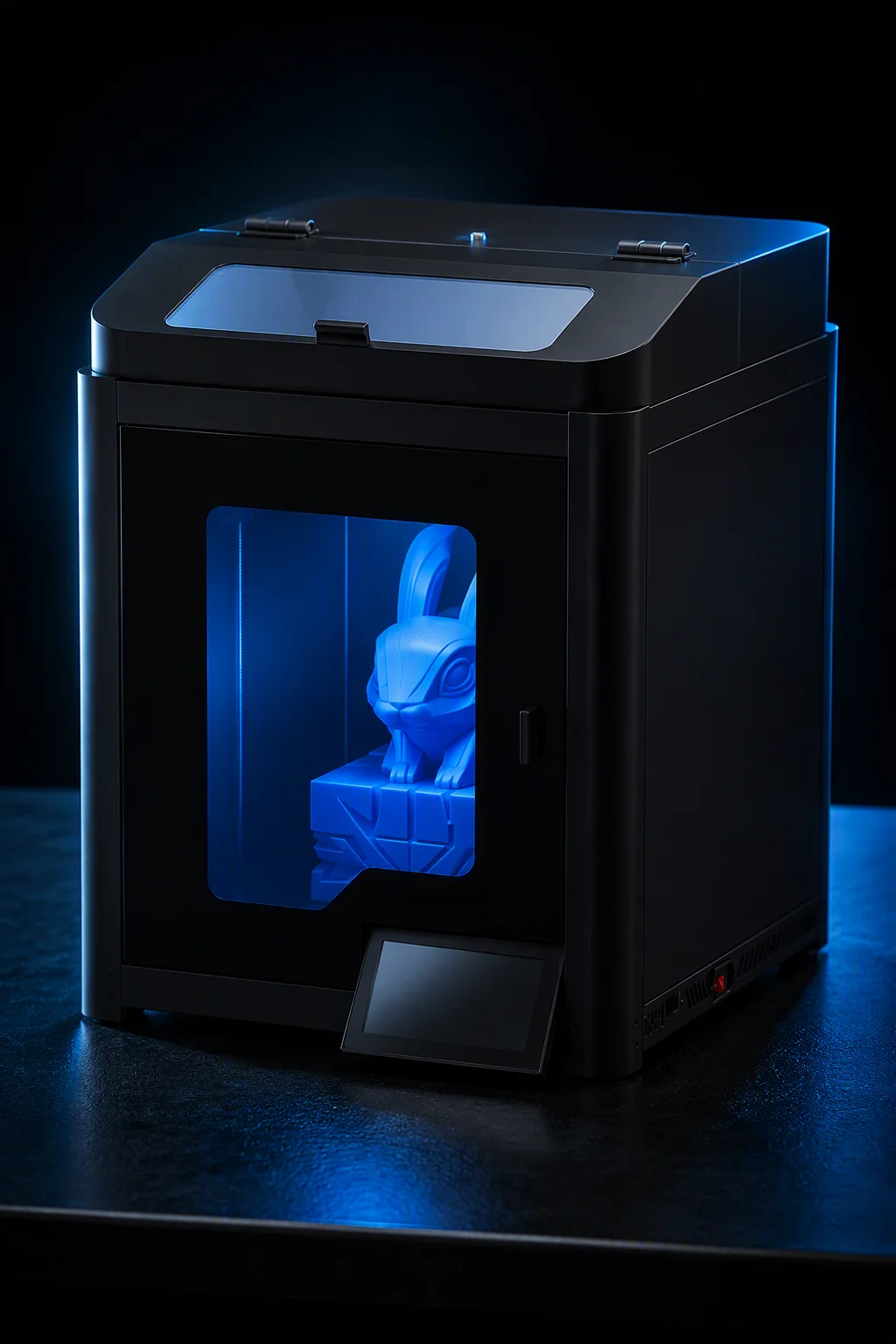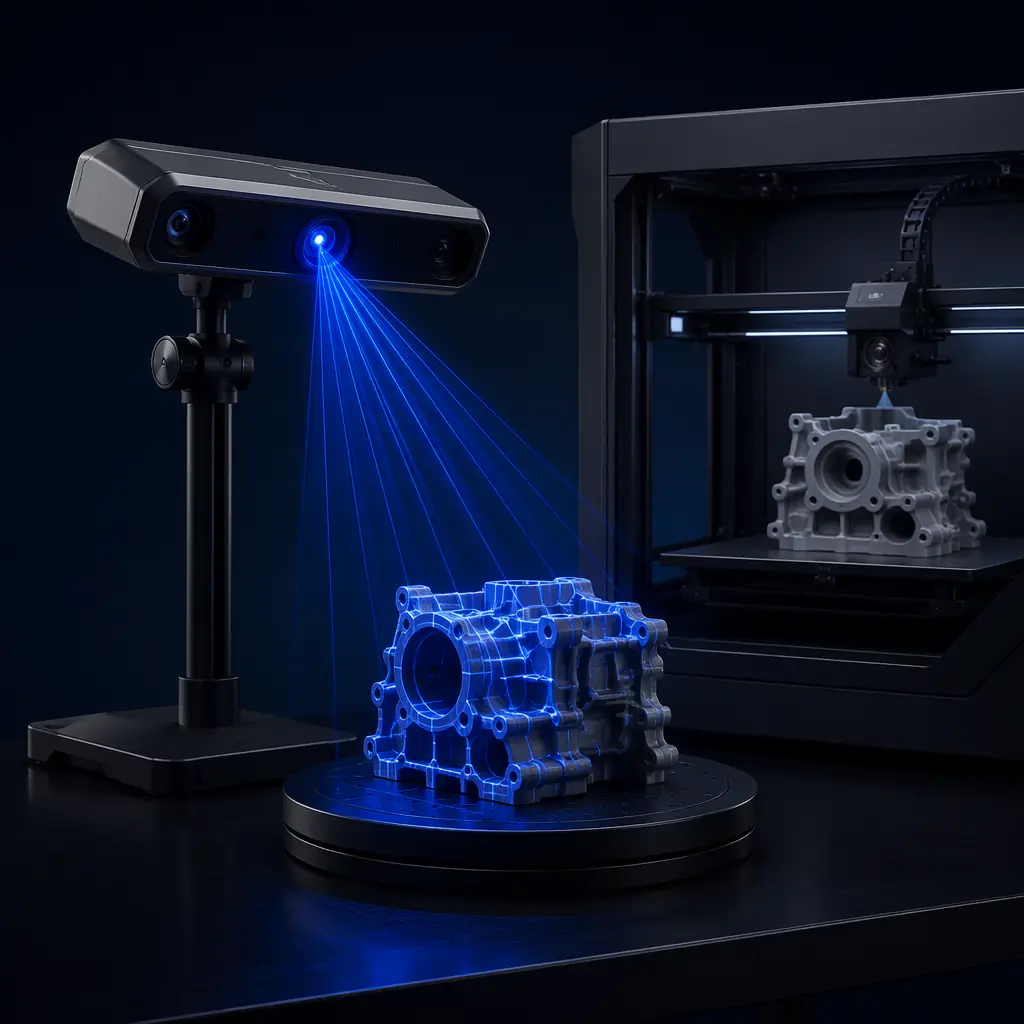
The 3D scanner market is growing at a 7.5% CAGR and is projected to reach $8.4 billion by 2030, driven by the same forces that are accelerating 3D printer adoption: digitization of manufacturing, demand for rapid prototyping, and the rise of customized production. For distributors already selling 3D printers, scanners represent the single largest adjacent revenue opportunity — because nearly every professional printer buyer either already needs a scanner or will within 12 months of deployment.
Yet most distributors treat scanners as an afterthought — a checkbox accessory alongside filament dryers and spare nozzles. That is a six-figure mistake. The data from Precise3D's distributor network is consistent: deals that include a scanner alongside a printer close at 63% higher average order value than printer-only deals, and scanner-inclusive customers show 28% lower churn at 18 months because the scanner embeds your solution deeper into their workflow. This guide gives you the comparison framework, pricing intelligence, and bundle strategy to capture that revenue.
Why Distributors Need 3D Scanners in Their Portfolio
The economics of adding scanners to your product line are straightforward, but the strategic argument is stronger than the financial one. When you sell only a printer, you are selling a production tool. When you sell a scanner alongside it, you are selling a complete digital manufacturing workflow. The difference in buyer perception — and willingness to pay a premium — is substantial.
Consider three real distributor scenarios from the Precise3D network in 2025–2026:
Dental lab distributor, Germany:
Selling resin printers to dental labs averaged EUR 3,200 per deal. After adding an entry-level structured light scanner (EUR 1,800 dealer cost, sold at EUR 2,900), the average deal rose to EUR 5,800 — an 81% increase — and required the same sales cycle length. The scanner was not an upsell; it was the answer to the question the lab manager was already asking: "How do I get the physical impression into the digital workflow?"
Education distributor, Australia:
A university tender for 20 FDM printers (AUD 24,000) was expanded to include 4 structured light scanners (AUD 12,000 dealer cost) for the digital fabrication lab. The total deal rose from AUD 24,000 to AUD 42,000 — a 75% increase — and the university's procurement committee approved the bundled proposal faster because it presented a "complete solution" rather than a piecemeal equipment purchase. Our education distributor guide details the curriculum-integration angles that make bundled proposals nearly self-justifying to academic buyers.
Manufacturing distributor, United States:
An engineering firm buying a large-format FDM printer (USD 5,200) for prototyping was introduced to a handheld laser scanner (USD 8,500 dealer cost) for reverse-engineering legacy parts. The combined deal — USD 17,000 — was 2.3x the original printer-only budget. The firm's engineering director later reported that the scanner had been used on 14 projects in the first quarter, generating savings of over USD 40,000 in outsourced CAD services.
The pattern holds across verticals, geographies, and price points. A scanner does not just add to the invoice — it changes the nature of the sale from an equipment purchase to a capability investment. That is the positioning shift that unlocks larger budgets and shorter approval cycles. For distributors building a balanced product portfolio strategy, the portfolio strategy guide covers how scanners fit into a multi-vertical product line alongside printers, materials, and accessories.
3D Scanner Technology Comparison
There are three dominant 3D scanning technologies in the market today, and each has a distinct accuracy band, speed profile, and ideal application set. Understanding these differences — and being able to explain them in 90 seconds to a non-technical buyer — is the core skill that separates scanner-selling distributors from those who carry scanners but never move them.
Structured Light: The Precision Workhorse
Structured light scanners project a known pattern (typically blue or white LED fringe patterns) onto the object and use one or more cameras to measure how the pattern deforms across the surface. Because each scan captures millions of data points simultaneously, structured light is the fastest scanning technology and the most accurate — achieving resolution as fine as 0.01mm, which is equivalent to 10 microns or approximately one-eighth the diameter of a human hair.
For distributors, structured light is the highest-volume scanner category because its core applications — dental model digitization, jewelry wax pattern scanning, and small-part QC inspection — align directly with the highest-growth segments of the 3D printer market. Every dental lab buying a resin printer for model production will eventually need a scanner. Every jewelry studio investing in castable resin printing will need a scanner for design capture and pattern digitization. Our dental lab guide and jewelry casting guide cover the scanner integration angle in depth for each vertical.
The key technical specification to compare across structured light models is single-scan accuracy (not volumetric accuracy, which is the accumulation of errors across multiple aligned scans). Single-scan accuracy of 0.02mm or better is the threshold for dental and jewelry applications. Models in the 0.03–0.05mm range are sufficient for general-purpose reverse engineering and QC work.
Laser Triangulation: The Industrial Standard
Laser scanners emit a laser line or point and measure its reflection with a camera at a known offset angle, calculating distance through triangulation. Unlike structured light, which captures an entire surface patch at once, laser scanning builds the model point by point or line by line — making it slower per scan but far more effective on large, complex geometries and in less-controlled lighting conditions.
Laser scanners dominate the industrial reverse-engineering segment (automotive components, aerospace tooling, heavy machinery parts) because they can handle objects from a few centimeters to several meters in size. Handheld laser scanners — a rapidly growing subcategory — allow operators to walk around large objects (engine blocks, aircraft components, architectural elements) and capture data in real time, with the software stitching scans as the operator moves.
For distributors, laser scanners represent the highest-margin segment within the scanner category, with dealer margins typically 30–45% on handheld industrial units. The buyer profile is also attractive: engineering departments and manufacturing firms with recurring scanning needs, established procurement budgets, and a strong preference for ongoing supplier relationships over one-off purchases. Training and support services can add an additional 15–20% revenue on top of hardware sales.
Photogrammetry: The Accessible Entry Point
Photogrammetry reconstructs 3D geometry from a series of overlapping 2D photographs taken from different angles. Software identifies common features across images and calculates their 3D positions through triangulation — the same principle your eyes use for depth perception. Modern photogrammetry software (Agisoft Metashape, RealityCapture, Meshroom) can produce surprisingly good results from phone cameras, making this the lowest-cost entry point into 3D scanning.
However, photogrammetry has three hard constraints that limit its professional applicability: (1) accuracy rarely exceeds 0.1mm, making it unsuitable for precision engineering or dental work; (2) it cannot scan featureless, shiny, or transparent surfaces without applied texture (matting spray, reference dots); (3) post-processing is time-intensive — a high-quality model from 150 photos can require 1–3 hours of computation and manual cleanup. For heritage preservation, architecture, and large outdoor scanning where sub-millimeter accuracy is unnecessary, photogrammetry is the correct and cost-effective choice. For everything else, structured light or laser is the right tool.
Price Tiers and Margins for Distributors
The 3D scanner market spans a wider price range than the consumer/prosumer 3D printer market — from $500 entry-level photogrammetry kits to $50,000 industrial laser systems. For distributors building a scanner product line, the optimal strategy is to carry one model in each of three tiers and match the tier to the buyer's application rather than their stated budget.
The margin structure is favorable compared to 3D printers at equivalent price points, because the scanner market has fewer competitors and less price transparency. Buyers rarely comparison-shop scanners the way they do printers — scanner selection is more application-driven, and a distributor who can articulate the technology-application match commands significant pricing power.
What you're listening for: The answer reveals the required accuracy tier. If the buyer says "I need to 3D print replacement parts that fit existing assemblies," you need 0.05mm or better (structured light). If they say "I want to create digital archives of sculptures for a museum catalog," photogrammetry at 0.5mm is adequate. The use case determines the technology, not the budget. Sell the right tool for the job and the budget often follows.
Application Matching: Which Scanner for Which Buyer
The most common mistake distributors make when entering the scanner market is treating scanners as a product category instead of an application category. A scanner is not "a scanner" — it is a reverse-engineering tool, a quality-inspection instrument, a dental digitization device, or a heritage preservation system. The technology requirements change completely depending on which job it is doing.
For the QC inspection use case, note that the scanner often replaces rather than complements a printer — the buyer is measuring existing parts against a CAD reference, not producing new ones. This is a distinct sales motion from the scanner-printer bundle, but it is a high-value transaction in its own right, with industrial QC scanners commanding $15,000+ price points and strong recurring calibration/service revenue.
Building Scanner-Printer Bundles That Sell
The scanner-printer bundle is the highest-value sales motion available to a 3D equipment distributor, but it only works when the bundle is built around a workflow, not a discount. A "buy the printer, get 10% off a scanner" offer underperforms because it frames the scanner as an optional accessory. A "complete scan-to-print solution for dental labs: scanner, printer, curing station, and 2 kg of model resin" offer outperforms because it frames the bundle as the minimum viable toolset for the buyer's actual job.
Here are the three bundle templates that have produced the highest attach rates across Precise3D's distributor network:
Bundle 1: Dental Lab Starter Kit.
Desktop structured light scanner (0.02mm accuracy, dental-specific software with automatic model base generation) + LCD resin printer (8.9" 4K mono, suitable for model production) + wash-and-cure station + 2 kg dental model resin. Dealer cost: ~$2,800. Recommended retail: $4,900. Attach rate: 72% of dental printer buyers who are shown this bundle purchase it instead of the printer alone.
Bundle 2: Engineering Reverse-Engineering Suite.
Handheld laser scanner (0.03mm accuracy, real-time mesh generation) + enclosed CoreXY FDM printer (300x300mm build, engineering materials capable) + 3 spools of engineering filament (PA-CF, PETG-CF, ABS). Dealer cost: ~$4,500. Recommended retail: $7,900. Attach rate: 58% among engineering-firm buyers.
Bundle 3: Education Digital Fabrication Lab.
Entry-level structured light scanner + 4 FDM printers (enclosed, auto-leveling, suitable for unsupervised student use) + 10 kg PLA filament assortment + curriculum guide. Dealer cost: ~$3,200. Recommended retail: $5,800. Attach rate: 64% among education buyers, with strong repeat filament revenue at 6+ kg/month per lab.
For distributors new to the scanner category, the scanner-printer bundle strategy guide provides complete pricing models, sales script frameworks, and objection-handling patterns for each vertical.
Top Scanner Brands for Distributors
The 3D scanner brand landscape is more consolidated than the 3D printer market, which means less noise and clearer leadership signals. Four brands dominate the distributor-relevant segments — the ones that offer dealer programs, wholesale pricing, and products that integrate naturally with 3D printer workflows.
For most distributors, the optimal brand strategy is to lead with Creality CR-Scan or Revopoint for the entry and mid-range tiers (where volume is highest and the printer-bundle synergy is strongest) and carry Shining 3D EinScan for the professional tier (where accuracy requirements demand a dedicated scanner brand with dental/industrial certifications). The entry-tier models from these brands — CR-Scan Ferret, Revopoint MINI 2, EinScan SE — all deliver 0.02–0.05mm accuracy at dealer costs of $500–$1,200, making them ideal bundle companions for the $500–$2,000 printer range that dominates consumer and education channels.
The strategic play for distributors who already have established printer relationships is to negotiate scanner distribution rights from the same OEM. If you are already a Creality printer distributor, adding CR-Scan scanners consolidates your supply chain, simplifies shipping and customs (single factory, combined containers), and gives you exclusive territory bundling rights that standalone scanner dealers cannot match.
Reviewed by the Precise3D engineering & OEM team. Compliance files that accompany the catalog are auditable at the certification register.
Partner With Precise3D
Add 3D Scanners to Your Distributor Portfolio
Precise3D distributors get scanner sourcing support, bundle pricing guidance, and territory-specific application matching data. Whether you are expanding from printers into scanners or starting fresh with a complete digital manufacturing portfolio, we provide the OEM relationships, technical training, and demand-generation assets to make scanners your fastest-growing category.