The registration letter arrives about fourteen months after the first shipment, and it is addressed to the distributor rather than to the factory. That is the whole problem in one sentence. Extended producer responsibility for packaging is national law in every EU member state, it attaches to whoever first places the packaged product on that national market, and for an imported 3D printer that party is almost always the distributor who bought it, not the Shenzhen factory that boxed it.
Most packaging compliance guides are written for a consumer goods brand with a packaging engineer and a sustainability team. A printer distributor has neither. What follows is the version that starts from the five packaging components of an actual machine, prices what each one triggers, and answers the question distributors actually ask: who is legally the producer here, and what does registration cost.
Who the Producer Is, and Why It Is Usually You
The definition is consistent in structure across member states even where the thresholds differ. The producer is the party that first makes the packaged product available on the market of that country in the course of business. Three common distribution models produce three different answers, and getting this wrong is the most expensive mistake in the whole topic, because registering in the wrong country or under the wrong party means the correct registration is still missing when enforcement arrives.
| Distribution model | Who first places it on the national market | Obligated party |
|---|---|---|
| Distributor imports printers in factory cartons, sells from own warehouse | The distributor, on import | Distributor, in every country it ships to |
| Distributor sells into another member state via carrier, DDP | The distributor, at the point of delivery | Distributor, in the destination country |
| Distributor sells into another member state, Ex Works, buyer arranges freight | The buyer or the buyer's importer | Buyer, if it acts in the course of business |
| Factory sells direct to end user in the EU | The factory, as importer of record | Factory, with an authorised representative |
| Marketplace sale from outside the EU | The marketplace, under most national transpositions | Marketplace, with recourse to the seller |
Two rows in that table surprise distributors. The third is the only arrangement that moves the obligation to the buyer, and it does so only if the buyer genuinely takes on import responsibility. A DDP term, which is what most Chinese factories quote by default and what most distributors prefer for simplicity, puts the obligation squarely on the distributor. The trade term chosen at negotiation quietly determines a five-figure annual compliance obligation on a high-volume line.
The fourth row matters for distributors who act as the factory's agent. A distributor that takes an order, passes it to Shenzhen and takes a commission is not the producer, but if any invoice or customs declaration bears the distributor's name as importer, the distinction collapses in an audit. The evidence that matters is the customs entry, not the commercial understanding.
What the answer tells you: that party is the packaging producer for that country. Everything else, including the factory's own compliance claims, is secondary. A distributor that has never looked at its own customs entries does not yet know how many packaging registrations it owes.
The Five Packaging Components of a 3D Printer
A printer ships in a packaging set that has been optimised for impact protection and almost never for recyclability, and each component maps onto a different obligation. This is where generic packaging advice fails, because a 25 kg machine with a glass bed and a precision gantry cannot be packed like a toaster.
| Component | Typical material | EPR impact | Practical problem |
|---|---|---|---|
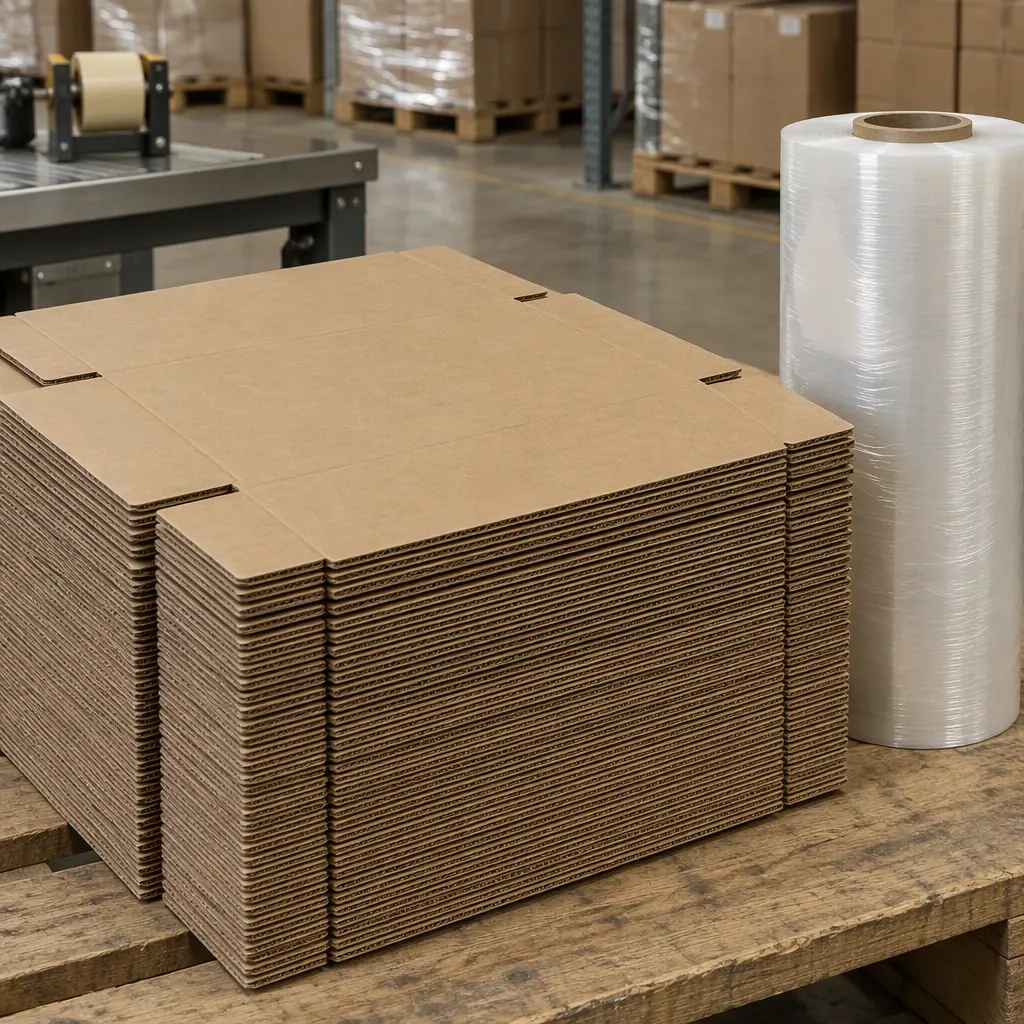
| Outer carton | Double-wall corrugated board, 7 to 9 mm | Registered, paper stream, low fee | Usually already recycled content and widely collected |
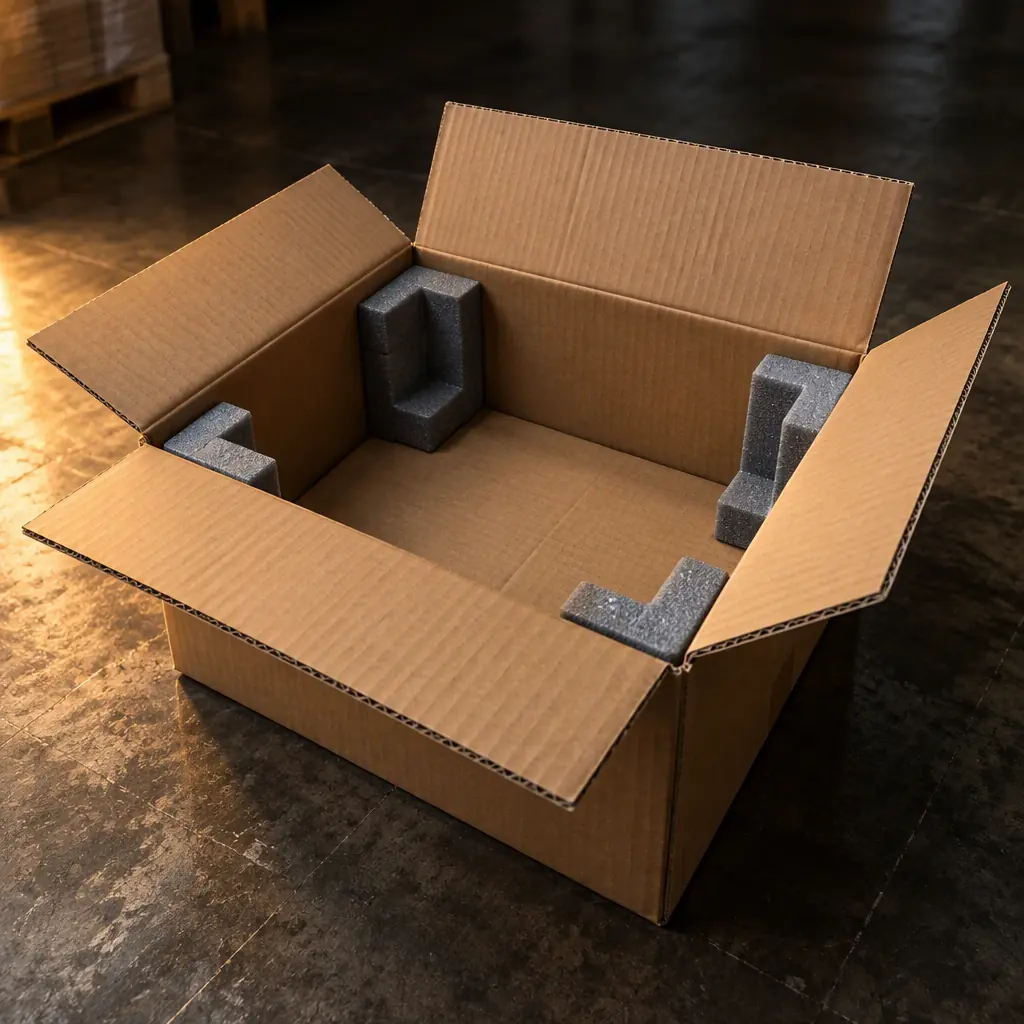
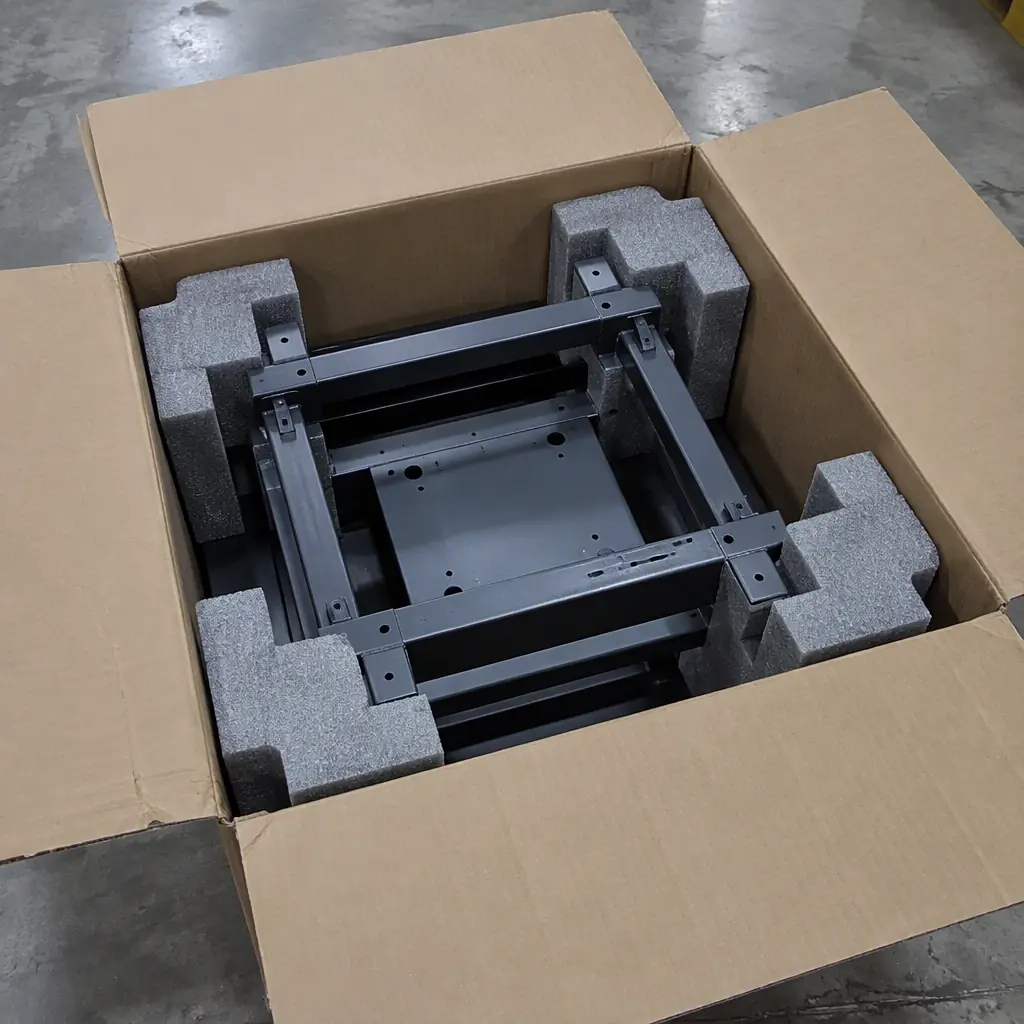
| Moulded cushioning | EPS or EPE foam, 4 corner blocks plus bed protection | Registered, plastic stream, highest fee | EPS is the fee driver and the recyclability target problem |
| Machine bag and film | LDPE bag, stretch wrap, VCI film | Registered, plastic stream | VCI film is multi-material and not recyclable in practice |
| Pallet | Heat-treated wood or plywood | Separate regime in most countries | Wood packaging has its own ISPM 15 and waste rules, not packaging EPR |
| Accessories and desiccant | Small cartons, silica sachets, cable ties | Registered, mixed streams | Small-format items accumulate fees with no design attention |
The fee-weighted picture is not intuitive. The carton, which visually dominates the package and is the item buyers think of as packaging, is usually the cheapest line to comply with because paper collection infrastructure exists and the material is genuinely recycled. The moulded EPS corner blocks, which are invisible until the box is opened, typically carry the highest per-kilogram EPR fee of anything in the shipment, because expanded polystyrene is expensive to collect and has almost no end market in most member states.
A worked figure makes it concrete. Consider a 40HQ container of 120 printers in retail cartons, each with a 9 kg packaging set: carton 4.5 kg, EPS cushioning 1.6 kg, LDPE bag and wrap 0.6 kg, accessories 0.4 kg, with the pallet counted separately. That is roughly 850 kg of plastic declared per container, of which the EPS blocks are about 190 kg. On a plastic-declaration fee structure where EPS carries a materially higher rate than LDPE film, those corner blocks can account for well over half the total packaging fee for the shipment despite being under a quarter of the plastic mass.
The Empty Space Ratio Meets Foam-Heavy Design
The Packaging and Packaging Waste Regulation introduces a requirement that is the most direct conflict with how industrial machines are packed: the empty space ratio, meaning the proportion of a transport package occupied by void fill and air rather than product. It is aimed at the e-commerce habit of shipping a phone in a box sized for a shoe. Applied to a printer, it collides with a real engineering constraint.
A 25 kg machine with a moving gantry has a fragility profile that requires standoff distance at the corners and a cushion that decelerates rather than transmits. The physics of the drop is not negotiable. Reducing void space by shrinking the carton increases the drop acceleration the machine sees, and the failure mode is not a dented corner, it is a gantry that is out of alignment on arrival and a warranty claim that costs more than years of packaging fees.
The compliant route is not a smaller box. It is replacing the void with structure. Moulded pulp or honeycomb paperboard cushioning performs the same deceleration function as EPS at comparable cost per unit in volumes above roughly 5,000 sets a year, and it satisfies both the recyclability target and the material composition rules in a way that EPS cannot. Below that volume the tooling amortisation is unfavourable and the cost premium per set typically runs 30 to 60 percent over EPS. This is the honest trade-off, and it is a volume decision rather than a materials-science one.
Country by Country: What Registration Actually Costs
There is no single EU packaging registration. Each member state runs its own scheme, its own register, and its own fee structure, which means a distributor shipping to six countries holds six registrations. The table below gives the shape of the obligation and typical order-of-magnitude figures for a small distributor, not quotations.
| Country | Register / scheme | Typical annual admin | Notes that catch importers |
|---|---|---|---|
| Germany | LUCID register plus a dual system contract | EUR 300 to 700 plus volume fees | Registration itself is free, but a LUCID entry without a dual system contract is non-compliant, and marketplaces delist without one |
| France | Citeo, with Triman marking and sorting info | EUR 250 to 600 plus volume fees | Triman logo and the French-language sorting notice are mandatory on pack, a print change not a database change |
| Spain | Ecoembes | EUR 200 to 500 plus volume fees | Registration is per material stream, not per company |
| Italy | CONAI with environmental contribution | EUR 200 to 450 plus contribution | Contribution is charged per material class and is passed down the chain in principle, rarely in practice |
| Netherlands, Belgium, Poland | National schemes, similar structure | EUR 150 to 500 each | Thresholds for small producers vary and are easy to exceed without noticing |
The volume fees are the part that scales and the part nobody estimates at the start. A distributor moving 15 containers a year with the packaging set described earlier is declaring roughly 12.8 tonnes of packaging, of which around 2.9 tonnes is plastic. At a blended rate of EUR 0.35 to 0.90 per kilogram depending on material and country, plastic declaration alone runs EUR 1,000 to 2,600 annually across the footprint, and the EPS portion sits at the top of that range. Add carton and wood and the total lands in the low five figures for a mid-sized distributor.
Two structural details are worth planning around. Most schemes invoice retrospectively on declared volume, which means a first-year distributor pays nothing visible and then receives a catch-up invoice for the whole first year in year two, usually at the least convenient moment. And most schemes allow a distributor to consolidate declarations across material streams into one annual filing, which is administratively cheaper than per-shipment reporting, provided the internal data exists to support it.
Building the Declaration From the Factory Side
The distributor carries the legal obligation, but the data has to come from the factory, and this is where compliance fails in practice rather than in law. A packaging declaration needs the material and weight of every component, by material class, per finished article. A factory that has never been asked for a packaging bill of materials does not have this data in a usable form.
What to request, in the format that makes it usable: a packaging BOM listing each component by name, material specification with resin identification code where applicable, weight in grams, and country of manufacture of the component. For the carton, the board grade and recycled content share. For any foam, whether it is EPS, EPE or moulded pulp, since the fee class differs by an order of magnitude.
The request should be built into the frame agreement rather than asked per shipment, because packaging changes silently. A factory switching from EPE to EPS to save cost, or changing carton board grade, shifts the distributor's declared volume and fee class without informing anyone. A clause requiring notification of packaging specification changes, plus a packaging BOM revision attached to each product change notice, closes that gap for the price of a paragraph.
What the answer tells you: a factory with a packaging BOM and a revision trigger can support your declaration and your PPWR recyclability reporting. A factory that sends a photograph of the carton has given you something you cannot declare, and the volume estimate you file will be a guess that either overpays every year or under-declares and creates a liability.
Where Packaging Sits in the Wider Compliance File
Packaging EPR is one of three regimes that attach to the same shipment, and they are usually managed by different people in different departments, which is how registrations get missed. The certification and compliance overview covers the product-level CE, RoHS and WEEE obligations that sit alongside it. The crating and international shipping guide covers the physical packaging design and its structural requirements, which is the input the EPR declaration is built from. The EU GPSR and UKCA guide covers the product safety marking regime, which interacts with labelling on the pack. For the registrations a distributor owes beyond packaging, the regional market entry guide covers the sequence of country-level obligations, and where packaging returns intersect take-back duties, the WEEE and end-of-life guide covers the collection side of the same producer responsibility logic.
Packaging Compliance
Need the Packaging BOM and Declared Weights Per Country?
Send the SKU list and the destination countries. You will get the packaging component breakdown by material class and weight, the EPR registration map for each market, and the PPWR recyclability position for the current pack.
One planning note that saves a year of rework. The recyclability and recycled-content requirements are phased, and the phases are set by packaging format rather than by product category. A distributor that builds the declaration data now, with material class and weight per component, will satisfy the later phases without re-collecting anything, because the underlying data requirement does not change, only the thresholds applied to it. A distributor that files a single aggregate tonnage figure this year will be re-collecting component-level data in two years under time pressure.
The practical sequence for a distributor starting from nothing is: pull the customs entries to establish which countries obligate you, request the packaging BOM from the factory once and make it a contract term, register in the obligated countries before the first shipment rather than after the first invoice, and model the fee on declared volume rather than treating registration as the cost. The registration is a form. The volume fee is the budget line.