
Why Compliance Changed Three Years Before Anyone Noticed
For years, importing a 3D printer into Europe was framed as a CE-marking question. The machine had to satisfy the machinery or electrical requirements, and RoHS covered the substances. That frame was incomplete even then, and the General Product Safety Regulation has made it decisively obsolete. GPSR does not replace the electrical requirements; it adds a horizontal consumer-safety layer on top of them, and it applies to any product placed on the EU market that is intended for consumers or is likely to be used by consumers under reasonably foreseeable conditions. A 3D printer sold through retail, education or a home-fab channel is squarely in scope.
The commercial consequence is blunt: responsibility is no longer an abstraction the OEM carries in Shenzhen. The Regulation demands an economic operator physically located in the EU who can be named on the product, in the documentation and to a customs authority. For a distributor that operator is usually the importer of record — the entity that brings the goods into the member state. Our certification & compliance guide covers the CE/RoHS fundamentals, and our HS codes, tariffs & customs guide explains how that importer-of-record role attaches at the border. Together they frame the legal reality the safety file now sits on top of.
The Two Frameworks a Distributor's File Must Satisfy
Europe is not one regime. The EU and Great Britain have diverged since Brexit, and a distributor selling across the continent typically builds one technical file and then maps it to two or three marking schemes. The table below is the quick comparison a product manager uses to decide how deep each obligation runs.
Notice that the electrical layer (CE under the Low Voltage Directive via EN 62368-1) and the substance layer (RoHS) are separate and cumulative with GPSR. The mistake distributors make is treating GPSR as a substitute for a CE file. It is not — it sits on top of it. For the substance and electrical detail behind this, our ITAR & EAR export compliance guide and our export documentation guide round out the paperwork conversation.

EU GPSR in Ninety Seconds
Regulation (EU) 2023/988 replaced the 2001 General Product Safety Directive and applies to consumer products placed on the EU market from 13 December 2024. Its practical demands on a distributor are fourfold. First, a responsible economic operator established in the EU must be identifiable on the product and in the accompanying paperwork — this is usually the importer or a formally appointed authorised representative. Second, an up-to-date product safety risk assessment must exist in the technical file. Third, the product must carry identifying information — type, batch or serial — plus warnings in the language of the member state where it is sold. Fourth, a process for post-market surveillance and corrective action must be in place.
For a distributor the single hardest part is the first one. If your supplier ships on DDP terms and you never formally act as importer of record, the responsible operator slot may sit with the seller or a named EU representative. If neither is in place, the product is technically non-compliant before it ever reaches a shelf. The goods in question do not have to be dangerous to be unlawful; they have to be brought to market by a properly identified accountable entity. This is why import strategy and compliance are the same conversation.
The Four Documents That Make a Safety File Defensible
A regulator does not ask for a marketing story; it asks for evidence. A compliant EU safety file for a 3D printer is built from four documents, and a distributor should insist on receiving all four before the first container loads. The table below lists what each one proves.
The distinction that matters is between the risk assessment and the test report. A test report proves a condition on a sample; a risk assessment proves that someone reasoned about how the product is actually used, including reasonably foreseeable misuse such as a hobbyist leaving a machine running unattended. Both belong in the file. For the regulatory context around food or medical-adjacent use, our food-safe regulatory guide and our ISO 13485 medical regulatory guide show how a safety file escalates for higher-stakes applications.
CE and RoHS: The Electrical Layer That Still Applies
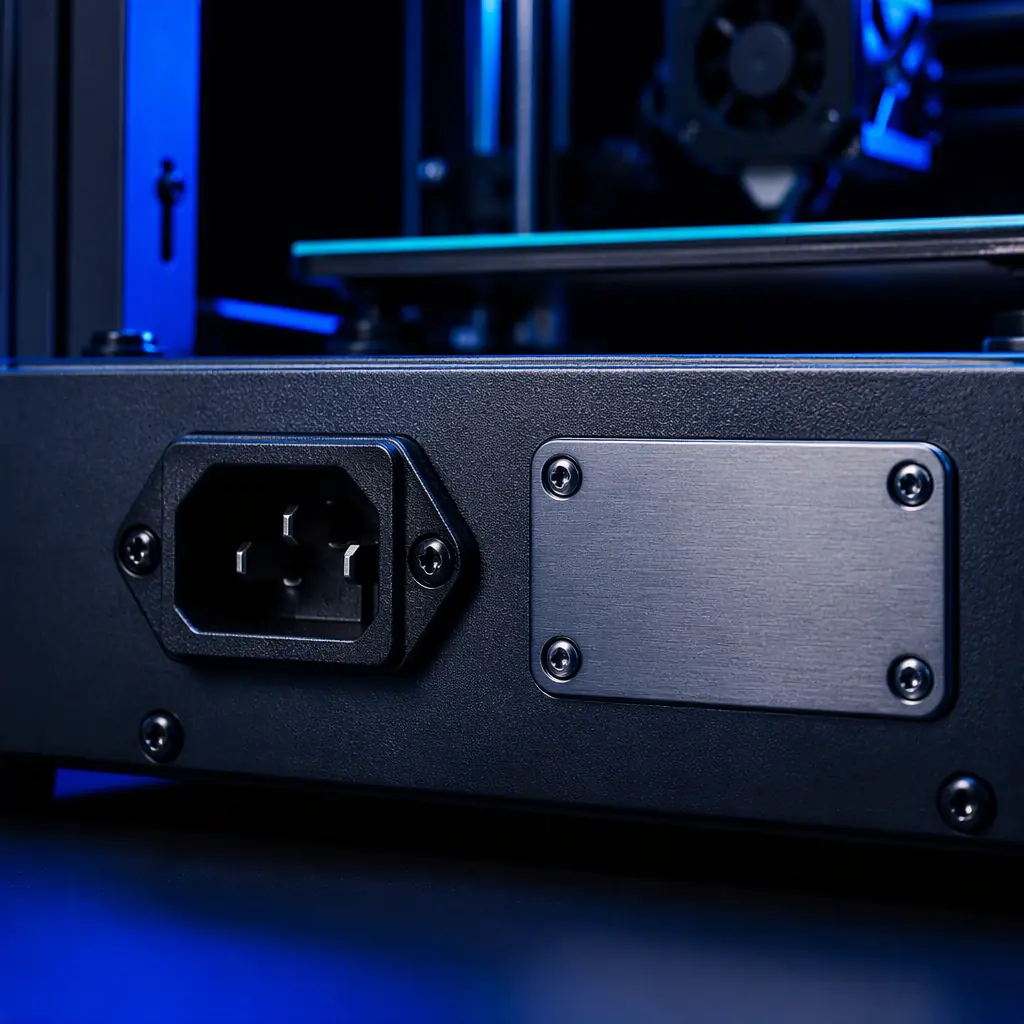
None of this erases the older requirements. A mains-powered 3D printer sold in the EU must still satisfy the electrical safety requirements, which in practice means compliance with EN 62368-1 (the harmonised standard for audio/video, ICT and similar equipment), and the essential health and safety objectives of the Low Voltage Directive. It must also meet electromagnetic compatibility requirements, and it must comply with RoHS (EU) 2015/863 on restricted hazardous substances. GPSR adds the consumer-safety layer; it does not replace any of these.
For a distributor the practical ask is that the technical file and the test reports attach to the end product being shipped, not to a generic portfolio claim. A CE declaration of conformity that is honestly scoped to the machine, a RoHS report from an independent laboratory and a physical label on the unit are the evidence a customs broker and a market surveillance authority both want to see. Asking for these before you order is far cheaper than resolving them after a holding at the border.
UKCA and Great Britain: One File, Two Markings
For the Great Britain market, UKCA (UK Conformity Assessed) is the marking established after Brexit for goods sold in England, Scotland and Wales. The key practical development in recent years is that the UK government has repeatedly recognised CE marking for most product categories, so a single conformity file can often serve both markets — the substance and electrical evidence is usually identical, and the difference is the GB responsible person and the exact marking on the label.
Because the recognition position has shifted over time and varies by product category, the correct way to treat it is as a verification task rather than a remembered rule. Confirm the current recognition of CE in Great Britain with a notified body for the specific machine before you commit a batch. The underlying engineering is shared: a printer that is genuinely safe, electrically compliant and substance-compliant is a printer that is one label change away from either market.

Traceability: The Requirement Distributors Underrate
GPSR does not just want a safety file; it wants to be able to connect a product to a record. When a regulator or an insurer asks about a specific unit, the answer has to be a serial number that resolves to a build, a bill of materials, and a test result. If your traceability stops at a batch number that only the OEM can decode, you have a gap. Build a ledger that maps the units you sold, in which months, to the certificates you hold.
Traceability is also the mechanism that turns a recall from a disaster into a logistics exercise. If you can isolate exactly which serial ranges share a component, you can target a corrective action instead of pulling every machine you ever sold. For the warranty and after-sales side of that ledger, our warranty & returns guide and our spare parts aftermarket guide cover how that record connects to real service operations.
What you're looking for: If the answer is a generic CE certificate and no named EU responsible person or unit-level test log, you have a GPSR-compliance exposure that no amount of product quality will cover → take the importer-of-record role, appoint your EU accountable entity and build the serial-to-record ledger before the next container.
What to Ask a Chinese OEM Before You Import
The questions that separate a defensible file from a folder of doubt are concrete and testable. Ask your supplier for the exact harmonised standards the machine was tested against, the scope of any third-party report, whether an EU-authorised representative is already named or whether you must appoint one, and whether the unit carries a physical conformity label. A supplier that hands you a single PDF labelled “CE” with no test laboratory named has not handed you evidence; it has handed you a placeholder.
- Raw data beats claims — ask for the test report number and the issuing laboratory, then verify it online.
- Scope the declaration — confirm the CE declaration covers the exact model and SKU you are buying, not the supplier’s range.
- Name the responsible operator — decide whether you, the seller, or an EU representative fills the slot.
- Ask for the risk assessment — made-for-consumer use changes the hazards you need documented.
- Plan traceability at purchase — serial numbers and test logs are far easier to get at order time than after a recall.
Holding a supplier to this standard is not paranoia; it is the difference between selling a product and accepting a liability you were never paid to carry. For the broader field of verifying a supplier before you commit capital, our factory audit & QC checklist is the companion reference.

How Precise3D Builds Compliance Into the Machine
At Precise3D we run a 3,500 sqm Shenzhen production network with four assembly cell groups and a dedicated burn-in and aging line. Every printer is power-tested and print-tested before packing, and the test print log travels in the box with each unit — which is exactly the unit-level record a GPSR file needs. Our machines ship with CE LVD (EN 62368-1:2014+A11:2017) and RoHS (EU 2015/863) compliance documented by third-party test reports you can look up online by report number, and we build in the traceability a distributor needs to defend a sale in Europe.
We quote against the Incoterms a distributor can defend and support an EU authorised-representative arrangement where your market needs it. Custom branding and OEM white-label starts at 100 units, and the fastest honest path is a one-to-five-unit sample order at wholesale pricing, tested in your own market before you commit. Our shipping page spells out the trade terms and documents we provide, and our certification compliance guide and import & customs guide cover the detail behind a compliant order.
Reviewed by the Precise3D OEM & distribution team. Product-safety obligations are market- and time-sensitive; always confirm the current scope, the responsible-operator requirement and the recognition of CE in Great Britain with a notified body for your specific product and market before import. Auditable quality and compliance backing is held in the certification register.
Source With Confidence
Ready to Import a Printer You Can Defend?
Join our network of global distributors. Third-party CE & RoHS reports, unit-level test logs, and traceability built in — the dossier that makes your EU and GB market entry defensible from day one.