

Selling thirty printers to a customer with five sites is a different business from selling thirty printers to one workshop. At one site, a failure means one machine down and one engineer walking to a shelf. Across five sites, the same failure means a courier decision, a downtime clock that started before anyone called you, and a stock position that is wrong at three of the five locations at any given moment. This guide covers the parts-distribution structure that keeps multi-site fleets running without asking the customer to hold a full spares inventory at every location. It pairs with the critical spares kit design and the warranty and reverse logistics guide.
The Three-Tier Parts Model
Fleet customers do not need the same parts at every location, and treating every site identically is how distributors end up shipping a $9 heater cartridge on a $40 express courier because nobody planned the stock. The structure that works divides parts by failure frequency and downtime cost into three tiers.
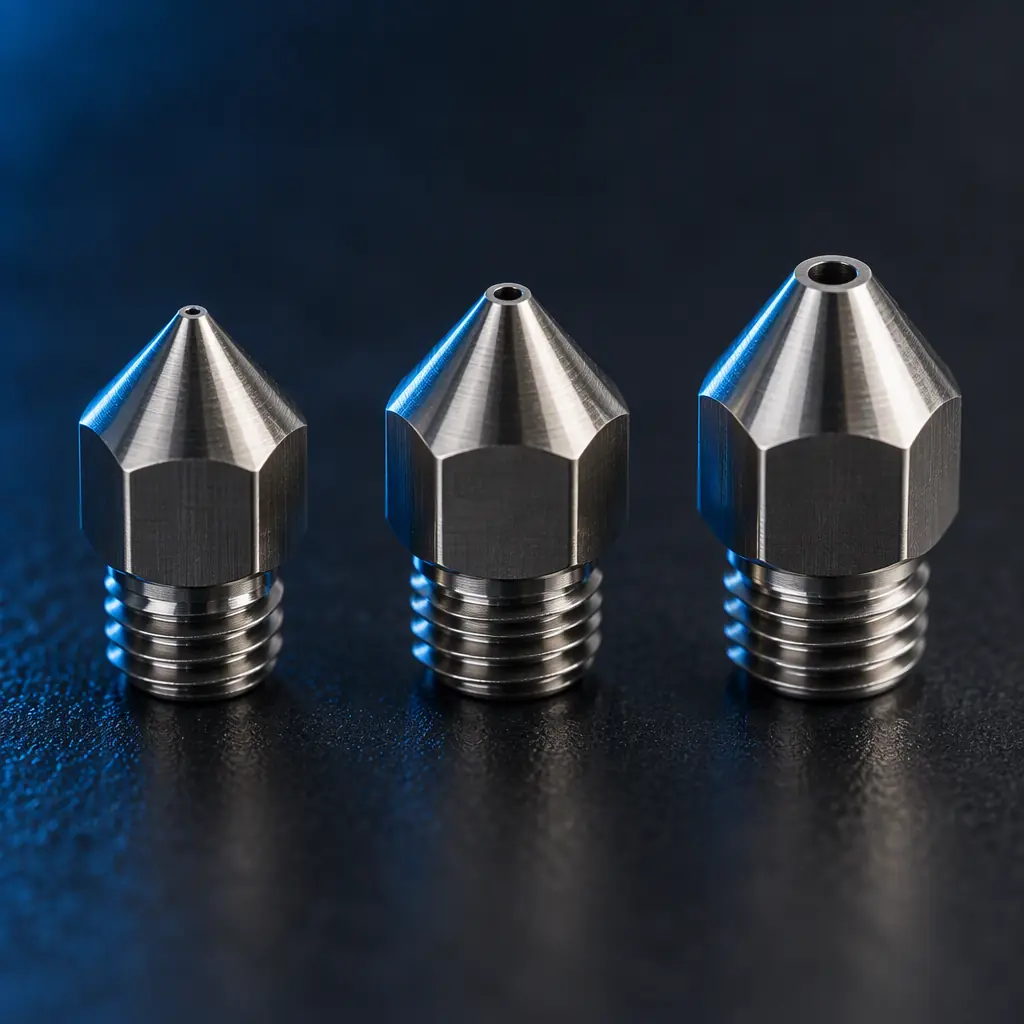
The tier boundaries are set by the ratio of part cost to downtime cost, not by part price alone. A $9 nozzle that stops a machine costing $60 per hour to have idle justifies on-site stock even though it is cheap; a $220 mainboard that fails once per fleet per two years does not, because the express courier decision can be made when it happens. Distributors who present this model as a stock plan rather than a parts list turn a transactional sale into a managed service contract.
Setting the Response Window Before the Parts List
The most common consultation error is building a parts list before asking what downtime actually costs the customer. Every fleet has a different answer, and it determines the whole structure.
Three questions settle it. What is the loaded hourly cost of an idle machine at each site? What is the customer's committed delivery promise to their own customers? And is there any part of the fleet that cannot go down at all, even for an hour? The answers map to response windows that determine stock placement far more reliably than a generic recommendation.
- Same-hour response (site cannot wait): Tier 1 buffer large enough that the part is always on the shelf, plus a named owner per site who checks it monthly. Justified when idle cost exceeds $100 per hour.
- Next-day response (most manufacturing sites): Tier 2 regional stock plus a pre-agreed courier account and a printed escalation contact. This is the default answer for the majority of fleets.
- 48-72 hour response (development and education sites): central depot only, with the customer accepting planned downtime. Trying to promise next-day here wastes money on stock that expires before it is used.
Getting this wrong in the expensive direction is common: distributors over-stock a teaching lab with a next-day promise it never asked for, then watch filament and resin expire on the shelf. Getting it wrong in the cheap direction is worse, because the customer concludes the printer brand is unreliable when the real problem was a two-day part lead time.
Consumable Expiry Across Sites
Filament and resin introduce a dimension hardware spares do not have: they degrade, and the degradation is invisible until a print fails. Multi-site operations make this worse because stock rotates unevenly. A site running 40 hours a week consumes its buffer; a site running 8 hours a week does not, and its resin sits for a year.
The practical rule is to stock by consumption rate rather than by site count, and to mark every spool and resin bottle with its receipt date. Resin shelf life after opening runs 6-12 months for standard formulations and 3-6 months for some bio-based and high-clarity types; unopened sealed bottles typically hold 12-24 months. Filament is more forgiving if kept dry, but PLA and PETG become brittle after 12-24 months of exposure to humidity and will snap in the extruder path.
For distributor margin, expiry is not only a customer cost. It is an argument for the subscription model: recurring small shipments sized to actual consumption beat a large annual stock order that half-expires. That shift is covered in the consumables subscription guide, and the storage detail that governs it is in the filament drying and storage guide and the resin shelf life and rotation guide.
Single Order Point, Single Invoice
The operational feature fleet customers value most is not price. It is one order point and one invoice. A customer with five sites that has to place five purchase orders, reconcile five invoices and manage five courier relationships will eventually consolidate to a distributor who removes that work, even at a slightly higher part price.
The mechanics are straightforward but must be built deliberately. A single account with per-site delivery addresses on file. A reorder process that accepts a consolidated list across sites and splits it into deliveries automatically. One invoice with a per-site cost allocation report attached, which the customer's finance team needs for their own internal charging. And a named account contact who can see stock and open orders across all sites in one view.
For the customer, the value is measurable: a five-site operation typically removes 6-10 hours of administrative work per month. That is the concrete number to put in the proposal, because it is a cost the customer is already paying and can see in their own accounts payable process. It is also the strongest defence there is against a price-based competitor, since a competitor quoting parts only is not offering to absorb the administration.

Standardising the Fleet to Reduce the Parts Matrix
Every additional printer model in a fleet multiplies the spares matrix. Two models means two nozzle thread patterns, two hotend geometries, two sensor connector standards and two firmware lineages. Five models means the customer is effectively running five maintenance programmes, and no forward stock plan can be economical.
The distributor's opportunity is to influence this at the point of sale rather than after. If a customer with five sites is buying incrementally, steer them to a consistent model family across sites wherever their applications allow it. Where a site genuinely needs a different capability (a large-format cell, a resin cell for fine detail), contain the variance: one non-standard machine per fleet is manageable, five is not.
The measurable payoff for the customer is a smaller stock commitment at every tier. Standardising from three models to one typically reduces the Tier 2 regional stock list by 40-55 percent, which removes both working capital and the risk of holding expired or obsolete parts. That saving is usually larger than any per-unit discount the customer was negotiating for, and it is a much better conversation to have than a margin concession. For the wider portfolio logic, see the distributor portfolio strategy guide.
Bottom Line
Multi-site fleets need a three-tier parts structure: nozzle and consumable buffers on site, hotend sub-kits and sensors at a regional forward-stock point, and boards, motors and gantries at one central depot. Set the tier boundaries from the ratio of part cost to downtime cost, establish the response window before writing the parts list, stock consumables by consumption rate rather than site count, and deliver one order point and one invoice. Standardise the model family wherever applications allow, because every extra model multiplies the spares matrix at every tier.
Reviewed by the Precise3D engineering & OEM team. Compliance files that accompany the catalog are auditable at the certification register.

Start Your Partnership
Ready to serve multi-site fleets in Your Market?
Fleet accounts are won on parts logistics as much as on hardware. Request the OEM & white-label program sheet, the three-tier spares structure and volume pricing.